Feedback Sandwich
A feedback pattern that wraps criticism between two compliments — widely taught and used, and criticized for burying the message.
 Find this on the mind-map
Introduction
The feedback sandwich has no single credited author. It spread through corporate management training starting in the 1980s, and it's often associated with Mary Kay Ash, who taught her managers to sandwich every piece of criticism between two layers of praise. You'll also see it called the praise-criticism-praise pattern, or PIP: Positive, Improvement, Positive.
How It Works
The structure is three layers, always in this order:
| Layer | Content | Purpose |
|---|---|---|
| 1. Positive | A genuine observation about something done well | Lowers defenses, signals goodwill |
| 2. Constructive | What needs to change and why | Delivers the message |
| 3. Positive | Encouragement and confidence in the person | Ends on a forward-looking note |
The idea, in its simplest form: soften tough feedback enough that it lands, while still getting the actual point across. That last part is where things get contested.
Why It Matters for Leaders
This one matters mostly because you're probably already using it by instinct, and the ways it can go wrong are predictable enough to be worth knowing before you lean on it.
It does have real uses. It gives someone who's inexperienced at giving feedback a script to follow, which beats them avoiding the conversation entirely. It helps early in a relationship, before trust is built up. And it forces you to notice something the person does well — which, if you're honest, you might otherwise skip entirely.
But these aren't occasional glitches — they show up almost every time. The pattern is easy to spot: once your team has seen it a few times, any positive opening starts to read as the warning shot before criticism, which quietly devalues every genuine compliment you give afterward. The criticism itself is usually the shortest part of the exchange, so people often walk away remembering the compliments and missing the actual ask. And the bookend praise is frequently manufactured just to fit the format — which the person on the receiving end can usually tell.
The deeper problem is that the sandwich is built around your comfort, not the other person's clarity. Radical Candor makes the case directly: caring about someone means being more honest with them, not less, and softening a message to protect your own discomfort is really just Ruinous Empathy — it just looks nicer on the surface. A better default is a specific, behavior-anchored statement. The SBI Model delivers criticism without the personal sting by naming the situation, the observable behavior, and its impact — getting you what the sandwich is reaching for, without hiding the message inside it.
What to do next
Test your knowledge of Feedback Sandwich
Practice Feedback Sandwich
Apply Feedback Sandwich to a real situation
Skills related to Feedback Sandwich

Frameworks related to Feedback Sandwich
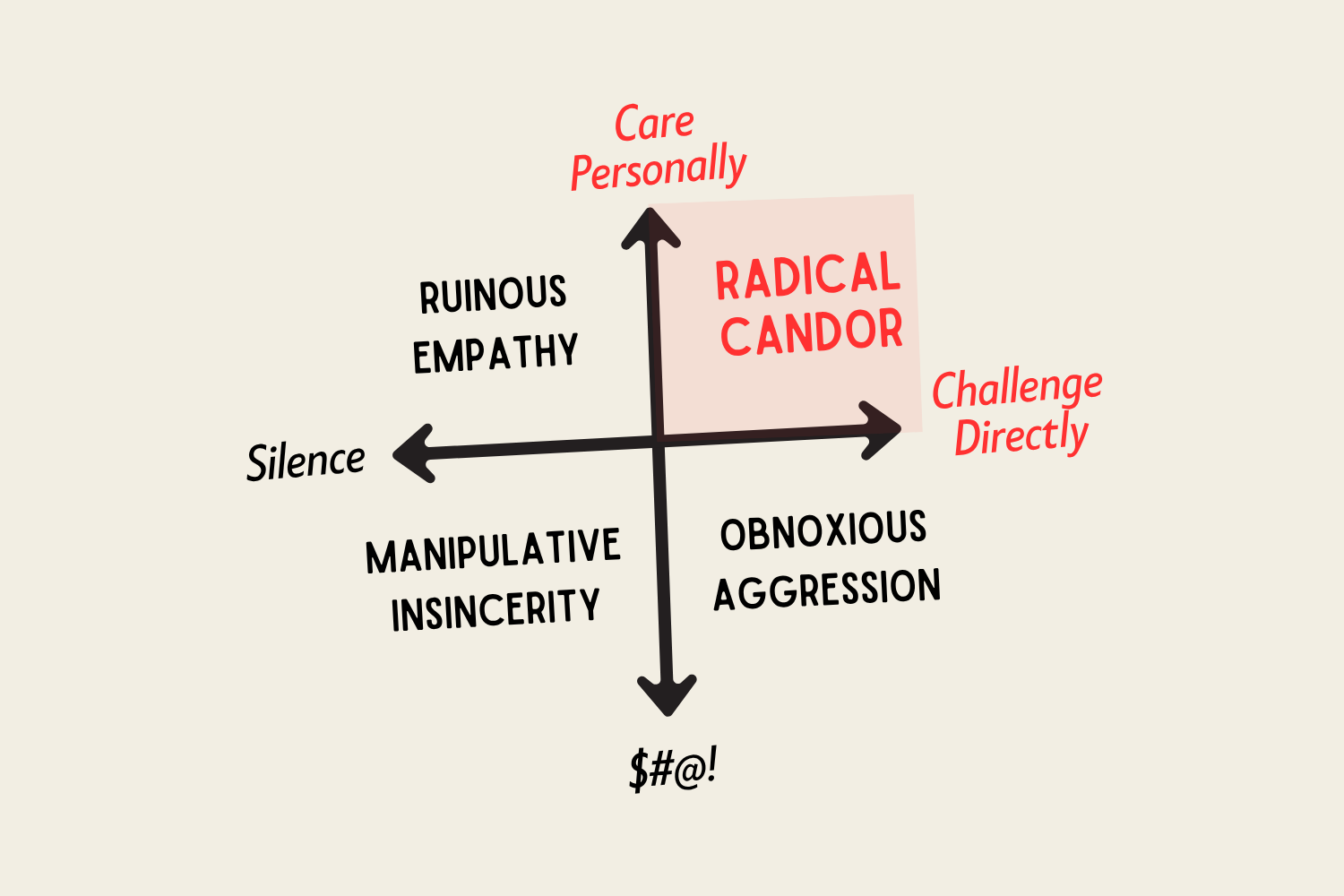
Radical Candor
Kim Scott's rule that good feedback means caring personally and challenging directly at once — a 2x2 for what goes wrong.

SBI Model
Situation, Behavior, Impact — a three-part way to give feedback that stays specific and observable instead of judging someone's character.
