Giving Feedback
Delivering honest, specific feedback often enough that people can actually act on it.
 Find this on the mind-map
Introduction
Feedback is information about the gap between what someone did and what the work actually required, handed over while they can still do something about it. The skill is in making that information specific, frequent, and usable.
Doing it well isn't as hard as it is perceived to be.
- You describe the situation and the behavior you actually observed, state the impact it had, and leave the person's character out of.
- You deliver it close to the event instead of saving it for a review cycle months later.
- And you treat the exchange as two-way, so the other person can correct your read on what happened before either of you acts on it.
Constructive feedback is uncomfortable to give, which is exactly why it's so easy to keep putting off. Without it, people simply don't improve, not because they're not trying, but because nobody's told them where the gap actually is.
Why It Matters for Leaders
A Gallup study found that employees who get regular feedback are 3.6 times more likely to be engaged at work, and only 26% say they actually get the feedback they need.
As they say, feedback is a gift, but most managers avoid giving that gift to their team members.
Not developing this skill can have real, damaging costs:
- Skip regular feedback and a minor performance issue slowly turns into resentment and disengagement. A small misunderstanding hardens into real tension.
- Feedback saved for the annual review arrives as a rating instead of a description, by which point the specific evidence has faded from everyone's memory.
- Feedback that is only ever positive leaves the person blindsided by their actual performance rating.
- Feedback hedged into safe, corporate phrasing lets the recipient walk out having heard nothing at all.
Picture the alternative: you notice something the week it happens, name the specific behavior and its impact in a two-minute conversation, and move on. Multiply that by every week of the year and there's no annual surprise left to have.
When you've built this skill, feedback stays honest, frequent, and constructive. It helps people feel valued rather than judged. It stays clear and specific, aimed at helping someone get better rather than at cutting them down.
What to do next
Master Giving Feedback by taking the mini-course
Frameworks related to Giving Feedback

Feedback Sandwich
A feedback pattern that wraps criticism between two compliments — widely taught and used, and criticized for burying the message.
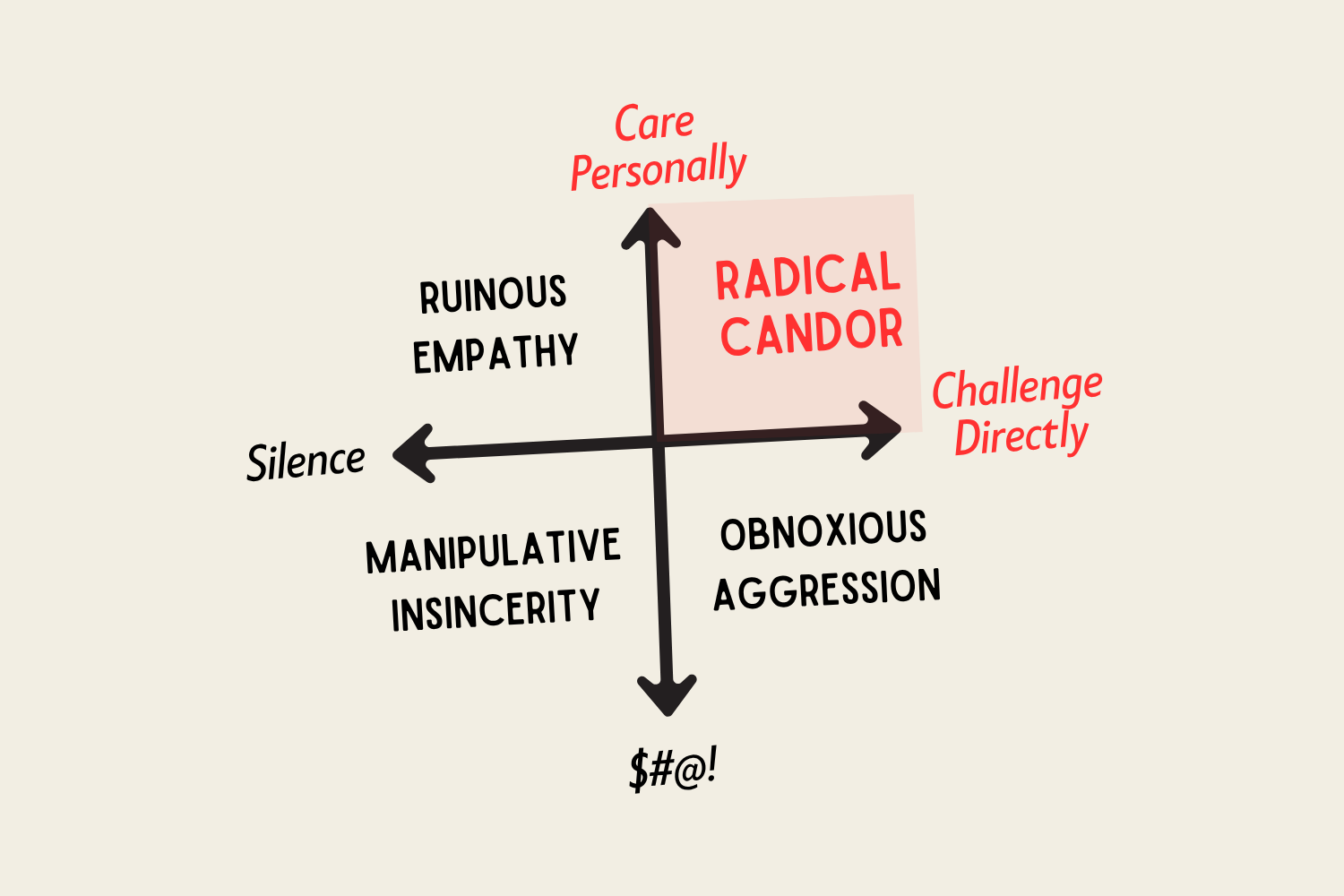
Radical Candor
Kim Scott's rule that good feedback means caring personally and challenging directly at once — a 2x2 for what goes wrong.

SBI Model
Situation, Behavior, Impact — a three-part way to give feedback that stays specific and observable instead of judging someone's character.
Books related to Giving Feedback

Skills related to Giving Feedback

Coaching
Helping people think, and take ownership of their own problems

Communication & Influence
Using narrative, story, and structure to inspire, align, and actually move people, not just inform them.

Culture Building
Culture isn't the perks or the values on the wall, but what you tolerate, reward, and let slide.

Goal Setting
Turning intentions into clear, measurable goals that give a team direction and a real sense of progress, and keeping those goals honest as conditions change.

Leadership Development
Deliberately growing the next generation of leaders on your team, because your legacy ends up measured by the leaders you develop, not by what you accomplish alone.

Team Development
Building a high-performing team on purpos, guiding people through the stages of a team's growth, building real trust between them, and handing over ownership as they earn it.