Coaching
Helping people think, and take ownership of their own problems
 Find this on the mind-map
Introduction
Coaching is a structured conversation where you supply the questions and the attention, and the other person supplies the thinking. At its core, coaching is the practice of helping people think, solve problems, and grow on their own.
It comes down to resisting the temptation to "solve" the problem for them. You hear a problem you could personally resolve in thirty seconds, and you ask a question instead. You help the individual identify their own motivations, their challenges, and their possible solutions. You help them to take ownership, and motivate them to take action.
Building this skill means learning to ask better questions, listen more, and guide people toward their own answers instead of just handing them yours.
Why It Matters for Leaders
Not developing the skill of coaching doesn't just cost you, it costs your whole team. If you constantly solve problems for your team, your team never learns to solve problems themselves, and that creates a loop where you become the bottleneck and they become dependent on you. You'll recognize the symptoms: decisions queue up in your inbox, the same problem comes back every quarter looking slightly different but really being the same thing, and capable people sit around waiting for permission instead of just taking action.
There's a subtler failure too. You can run a conversation that has "feels" like coaching — open questions, long pauses — while still steering the person toward an answer you have already decided on. Remember: people pick up on that fast, and the moment they do, the conversation will stop working.
A study from Gallup found that employees who receive regular coaching are 27% more likely to feel engaged at work. When coaching is actually present, problem-solving capacity spreads through the team. People start showing up with proposals instead of questions, your own time frees up for the work only you can do, and the team's judgment holds up even when you're not in the room.
What to do next
Master Coaching by taking the mini-course
Frameworks related to Coaching

CLEAR Model
A five-stage coaching structure — Contract, Listen, Explore, Action, Review — that centers real listening and reflection before rushing to a plan.

FUEL Model
A four-stage coaching model — Frame, Understand, Explore, Lay out a plan — built for managers, ending in an actual plan.

T-GROW
A five-stage coaching structure — Topic, Goal, Reality, Options, Way Forward — that names what's actually worth discussing before it moves you from where you are to where you want to be.
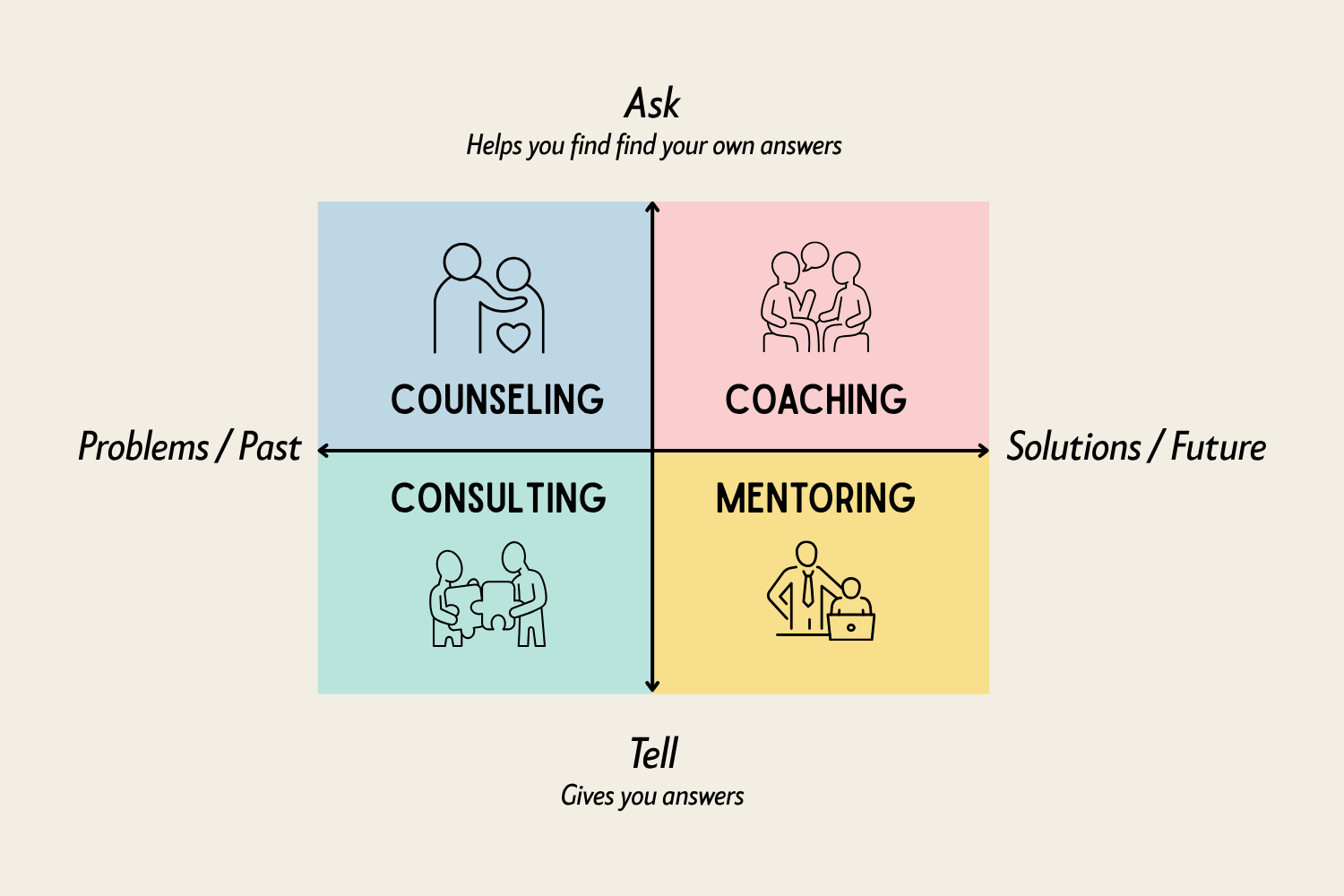
The Four Leadership Support Roles
A 2x2 separating four modes for helping someone — coaching, mentoring, counseling, consulting — plus a test for picking the right one.

The Thomas-Kilmann (TKI) Model
Five conflict styles, two dials — how hard you push, how much room you give — chosen on purpose, not by default.
Skills related to Coaching

Communication & Influence
Using narrative, story, and structure to inspire, align, and actually move people, not just inform them.

Culture Building
Culture isn't the perks or the values on the wall, but what you tolerate, reward, and let slide.

Giving Feedback
Delivering honest, specific feedback often enough that people can actually act on it.

Goal Setting
Turning intentions into clear, measurable goals that give a team direction and a real sense of progress, and keeping those goals honest as conditions change.

Leadership Development
Deliberately growing the next generation of leaders on your team, because your legacy ends up measured by the leaders you develop, not by what you accomplish alone.

Team Development
Building a high-performing team on purpos, guiding people through the stages of a team's growth, building real trust between them, and handing over ownership as they earn it.