T-GROW
A five-stage coaching structure — Topic, Goal, Reality, Options, Way Forward — that names what's actually worth discussing before it moves you from where you are to where you want to be.
 Find this on the mind-map
Introduction
GROW took shape in the United Kingdom during the 1980s, developed by Graham Alexander, Alan Fine, and Sir John Whitmore, and it became widely known through Whitmore's book Coaching for Performance. Its roots run back to Timothy Gallwey's The Inner Game of Tennis, which argued that a coach's real job is removing the internal interference that stops someone performing — not handing them technique.
Executive coach Myles Downey later added a stage to the front of it: Topic. T-GROW exists because a coaching conversation that jumps straight to "what's your goal?" quietly assumes the goal is already obvious — and in most real 1:1s, it isn't. Someone sits down with you carrying three half-formed things on their mind; picking which one actually deserves the next twenty minutes is its own piece of work, done badly or not at all in plain GROW.
How It Works
T-GROW runs through five stages, in this order:
| Stage | Question it answers | Typical prompts |
|---|---|---|
| Topic | What's actually worth talking about? | "What's on your mind? Of everything going on, what matters most right now?" |
| Goal | What does this person want? | "What would be useful to get from this conversation? What does success look like?" |
| Reality | Where are they now? | "What's happening now? What have you tried? What's in the way?" |
| Options | What could they do? | "What could you do? What else? What if you did nothing?" |
| Way Forward | What will they do? | "What will you do, by when? What might stop you?" |
The order isn't arbitrary. A Goal set before the Topic is settled tends to be whatever's loudest in the room that day, not what actually matters. Options generated before Reality is clear tend to just be your own habits transplanted into someone else's situation, and a Way Forward without specifics is a good intention that dies in the calendar. In practice it's not strictly linear — you'll often loop back from Options to Reality the moment a new constraint shows up.
Why It Matters for Leaders
Your default reflex is to solve. Someone brings you a problem, you've seen it before, and the fastest path is telling them what to do. That works once and costs you twice — when you constantly solve problems for your team, the team never learns to solve them, which makes you the bottleneck and them dependent on you.
T-GROW gives that reflex somewhere else to go, and the Topic stage gives it somewhere to go first. It turns advice into a sequence of questions, a skill most managers actually pick up faster than they pick up patience. The payoff shows up in engagement: Gallup found employees who receive regular coaching are 27% more likely to feel engaged at work.
It's also short enough to use without ceremony. A fifteen-minute T-GROW conversation fits inside a regular 1:1 — which matters far more than a perfect quarterly coaching session that never actually happens. Naming the Topic up front is what keeps that fifteen minutes from being spent on the wrong thing entirely.
What to do next
Skills related to T-GROW

Frameworks related to T-GROW

CLEAR Model
A five-stage coaching structure — Contract, Listen, Explore, Action, Review — that centers real listening and reflection before rushing to a plan.

FUEL Model
A four-stage coaching model — Frame, Understand, Explore, Lay out a plan — built for managers, ending in an actual plan.
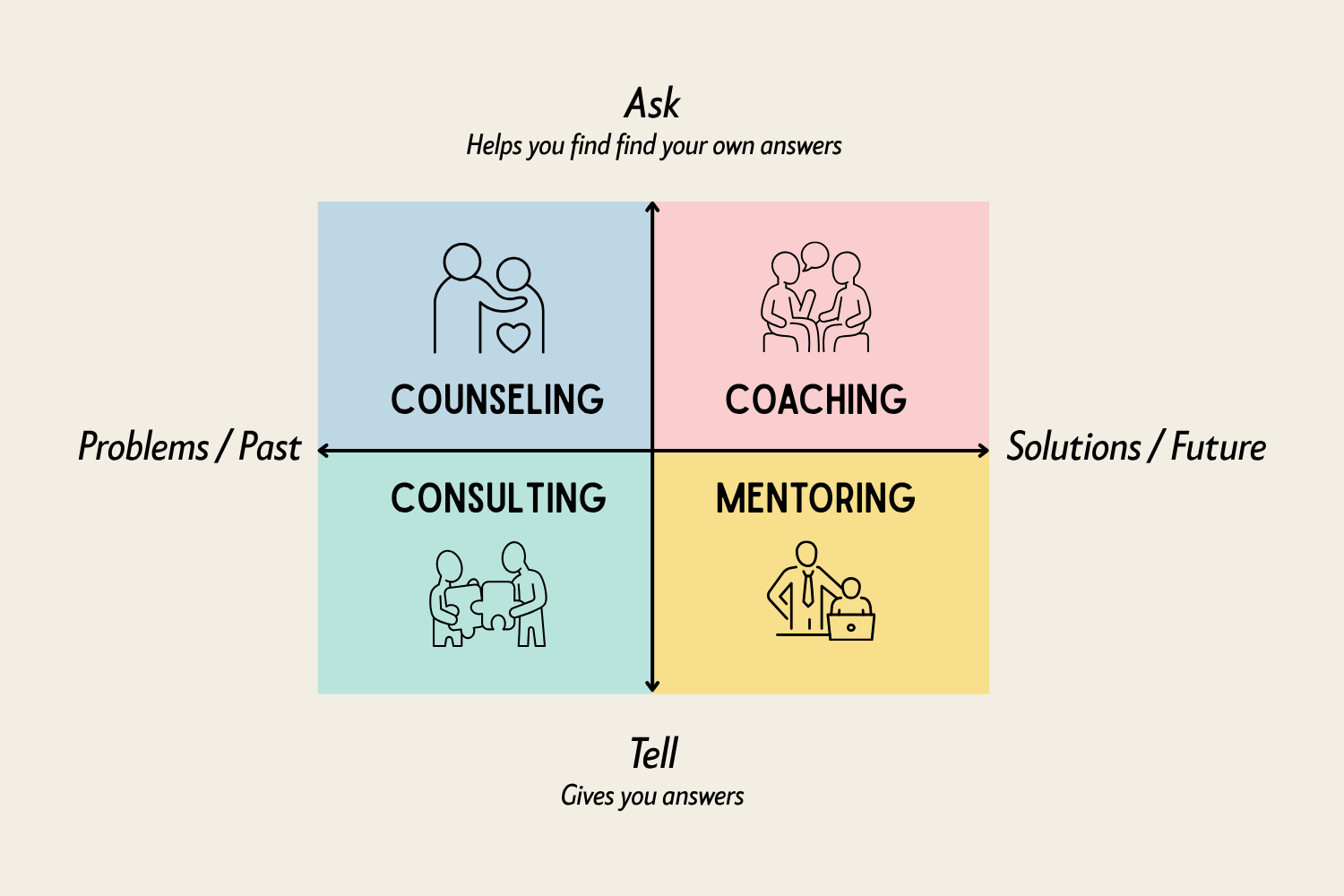
The Four Leadership Support Roles
A 2x2 separating four modes for helping someone — coaching, mentoring, counseling, consulting — plus a test for picking the right one.

The Thomas-Kilmann (TKI) Model
Five conflict styles, two dials — how hard you push, how much room you give — chosen on purpose, not by default.
