SBI Model
Situation, Behavior, Impact — a three-part way to give feedback that stays specific and observable instead of judging someone's character.
 Find this on the mind-map
Introduction
The Center for Creative Leadership built this after noticing that most workplace feedback fails for one of two reasons: it's too vague for anyone to act on, or it's too personal for anyone to actually hear. Their fix was short and deliberately simple. When you give feedback, describe what happened, what the person did, and what effect it had. That's it — three parts, in that order.
How It Works
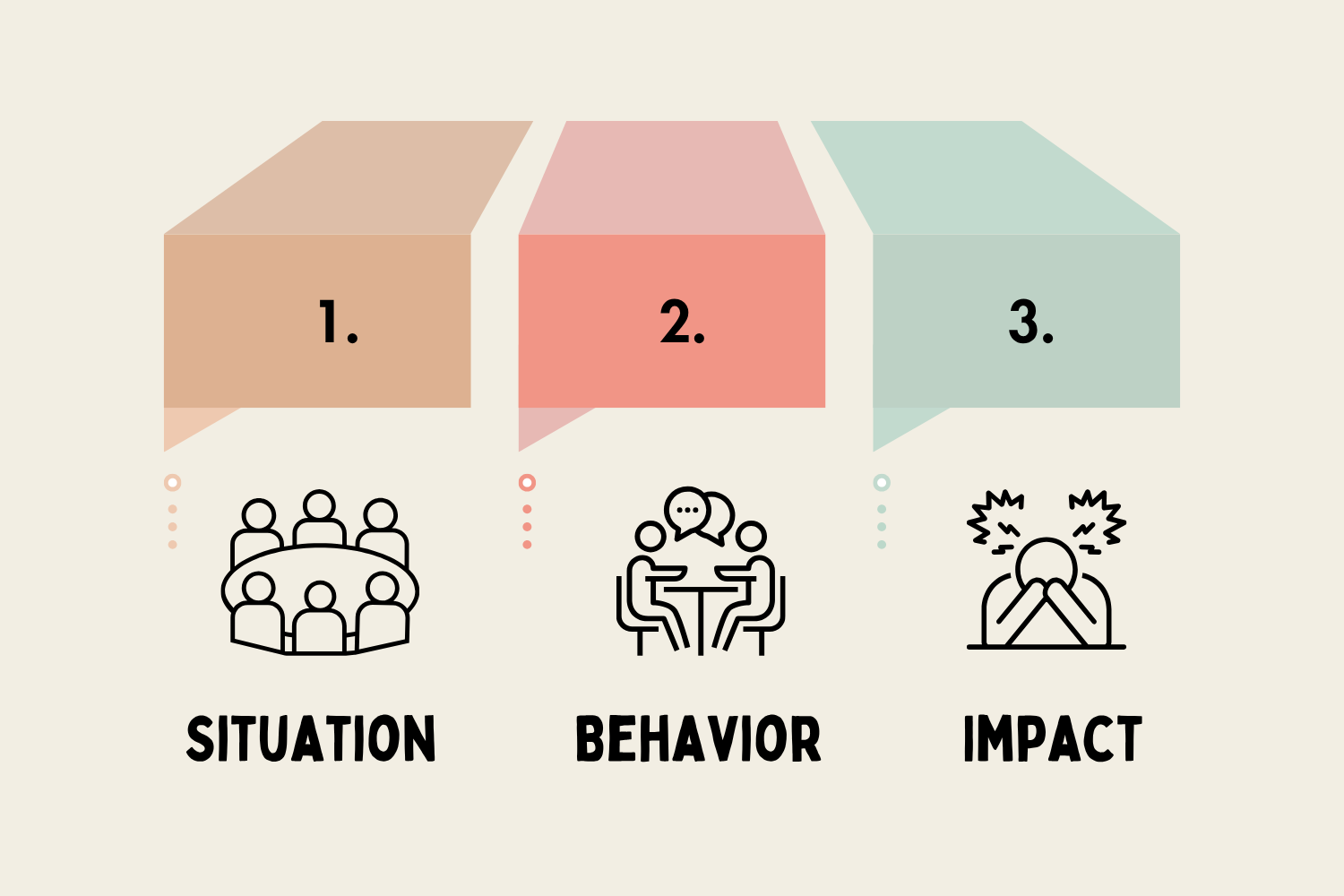
Situation is your anchor. Name the specific time and place so the person knows exactly which moment you're talking about. Specific anchors sound like "in this morning's sprint review," "during the customer call yesterday," "at Tuesday's all-hands." Weak anchors sound like "lately," "you always," "you tend to." Without a concrete moment, the person either gets confused or gets defensive — sometimes both.
Behavior is what the person actually said or did, described the way an observer would describe it. "You interrupted Miguel while he was mid-sentence." "You raised your voice during the call with the client." "You arrived 15 minutes late to the planning meeting." This is where most feedback breaks down. "You were rude," "you weren't being professional," "you don't respect other people's time" — these are interpretations, not observations. The moment feedback slides from observation into interpretation, the conversation turns into a debate about someone's character. People can correct an action. They cannot correct a judgment about who they are.
Impact is the effect the behavior had — on you, on the team, or on the work. "It made it hard for the team to follow the discussion." "It created tension in the room, and people went quiet." "It helped us refocus and move forward faster." This is the part that actually creates awareness, because it shows the person something they can't see from inside their own intent. People rarely change because you told them to. They change once they understand how their actions actually land on other people.
Put together, a full SBI statement reads as one sentence: "In yesterday's design review (Situation), you interrupted Asha and Miguel when they were sharing their updates (Behavior). It made it hard for them to contribute, and I noticed the conversation shut down after that (Impact)."
The same structure works just as well for reinforcing something good: "During this morning's sprint planning (Situation), you summarized the team's concerns clearly before moving forward (Behavior). It helped align everyone and saved us a lot of time (Impact)."
Why It Matters for Leaders
Most feedback isn't wrong — it's just delivered badly. Managers speak in generalities, confuse feedback with feelings, or delay the conversation so long it loses all its value. Picture a new manager telling someone, "I've been getting a sense that something's off in meetings, you might want to watch how you come across." That gives the person nothing to actually act on, and the conversation usually collapses into blame and defensiveness instead.
Avoiding the conversation costs you more than the discomfort of having it would. Gallup found that employees who get regular feedback are 3.6 times more likely to be engaged at work, while only 26% say they actually get the feedback they need. Skip it, and a minor performance issue quietly turns into resentment and disengagement.
SBI works because it separates observation from interpretation, and that separation is what keeps the other person's defenses down long enough for your message to actually register. It also gives you somewhere to stand when the conversation gets tense — the facts of what happened aren't up for negotiation, only what they mean is.
It's just as powerful for praise. "Nice job on the bug fix" fades in about a day. "During last night's production outage, you traced the root cause and shipped a patch within the hour, which minimized customer impact and helped us avoid an escalation" tells the person exactly which behavior to repeat. Specific praise beats generic praise every time.
What to do next
Test your knowledge of SBI Model
Practice SBI Model
Apply SBI Model to a real situation
Skills related to SBI Model

Frameworks related to SBI Model

Feedback Sandwich
A feedback pattern that wraps criticism between two compliments — widely taught and used, and criticized for burying the message.
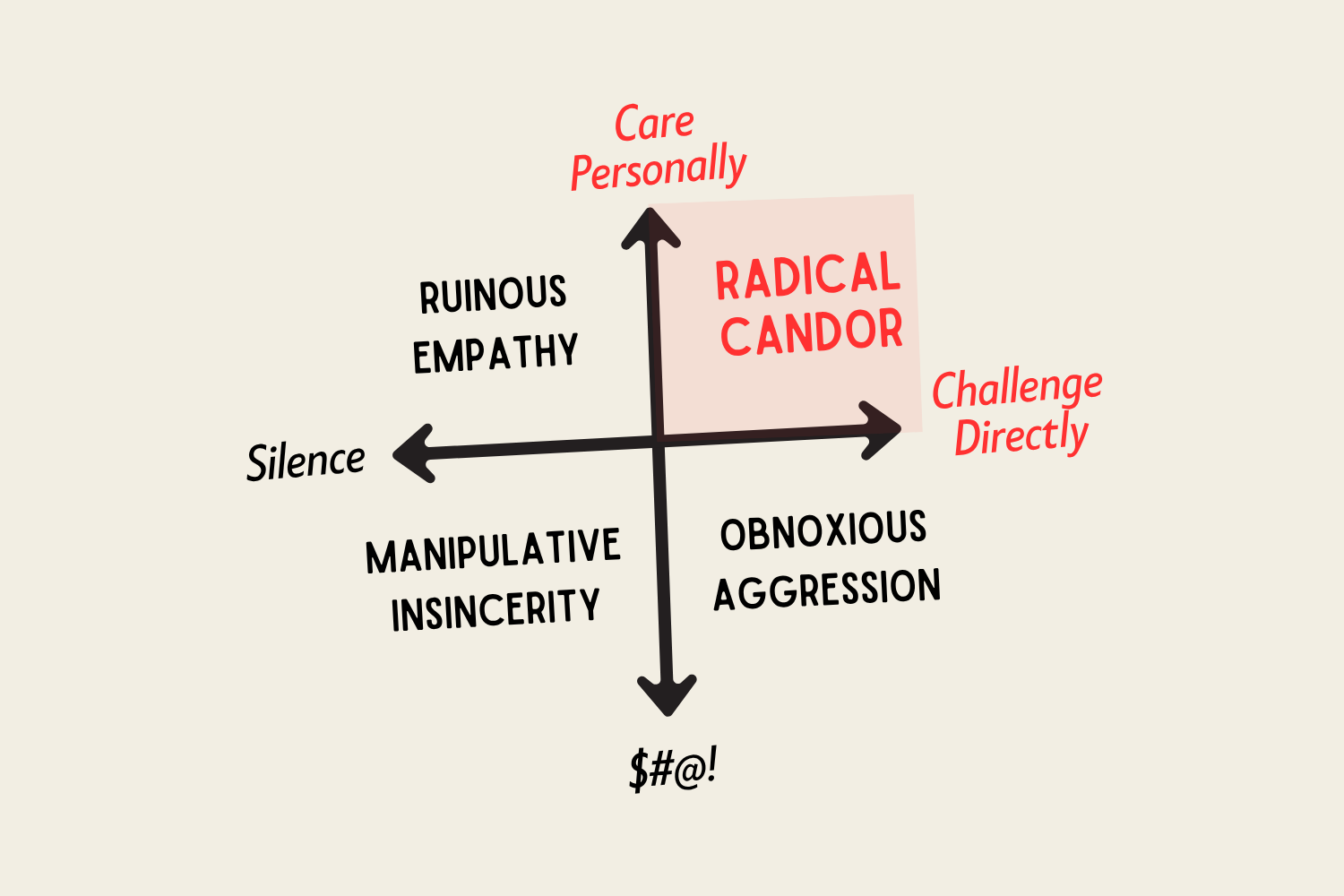
Radical Candor
Kim Scott's rule that good feedback means caring personally and challenging directly at once — a 2x2 for what goes wrong.
