Measure What Matters
John Doerr's field guide to OKRs, the goal-setting system he carried from Andy Grove's Intel to a young Google, built on the argument that most teams fail not from lack of effort, but from being clear about activity and vague about outcomes.
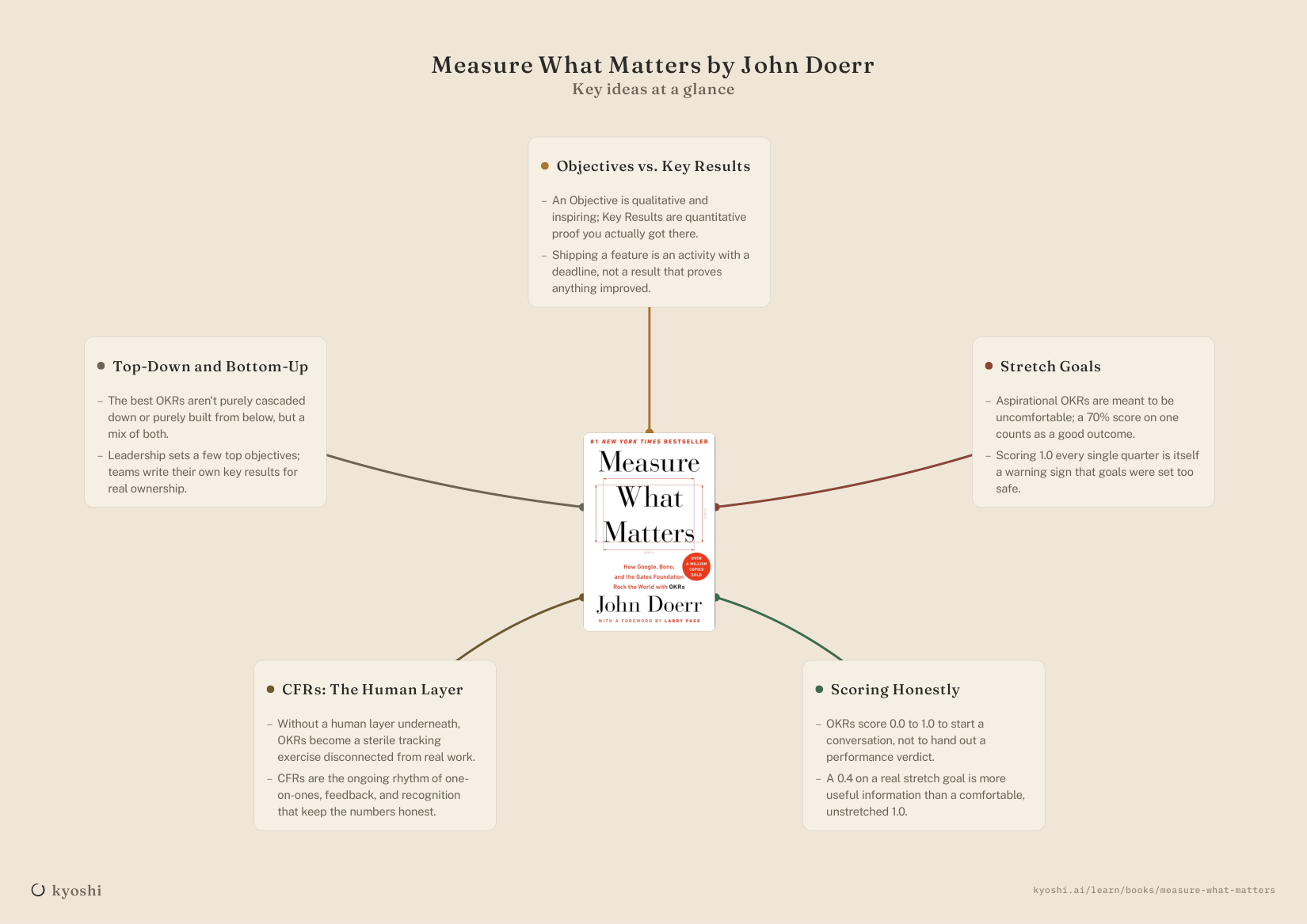
 Find this on the mind-map
Introduction
John Doerr's book is a delivery vehicle for one management tool: OKRs, Objectives and Key Results, which he learned from Andy Grove at Intel and later brought to a young Google. The pitch is almost too simple to seem important: separate what you want to achieve (the Objective) from how you'll know you achieved it (the Key Results). But Doerr's real argument is that most teams fail not from lack of effort. They fail from being clear about activity and vague about outcomes.
Objectives and Key Results: What vs. How Much
An Objective is qualitative and inspiring: where you want to go. Key Results are quantitative and verifiable: exactly how you'll know you got there, usually three to five per Objective. The discipline is in refusing to let the two blur together: "Improve customer satisfaction" is an Objective; "Reduce support ticket resolution time from 48 to 12 hours" is a Key Result. Leo's team tracks "launch the new onboarding flow" as a goal, which gets marked done the moment it ships, whether or not it actually improved anything. A team running real OKRs would have tied that launch to a measurable result, and found out honestly whether it worked.
Stretch Goals, Not Sandbagged Ones
Doerr draws a line between committed OKRs (things that must get done, tied to operational numbers) and aspirational OKRs (deliberately ambitious, meant to be uncomfortable). A 70% score on an aspirational OKR is treated as a good outcome. Scoring 1.0 every quarter is itself a warning sign that goals were set too safe. This runs against most managers' instinct to set goals they're confident they'll hit, which caps how much anyone attempts without anyone noticing.
Scoring Honestly
OKRs are scored on a 0.0 to 1.0 scale, not pass/fail, and the score is meant to generate a conversation, not a performance verdict. A 0.4 on an aspirational goal that pushed real progress is more useful information than a comfortable 1.0 that required no stretch at all. The number is diagnostic, not a grade to be defended.
CFRs: Conversations, Feedback, and Recognition
Doerr is explicit that OKRs without a human layer underneath them become a sterile tracking exercise. CFRs are the ongoing rhythm that keeps the quarterly numbers connected to what's actually happening week to week: frequent one-on-one conversations about progress and obstacles, lightweight feedback in both directions, and specific recognition of contribution.
Top-Down and Bottom-Up
Effective OKRs aren't purely cascaded from the top, nor purely bottom-up. The best results come when leadership sets a small number of top company objectives and teams are trusted to write their own key results against them, which produces far more genuine ownership than a goal handed down fully formed.
Putting It Together
The mechanics (Objectives separate from Key Results, scored honestly, calibrated to stretch rather than comfort) only work because of the human layer around them (CFRs) and the direction they come from (a mix of top-down clarity and bottom-up ownership). Strip out any one piece and OKRs degrade into exactly the thing Doerr is arguing against: a lot of activity, tracked carefully, in service of outcomes nobody is quite sure actually mattered.
Why It Matters for Leaders
Most managers who adopt OKRs get the format right and the substance wrong. They write "Objective: improve the onboarding flow" and "Key Result: ship the new onboarding flow by March," and nothing about that catches the actual failure mode, because shipping isn't a result, it's an activity with a deadline attached.
The real value of this system shows up at review time, not planning time. When a manager sits down at quarter end and has to score something 0.4 instead of just marking it "done," that's the moment the team finds out whether the work actually moved anything. A lot of status updates are built to avoid that moment entirely.
It also changes what you reward. If every goal on your team scores 1.0 every quarter, that's not a strong team, it's a team that's been trained to only commit to what it already knows it can deliver. Managers who actually want stretch have to say out loud, in advance, that a 70% on a hard goal beats a 100% on an easy one, and then prove it by not punishing the person who came in at 70%.
Picture a product lead, Keisha, reviewing her team's quarter. One engineer's key result reads "reduce checkout errors from 4% to 1%," and he landed at 2.5%, a 0.5 score. Another's reads "launch the new checkout flow," and it shipped on time, a clean 1.0. The instinct is to praise the second person in the all-hands and privately flag the first as behind. Doerr's whole argument is that Keisha has it backwards: the first result tells her something real happened to a number that mattered, and the second tells her nothing happened yet at all.
What to do next
Reinforce your understanding of Measure What Matters
Skills related to Measure What Matters

Frameworks referenced from this book
Frameworks related to Measure What Matters
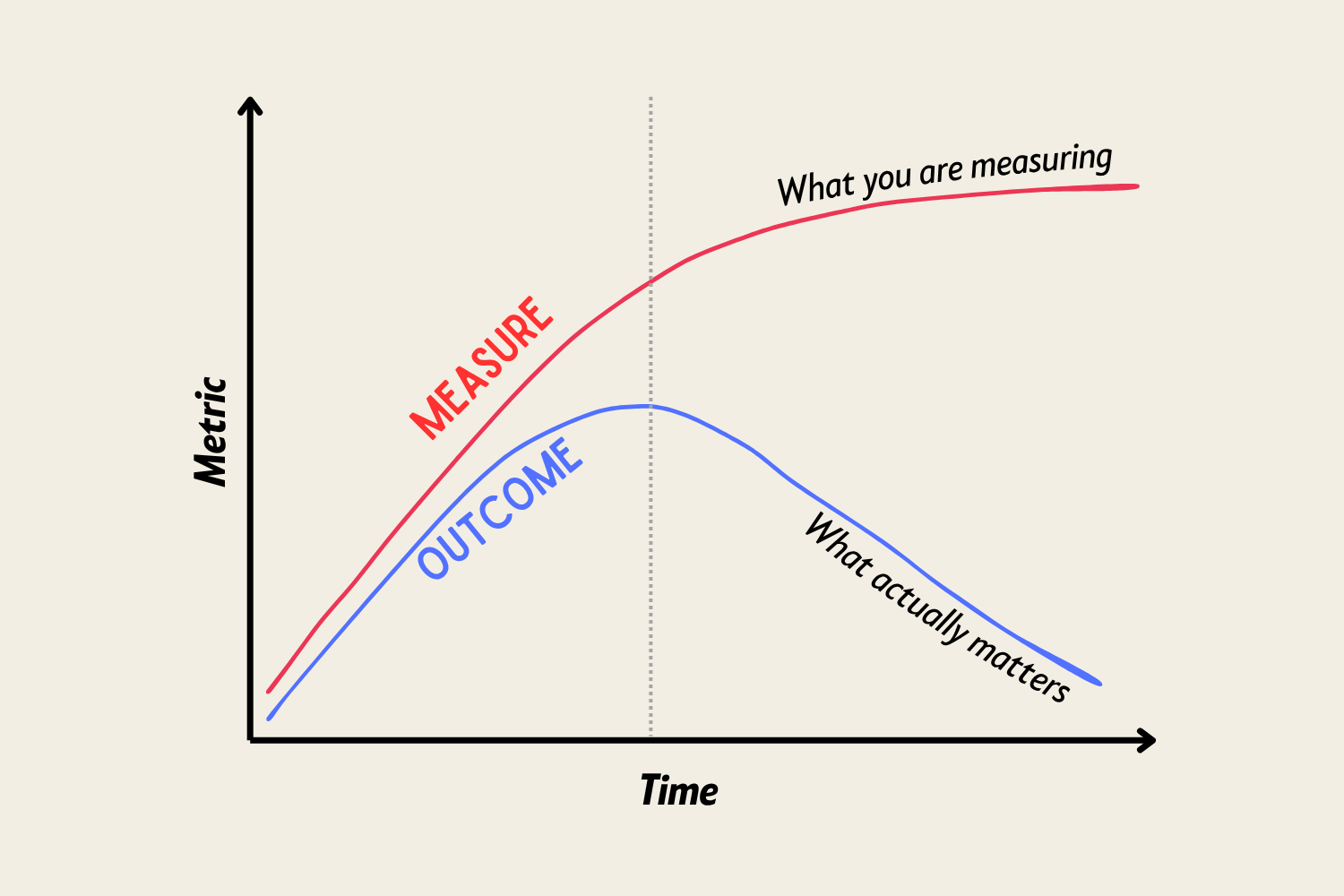
Goodhart's Law
"When a measure becomes a target, it stops being a good measure" — metrics with consequences get gamed.

OKR Model
Objectives and Key Results: pair an ambitious objective with measurable key results and the initiatives that move them.

SMART Goals
A five-letter test for turning an intention into an executable goal: Specific, Measurable, Achievable, Relevant, Time-bound — easy to get wrong.
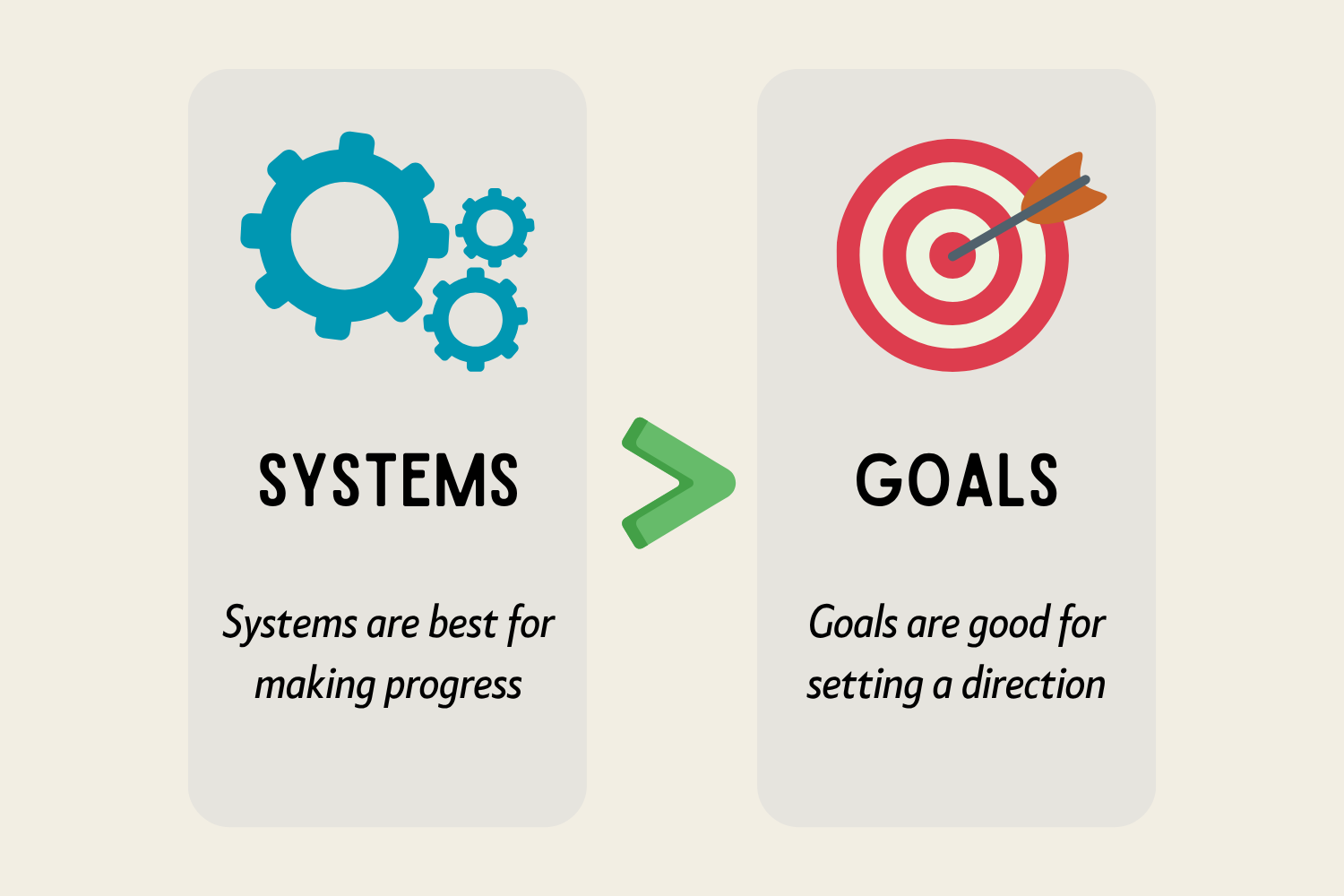
Systems > Goals
Results come from repeatable habits, not targets — turn every goal into a system of leading behaviors you design and track.