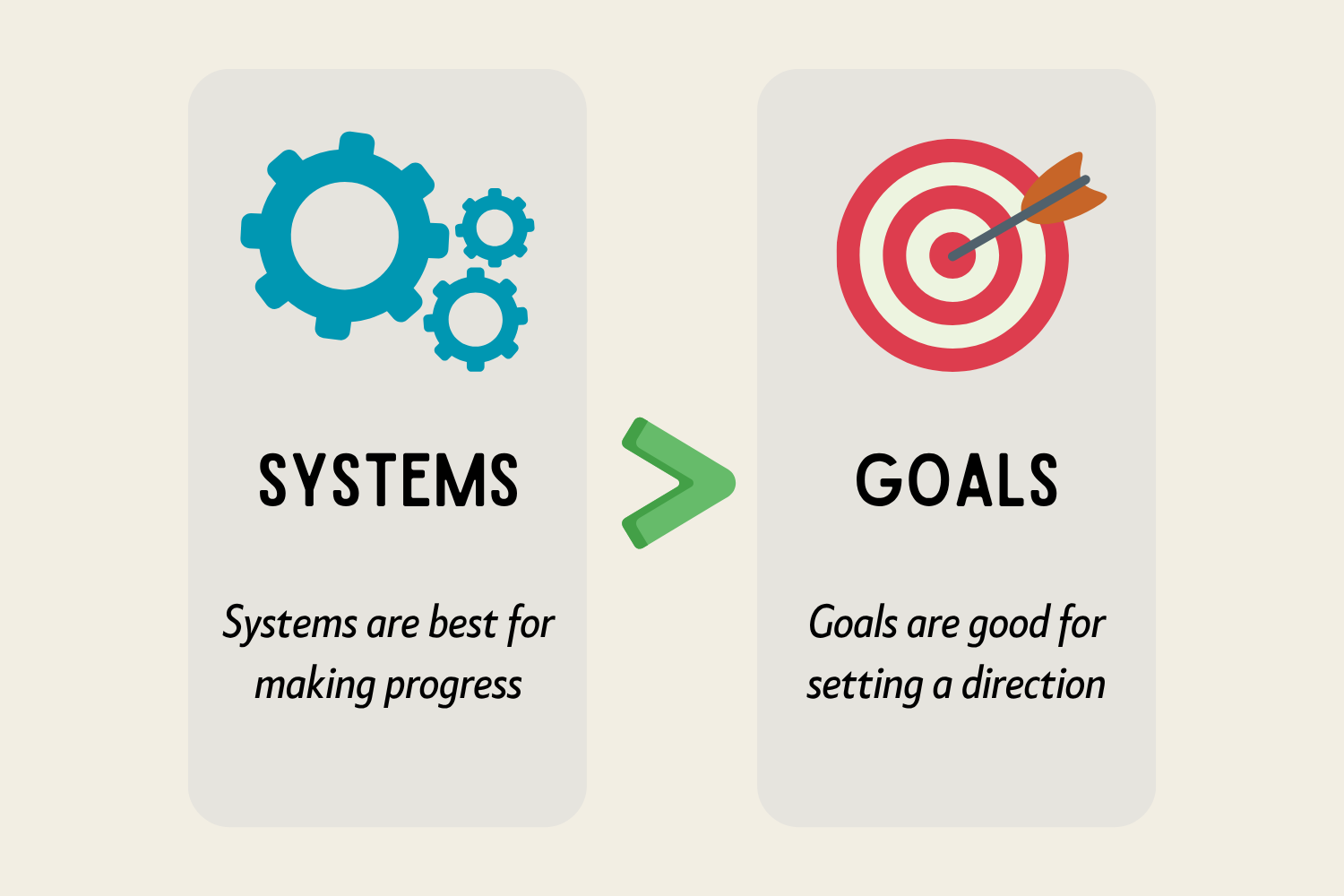
Systems > Goals
Results come from repeatable habits, not targets — turn every goal into a system of leading behaviors you design and track.
 Find this on the mind-map
Introduction
This one comes from Gaurav Jain at The Good Boss, building on a line from James Clear's Atomic Habits that's worth pinning above your desk: "You do not rise to the level of your goals. You fall to the level of your systems."
How It Works
Here's the difference, and it's simple:
- A goal is the outcome you want.
- A system is the process you follow to get there.
Running a marathon is a goal. Training five days a week on a plan is the system. Improving customer satisfaction is a goal. Closing every support ticket within 48 hours is the system.
This isn't an anti-goal framework — goals still give you direction. But they have three real problems that systems don't.
| Goals | Systems |
|---|---|
| Temporary. Once hit, progress stops and people backslide. | Ongoing. The routine keeps running past any single milestone, so progress keeps building up. |
| Often vague. "Be a better manager" or "have fewer bugs" gives you nothing to act on right now. | Concrete. Far less fuzziness, far more clarity about what to actually do today. |
| Motivation-dependent. Good days bring progress, bad days bring slippage. | Willpower-light. The behaviors feel doable rather than overwhelming, so they survive the bad weeks. |
| Outcome-focused. Names the destination, not the vehicle. | Behavior-focused. White teeth are the outcome; brushing daily is the system that produces them. |
It works by reverse-engineering the goal: take the outcome you want, figure out the steady actions that would make it almost certain to happen, then make those actions easy to do and hard to skip.
Why It Matters for Leaders
The most common failure in leadership is mistaking goal-setting for the actual work. You set a revenue number, commit to a launch date, turn an engagement target into an OKR — and then everything reverts to business as usual. Inboxes fill up, meetings eat the day, priorities shift, and your team feels the pressure of the outcome with no repeatable way to move toward it. What you're left with at quarter-end is a well-written goal and not much progress.
Communicating the vision clearly isn't enough on its own. A team that understands the target but has no defined weekly behavior to move it will produce stress, confusion, and late nights instead of results.
Here's how that shift plays out on problems you already have. Where the old habit sets a goal, the system habit names a ritual.
- Performance management. Instead of "give more feedback," build the habit of one piece of feedback in every one-to-one, track it in a shared doc, review it monthly. Feedback stops being an event and becomes continuous.
- Product delivery. Instead of "launch by June," run weekly demos to leadership, daily standups that surface blockers, and a retro every sprint. Momentum becomes the default and surprises get rarer.
- Hiring. Instead of "hire three engineers by Q3," put daily sourcing blocks on the calendar, hold a weekly recruiter sync, run a candidate-experience checklist every round. That's a repeatable hiring machine instead of a scramble.
- Time management. Instead of "spend more time on strategic work," block one hour of deep work every morning at 10, run a weekly review every Friday at 3, and audit your meetings monthly. Focus becomes the norm instead of the exception.
The leaders who build lasting impact aren't the ones announcing stretch goals in quarterly meetings. They're the ones who build habits that drive results, then keep them running — leaning on systems instead of motivation.
What to do next
Test your knowledge of Systems > Goals
Practice Systems > Goals
Apply Systems > Goals to a real situation
Skills related to Systems > Goals

Goal Setting
Turning intentions into clear, measurable goals that give a team direction and a real sense of progress, and keeping those goals honest as conditions change.

Productivity
Directing your time and energy at the work that actually matters, instead of letting whatever lands first run your day.

Systems Analysis
Tracing how a decision in one part of the organization moves through the rest of it, instead of treating your team as its own island.
Frameworks related to Systems > Goals

Conway's Law
Organizations build systems that mirror their own communication structure — your product's shape follows your org chart's shape.
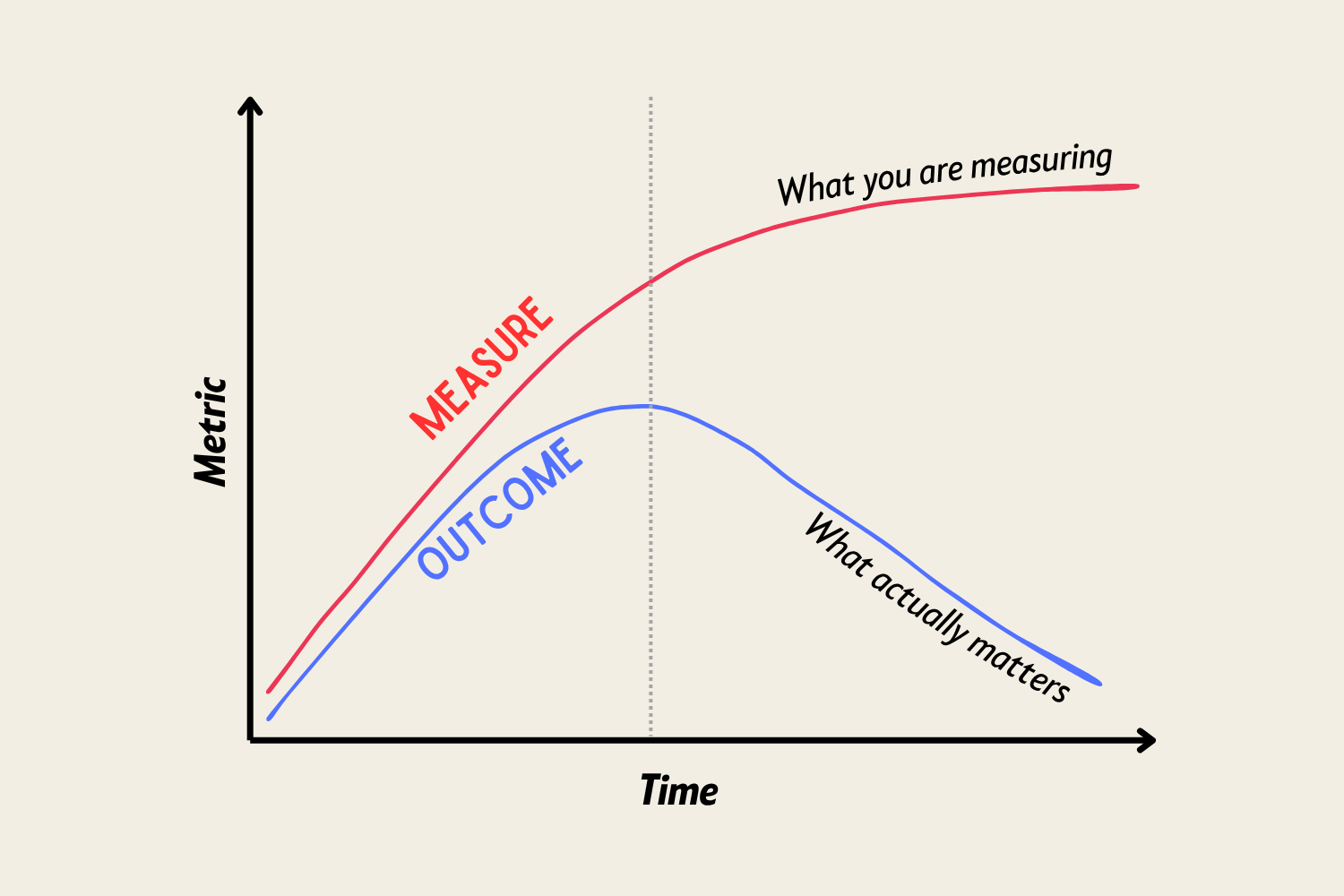
Goodhart's Law
"When a measure becomes a target, it stops being a good measure" — metrics with consequences get gamed.

Mind Boxing
A six-box grid crossing People, Process, Product against Strategy and Tactics — deciding where your leadership time actually goes.

OKR Model
Objectives and Key Results: pair an ambitious objective with measurable key results and the initiatives that move them.
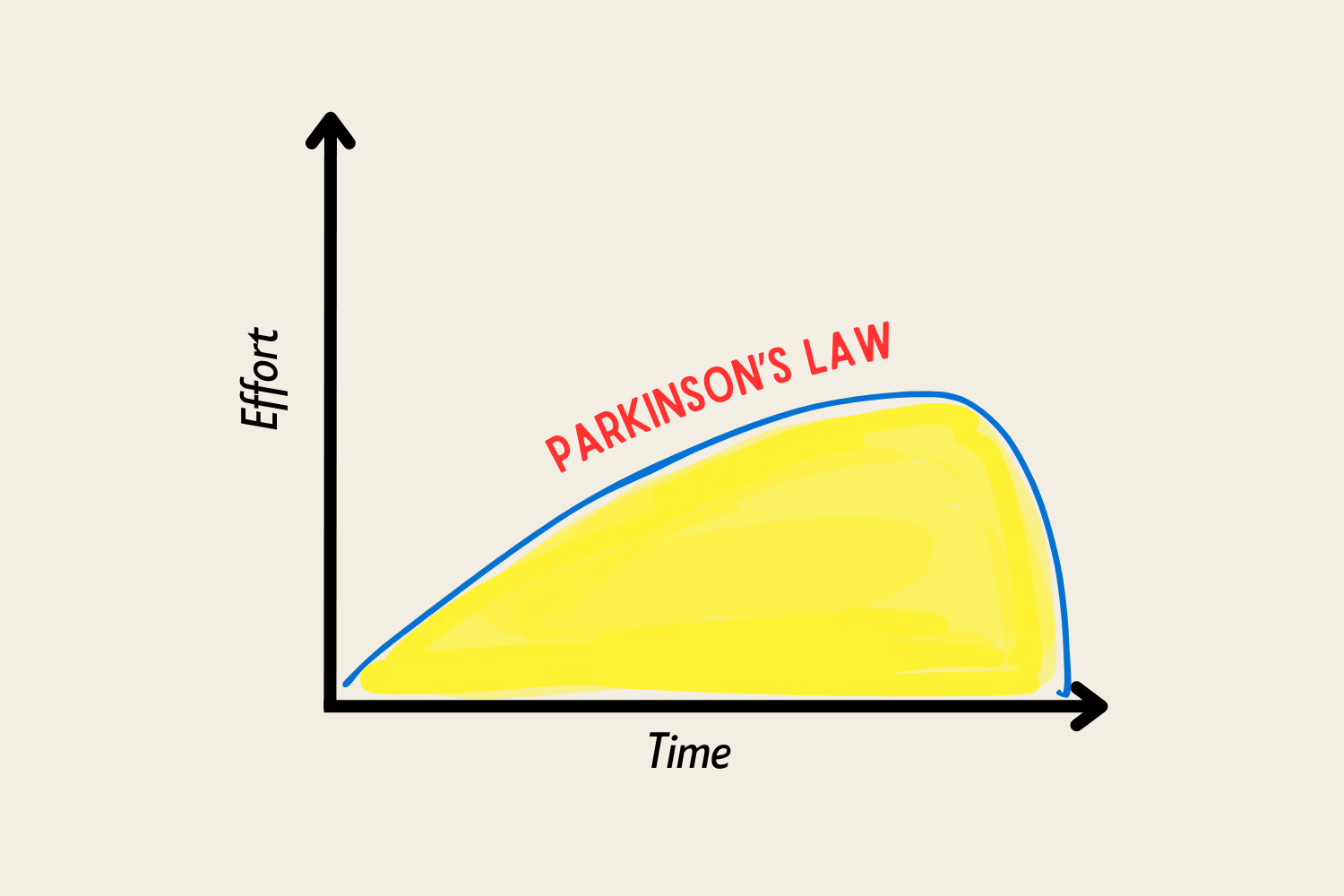
Parkinson's Law
Work expands to fill the time you give it — deadlines shape effort more than the work itself, so tighten deadlines.

SMART Goals
A five-letter test for turning an intention into an executable goal: Specific, Measurable, Achievable, Relevant, Time-bound — easy to get wrong.
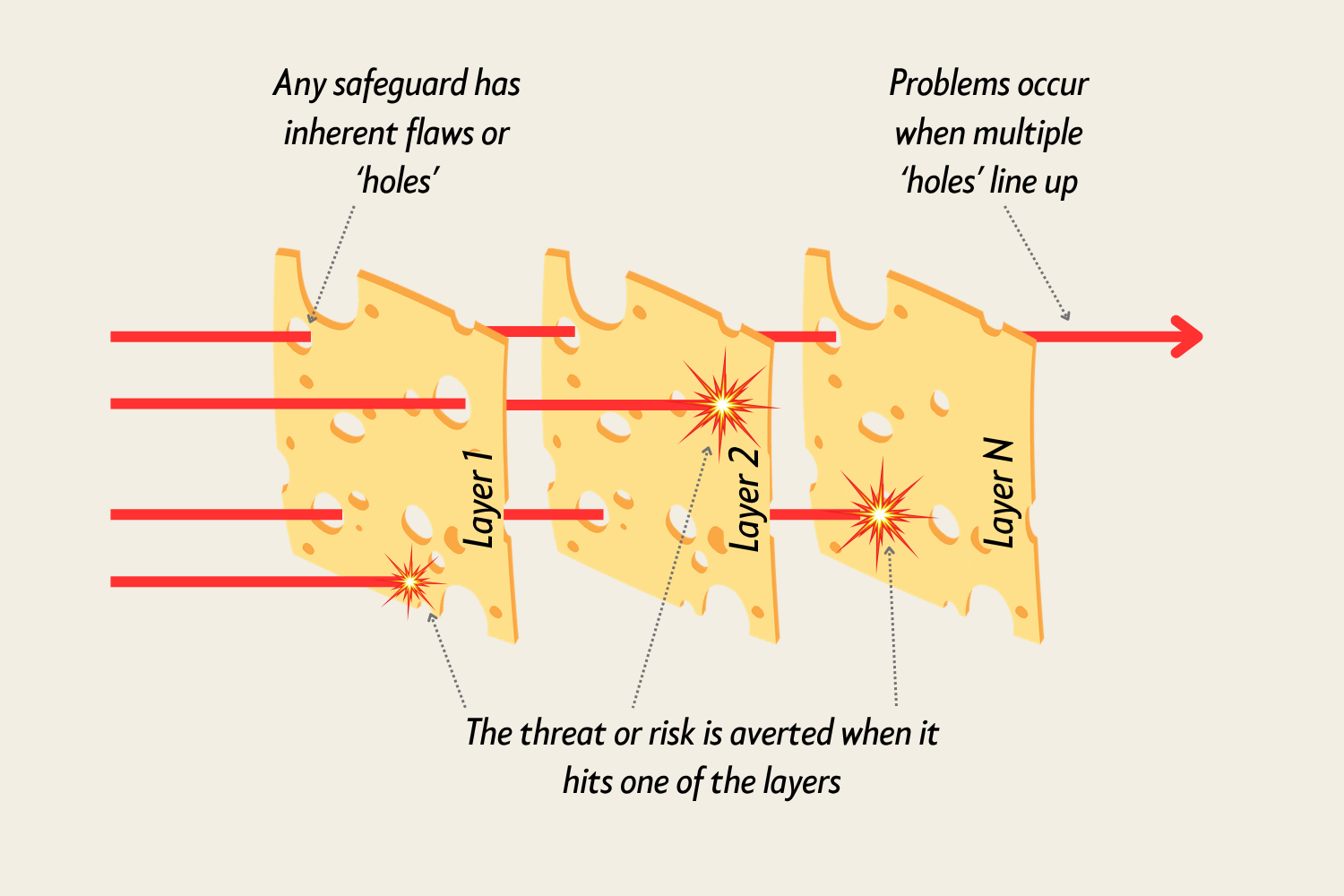
Swiss Cheese Model
Every layer of defense has holes — failure gets through only when several holes line up — fix is redundancy, not perfection.

The 3 Pillars of Smart Work
Smart work isn't doing less — it's efficiency, creativity, and discipline together, not permission to coast on "work smart, not hard."

The Iceberg Model
Underneath an event sits a pattern, a structure, then the beliefs that built it — fix the wrong layer.
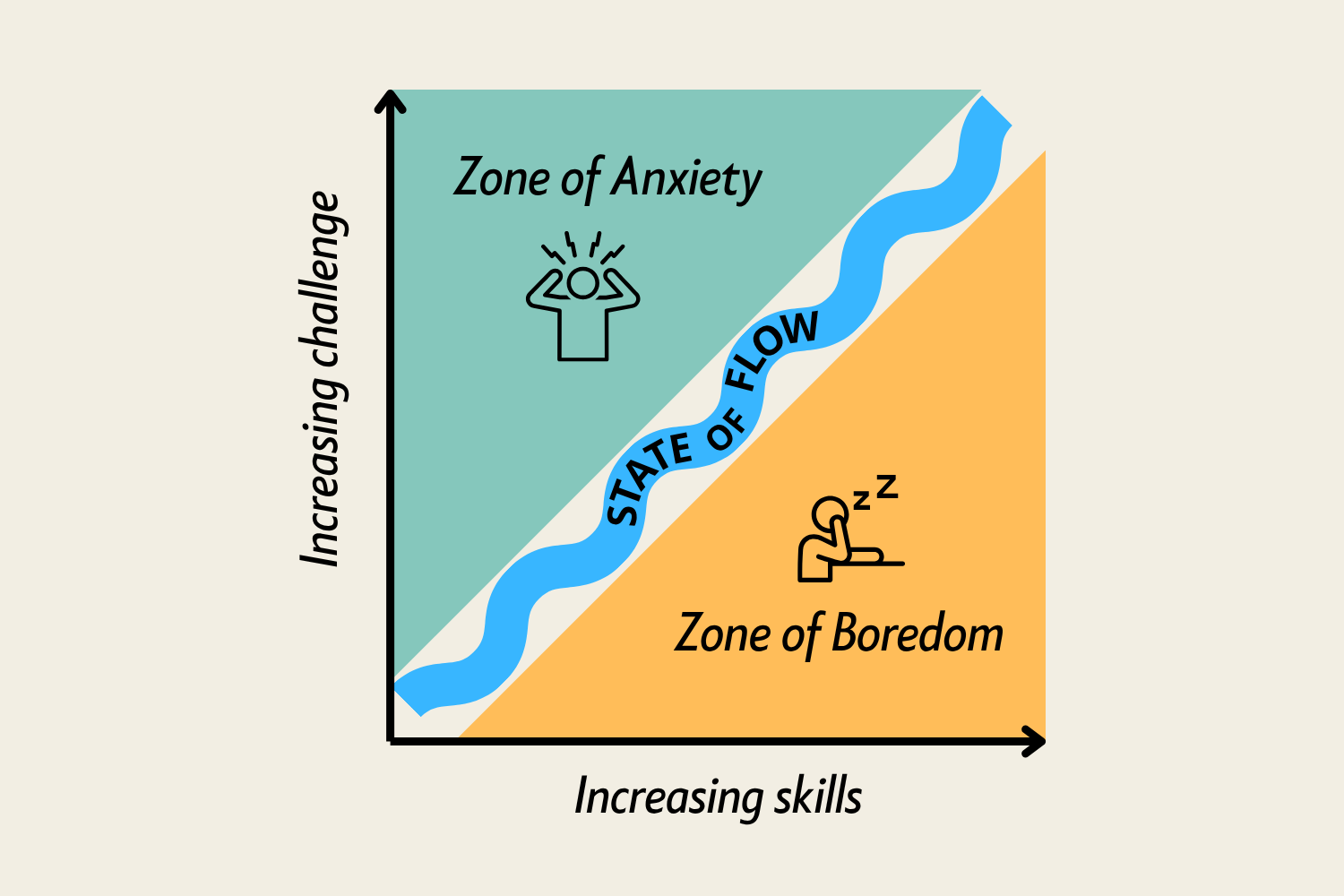
The State of Flow
The zone between anxiety and boredom, where challenge meets skill — your job is moving each person, with a different push.
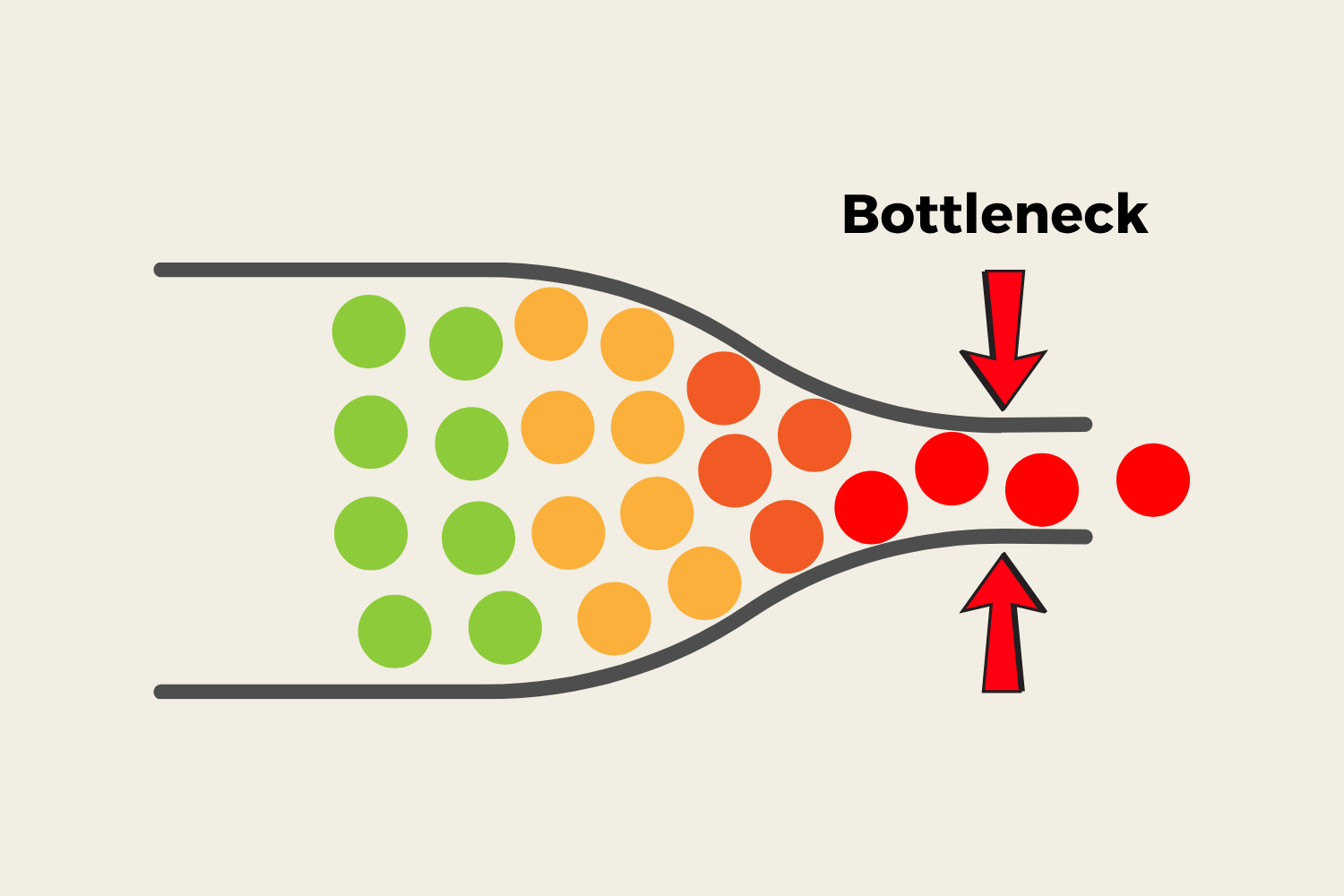
The Theory of Constraints
Every system has a bottleneck that caps everything it can produce — find that one constraint and put your energy there.
Books related to Systems > Goals

Atomic Habits
James Clear's case that tiny, consistent changes compound into dramatic results, and that the system you build matters more than the goal you set, no matter how motivated you feel on day one.

Deep Work
Cal Newport's case that the ability to focus without distraction on a hard problem is becoming rare and valuable at the exact moment most of the modern workday (email, meetings, constant notifications) is organized to make it nearly impossible.

Focus
Daniel Goleman's case that attention, not raw intelligence or emotional intelligence alone, is the overlooked resource behind effective leadership, and that most leaders are depleting it faster than they realize.

Measure What Matters
John Doerr's field guide to OKRs, the goal-setting system he carried from Andy Grove's Intel to a young Google, built on the argument that most teams fail not from lack of effort, but from being clear about activity and vague about outcomes.

The 4-Hour Workweek
Timothy Ferriss's provocation that most of what fills a workday isn't actually producing most of the value. A useful, if deliberately extreme, lens for any manager who's never actually audited where their hours go.

The Power of Habit
Charles Duhigg's deep dive into why habits form and how they change, and a practical mechanism for any manager who's tired of relying on willpower to fix behavior that structure should be fixing instead.