The Theory of Constraints
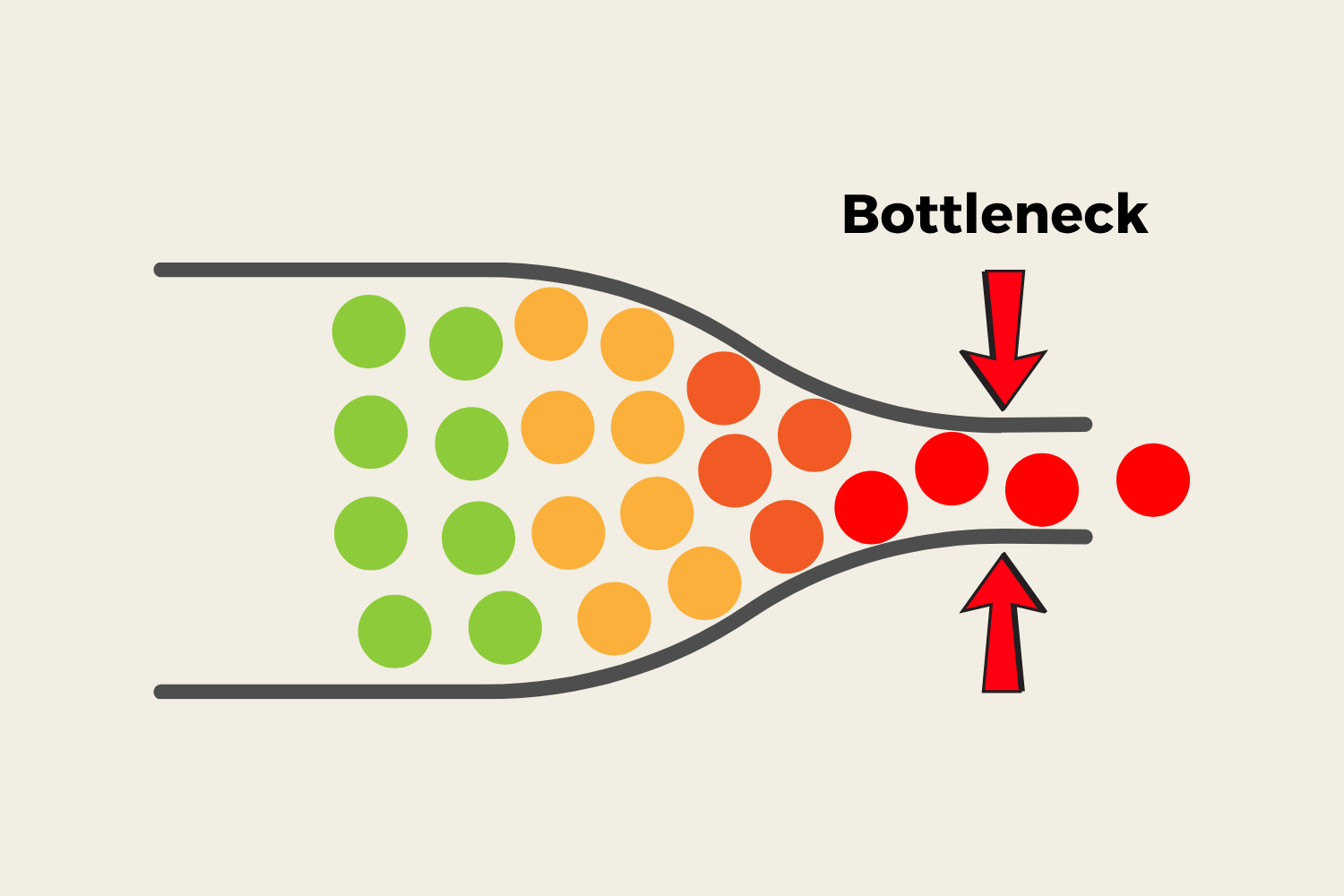
Every system has a bottleneck that caps everything it can produce — find that one constraint and put your energy there.
 Find this on the mind-map
Introduction
Eliyahu M. Goldratt introduced this in 1984 with The Goal, a business novel written as a fable set on a struggling factory floor — not exactly the format you'd expect from a management theory, but it's why the idea spread as far as it did.
How It Works
The central claim: every system has at least one constraint — a limiting factor that keeps it from hitting its potential — and the whole system is only as strong as that weakest link. Improve anything other than the constraint and your total output doesn't move. Think about aircraft safety: takeoff and landing are the most dangerous phases of a flight, which is exactly why they get disproportionate engineering attention.
Constraints aren't always physical, either. A machine with limited capacity is one. So is a policy, an approval step, a single person who's the only one who can sign off, a skill gap, or plain cultural resistance to change.
The framework runs on five focusing steps.
| Step | Action | What it means |
|---|---|---|
| 1 | Identify the constraint | Find the bottleneck limiting system performance — physical or intangible. |
| 2 | Exploit the constraint | Get more out of it without spending money: reprioritize, reschedule, protect its time. |
| 3 | Subordinate everything to it | Align every other process and resource to keep the constraint running at full capacity. |
| 4 | Elevate the constraint | If it still limits performance, invest: hire, buy tooling, change the policy. |
| 5 | Repeat | Once resolved, a new constraint emerges. The loop doesn't end. |
Step 3 is the one almost every team skips, and it's the one doing most of the work. Subordinating means everything upstream and downstream deliberately slows to the constraint's pace — which is how you kill the overproduction, the queues, and the busywork that looks like productivity but adds nothing to actual output.
Why It Matters for Leaders
Your default instinct when a team falls behind is to throw more people at it and ask for more effort. Both fail the moment the real problem is a bottleneck, because effort spent anywhere but the constraint just builds a bigger queue in front of it. One team spent months adding headcount and pushing harder before finally realizing an overburdened approval step — the least visible part of the whole workflow — was capping everything downstream of it.
The stakes here are real money. Harvard Business Review research puts the cost of inefficiencies from poor workflow management at 20 to 30 percent of annual revenue.
This holds up well outside manufacturing, too. A tech startup where developers finished on time but releases still crawled found the real constraint was one senior engineer handling most code reviews; prioritizing his queue, training juniors to take routine reviews, and adding automated testing later cut time-to-deployment by 40 percent. A SaaS company traced its long sales cycles to contract approvals, standardized templates for common cases, added e-signature, and cut time-to-close in half. A hospital ER traced its overcrowding to diagnostic imaging capacity and cut patient wait times by 30 percent.
The real value for you as a leader is permission to say no. This framework isn't about fixing everything — it's about fixing the one thing that matters, and it gives you a defensible reason to leave every other visible inefficiency alone this quarter.
It also changes what "done" looks like. Solving one constraint always exposes the next one, so if you're running this well, you're not chasing a finish line — you're just tracking the current weakest link. It's the same continuous-improvement logic underneath Kaizen.
What to do next
Test your knowledge of The Theory of Constraints
Practice The Theory of Constraints
Apply The Theory of Constraints to a real situation
Skills related to The Theory of Constraints

Process Improvement
Finding where the work slows down, repeats itself, or breaks, and clearing that friction so effort turns into output instead of overhead.

Systems Analysis
Tracing how a decision in one part of the organization moves through the rest of it, instead of treating your team as its own island.
Frameworks related to The Theory of Constraints

Conway's Law
Organizations build systems that mirror their own communication structure — your product's shape follows your org chart's shape.

Kaizen
A continuous improvement philosophy built on small, repeated changes to the system your team works in — not big transformation programs.

Six Sigma
A data-driven way to remove root causes of defects, via the DMAIC cycle: define, measure, analyze, improve, control.
Swiss Cheese Model
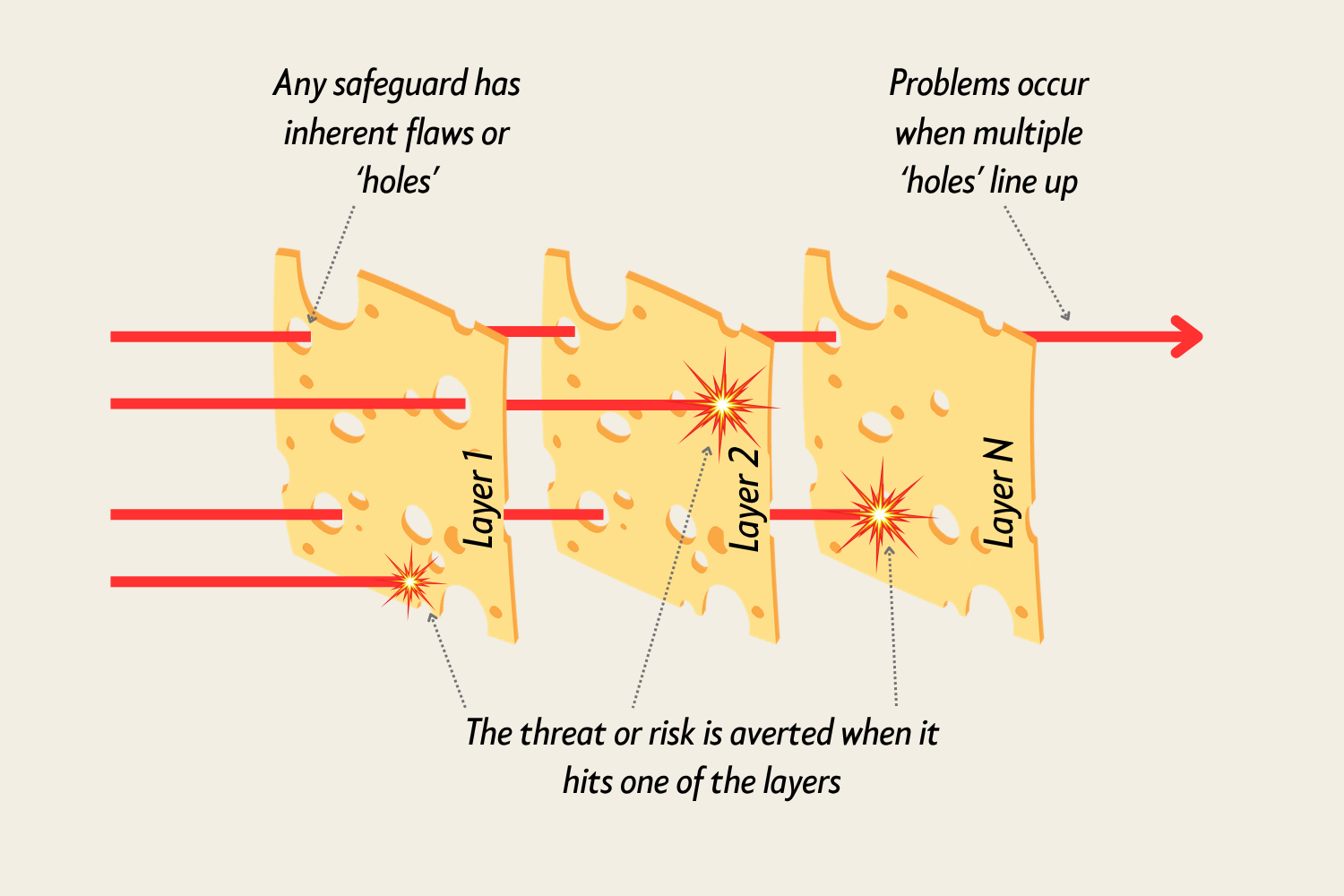
Every layer of defense has holes — failure gets through only when several holes line up — fix is redundancy, not perfection.
Systems > Goals
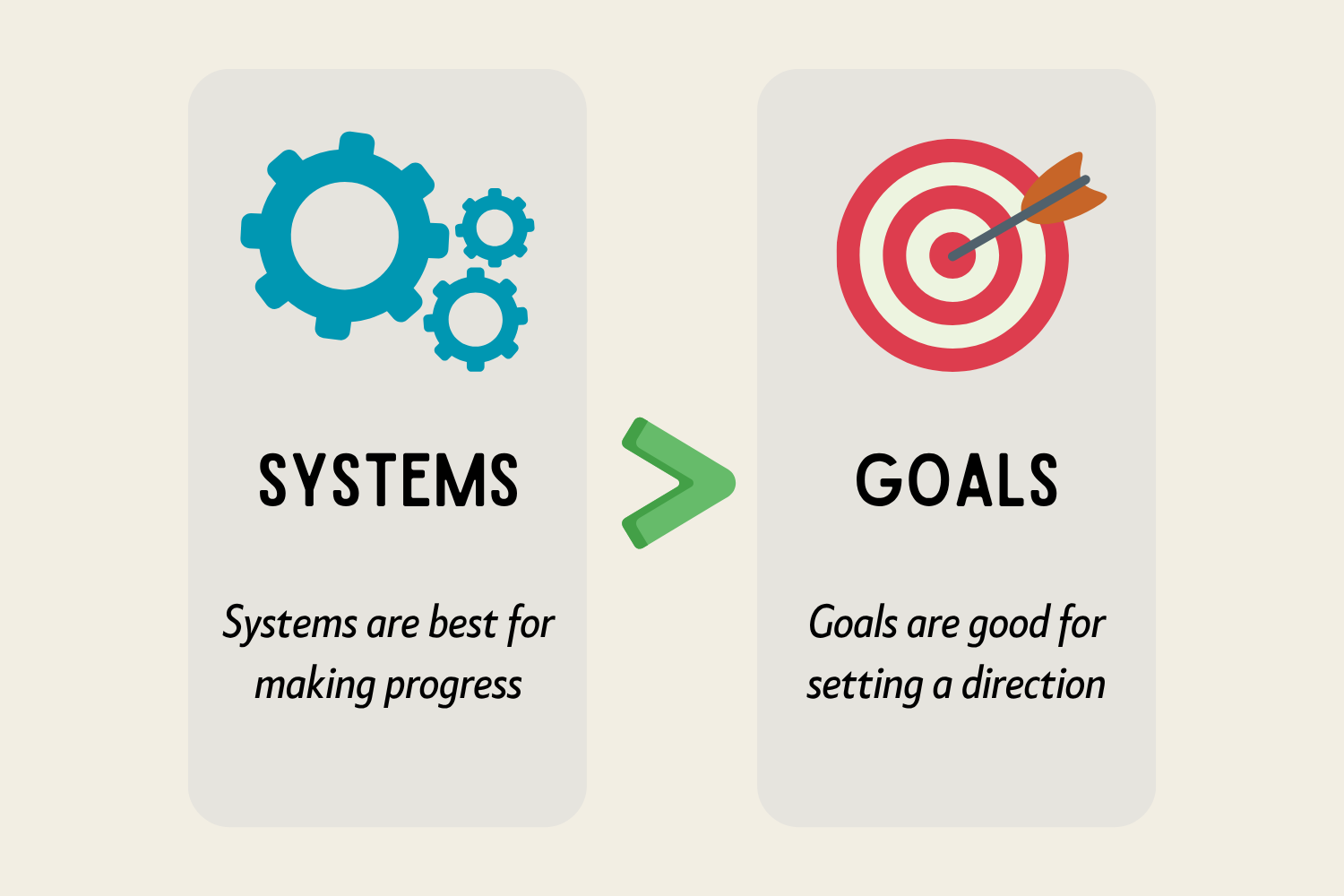
Results come from repeatable habits, not targets — turn every goal into a system of leading behaviors you design and track.

The Iceberg Model
Underneath an event sits a pattern, a structure, then the beliefs that built it — fix the wrong layer.
Books that reference this framework
Books related to The Theory of Constraints

The Checklist Manifesto
Atul Gawande's case, built from surgery and aviation, that expertise alone no longer prevents avoidable failure in complex work, and that a short, well-designed checklist catches exactly what skill and memory reliably miss under pressure.

The Goal
Eliyahu Goldratt's business novel about a plant manager racing to save his factory. Hidden inside the story is the Theory of Constraints: every system has exactly one bottleneck at a time, and polishing everything that isn't it is effort dressed up as progress.