Process Improvement
Finding where the work slows down, repeats itself, or breaks, and clearing that friction so effort turns into output instead of overhead.
 Find this on the mind-map
Introduction
Every team runs on processes, and almost none of those processes were actually designed. They built up over time: a meeting added after one incident, an approval step added after one mistake, a handoff that made sense under a structure that doesn't even exist anymore.
A bad process wastes time, drains motivation, and makes simple work feel exhausting, and the too-many-meetings, slow-approvals, redundant-tasks complaints you hear constantly are just the visible symptoms of a system nobody has questioned in years.
Building this skill means treating the workflow itself as the thing you're examining, not the people moving through it. Map out how the work actually travels from start to finish. Find the step where it piles up and queues. Change that step specifically, asking yourself "how can we make this easier, faster, and better?" and let the answer be fewer steps, not more bureaucracy layered on top. Fix the single biggest bottleneck first, then move to the next one.
Why It Matters for Leaders
The payoff here is large enough that doing nothing is itself a choice with a cost. A McKinsey study found that companies which continuously improve their processes increase efficiency by 25% and cut costs by 20%. Plenty of leaders still hold off on changing a process because "that's how we've always done it" and that excuse gets more expensive every year it survives.
Without this skill, the same complaints come up in every retrospective and nothing really changes between them. People build their own workarounds, so the real process that actually runs your team lives nowhere on paper, and new hires take months to become productive because of it. Improvement effort, when it happens at all, gets spread evenly across the whole system and produces almost no measurable gain, because most of it lands on steps that were never actually the bottleneck.
When you've built this skill, capacity shows up without you having to hire for it. Work in progress falls, cycle time shortens, and you can explain exactly why each remaining step exists and what would break without it. Improvement stops being a project that runs once a year and becomes a habit built into the normal rhythm of the work.
What to do next
Master Process Improvement by taking the mini-course
Frameworks related to Process Improvement

Kaizen
A continuous improvement philosophy built on small, repeated changes to the system your team works in — not big transformation programs.

Six Sigma
A data-driven way to remove root causes of defects, via the DMAIC cycle: define, measure, analyze, improve, control.
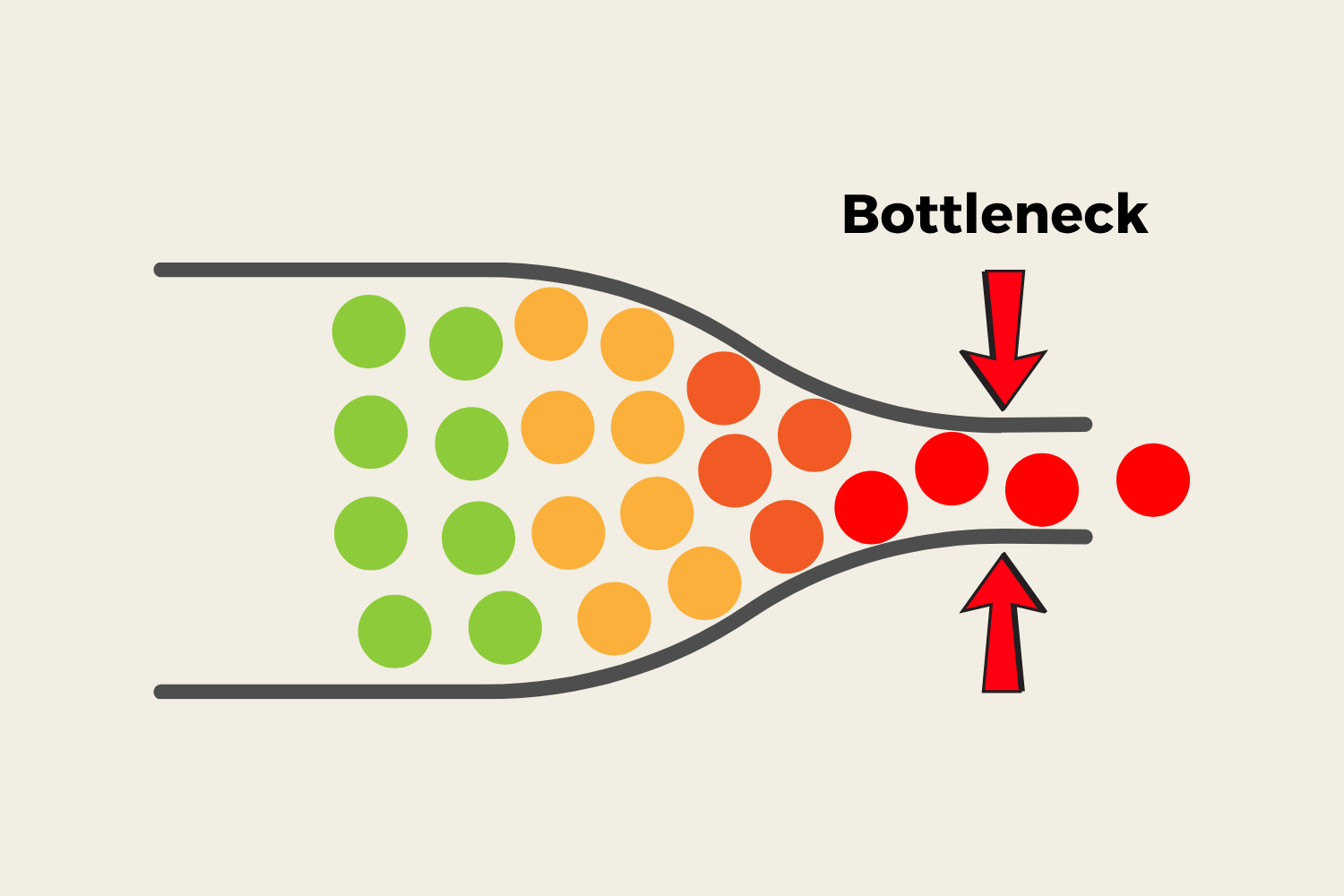
The Theory of Constraints
Every system has a bottleneck that caps everything it can produce — find that one constraint and put your energy there.
Books related to Process Improvement

The Checklist Manifesto
Atul Gawande's case, built from surgery and aviation, that expertise alone no longer prevents avoidable failure in complex work, and that a short, well-designed checklist catches exactly what skill and memory reliably miss under pressure.

The Goal
Eliyahu Goldratt's business novel about a plant manager racing to save his factory. Hidden inside the story is the Theory of Constraints: every system has exactly one bottleneck at a time, and polishing everything that isn't it is effort dressed up as progress.
Skills related to Process Improvement

Business Analysis
Gathering real evidence about how the business is performing, reading the trends inside it, and keeping your strategy anchored to reality instead of assumption.

Business Strategy
Making the focused calls about where to compete, what to prioritize, and what to say no to, because a strategy is defined as much by what it rules out as by what it commits to.

Change Management
Carrying your team through a transition, from the moment you announce a change to the point where the new way of working has just become the ordinary one.

Driving Execution
Turning an agreed plan into delivered results through the focus, systems, and accountability that keep a team moving from decision to outcome.

Risk Management
Naming what could go wrong before it does, sizing each threat by likelihood and impact, and acting on the ones that matter.

Visioning
Defining and communicating a compelling direction, and connecting your team's daily work to that.