Six Sigma
A data-driven way to remove root causes of defects, via the DMAIC cycle: define, measure, analyze, improve, control.
 Find this on the mind-map
Introduction
An engineer named Bill Smith developed this at Motorola in the mid-1980s, and Jack Welch made it famous a decade later by pushing it hard across General Electric. The goal was blunt: reduce errors and inefficiency by using data to improve quality and consistency, especially on problems that keep recurring in a workflow rather than showing up once.
The name itself is a statistical target. "Sigma" is the standard deviation of a process, and a six-sigma process is one where the nearest specification limit sits six standard deviations from the mean — which works out to no more than 3.4 defects per million opportunities. The insight underneath all of it: quality problems come from variation, not carelessness. So you improve quality by measuring the variation and removing what causes it.
How It Works
The core improvement cycle is DMAIC, and you run it against an existing process:
| Stage | Purpose |
|---|---|
| Define | State the problem, the customer requirement, the scope, and the goal |
| Measure | Establish a baseline: how the process performs today, measured, not estimated |
| Analyze | Find the root causes of defects and variation in the data |
| Improve | Design, test, and implement changes that address those causes |
| Control | Put monitoring and standards in place so the gain doesn't decay |
A companion cycle, DMADV (Define, Measure, Analyze, Design, Verify), applies when you're building a process from scratch instead of improving one that already exists.
Six Sigma sits next to a couple of relatives, and it's worth knowing where it stops and they start. Kaizen is continuous small improvement as a daily habit; Six Sigma is a rigorous, measured project aimed at a specific defect problem. The Theory of Constraints asks where the bottleneck is; Six Sigma asks why the output varies. Lean, often bolted onto it as "Lean Six Sigma," attacks waste while Six Sigma attacks variation.
Why It Matters for Leaders
Most leaders manage quality by telling people to try harder — ask the team to be more careful, add a review step, escalate the individual who dropped the ball. That works fine on a one-off mistake and fails completely on a recurring one, because a defect that keeps showing up is a property of the process, not of whoever happened to be holding it that day.
Six Sigma forces measurement before opinion. The Measure stage makes you establish a baseline, which settles the argument every improvement effort eventually has: did things actually get better, or does the person who sponsored the change just believe they did?
It's also a discipline of scope. The Define stage makes you name one problem, its impact on the customer, and a target — which stops an improvement effort from ballooning into a vague program that touches everything and finishes nothing.
The Control stage is the one that matters most and gets cut most often. Skip it, and improvements quietly decay: the workaround creeps back, the checklist stops getting used, the metric drifts back to where it started within a quarter or two.
Be honest about the cost, too. Full Six Sigma — belt certifications, statistical tooling, formal project governance — is heavy, and it earns its keep in high-volume processes with a low tolerance for error: manufacturing, logistics, transaction processing, service delivery at scale. Running a small team with a messy workflow? You probably don't need all of that machinery, but the DMAIC logic itself is worth stealing anyway.
What to do next
Test your knowledge of Six Sigma
Apply Six Sigma to a real situation
Skills related to Six Sigma

Frameworks related to Six Sigma

Kaizen
A continuous improvement philosophy built on small, repeated changes to the system your team works in — not big transformation programs.
The Theory of Constraints
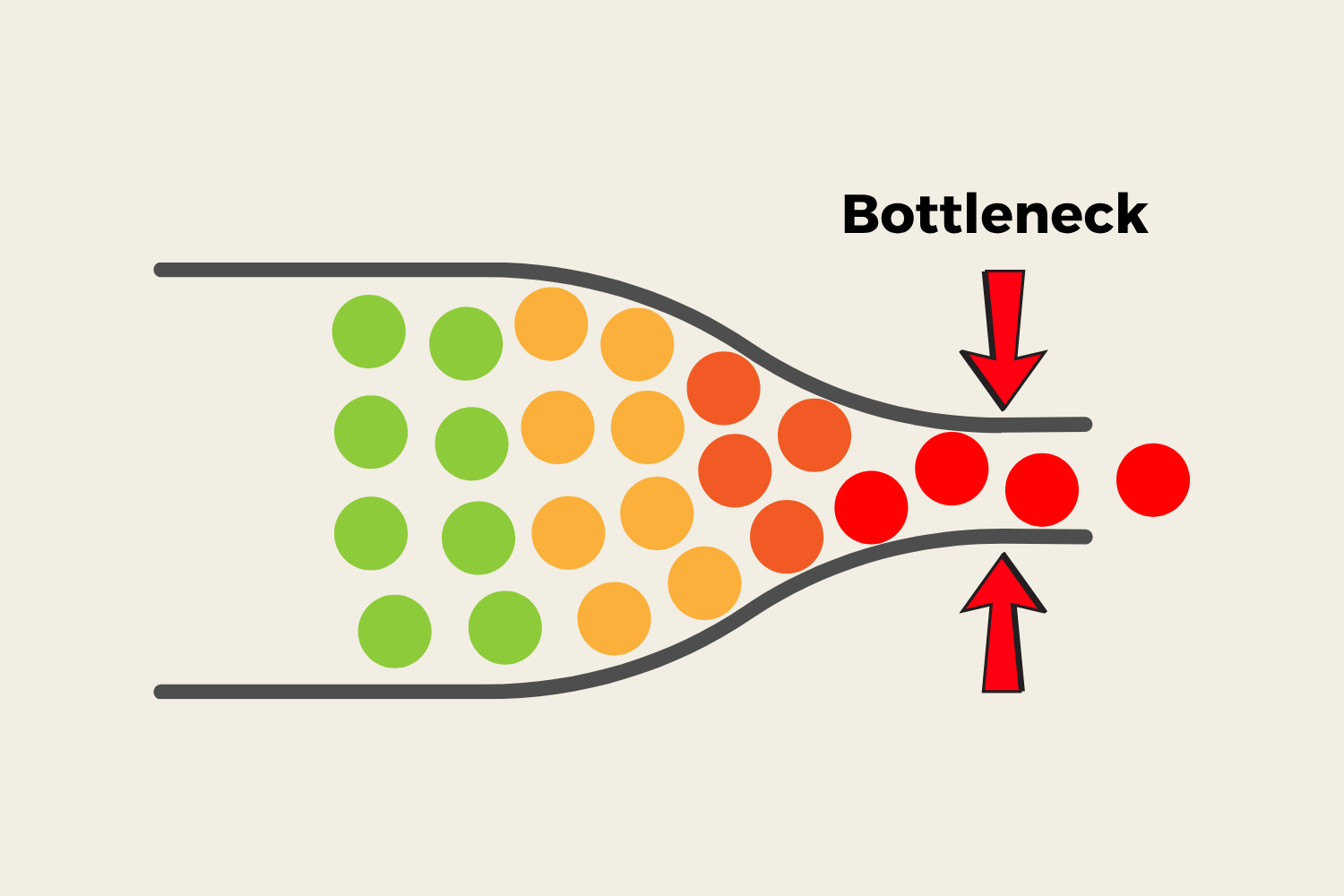
Every system has a bottleneck that caps everything it can produce — find that one constraint and put your energy there.
Books related to Six Sigma

The Checklist Manifesto
Atul Gawande's case, built from surgery and aviation, that expertise alone no longer prevents avoidable failure in complex work, and that a short, well-designed checklist catches exactly what skill and memory reliably miss under pressure.

The Goal
Eliyahu Goldratt's business novel about a plant manager racing to save his factory. Hidden inside the story is the Theory of Constraints: every system has exactly one bottleneck at a time, and polishing everything that isn't it is effort dressed up as progress.