The Checklist Manifesto
Atul Gawande's case, built from surgery and aviation, that expertise alone no longer prevents avoidable failure in complex work, and that a short, well-designed checklist catches exactly what skill and memory reliably miss under pressure.
 Find this on the mind-map
Introduction
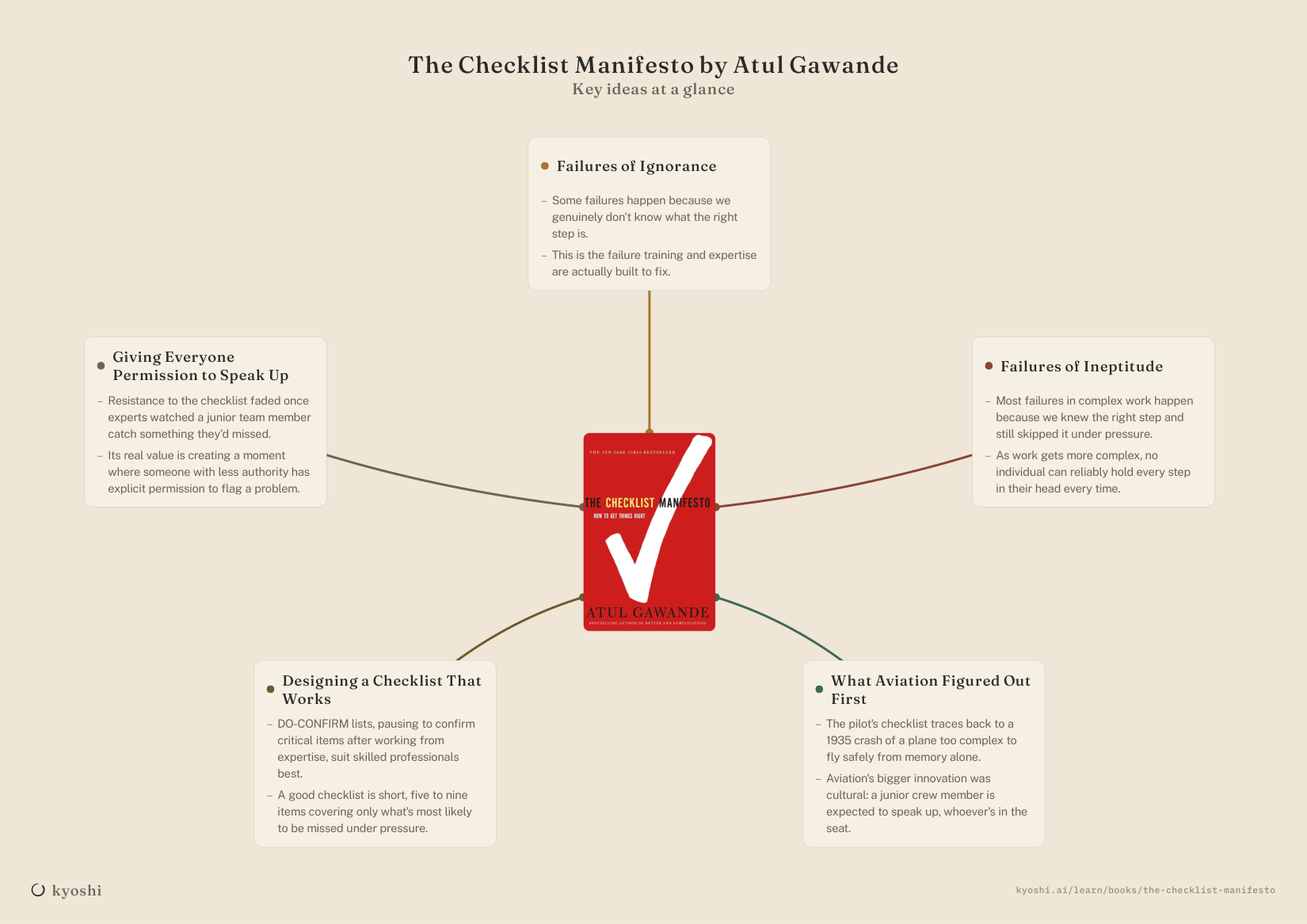
Atul Gawande's starting observation: the problem in most complex fields today isn't ignorance. We usually know what to do. It's ineptitude: failing to apply what we already know correctly, consistently, under pressure. His answer is almost embarrassingly humble for a surgeon: a short, well-designed checklist, borrowed shamelessly from aviation, catches the kind of failure that experience and skill alone reliably miss.
Two Kinds of Failure
Gawande separates failures of ignorance (we didn't know what to do) from failures of ineptitude (we knew, and still didn't do it right: a step skipped under time pressure, an assumption nobody double-checked, a handoff where information dropped without anyone catching it). As work gets more complex, ineptitude becomes the dominant failure mode, because no individual, however skilled, can reliably hold every step of a complicated process in their head every single time.
What Aviation Figured Out First
The pilot's checklist traces back to the 1935 crash of Boeing's Model 299 prototype, an aircraft too complex for even its most experienced test pilot to fly safely from memory alone, which led not to simpler planes but to a simple written checklist that made the complexity manageable. Aviation's bigger innovation was cultural as much as procedural: checklists paired with a culture where a junior crew member is expected to speak up if something looks wrong, no matter who's in the captain's seat.
Designing a Checklist That Works
Not every checklist works. Gawande distinguishes READ-DO lists (read a step, do it, step by step) from DO-CONFIRM lists (do the work from memory or expertise, then pause at a defined point to confirm the critical items weren't missed), and argues the second is usually better suited to skilled professionals who'd find a rigid step-by-step list insulting or disruptive. A good checklist is short: five to nine items, covering only the "killer items" most likely to be missed under pressure, not an exhaustive restatement of everything a professional should already know.
Giving Everyone Permission to Speak Up
Many senior surgeons resisted the surgical safety checklist at first, describing it as a challenge to their own judgment. What changed minds in practice usually wasn't the checklist's content so much as watching a nurse or junior team member use the pause point to catch something an experienced surgeon's own confidence had walked right past. The checklist's real value often isn't reminding the expert of something they forgot. It's creating a structured moment where someone with less authority in the room has explicit permission, even an obligation, to flag a problem.
Putting It Together
Complexity doesn't get solved by hiring more expert people or trying harder to remember everything. It gets solved by building short, deliberately designed checkpoints into the process, and by making sure the culture around those checkpoints actually invites the quietest person in the room to speak up when something's wrong. The checklist is the easy part; building a team that will actually use it under pressure is the harder one.
Why It Matters for Leaders
The leadership lesson underneath this book has nothing to do with checklists specifically, it's about which kind of failure you're actually looking at. When something goes wrong on a team, the instinct is almost always to add training, hire more experienced people, or tell everyone to be more careful next time. That fixes ignorance. It does nothing for ineptitude, the much more common failure where everyone already knew the right step and it still got skipped under pressure.
The second, less obvious lesson is about who gets permission to stop the process. A checklist only works if the most junior person in the room is genuinely expected to speak up when something looks wrong, not just technically allowed to. Most teams have the permission on paper and not in practice, and the gap only shows up the one time it actually matters.
For a manager, this means building short, specific pause points into the riskiest parts of your own team's work, not long compliance documents nobody reads end to end. A five-item list that gets used every time beats a thirty-item list that gets skipped. And it means treating a new hire's hesitant "wait, should we double-check this?" as the system working exactly as intended, not as an interruption.
Picture an engineering manager, Lucas, whose team has a short pre-deploy checklist that includes "confirm rollback plan is tested." An intern on his team flags, in his first week, that nobody actually tested the rollback plan on this particular release. Two senior engineers wave it off as a formality. Lucas's whole job in that moment is to back the intern over the two senior engineers, because the one time that step gets skipped is the one time it matters, and if the intern learns that speaking up gets overruled, he won't do it again.
What to do next
Reinforce your understanding of The Checklist Manifesto
Books related to The Checklist Manifesto

Skills related to The Checklist Manifesto

Frameworks related to The Checklist Manifesto

Kaizen
A continuous improvement philosophy built on small, repeated changes to the system your team works in — not big transformation programs.

Six Sigma
A data-driven way to remove root causes of defects, via the DMAIC cycle: define, measure, analyze, improve, control.
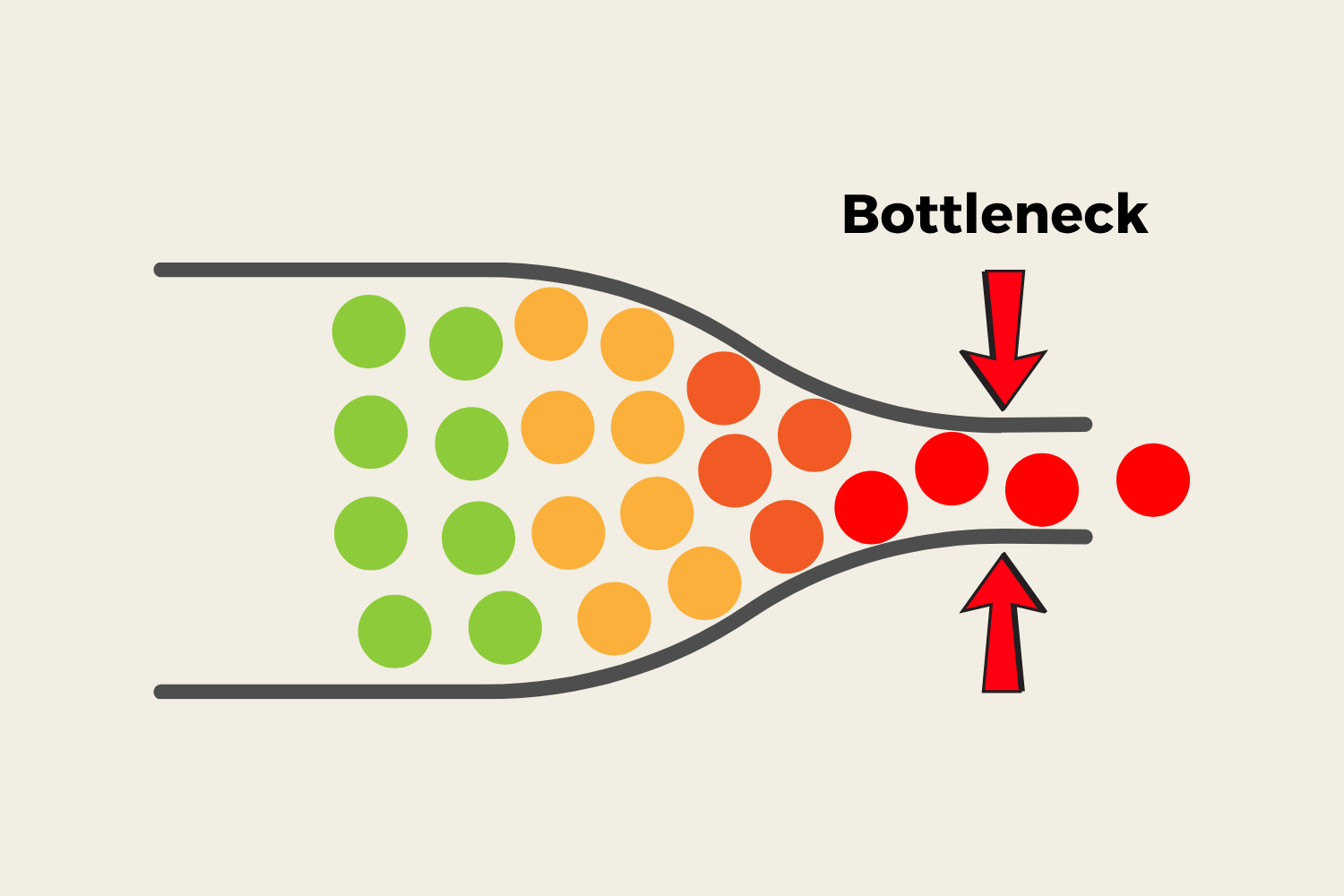
The Theory of Constraints
Every system has a bottleneck that caps everything it can produce — find that one constraint and put your energy there.