Kaizen
A continuous improvement philosophy built on small, repeated changes to the system your team works in — not big transformation programs.
 Find this on the mind-map
Introduction
The word is Japanese (改善) and translates simply as "change for better." It became widely known through the Toyota Production System, where it shaped how one of the most respected manufacturers in the world approached getting better at anything. After World War II, Toyota couldn't compete with the bigger automakers on scale or resources, so instead of chasing dramatic breakthroughs, it improved its processes a little every single day, across the entire organization. That's the whole claim underneath Kaizen: small, steady improvements add up over time and beat bold, disruptive change. The power sits in the discipline of making change continuous — not in how big any single change is.
How It Works
Kaizen also changes where you look when something breaks. Instead of asking who failed, it asks where the system failed. Unclear goals create hesitation. Poorly designed meetings waste time. Complicated approval flows slow decisions down. Each of these frictions looks small on its own, and together they quietly drain energy and lower standards over time.
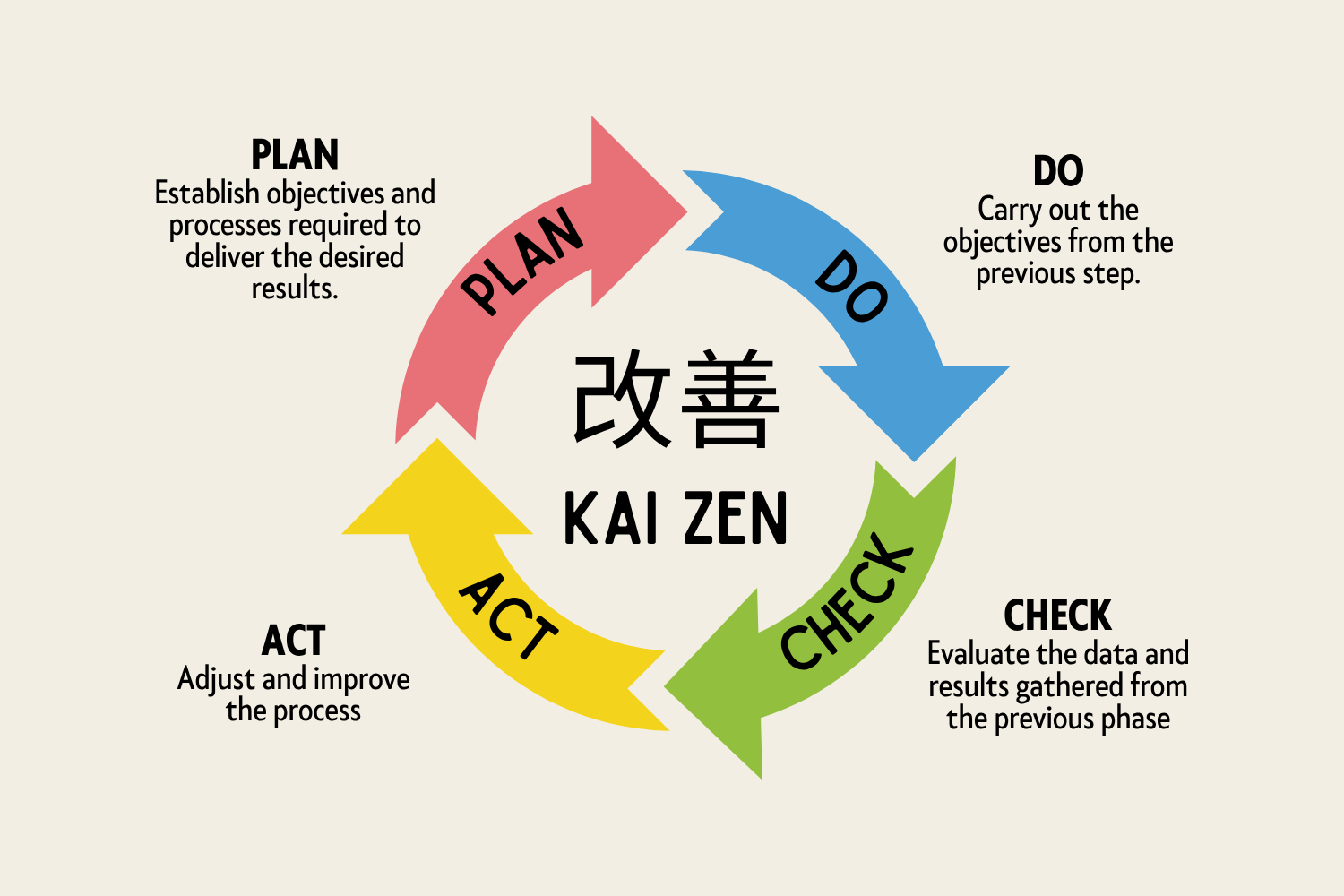
The operating rhythm is the Plan-Do-Check-Act loop.
| Stage | What happens |
|---|---|
| Plan | Set a clear objective and design the process change. Pick one improvement and define exactly what "better" means. |
| Do | Make the change and watch what actually happens in real work, not in theory. |
| Check | Evaluate against the data, the outcomes, and what your team actually experienced — what really happened, not what you hoped for. |
| Act | Standardize what worked, refine what didn't, and run the loop again. |
That loop builds learning directly into the system, so improvement becomes a habit instead of an occasional event you schedule once a quarter.
Kaizen shares its core premise with Systems > Goals and The Theory of Constraints: pay attention to continuously improving the system, instead of obsessing over big, distant targets.
Why It Matters for Leaders
When performance dips, your first instinct is probably to look at people: who's not stepping up, who needs feedback, who needs more pressure. It feels like the responsible thing to do, and in most cases it's the wrong one. Wasteful meetings, unclear priorities, messy communication channels, and unspoken bottlenecks are usually doing more damage than any one person's effort level ever could.
That leaves you two real options: push people harder, or improve the system they're working inside of. The first produces stress. The second produces momentum.
Kaizen also corrects a bias baked into how leadership gets rewarded. You're conditioned to believe meaningful improvement needs a new strategy, a major restructuring, or a flashy initiative — because those are the things that get noticed. Kaizen asks for the opposite: look closely at how work actually flows, improve one small piece of it, and repeat.
Three situations show the difference clearly. Facing meeting overload, the usual move is to cancel meetings in bulk until something breaks; the Kaizen move is to redesign one recurring meeting, sharpen its purpose, cut what doesn't belong, and shave fifteen minutes off it for two weeks straight. Facing slow decisions, the usual move is to tell people to be more decisive; the Kaizen move is to map the approval flow, find where work actually pauses, and remove one unnecessary checkpoint. Facing low ownership, the usual move is to work on attitude; the Kaizen move is to check whether goals are clear, feedback is frequent, and responsibilities are actually written down — one simple fix to how the team is set up, like a weekly check-in, often resolves it on its own.
Run this loop long enough and it changes your culture. Mistakes stop feeling like threats, because they've become inputs into the next cycle — and your team stops waiting around for direction and starts finding improvements on its own.
What to do next
Skills related to Kaizen

Frameworks related to Kaizen

Six Sigma
A data-driven way to remove root causes of defects, via the DMAIC cycle: define, measure, analyze, improve, control.
The Theory of Constraints
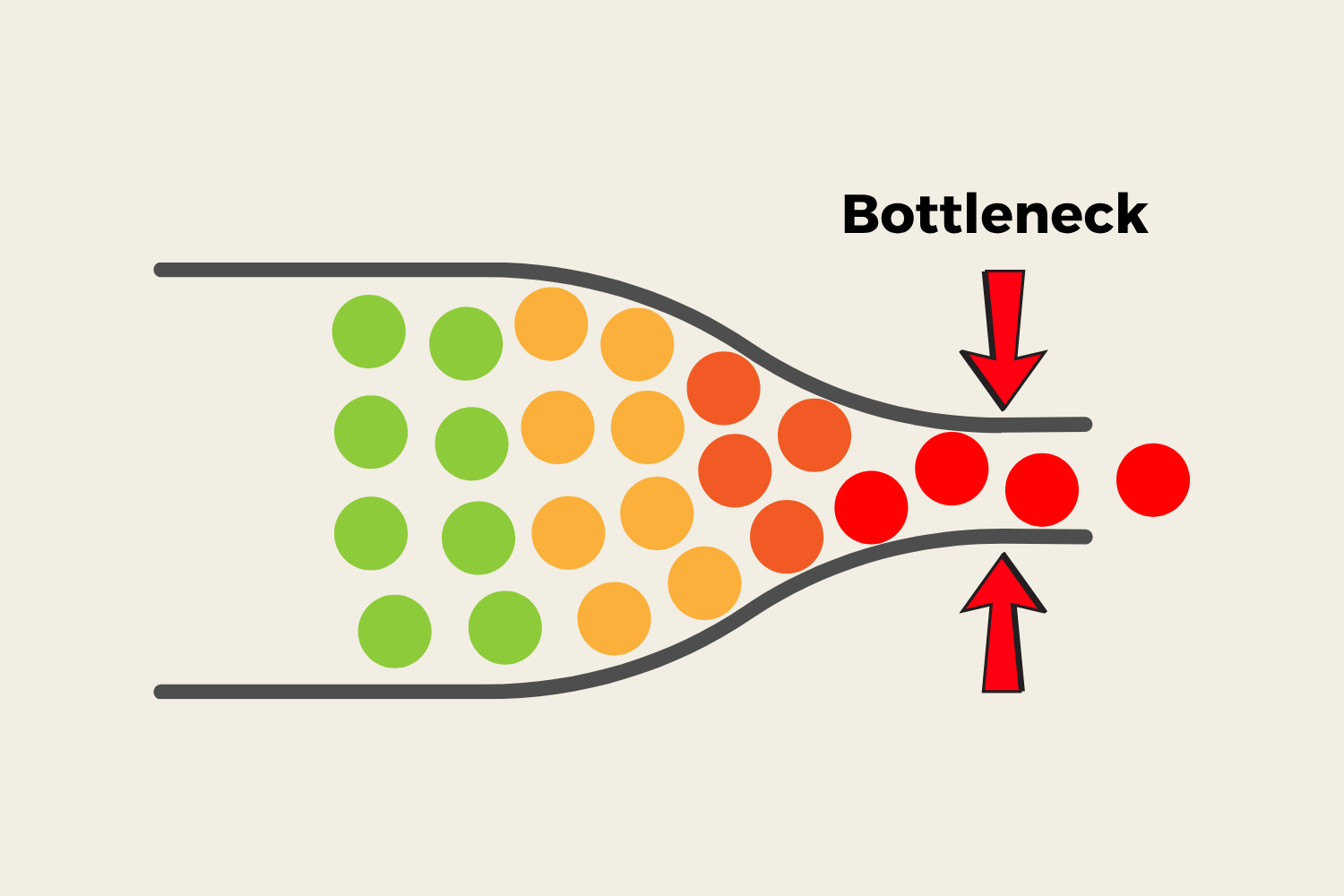
Every system has a bottleneck that caps everything it can produce — find that one constraint and put your energy there.
Books related to Kaizen

The Checklist Manifesto
Atul Gawande's case, built from surgery and aviation, that expertise alone no longer prevents avoidable failure in complex work, and that a short, well-designed checklist catches exactly what skill and memory reliably miss under pressure.

The Goal
Eliyahu Goldratt's business novel about a plant manager racing to save his factory. Hidden inside the story is the Theory of Constraints: every system has exactly one bottleneck at a time, and polishing everything that isn't it is effort dressed up as progress.