Risk Management
Naming what could go wrong before it does, sizing each threat by likelihood and impact, and acting on the ones that matter.
 Find this on the mind-map
Introduction
Every decision you make carries some risk. Hiring someone, launching a product, entering a new market - each one has a downside, and most of those downsides are knowable in advance if you're willing to look for them.
You don't get credit for avoiding risk. You get credit for anticipating it, sizing it, and managing it before it turns into a surprise.
The skill sits between two ways of getting it wrong.
- Ignore risk and you set yourself up for failures that arrive looking sudden.
- Overanalyze it and you talk yourself into paralysis.
What you're actually after is staying proactive about threats without letting fear set the pace of your own work.
Doing this is actually simple and repeatable:
- List what could go wrong, and rank each item by likelihood and impact.
- Decide, for each one, whether you're going to accept it, reduce it, transfer it, or avoid the activity altogether.
- Assign an owner and a trigger that tells you exactly when to act.
- Then revisit the list as the work moves along, because the risks that mattered at the start are rarely the ones that matter by the end.
Scope is where this usually breaks down. It's easy to weigh only the financial risk and ignore the operational, reputational, and strategic risk sitting right next to it. Expanding into a new market can look like a clean opportunity until you count the hiring challenges, the cultural differences, and the long-term sustainability of the move alongside the revenue case.
Why It Matters for Leaders
When this skill is missing, risks live in people's heads and only get voiced after something has already gone wrong.
- A risk register gets written at kickoff and never opened again.
- Risks get discussed at length and nobody gets assigned to anything, so the meeting produces comfort instead of actually lowering the risk.
- Your team stays politely quiet about the risk everyone can already see, and the one low-probability, high-impact risk gets waved off because it feels unlikely.
When you do effective risk-management, you get fewer surprises, and faster responses to the ones that still slip through, because you thought through the response before anyone was under pressure. Risk becomes a normal part of your decisions instead of an argument against making them at all.
As Warren Buffett put it: "Risk comes from not knowing what you're doing." Most of the risk you're carrying right now isn't the risk you named and accepted, it's the risk nobody in the room bothered to name at all.
What to do next
Master Risk Management by taking the mini-course
Frameworks related to Risk Management
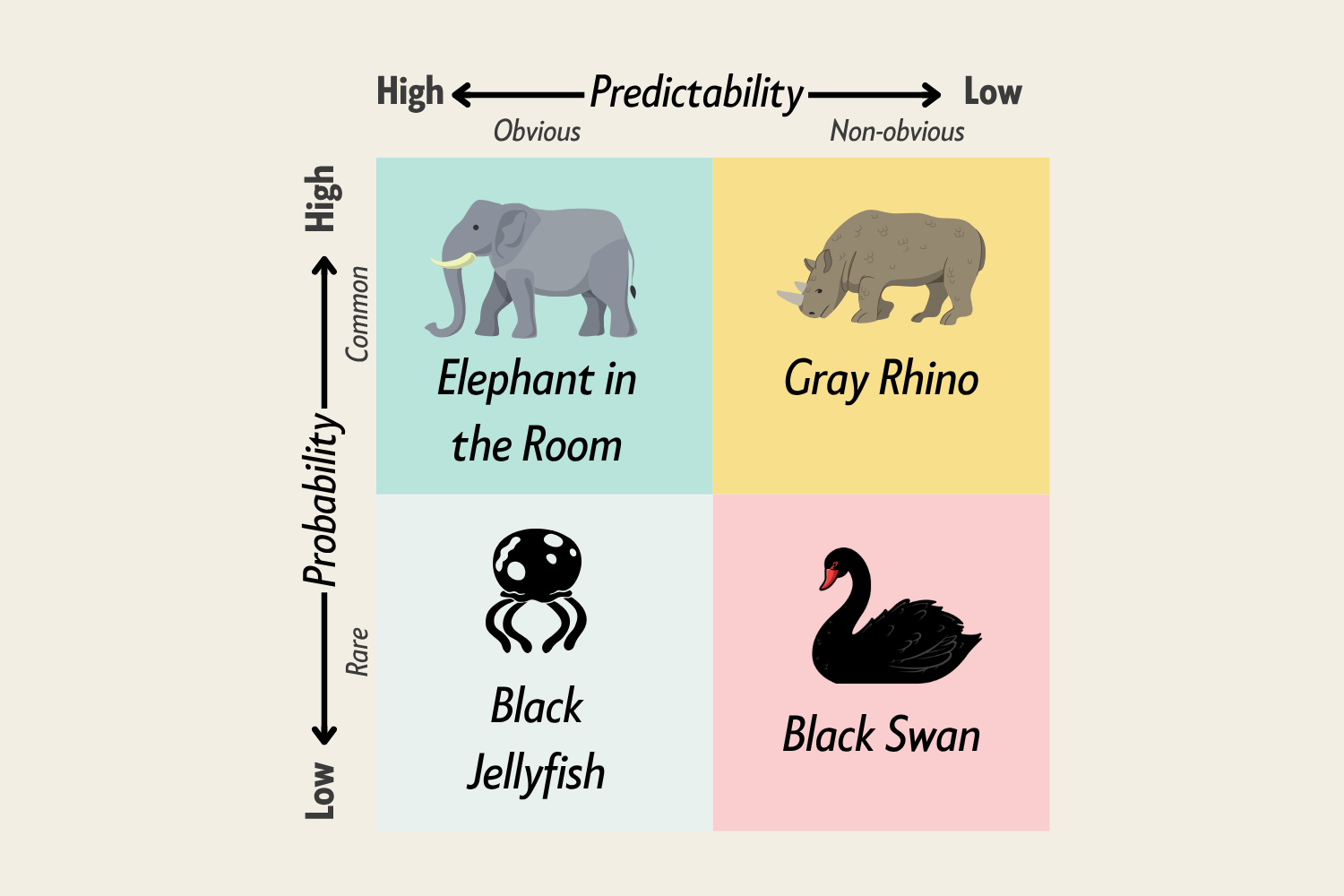
Animal Risk Matrix
Sort risk by predictability and probability into shapes — Elephant, Gray Rhino, Black Jellyfish, Black Swan — each needs a different response.

Inversion Principle
A thinking tool that swaps "how do I succeed?" for "how would this fail?" — surfacing failure modes forward planning misses.

Premortem Technique
Assume the project has failed by a specific date, then explain why — hindsight gets your team saying what they thought.
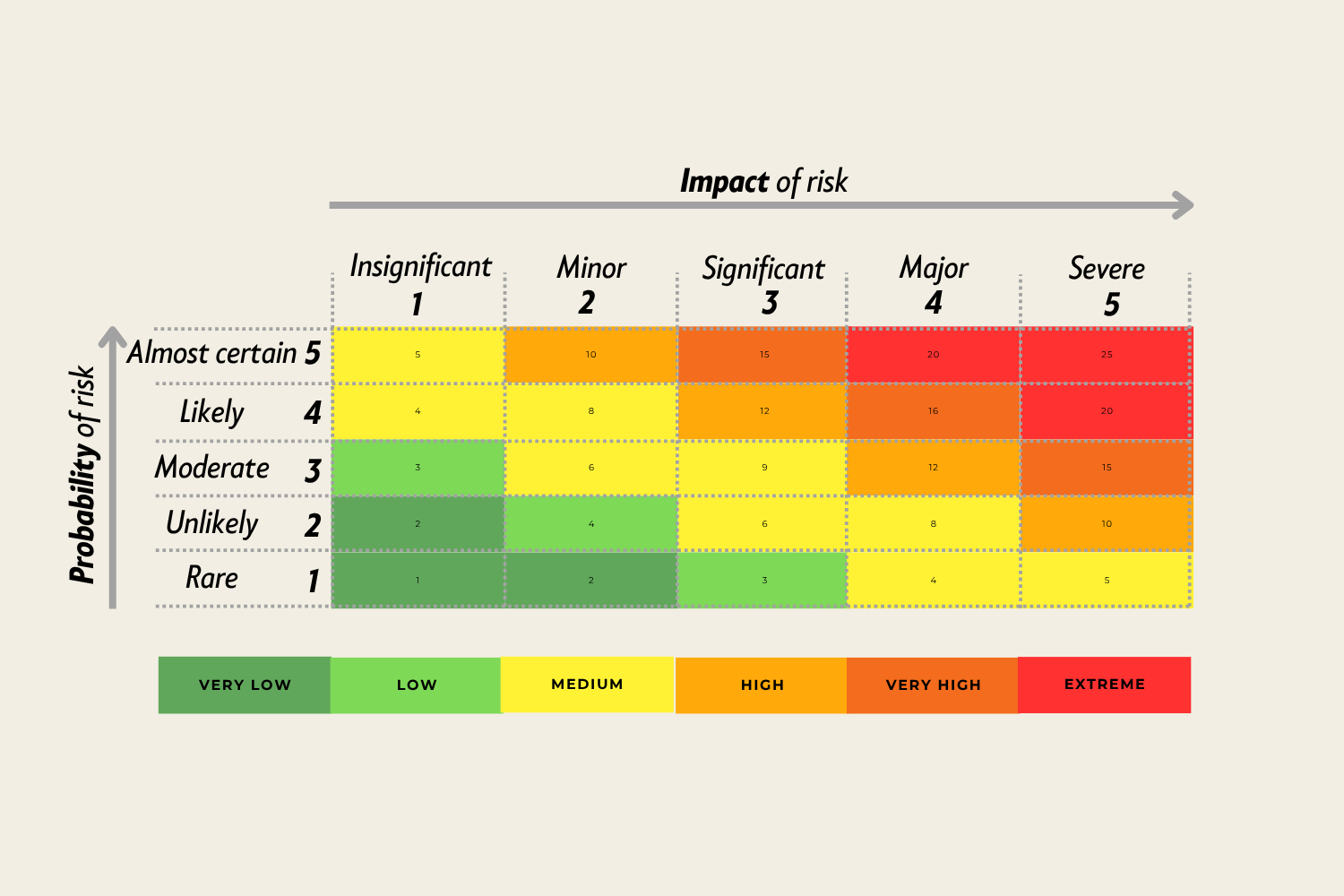
Risk Assessment Matrix
The grid for scoring risks by likelihood and impact, turning a messy list of worries into a ranked priority order.
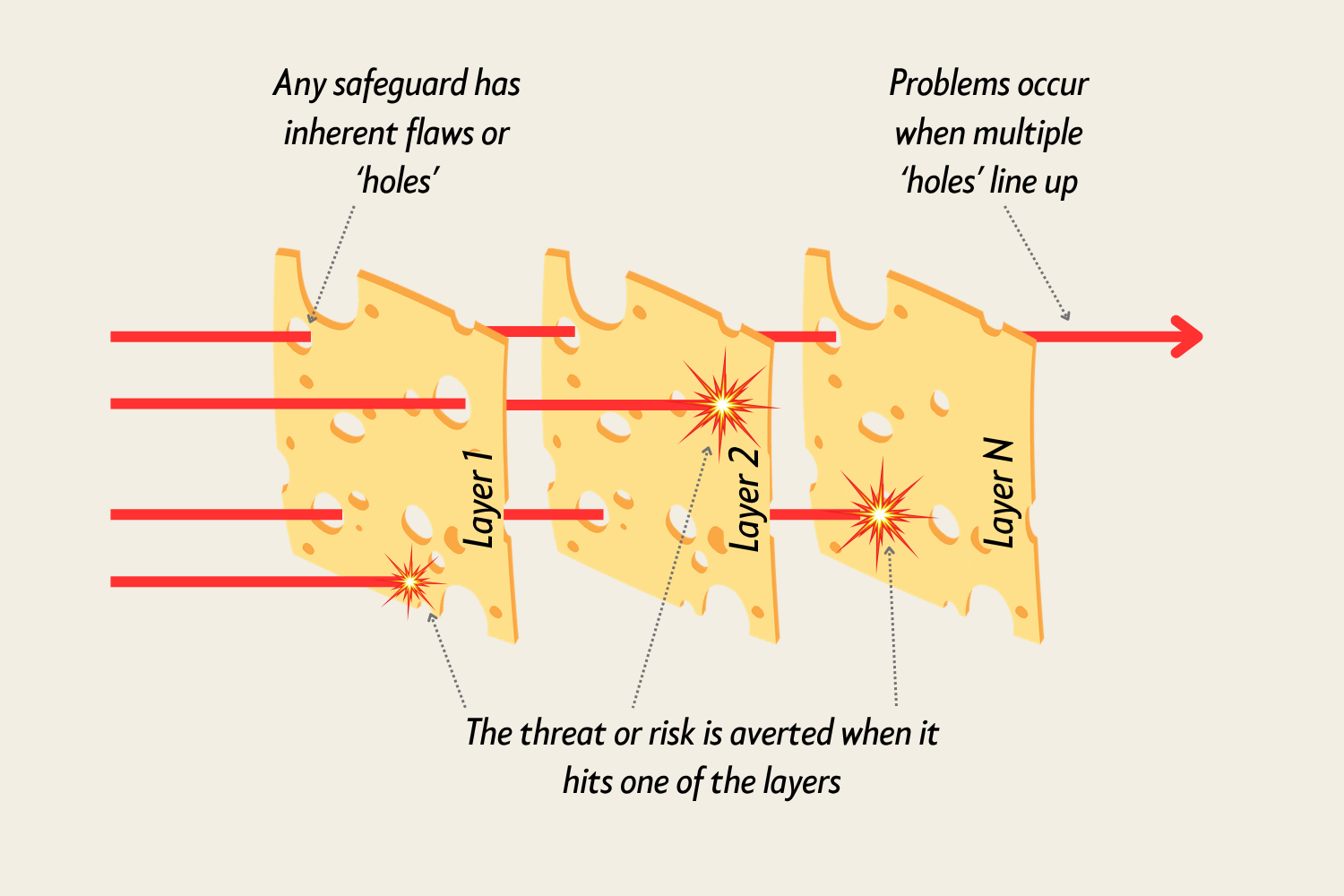
Swiss Cheese Model
Every layer of defense has holes — failure gets through only when several holes line up — fix is redundancy, not perfection.
Books related to Risk Management

Skills related to Risk Management

Business Analysis
Gathering real evidence about how the business is performing, reading the trends inside it, and keeping your strategy anchored to reality instead of assumption.

Business Strategy
Making the focused calls about where to compete, what to prioritize, and what to say no to, because a strategy is defined as much by what it rules out as by what it commits to.

Change Management
Carrying your team through a transition, from the moment you announce a change to the point where the new way of working has just become the ordinary one.

Driving Execution
Turning an agreed plan into delivered results through the focus, systems, and accountability that keep a team moving from decision to outcome.

Process Improvement
Finding where the work slows down, repeats itself, or breaks, and clearing that friction so effort turns into output instead of overhead.

Visioning
Defining and communicating a compelling direction, and connecting your team's daily work to that.