Animal Risk Matrix
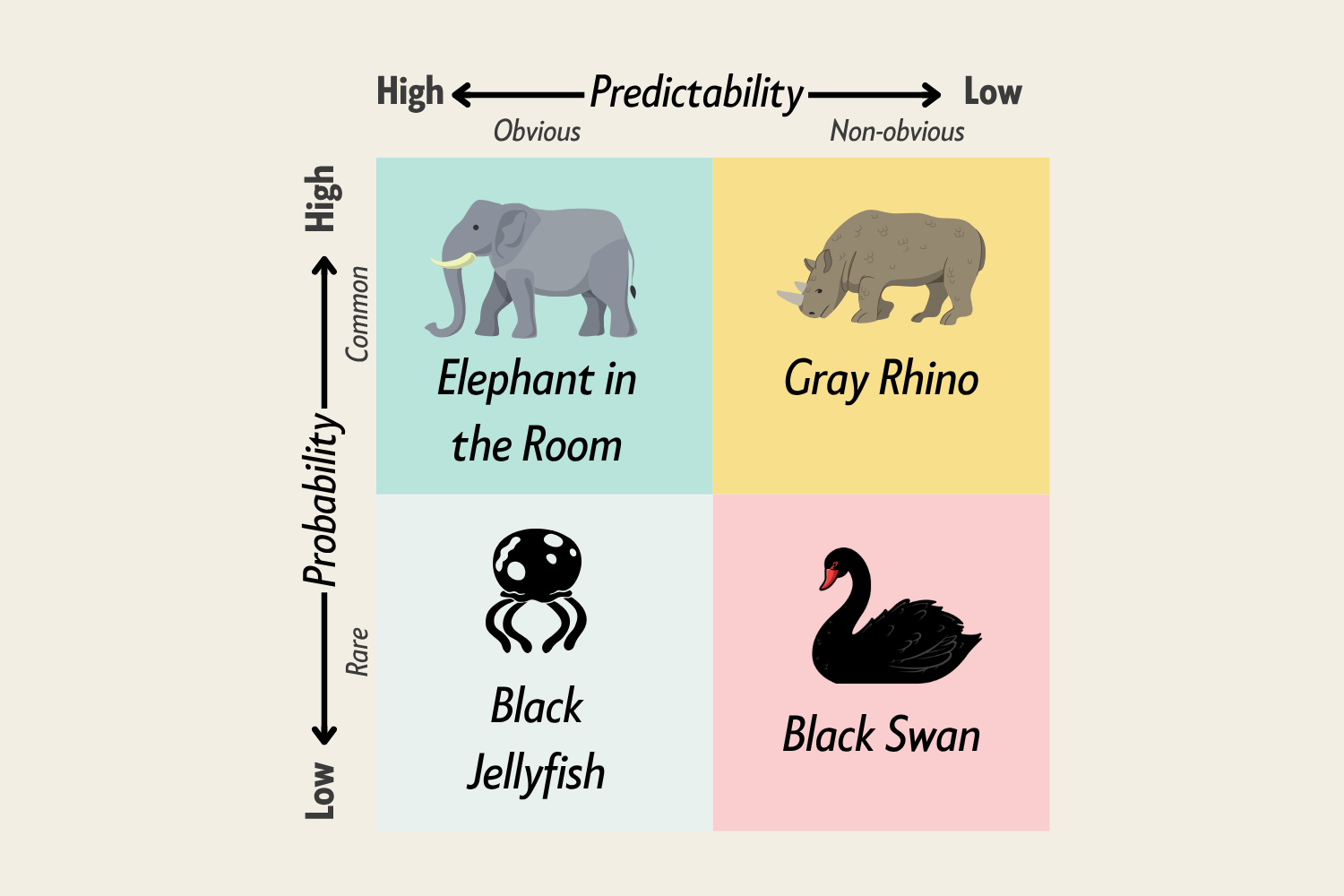
Sort risk by predictability and probability into shapes — Elephant, Gray Rhino, Black Jellyfish, Black Swan — each needs a different response.
 Find this on the mind-map
Introduction
Gaurav Jain built this at The Good Boss by taking four existing risk metaphors — two of them borrowed from well-known books — and putting them all on a single 2x2 that plots predictability against probability. Instead of treating "risk" as one big lump, it gives you four distinct shapes, each one calling for a different response.
How It Works
Here are the four categories:
Elephant in the Room. An obvious, imminent problem that everyone can see and nobody raises — usually because addressing it means hard conversations, challenged assumptions, or admitted mistakes. A toxic culture that leadership talks about privately and never puts on the agenda is the classic case.
Black Swan. A rare, unpredictable event with massive consequences. The term comes from risk analyst Nassim Nicholas Taleb, who named it after the 1697 discovery of black swans in Australia overturned the European assumption that all swans were white. The 2008 financial crisis, COVID-19, and the speed of the recent AI shift all fit this shape.
Gray Rhino. A highly probable, high-impact risk that's completely visible and still gets ignored until it's too late. Author and policy analyst Michele Wucker coined the term. Climate change, cybersecurity threats, and a deteriorating workplace culture with visible turnover and disengagement are all gray rhinos — the warning signs are known, and action lags anyway.
Black Jellyfish. A predictable but rare event, ignored precisely because it doesn't happen often. In 2011, a Japanese nuclear plant shut down because jellyfish clogged its cooling water intake — and similar shutdowns have hit plants in Sweden, the United States, and Scotland, all traceable to warmer water expanding jellyfish populations. Regulatory changes, single-supplier failures, and an unexpected CEO departure with no succession plan all behave the same way.
Plot all four on predictability and probability and you get this:
| High predictability (obvious) | Low predictability (non-obvious) | |
|---|---|---|
| High probability (common) | Elephant in the Room | Gray Rhino |
| Low probability (rare) | Black Jellyfish | Black Swan |
Whenever a new risk shows up, ask yourself the working question: is this a Black Swan, a Gray Rhino, a Black Jellyfish, or an Elephant in the Room? The answer tells you how to respond, because the four need completely different investments.
Think of this as a discussion tool rather than a scoring system — the Risk Assessment Matrix is the numerical counterpart, ranking risks by likelihood against impact for formal documentation and stakeholder reporting.
Why It Matters for Leaders
Risk management isn't a specialist function you can hand off. Market downturns, hiring decisions, and new initiatives all carry risk, and your ability to sort that risk is often what separates a leader who prevents crises from one who's stuck managing them.
These categories exist because they fail in different ways — and if you only have one mental model for risk, you default to whatever's loudest in the room. Two mistakes show up again and again.
The first is dismissing low-probability risks because they seem too rare to bother with. Black Swans and Black Jellyfish get zero plan at all until they actually arrive, at which point the consequences are severe. Before 2020, most companies had no contingency plan for a global pandemic.
The second is prioritizing urgent risks over strategic ones — reacting to fires instead of preventing them. A company consumed by customer complaints can completely miss the industry shift that's about to threaten its whole business model.
The animal names actually help, too. Calling something "the elephant in the room" makes it a lot easier to raise than describing it in neutral corporate language. That's why one leader put "The Elephant in the Room" as the first item on every single leadership meeting agenda — making the call-out part of the process removed the cost of being the one who raised it.
What to do next
Test your knowledge of Animal Risk Matrix
Practice Animal Risk Matrix
Apply Animal Risk Matrix to a real situation
Skills related to Animal Risk Matrix

Frameworks related to Animal Risk Matrix

Inversion Principle
A thinking tool that swaps "how do I succeed?" for "how would this fail?" — surfacing failure modes forward planning misses.

Premortem Technique
Assume the project has failed by a specific date, then explain why — hindsight gets your team saying what they thought.
Risk Assessment Matrix
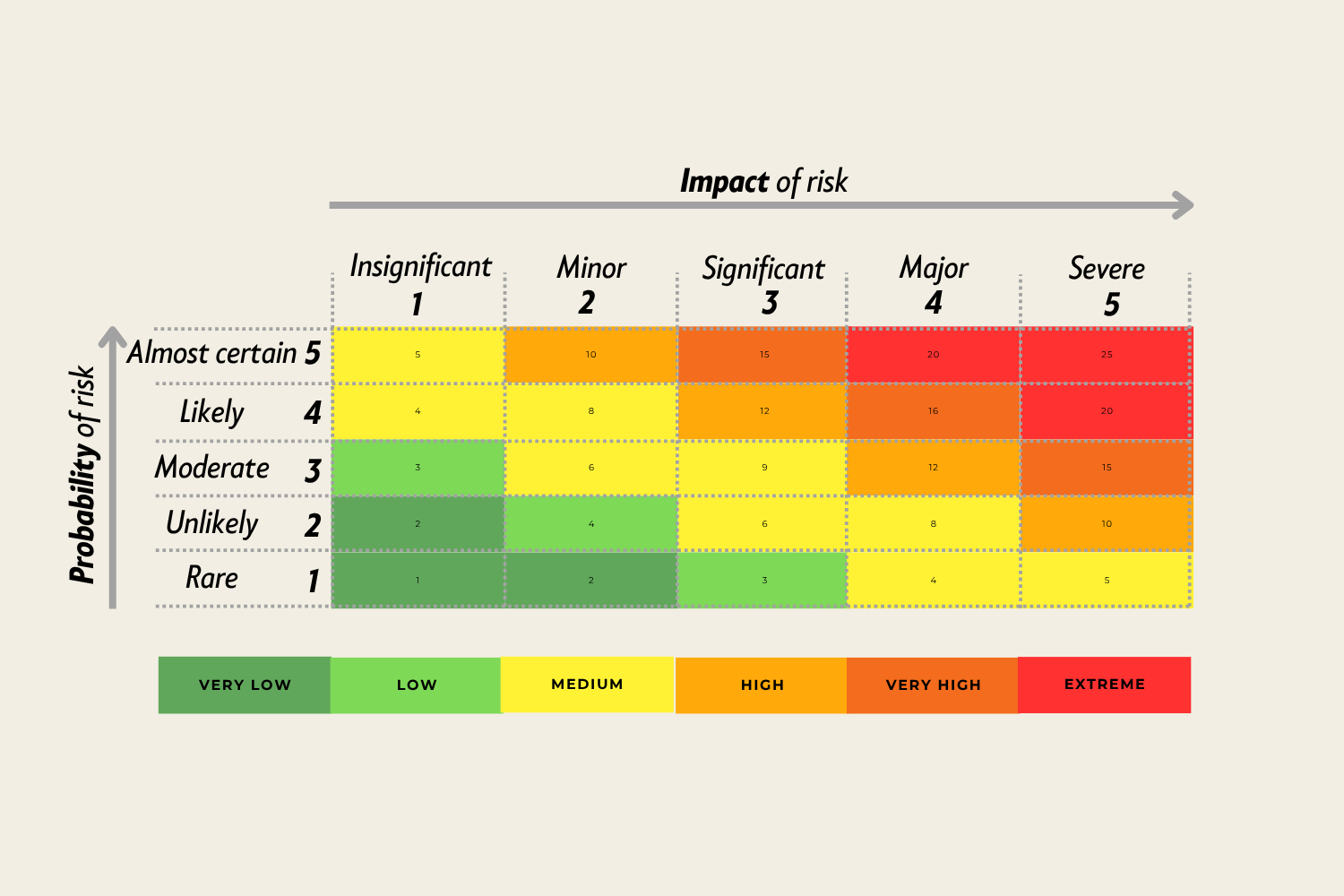
The grid for scoring risks by likelihood and impact, turning a messy list of worries into a ranked priority order.
Swiss Cheese Model
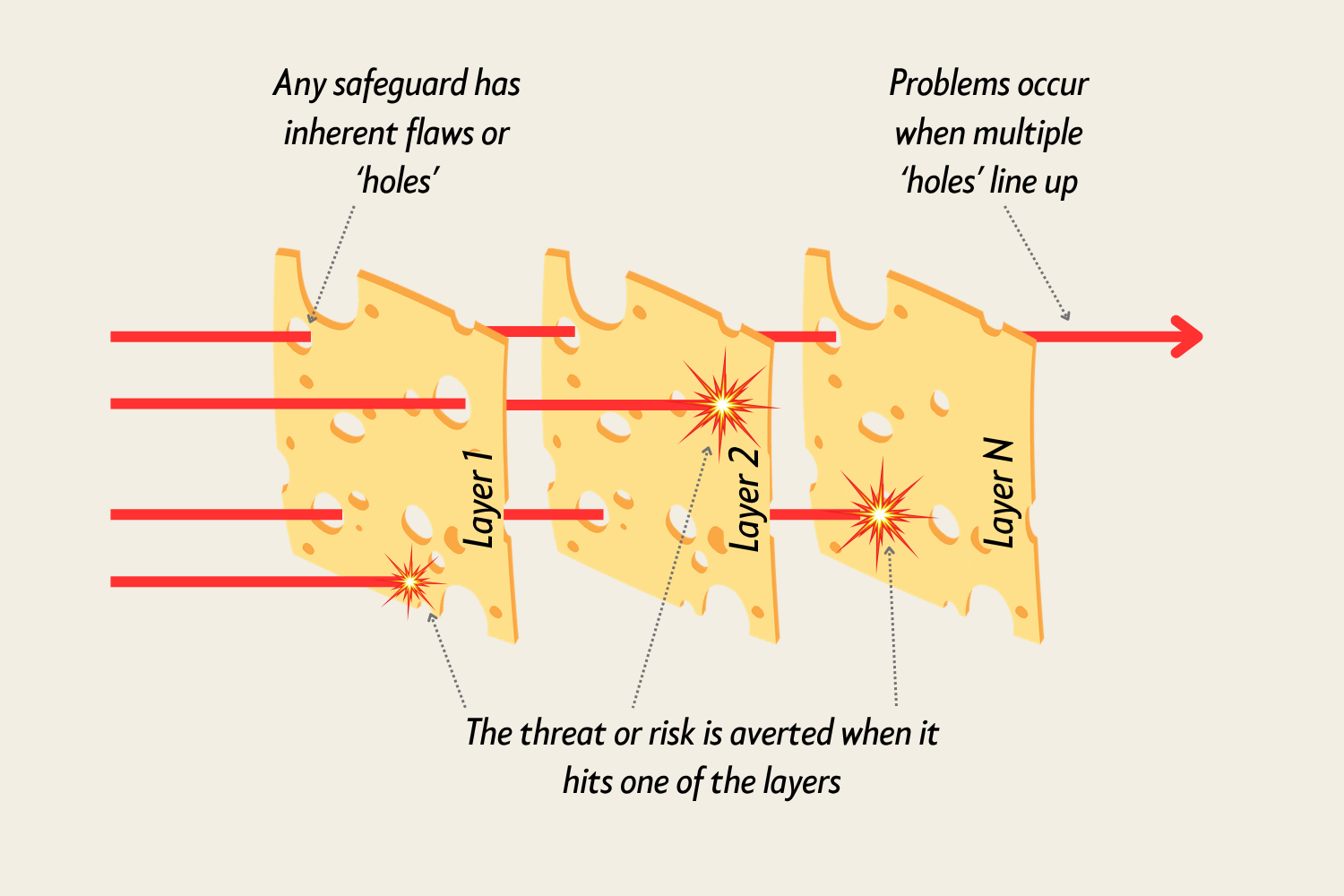
Every layer of defense has holes — failure gets through only when several holes line up — fix is redundancy, not perfection.
