Premortem Technique
Assume the project has failed by a specific date, then explain why — hindsight gets your team saying what they thought.
 Find this on the mind-map
Introduction
Gary Klein, a cognitive psychologist, spent years studying how firefighters, ICU nurses, and military commanders make high-stakes calls under real pressure. Out of that work came a specific observation, one he laid out in a 2007 Harvard Business Review piece: the moment a plan gets approved, honest risk assessment gets harder, not easier. People stop evaluating the plan and start defending it. Raising a doubt after everyone's signed off starts to feel like disloyalty — like you're the one person who didn't get on board.
How It Works
Standard risk assessment happens before a decision, while nothing's settled and everyone's just speculating. Klein's fix was to move the exercise in time instead. Assume the decision has already been made, the project has already launched, and it has already failed — on a specific date, a few months out. Then ask your team to explain why.
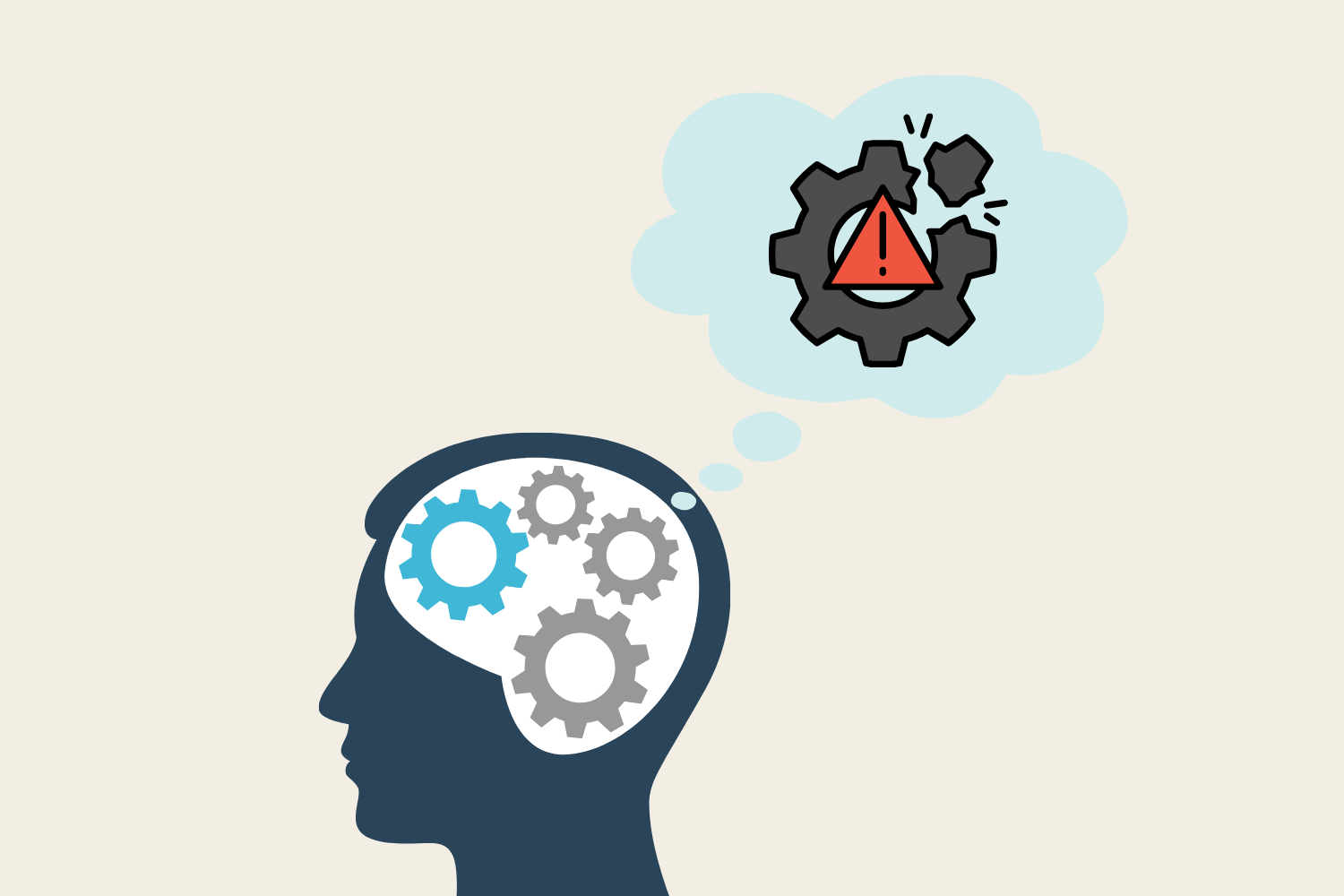
That single shift in framing changes the quality of what people say.
| Prompt | What it produces |
|---|---|
| "What could go wrong?" | Hedged possibilities: there's some risk the timeline might slip, we should keep an eye on adoption |
| "It failed. Explain why." | A confident account: the timeline slipped because nobody accounted for the compliance review, and by the time we caught it we were three weeks behind and cutting testing to compensate |
Here's why it works: speculating about a future nobody wants to be blamed for makes people cautious. Explaining a failure that's already "happened" gives them permission to be as blunt as they'd be in hindsight. It also hands your skeptics cover — they're not shooting down the plan, they're just answering the question you gave them.
One distinction worth holding onto: a premortem is not a retrospective. A retrospective runs after the outcome, when there's nothing left to change. A premortem runs while the plan is still movable — which is the only moment where any of this actually does something.
Why It Matters for Leaders
Three forces make plans harder to challenge exactly when challenging them is cheapest.
The confidence tax. The more senior, well-funded, or publicly committed a plan gets, the more expensive it becomes for any one person to raise a doubt about it. By the time a plan reaches you, it's usually already been pre-sold internally — so you're not evaluating it anymore, you're just validating it. A premortem is one of the only structures that reopens real evaluation after commitment has already started.
Silence gets read as agreement. When you present a plan and ask for concerns and get nothing back, that silence is usually your team calculating whether raising an objection is worth the cost — not proof there are none. This is the Abilene Paradox in action: a whole room can agree to something nobody in it actually believed in.
Hindsight is honest, foresight is polite. Ask your team what went wrong with last year's failed initiative and you'll get sharp, specific, sometimes brutal answers. Ask what might go wrong with this year's, and the answers turn generic fast.
Even smart, well-resourced teams fail for ordinary, foreseeable reasons. Quibi raised roughly $1.75 billion, launched in April 2020, and shut down six months later. Its two fatal problems weren't hidden: the product assumed people would watch short videos while commuting, in a year when nobody commuted, and its mobile-only format blocked the ordinary habit of watching something while doing something else. Both are exactly the kind of thing someone in the room almost certainly thought — and didn't say.
Two smaller examples show the actual payoff. A director ran a premortem two weeks before shipping a new onboarding flow, and the notes kept circling one theme: everyone had assumed sales would explain the new flow to existing customers, and nobody actually owned that handoff. She assigned an owner that same week. A manager under pressure to pick a vendor fast ran the compressed version of the exercise and found the notes clustering around one root cause: nobody had actually tested the vendor's claimed integration. He delayed a week, ran a real test, and found out it didn't work as advertised.
What to do next
Test your knowledge of Premortem Technique
Practice Premortem Technique
Apply Premortem Technique to a real situation
Skills related to Premortem Technique

Frameworks related to Premortem Technique
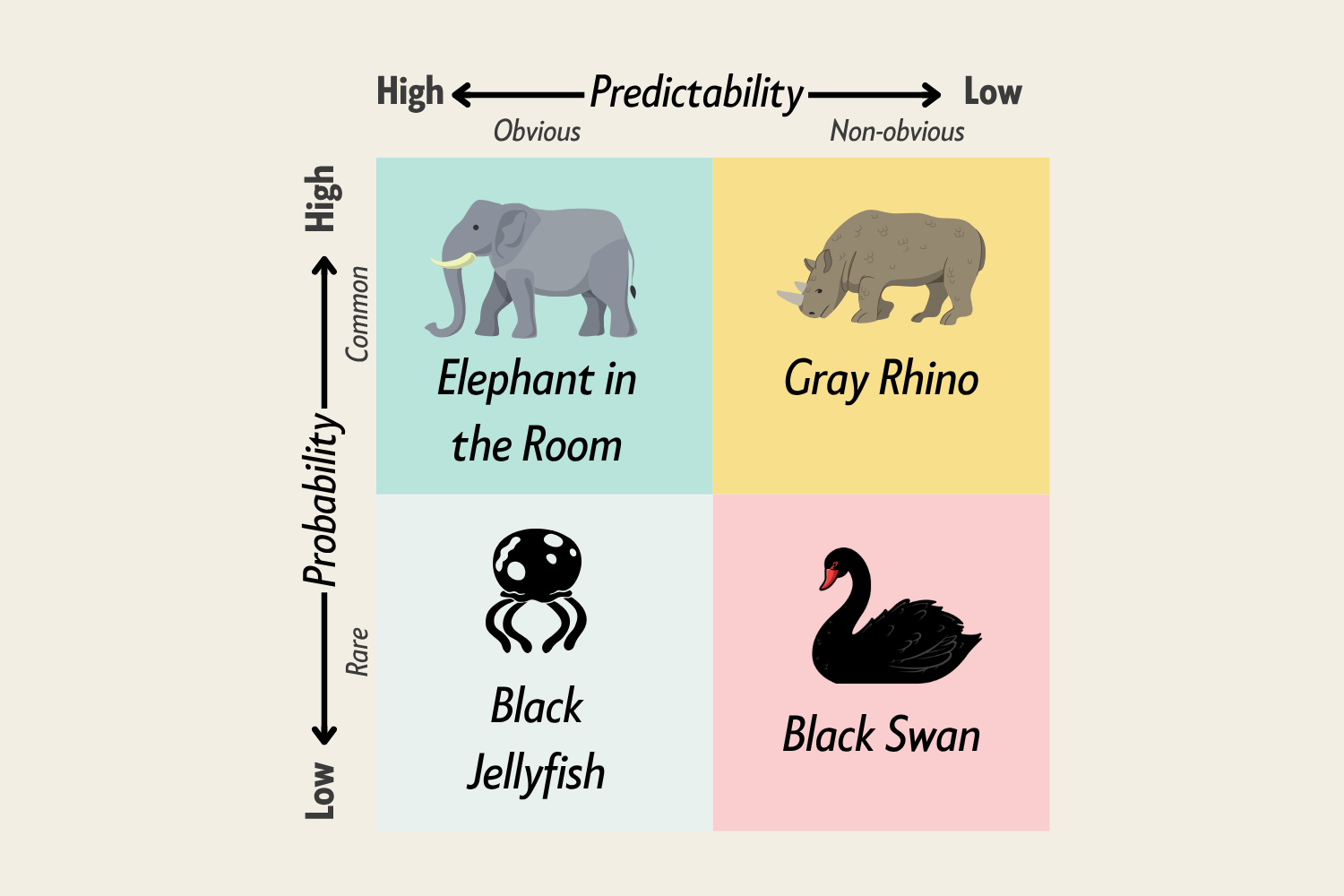
Animal Risk Matrix
Sort risk by predictability and probability into shapes — Elephant, Gray Rhino, Black Jellyfish, Black Swan — each needs a different response.

Inversion Principle
A thinking tool that swaps "how do I succeed?" for "how would this fail?" — surfacing failure modes forward planning misses.
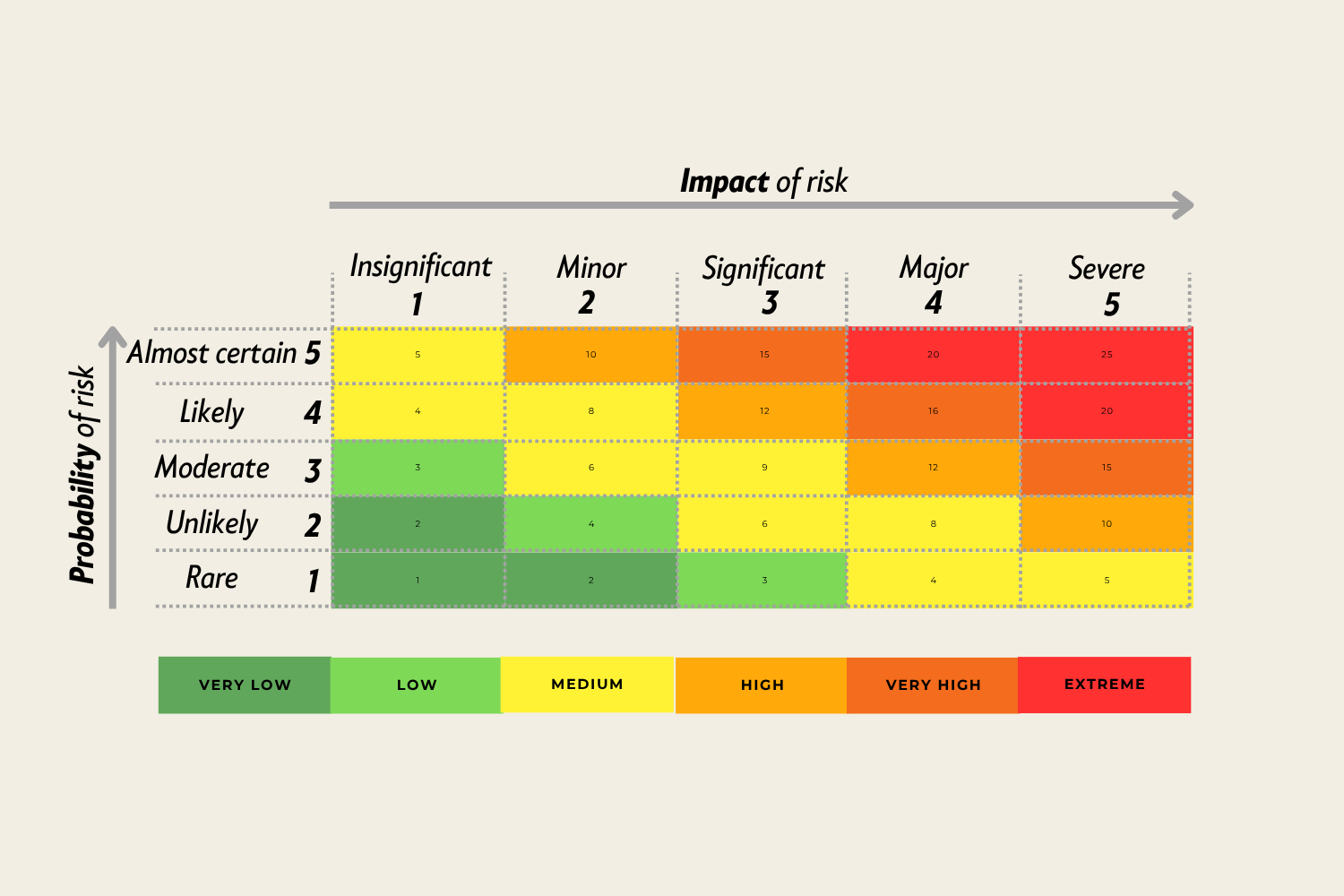
Risk Assessment Matrix
The grid for scoring risks by likelihood and impact, turning a messy list of worries into a ranked priority order.
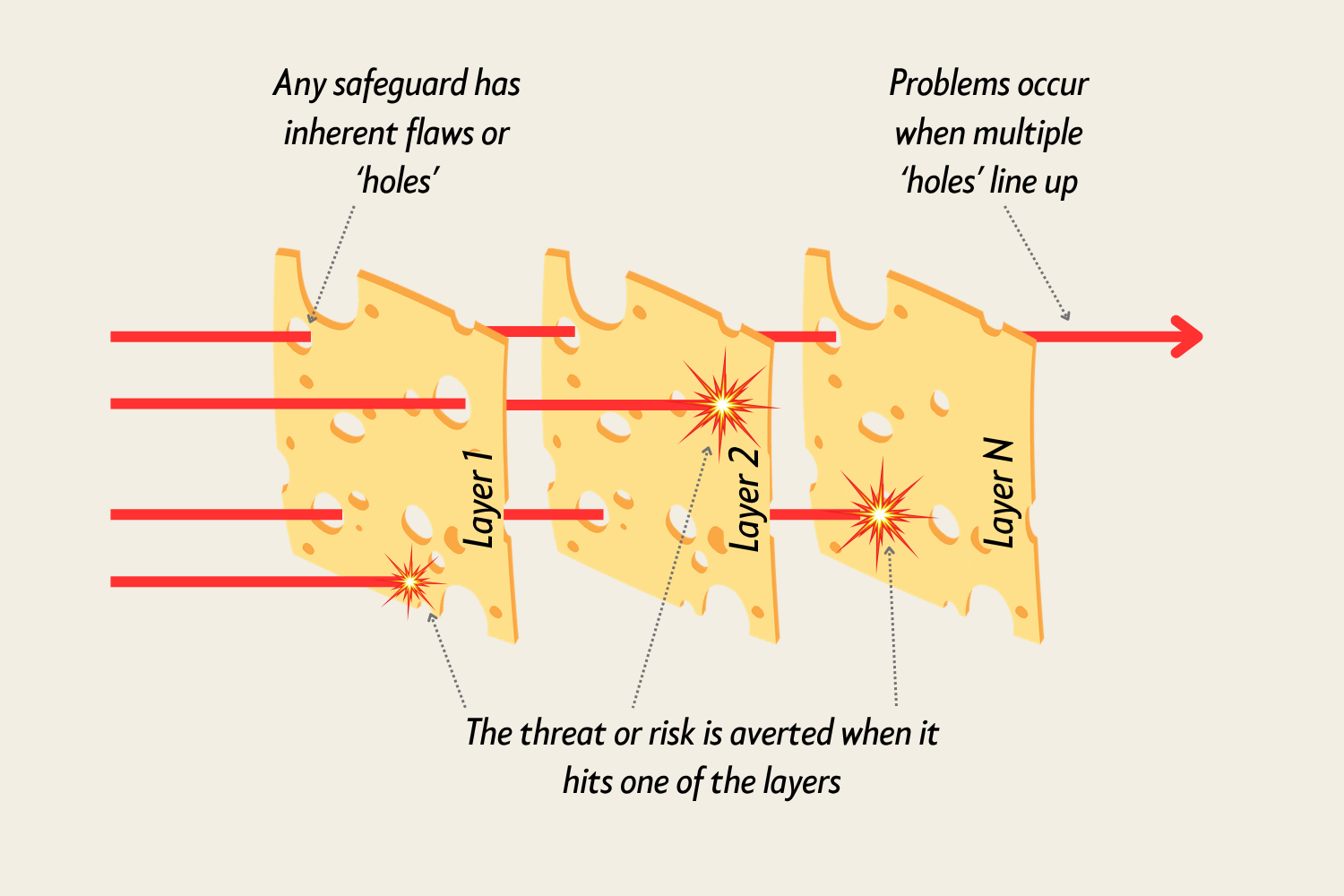
Swiss Cheese Model
Every layer of defense has holes — failure gets through only when several holes line up — fix is redundancy, not perfection.
