Risk Assessment Matrix
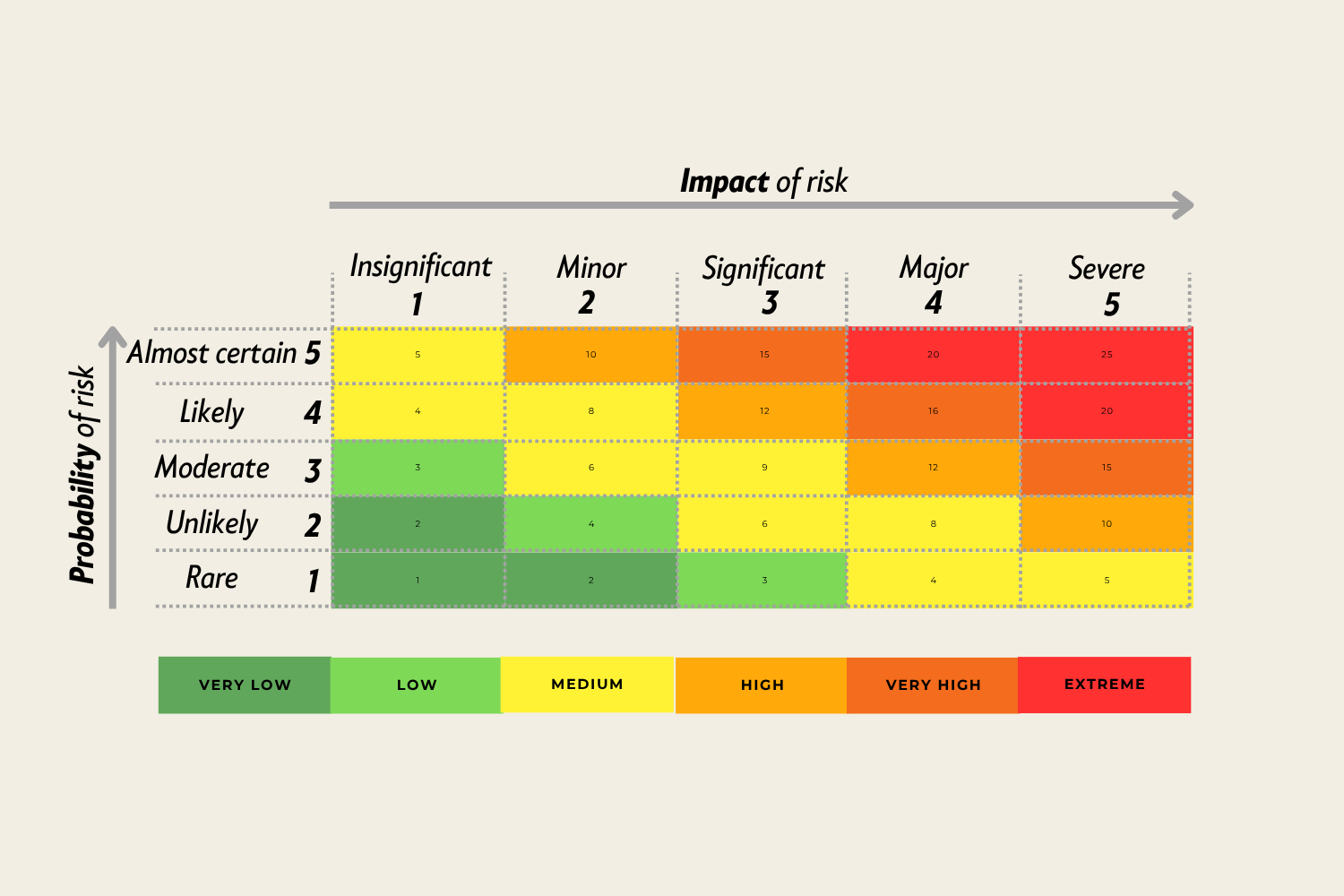
The grid for scoring risks by likelihood and impact, turning a messy list of worries into a ranked priority order.
 Find this on the mind-map
Introduction
Nobody owns this one — there's no single named author behind it. It grew out of safety engineering and military hazard analysis in the mid-twentieth century, and by now it's baked into standard practice everywhere, including ISO 31000 and the PMBOK guide. What it gives you is a way to rank risks by how likely they are and how much damage they'd do, which is exactly what you need when you're staring at a long list of things that could go wrong and have to decide what actually deserves your attention.
How It Works
Every risk you identify gets scored on two separate dimensions:
- Likelihood — how probable is this, over a stated time window? Usually rated 1 to 5, or low, medium, high.
- Impact — how severe would the consequences be if it happened? Rated on the same scale, ideally anchored to something concrete, like cost, schedule slip, customer harm, or regulatory exposure.
Where a risk lands on the grid tells you its priority zone.
| Low impact | Medium impact | High impact | |
|---|---|---|---|
| High likelihood | Monitor | Mitigate | Critical, act now |
| Medium likelihood | Accept | Monitor | Mitigate urgently |
| Low likelihood | Accept | Accept or monitor | Contingency plan |
Each zone maps to one of four standard responses: avoid the risk by changing the plan, mitigate it by cutting its likelihood or its impact, transfer it through insurance or a contract, or accept it explicitly and move on. Accepting a risk on the record is a real decision. Ignoring it is not the same thing.
The matrix is the formal, numerical version of this exercise. The Animal Risk Matrix covers similar ground using animal metaphors plotted on predictability against probability, and it's a much better way to open a conversation with a team that isn't fluent in risk language. A good division of labor: use the Animal Risk Matrix to surface and talk through risks, then the Risk Assessment Matrix to actually score, document, and report them.
Why It Matters for Leaders
Without a shared scale, risk conversations collapse into whoever argues the loudest. Two people can both call the same issue "high risk" while meaning completely different things by it. The matrix forces both dimensions to be named separately, which is exactly where most of these disagreements actually live.
It also protects you from two common mistakes. You'll naturally give too much weight to vivid, recent events, making whatever went wrong last quarter seem more likely to happen again — and you'll give too much weight to high-likelihood, low-impact irritations simply because they generate the most noise day to day. Scoring both axes explicitly forces that trade-off into the open where you can actually see it.
There's a real limitation worth knowing, too. The matrix compresses uncertainty into a small number of buckets, which means it handles ordinary operational risk well and rare catastrophic risk badly. A risk scored "low likelihood, high impact" and quietly filed away is exactly the shape of the failure that ends up doing the most damage. For that quadrant specifically, pair the matrix with a resilience-first approach instead of trusting the score alone.
What to do next
Test your knowledge of Risk Assessment Matrix
Apply Risk Assessment Matrix to a real situation
Skills related to Risk Assessment Matrix

Frameworks related to Risk Assessment Matrix
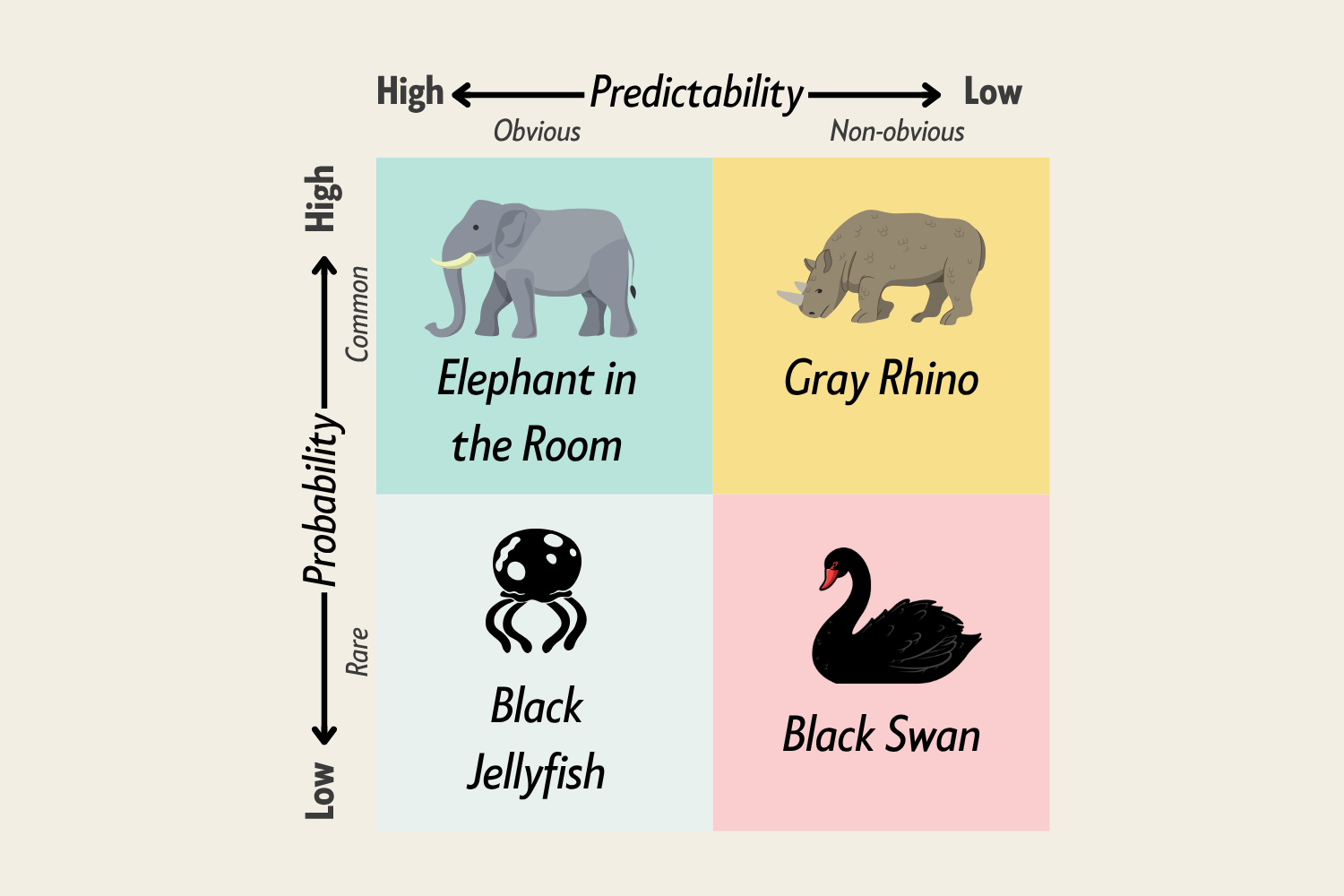
Animal Risk Matrix
Sort risk by predictability and probability into shapes — Elephant, Gray Rhino, Black Jellyfish, Black Swan — each needs a different response.

Inversion Principle
A thinking tool that swaps "how do I succeed?" for "how would this fail?" — surfacing failure modes forward planning misses.

Premortem Technique
Assume the project has failed by a specific date, then explain why — hindsight gets your team saying what they thought.
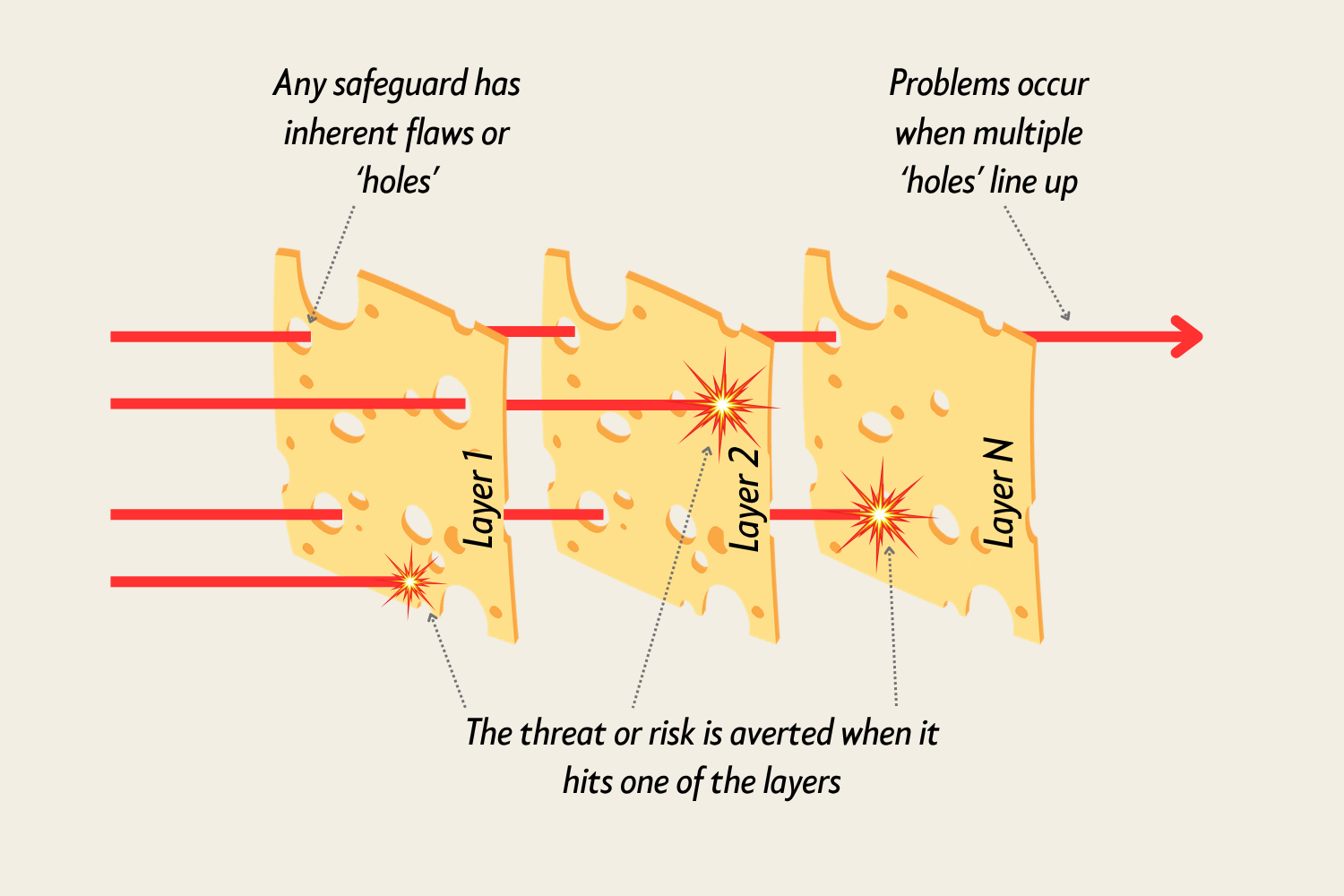
Swiss Cheese Model
Every layer of defense has holes — failure gets through only when several holes line up — fix is redundancy, not perfection.
