Leading Results
Provide vision & purpose, drive business impact, and manage change.
 Find this on the mind-map
Introduction
You may be self-aware and have a strong team, but those are still not enough for you to be a effective leader. In a real leadership situation, especially related to a business, you are ultimately judged on what actually gets delivered.
Leading results is about turning direction into action: choosing where you will and won't compete, improving the processes and systems your work runs through, managing change and risk, and confirming that all the effort actually turns into outcomes that matter. You set the goals, and then you are accountable for hitting those goals.
Fundamentally, it comes down to closing the gap between what you intended and what you delivered.
- Set a direction that you want to drive your team towards.
- Turn it into a small number of commitments with real owners and real dates.
- Establish processes that surfaces issues while it's still cheap to fix them.
- Remove bottlenecks and any hurdles that slow your tean down.
- Identify and manage the risks that could derail the plan before they show up.
Why It Matters for Leaders
Leading results is the layer where a lot of leaders get stuck. They assume that hiring strong people automatically guarantees that you will get good results.
In reality, without a solid strategy, your team will end up spending months on low-impact work, or just reacting to fires instead of actually making progress.
Here are some telltale signs that you need to work on this layer:
- Every single initiative is "important," so none of them ever finish.
- Status stays green right up until the week before the deadline.
- You announce a change, everyone agrees to it in the room, and three weeks later the old process comes back.
- Metrics improve while the actual outcome they were supposed to represent doesn't.
On the flip side, when you are leading results well, your team spends their capacity on the small number of things that actually matter. The people doing the work can see the connection between what they're doing and the outcome it produces.
Skills related to Leading Results

Business Analysis
Gathering real evidence about how the business is performing, reading the trends inside it, and keeping your strategy anchored to reality instead of assumption.

Business Strategy
Making the focused calls about where to compete, what to prioritize, and what to say no to, because a strategy is defined as much by what it rules out as by what it commits to.

Change Management
Carrying your team through a transition, from the moment you announce a change to the point where the new way of working has just become the ordinary one.

Driving Execution
Turning an agreed plan into delivered results through the focus, systems, and accountability that keep a team moving from decision to outcome.

Process Improvement
Finding where the work slows down, repeats itself, or breaks, and clearing that friction so effort turns into output instead of overhead.

Risk Management
Naming what could go wrong before it does, sizing each threat by likelihood and impact, and acting on the ones that matter.

Visioning
Defining and communicating a compelling direction, and connecting your team's daily work to that.
Frameworks related to Leading Results

ADKAR Model
Five building blocks — Awareness, Desire, Knowledge, Ability, Reinforcement — track change person by person, pinpointing exactly where it's stuck.

Agile Methodology
Short cycles beat long plans — build a slice, ship it, get real feedback, adjust, and repeat until it fits.
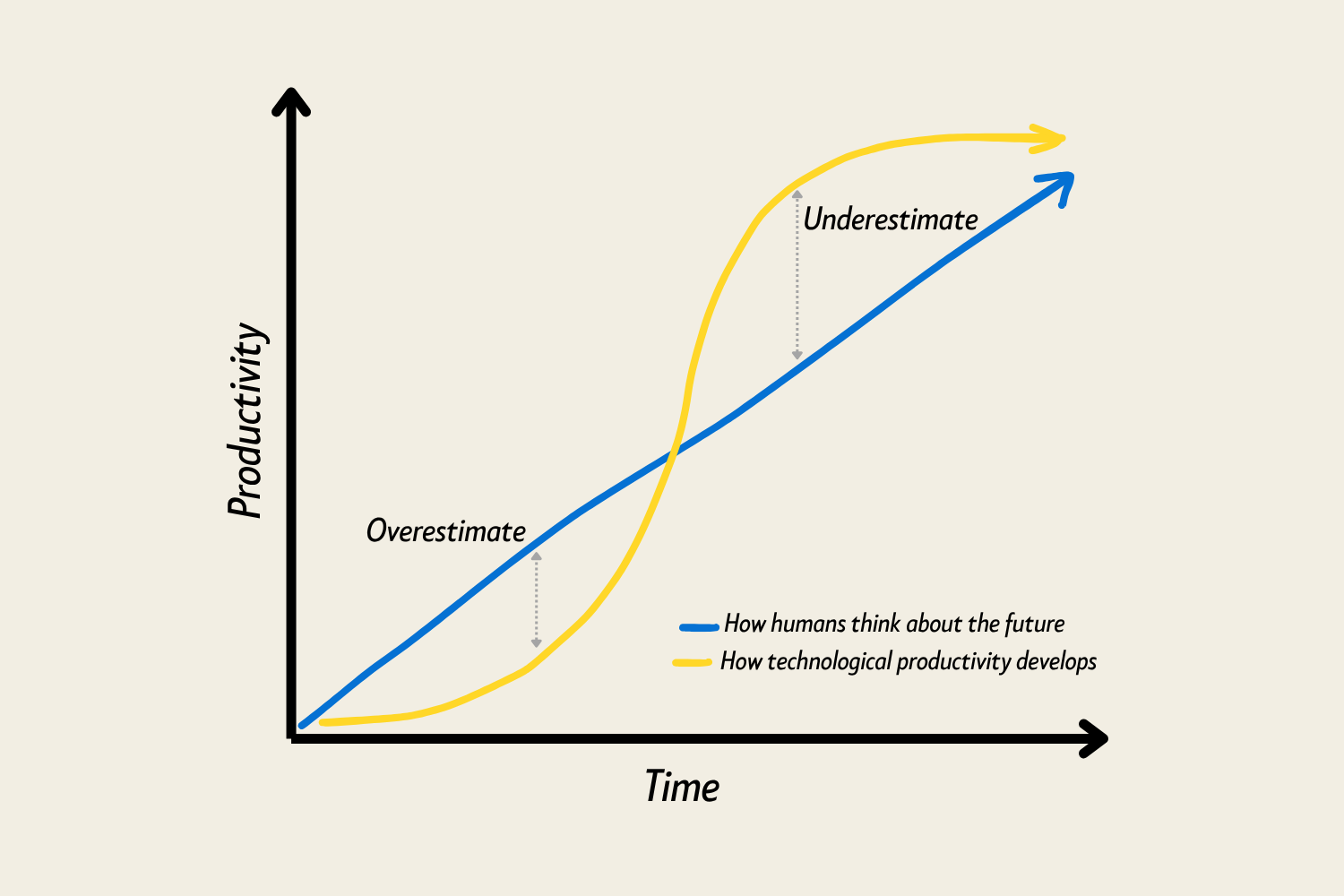
Amara's Law
You overestimate new tech's short-run impact and underestimate its long-run impact — so ask if you're early, not whether it's working.
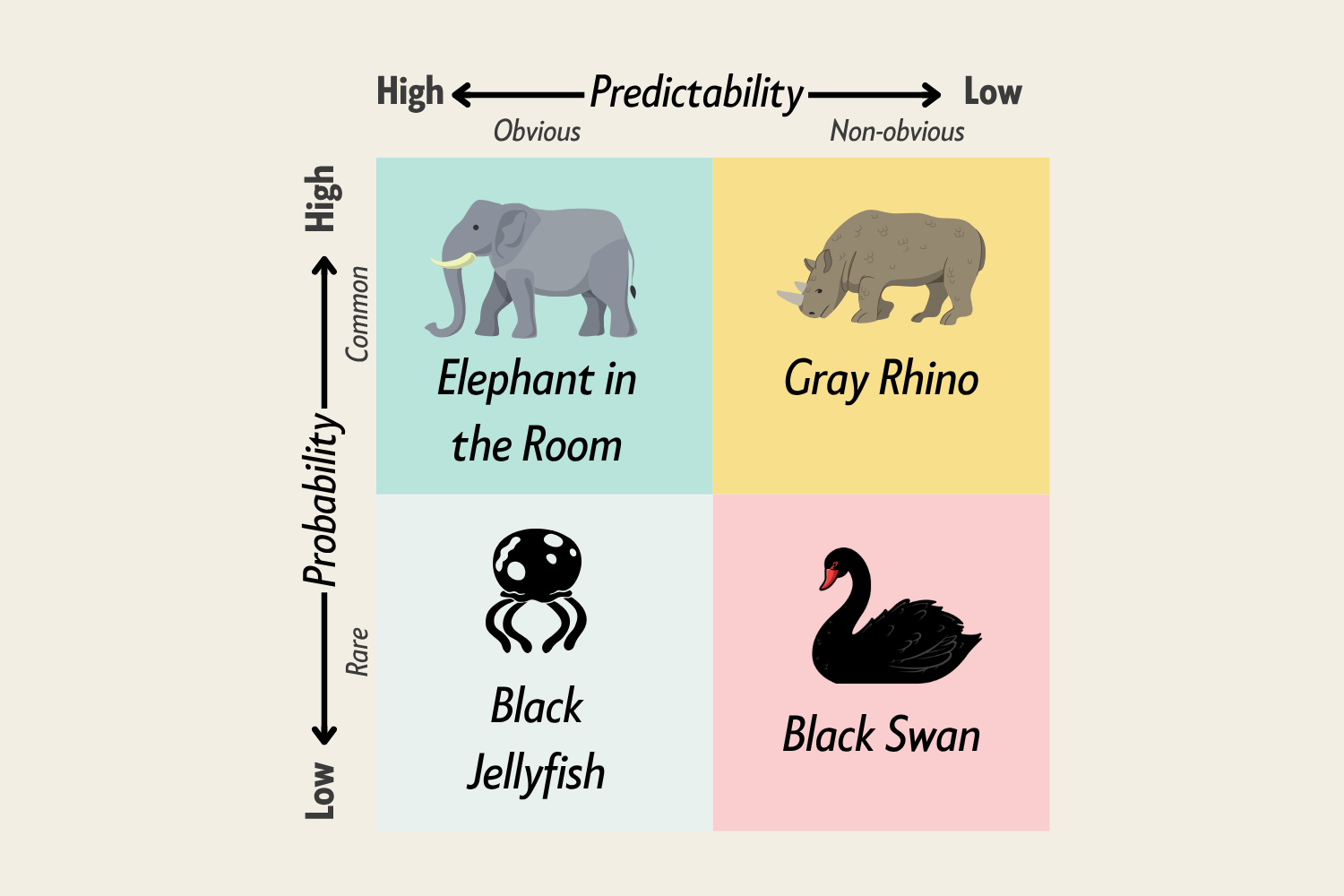
Animal Risk Matrix
Sort risk by predictability and probability into shapes — Elephant, Gray Rhino, Black Jellyfish, Black Swan — each needs a different response.
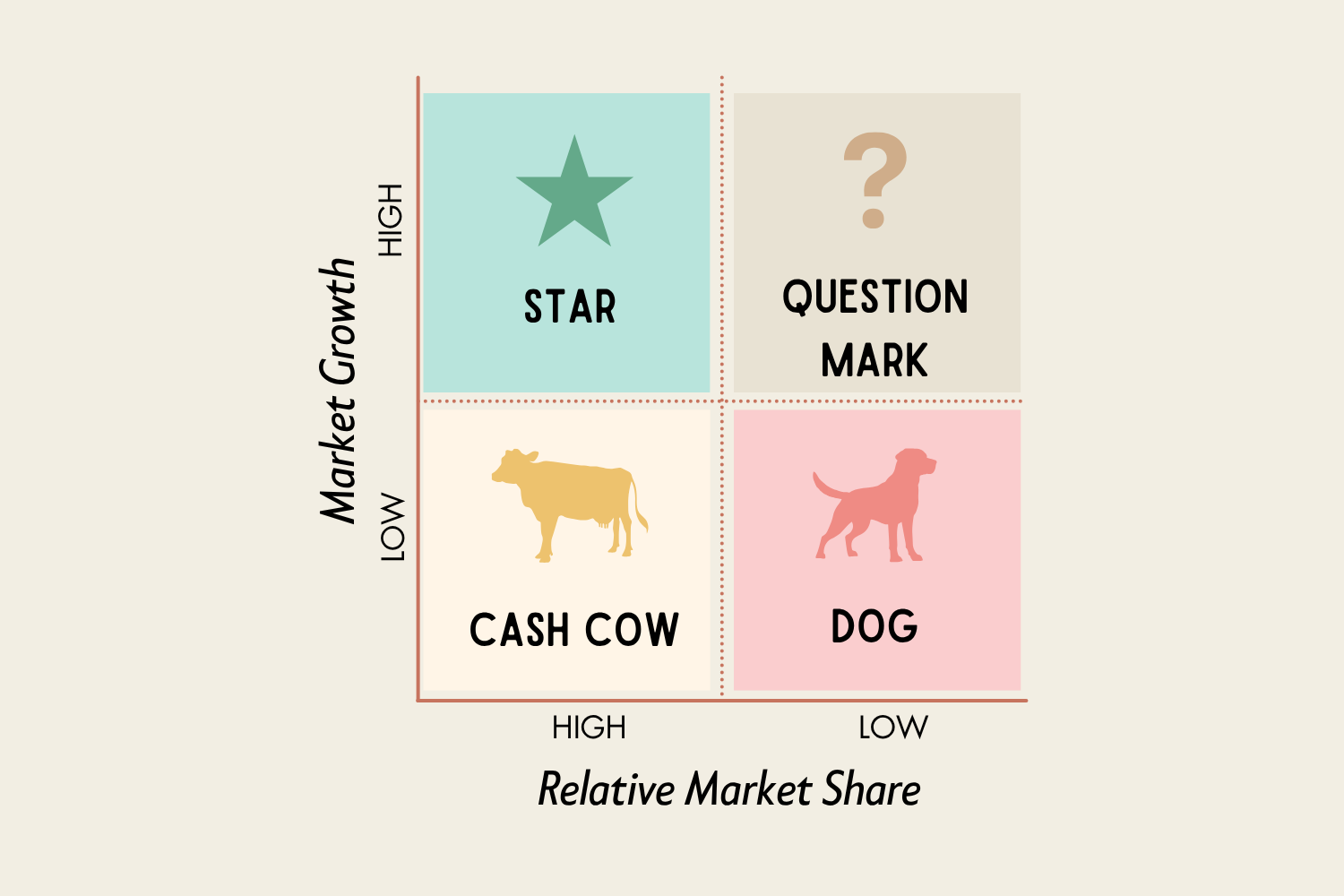
BCG Matrix
A 2x2 that sorts products or units by market growth and share — telling you what to fund, milk, or kill.

BHAG
A Big Hairy Audacious Goal: a 10-to-30-year target so bold it looks impossible — your organization's North Star.
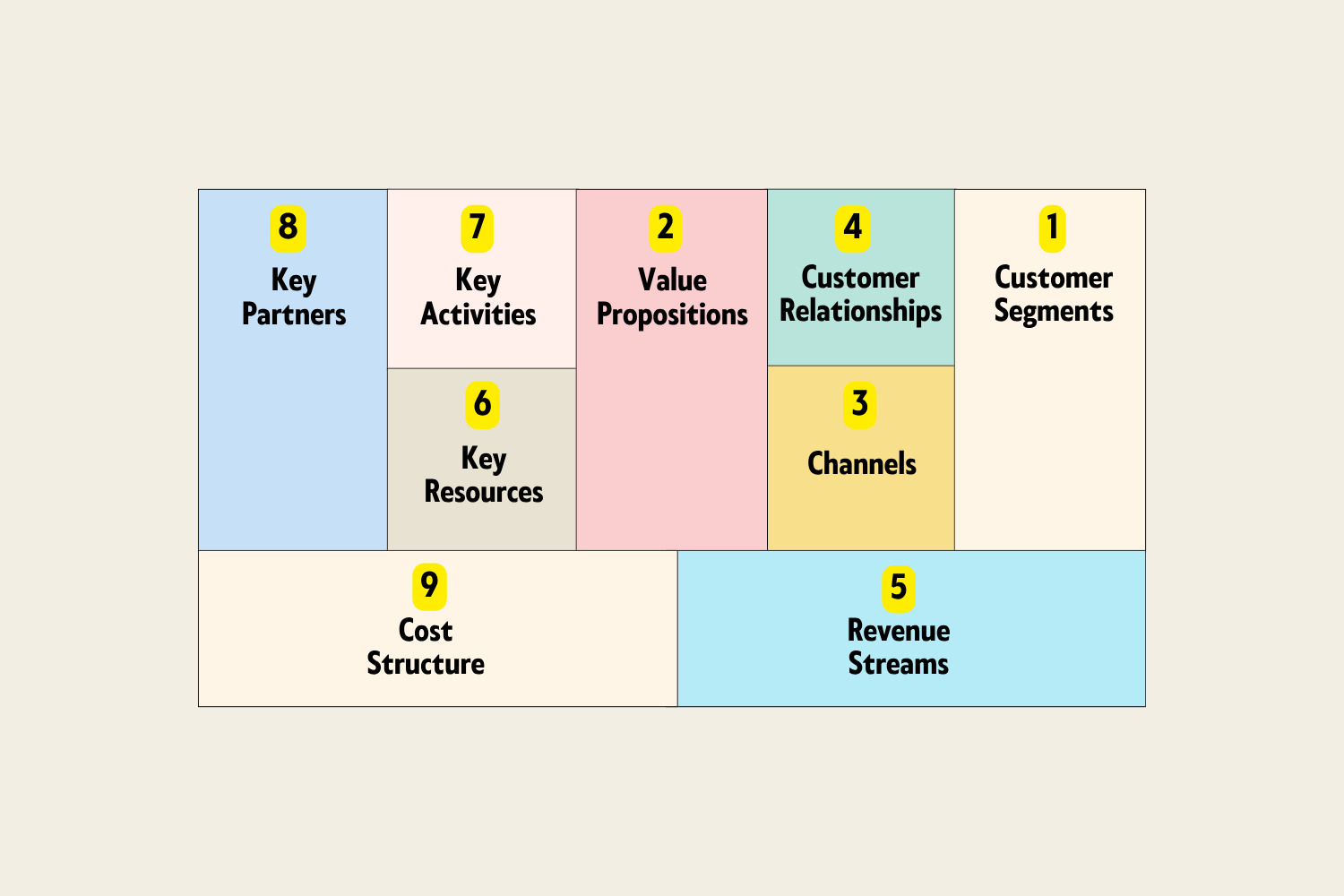
Business Model Canvas
A one-page map of how your business creates, delivers, and captures value, broken into nine blocks you see and debate.

Dreamboxing
A model for turning vision into disciplined execution by cycling through three stages — Dream, Drive, Do — rather than favoring one.

IKEA Effect
You value things more when you helped build them — which is why a strategy handed to a team lands flat.

Ikigai
A Japanese concept locating your reason for being at the overlap of passion, skill, world need, and pay.

Inversion Principle
A thinking tool that swaps "how do I succeed?" for "how would this fail?" — surfacing failure modes forward planning misses.

Kaizen
A continuous improvement philosophy built on small, repeated changes to the system your team works in — not big transformation programs.
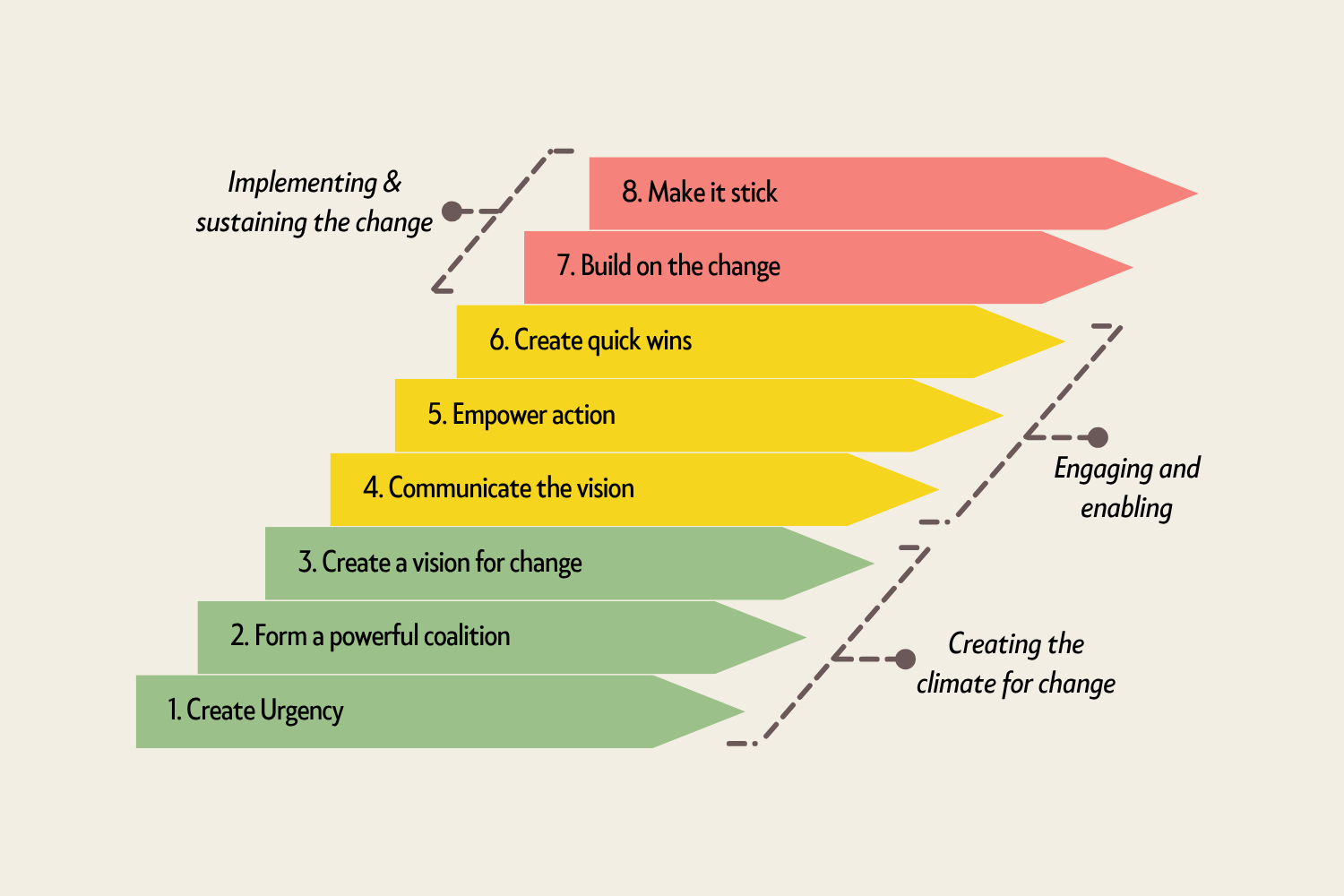
Kotter's 8-Step Change Model
John Kotter's eight-step process for leading change, from creating urgency to anchoring new behavior in culture — keeping transformations from reversing.

Lean Startup
Eric Ries's Build-Measure-Learn loop: test your riskiest assumption with the smallest product, measure what people do, then pivot or persist.

McKinsey's Three Horizons Model
Split your team's effort across three time frames — defend the core, grow what's emerging, seed future bets — without mortgaging tomorrow.

Porter's Five Forces
Porter's answer to why some industries are brutal for profit — five forces shaping any market, telling you where to compete.

Premortem Technique
Assume the project has failed by a specific date, then explain why — hindsight gets your team saying what they thought.
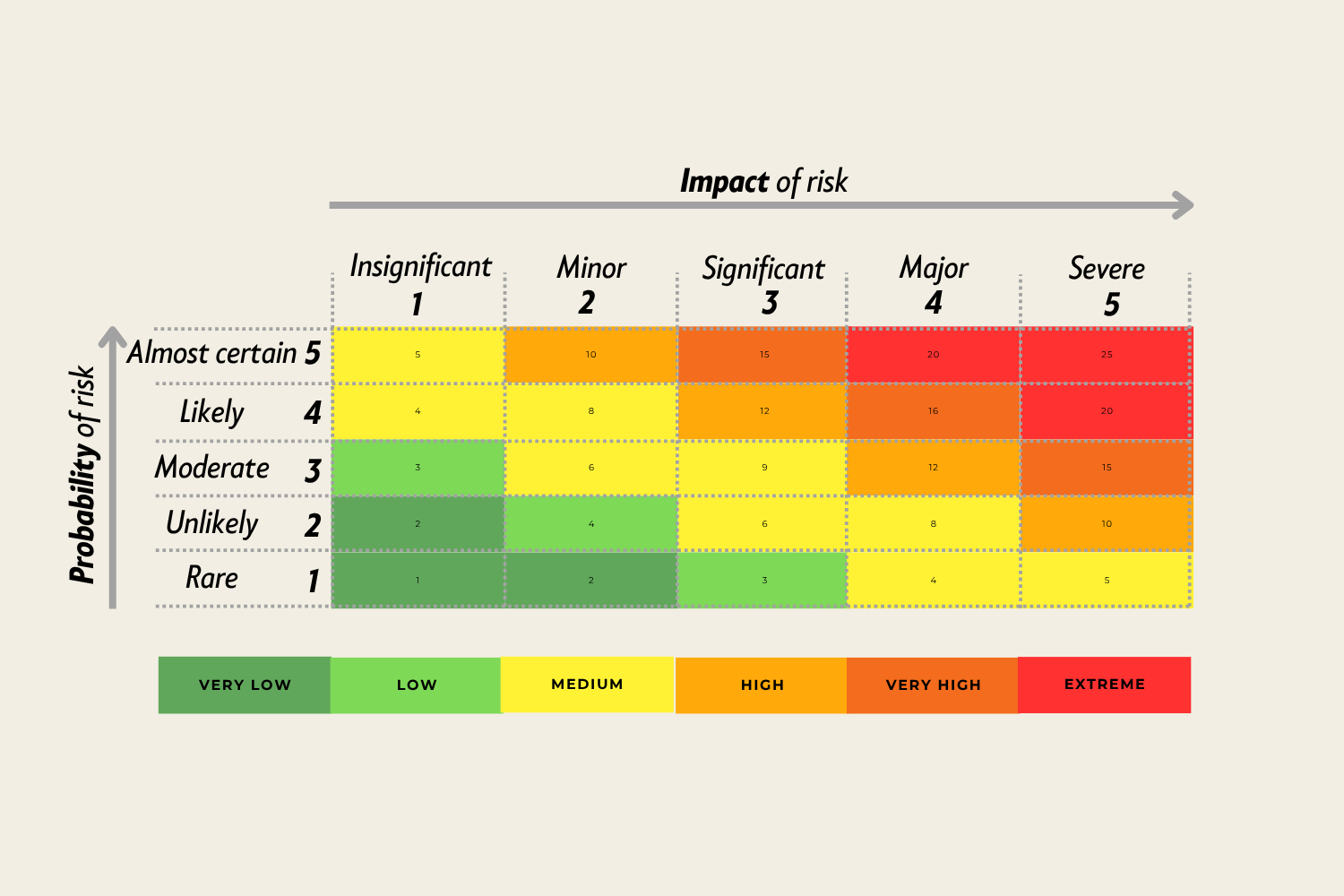
Risk Assessment Matrix
The grid for scoring risks by likelihood and impact, turning a messy list of worries into a ranked priority order.
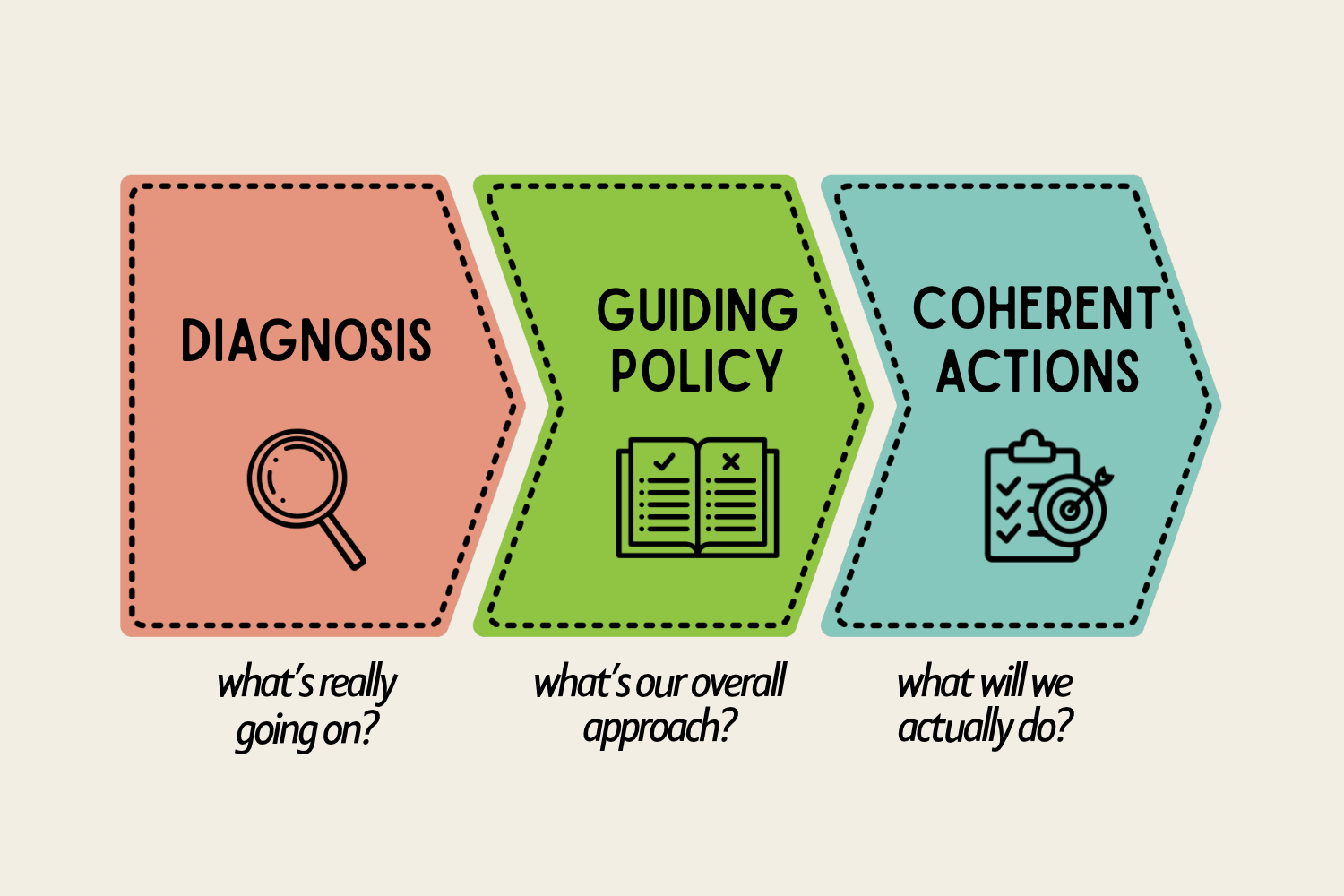
Rumelt's Kernel
Richard Rumelt's test for telling a real strategy from a list of goals — a diagnosis, a guiding policy, and coherent actions. Miss any one of the three and what you have is a wish, not a strategy.

Six Sigma
A data-driven way to remove root causes of defects, via the DMAIC cycle: define, measure, analyze, improve, control.
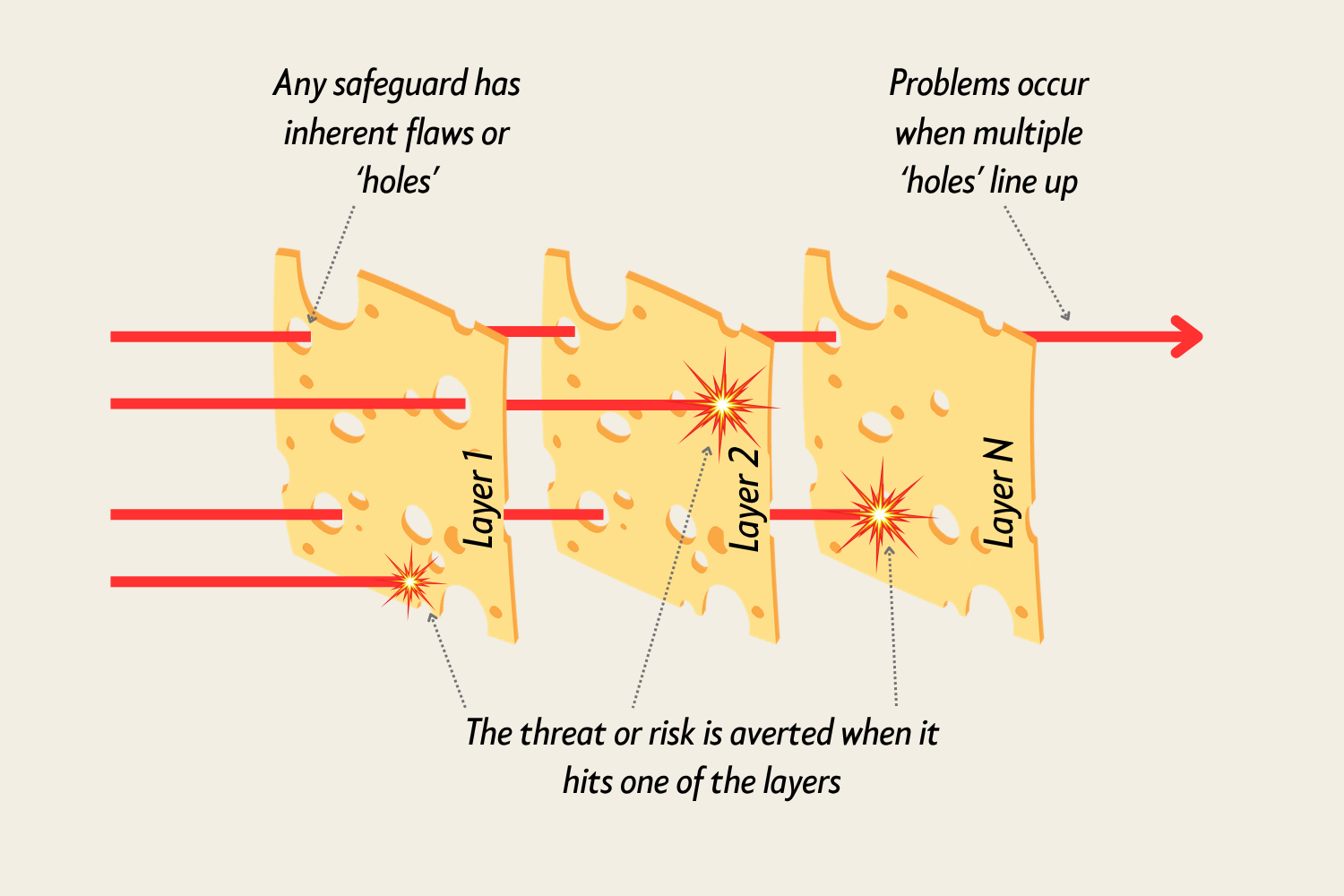
Swiss Cheese Model
Every layer of defense has holes — failure gets through only when several holes line up — fix is redundancy, not perfection.

SWOT Analysis
A four-box check on Strengths, Weaknesses, Opportunities, Threats — splitting what you control from what you don't before deciding what's next.

The 3 Conditions for Change
A team can agree in the room and change nothing after — change needs three conditions at once: Willingness, Desire, Courage.
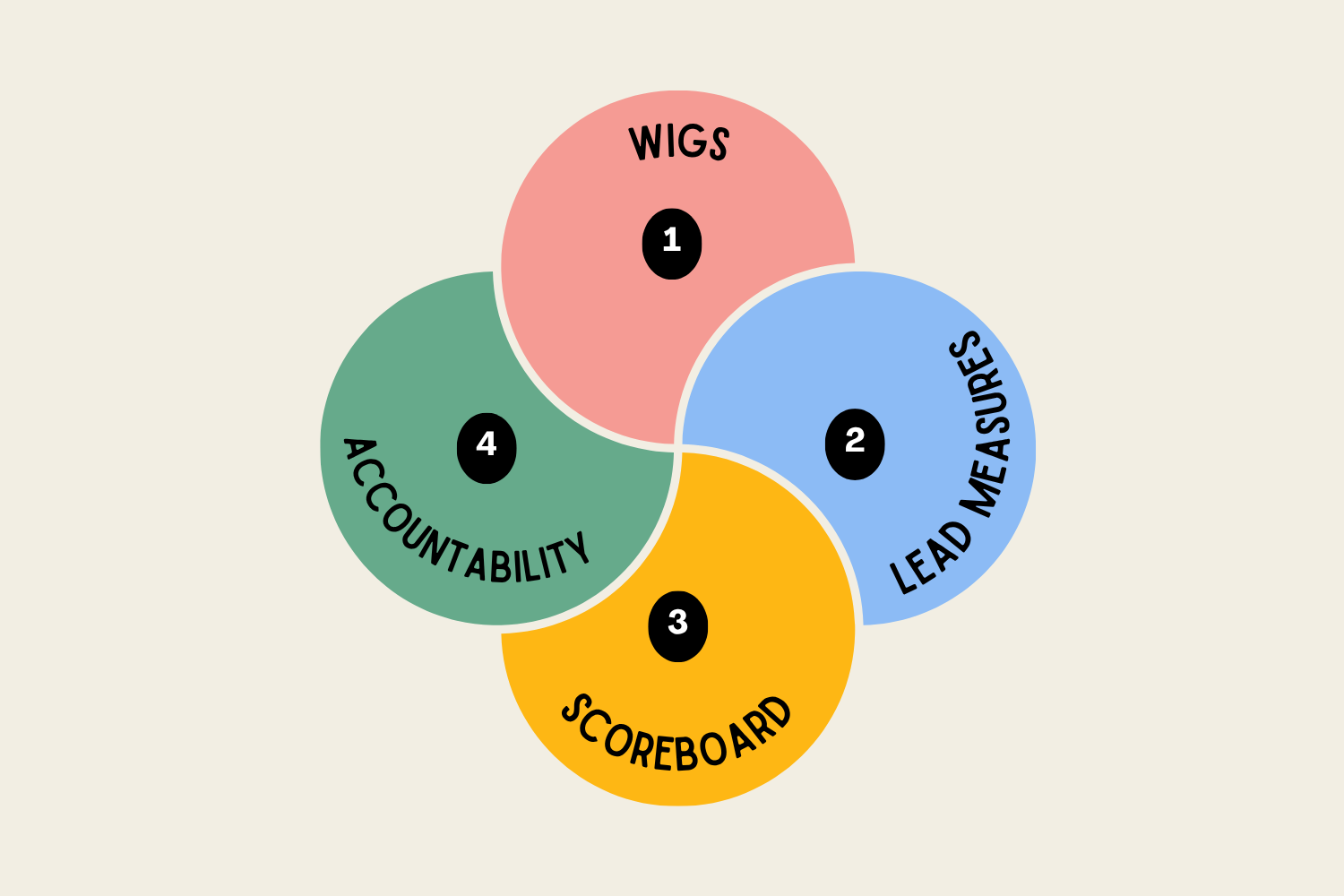
The 4 Disciplines of Execution
Four disciplines for hitting your important goals: narrow focus, act on lead measures, keep a visible scoreboard, run weekly accountability.

The Golden Circle
Simon Sinek's three-ring model: most leaders talk What, How, Why — inspiring ones flip it, because belief precedes product.

The Hedgehog Concept
Jim Collins' test for finding what your team should be built around — where passion, potential, and results overlap.

The Innovator's Dilemma
Clayton Christensen's explanation for why great companies fail doing everything right — serving your best customers blinds you to cheap newcomers.
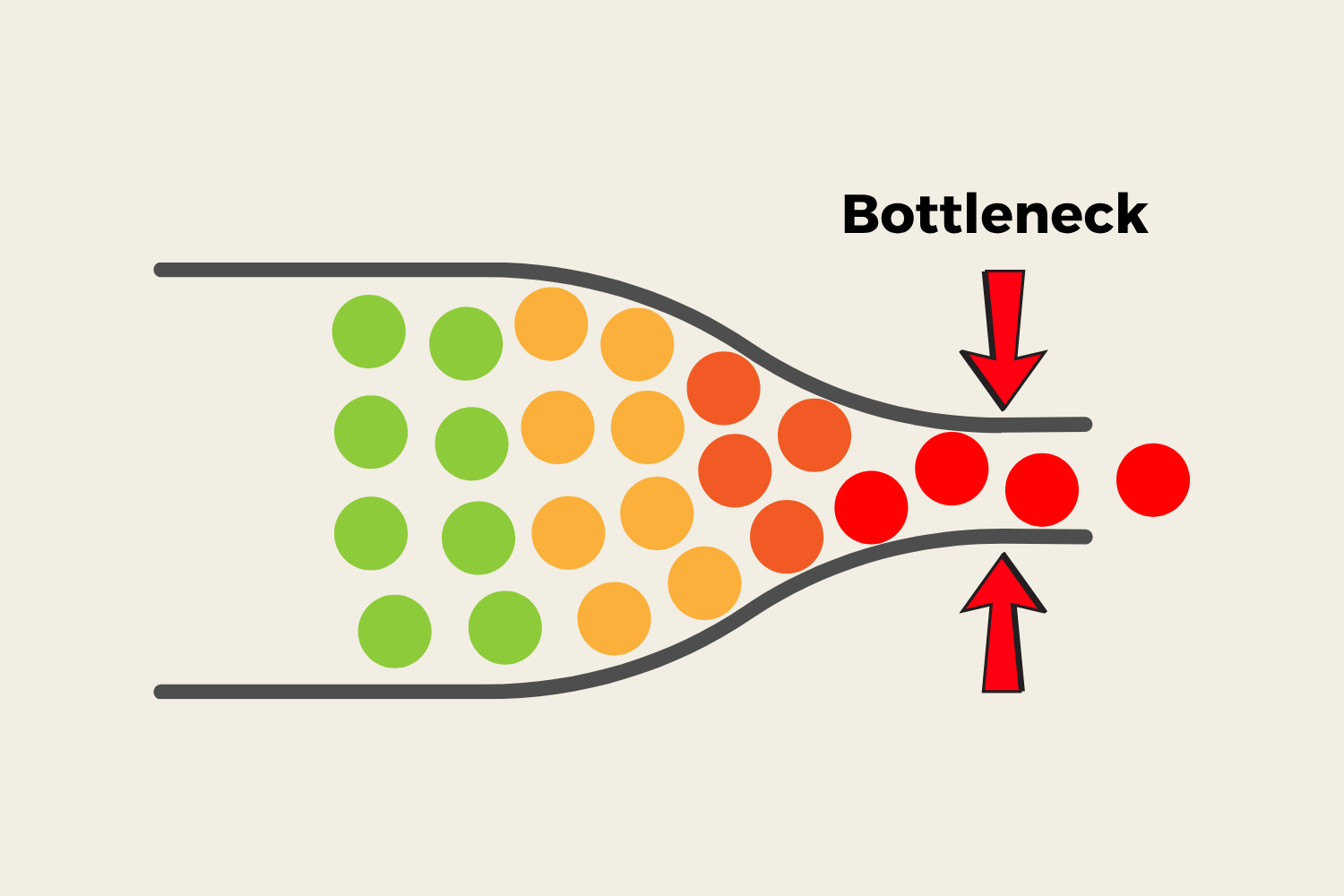
The Theory of Constraints
Every system has a bottleneck that caps everything it can produce — find that one constraint and put your energy there.

The Value Triangle
A modern replacement for the Iron Triangle — swap cost, time, scope for investment, frequency, and incremental value — levers, not constraints.