McKinsey's Three Horizons Model
Split your team's effort across three time frames — defend the core, grow what's emerging, seed future bets — without mortgaging tomorrow.
 Find this on the mind-map
Introduction
This one came out of McKinsey & Company, set out in The Alchemy of Growth by Mehrdad Baghai, Stephen Coley, and David White. It's built to help you balance short-term goals against medium-term innovation and long-term growth ideas, so your strategy stays grounded without losing sight of what's ahead.
How It Works
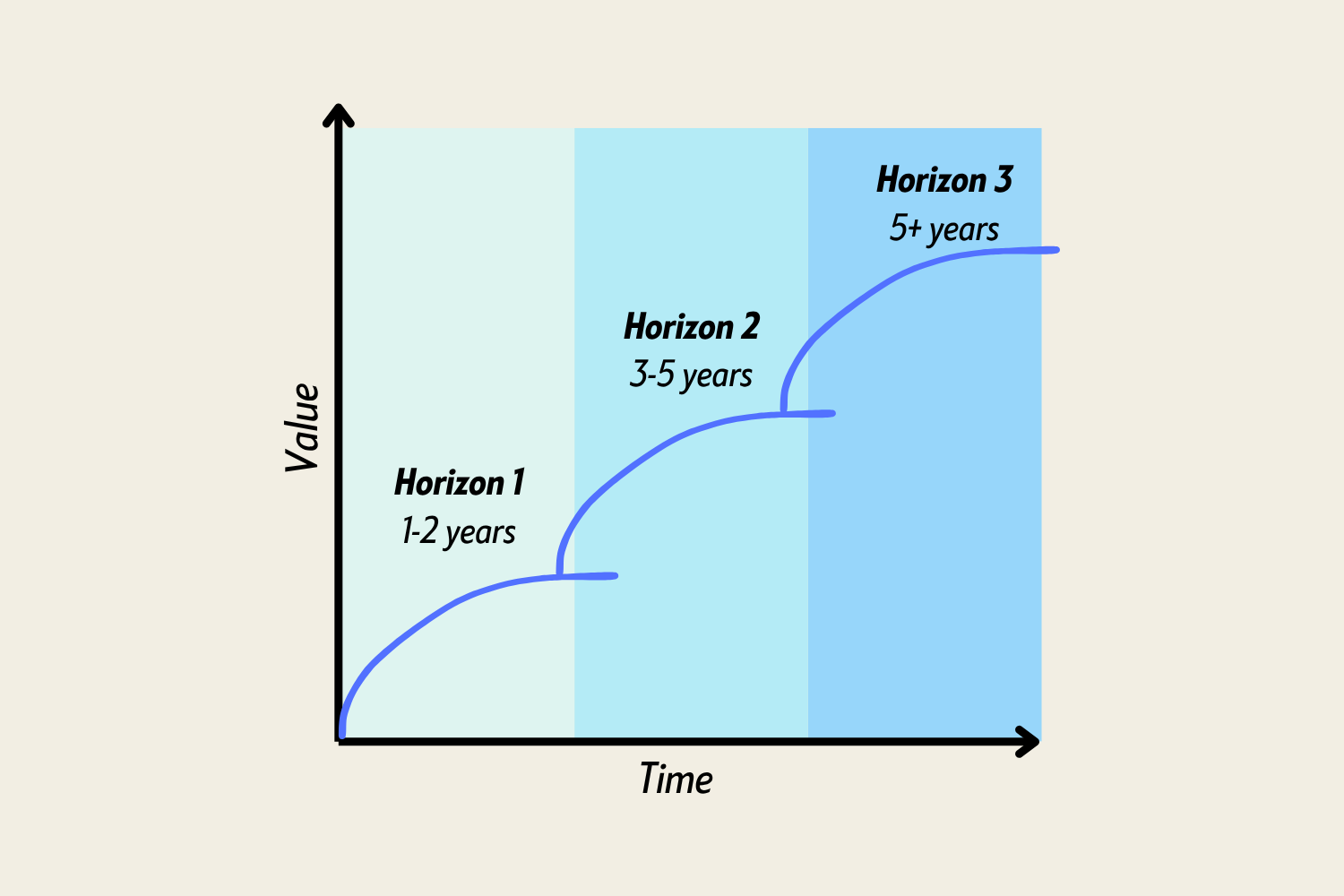
The model splits your organization's focus into three horizons of time and activity, and they run in parallel — not in sequence.
| Horizon | Time frame | Activities | Mindset | Example |
|---|---|---|---|---|
| Horizon 1 | 1 to 2 years | Incremental improvement, cost reduction, operational efficiency. Defend and expand the core business that pays the bills. | Deliver immediate results. | Improving a software feature to retain existing customers. |
| Horizon 2 | 3 to 5 years | Scaling proven ideas, testing new products, entering adjacent markets. | Build the bridge to the future without losing the present. | Expanding an existing service into a new region. |
| Horizon 3 | 5 years and beyond | Research, exploring disruptive technology, conceptualising future business models. | Think big and prepare for uncertainty. | Developing AI-driven capabilities that could change how customers are served. |
These horizons aren't departments — they're time frames of investment logic. Horizon 1 funds the other two. Horizon 2 is the hardest one to hold onto, because it's expensive enough to show up in the budget and too far out to defend with this quarter's numbers. Horizon 3 is where your next core business eventually comes from.
The question this model forces you to ask is simple: are you only thinking about today, or are you actually investing in tomorrow too.
Why It Matters for Leaders
The tension between delivering now and preparing for later is the daily condition of your job, and treated as an either/or choice, it resolves the same way every time. Urgent work wins, because urgent work is what gets measured. You can pour everything into short-term wins and still have no plan for growth, and nobody notices until the core business starts slowing down.
What this model gives you is a way to stop that being a zero-sum choice. Once effort gets labeled by horizon, the imbalance becomes a number instead of a feeling. It's common to discover your team spends 90% of its time in Horizon 1 and only 10% across the other two combined — and that's a fact that changes a conversation in a way opinions never do.
Picture how this plays out in practice. A software team ships bug fixes and updates on the flagship product, while a second effort quietly builds an AI assistant meant to land years out, and a small experimental group pokes at VR collaboration on the side. A retail chain fixes checkout friction now, launches a subscription delivery service for the medium term, and partners with a startup on delivery drones for later. A healthcare provider invests in telemedicine and scheduling today, a wearables-linked monitoring app next, and personalized medicine with a biotech partner last. In every case, the work exists at all three ranges at once — your job is the split, not the choice.
The horizons also hand you language for defending exploratory work upward. "This is a Horizon 3 bet measured in prototypes, not revenue" beats an apology about ROI every time.
What to do next
Test your knowledge of McKinsey's Three Horizons Model
Practice McKinsey's Three Horizons Model
Apply McKinsey's Three Horizons Model to a real situation
Skills related to McKinsey's Three Horizons Model

Business Strategy
Making the focused calls about where to compete, what to prioritize, and what to say no to, because a strategy is defined as much by what it rules out as by what it commits to.

Strategic Thinking
Stepping back to see where things are heading, and actually letting that change what you do today.
Frameworks related to McKinsey's Three Horizons Model
BCG Matrix
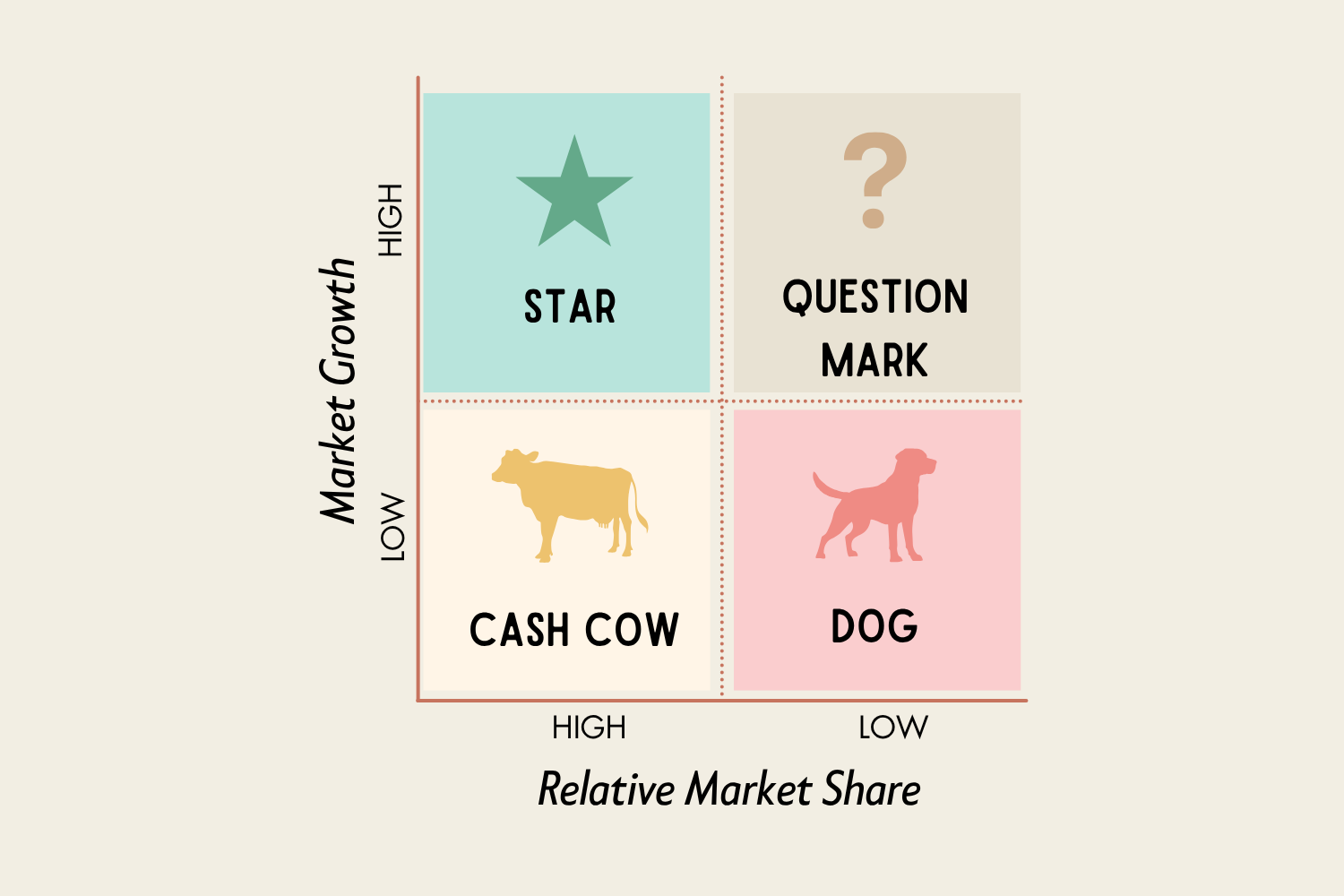
A 2x2 that sorts products or units by market growth and share — telling you what to fund, milk, or kill.

Mind Boxing
A six-box grid crossing People, Process, Product against Strategy and Tactics — deciding where your leadership time actually goes.

Porter's Five Forces
Porter's answer to why some industries are brutal for profit — five forces shaping any market, telling you where to compete.
Rumelt's Kernel
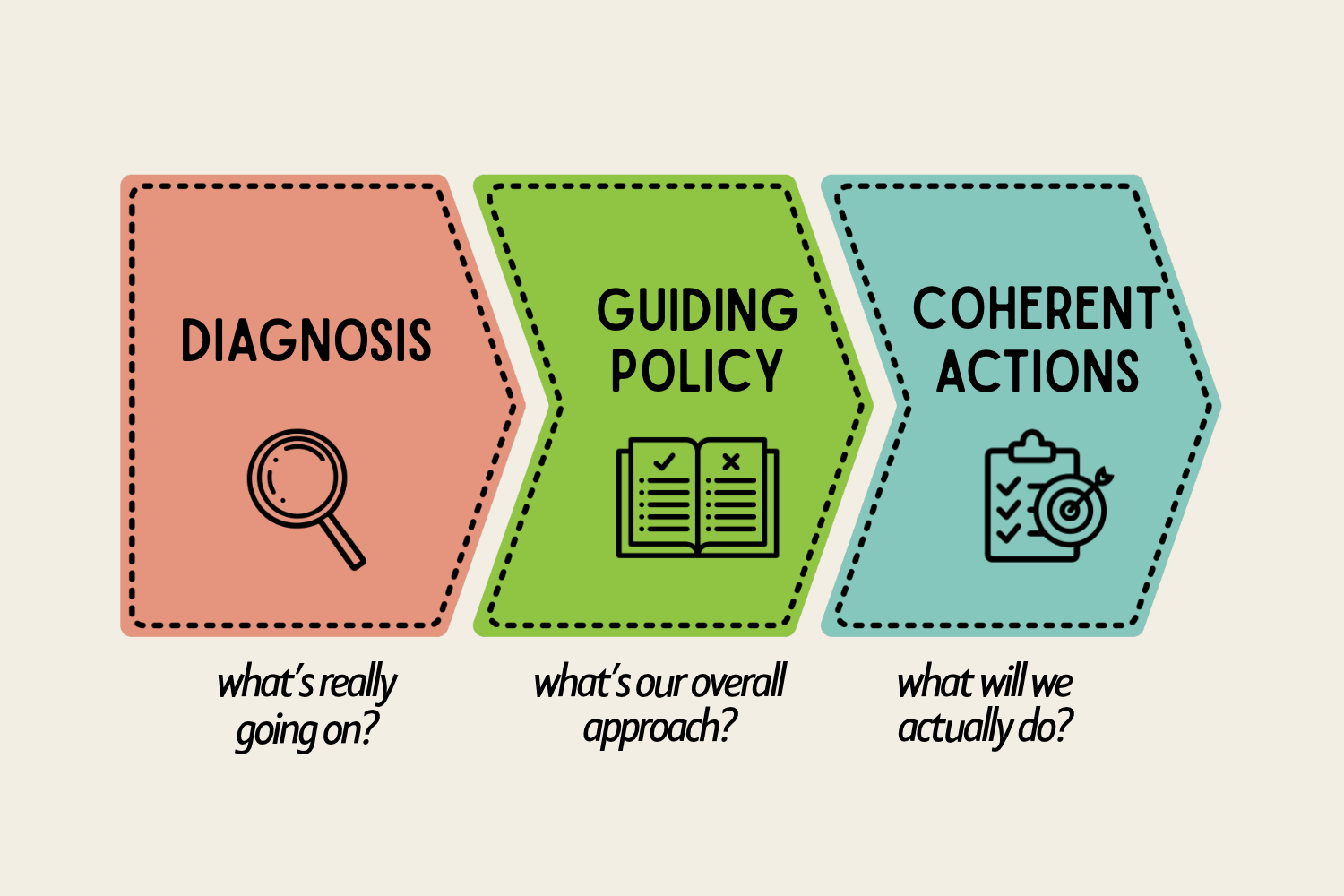
Richard Rumelt's test for telling a real strategy from a list of goals — a diagnosis, a guiding policy, and coherent actions. Miss any one of the three and what you have is a wish, not a strategy.

The Innovator's Dilemma
Clayton Christensen's explanation for why great companies fail doing everything right — serving your best customers blinds you to cheap newcomers.
Books related to McKinsey's Three Horizons Model

Built to Last
Collins and Porras' earlier, lesser-known study of visionary companies: the research that came before Good to Great, built around a single hard question: what actually survives past the founder, the product, and the current strategy?

Good Strategy Bad Strategy
Richard Rumelt's blunt case that most of what gets called "strategy" in a typical planning meeting is actually a wish list dressed up in strategic language, plus a concrete test for telling the two apart.

Good to Great
Jim Collins' research into why some companies go from average to sustained market dominance, and others don't. Read less as a book about companies and more as a book about the kind of leader you have to become before a company (or a team) can get great.

Start With Why
Simon Sinek's argument that people don't buy what you do, they buy why you do it, and that most organizations have never actually answered the question, even the ones that think they have.

Sun Tzu and The Art of Business
Mark McNeilly's translation of Sun Tzu's 2,500-year-old military strategy into six concrete business principles, built around a point most business books skip: the best wins are the ones nobody had to fight for.

The Art of War
The original 2,500-year-old military treatise, read the way most modern leaders actually use it. Not as a manual for fighting better, but as a manual for needing to fight less.

The Infinite Game
Simon Sinek's case that most leaders are playing the wrong game entirely: treating an endless competition as something you can win, when the only real goal is staying in it, strong enough to keep playing.

The Innovator's Dilemma
Clayton Christensen's answer to a puzzle that looks impossible: well-run companies, doing everything their best customers ask for, still lose to products that look worse on every spec sheet, right up until the moment they don't. The book every leader cites and few actually apply to their own team.

Walmart
A retail-industry case study of how Walmart built, and is now fighting to defend, the position it spent sixty years earning. Less a biography of Sam Walton and more a hard look at what scale economics can and can't protect you from in the age of Amazon.

Your Next Five Moves
Patrick Bet-David's chess-inspired framework for strategic leadership, built around five "moves" every founder or executive has to master in order, from knowing yourself to running power plays against bigger competitors, instead of just reacting to whatever just happened.