Mind Boxing
A six-box grid crossing People, Process, Product against Strategy and Tactics — deciding where your leadership time actually goes.
 Find this on the mind-map
Introduction
Gaurav Jain built Mind Boxing over 20 years of corporate leadership practice and published it as the 6-box framework in The Good Boss. It starts from one observation: time is the scarcest thing you have as a leader, and most leadership advice doesn't actually map onto what a leadership role contains day to day. This framework does.
How It Works
Think of your role along two dimensions.
The three verticals — the 3Ps. Every leadership role, at any level, in any industry, covers three areas.
- People — the well-being, growth, and performance of your team and stakeholders. You move between coach, mentor, taskmaster, and problem solver depending on what the moment calls for.
- Process — how work actually gets done, through two levers: efficiency (doing things right) and effectiveness (doing the right things).
- Product — whatever you deliver to customers: the product, platform, or service, including the needs you're meeting, the competition you're watching, and the innovation you're driving.
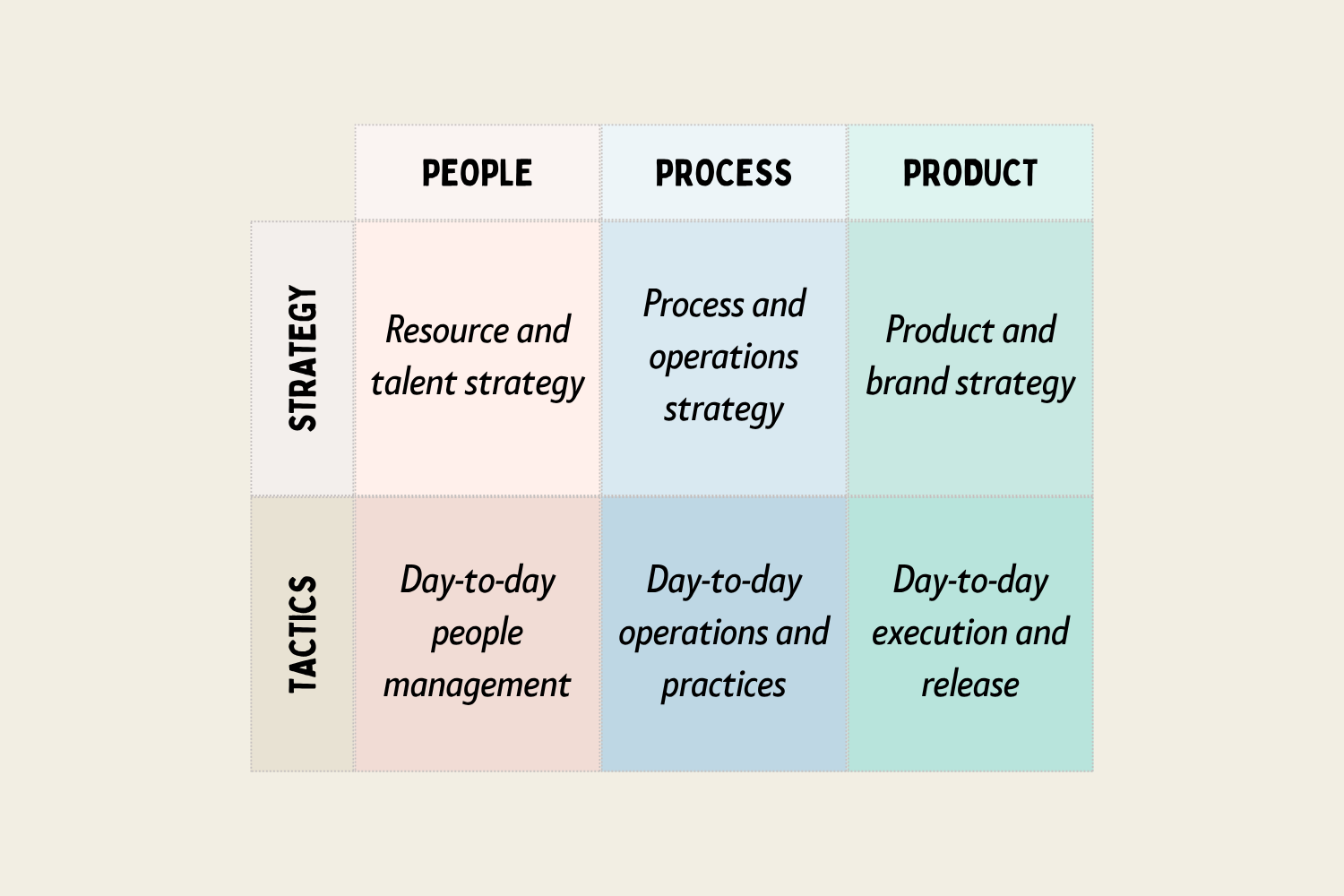
The two layers. You also operate on two horizontal layers, and where your time lands between them tends to track your seniority.
- Strategy — long-term goals, roadmap, resourcing, skill planning, spotting opportunities and threats. This is the layer most leaders neglect, because day-to-day tactics keep crowding it out.
- Tactics — current execution, hitting goals, unblocking your team, handling the escalation that just landed. Front-line and junior managers live here most of the time, and no leader gets to ignore it completely.
Cross the three verticals with the two layers and you get the six-box grid — the Mind-box.
| People | Process | Product | |
|---|---|---|---|
| Strategy | Resource and talent strategy: building and growing the team that can actually deliver the vision. | Process and operational strategy: keeping how your organization works adaptive and efficient as technology moves. | Product and brand strategy: staying ahead of competitors and leading the market. |
| Tactics | Day-to-day people management: expectations, motivation, productivity. | Day-to-day operations: streamlining practice and clearing whatever's blocking execution. | Day-to-day execution and release management: delivering results, handling escalations and fires. |
That grid gives you a bird's-eye view of everything you're responsible and accountable for — which is what makes it possible to honestly plan where your time should go.
Why It Matters for Leaders
Time is your most precious resource — ahead of budget, ahead of headcount, ahead of even vision. A chaotic day that ends with nothing meaningful accomplished isn't bad luck. It's the normal outcome of letting your calendar get filled by everyone else's requests.
This framework exists because leadership is genuinely hard to scope. Every leader has a different style and background, and the job looks completely different depending on whether you're a front-line manager, a middle manager, or a senior executive. Without a structure like this, figuring out what actually matters in your specific role is guesswork.
The most common thing this grid exposes is a starved Strategy row. You get pulled into day-to-day tactics and never make the strategic contribution your role is actually there for — and the gap only widens as you get more senior. Seeing your time as a grid makes that imbalance visible instead of just something you vaguely feel.
The second failure is one overloaded box. If you're living in Product-Tactics because the escalations are loud, you're not just mismanaging your time — you're neglecting five other parts of the job, including the People-Strategy work that determines whether your team can even deliver next year.
The operating principle here, borrowed from Stephen Covey, is to schedule your priorities rather than prioritize your schedule. Mind Boxing is what turns that into an actual weekly plan you can look at and check.
What to do next
Test your knowledge of Mind Boxing
Practice Mind Boxing
Apply Mind Boxing to a real situation
Skills related to Mind Boxing

Productivity
Directing your time and energy at the work that actually matters, instead of letting whatever lands first run your day.

Strategic Thinking
Stepping back to see where things are heading, and actually letting that change what you do today.
Frameworks related to Mind Boxing

McKinsey's Three Horizons Model
Split your team's effort across three time frames — defend the core, grow what's emerging, seed future bets — without mortgaging tomorrow.
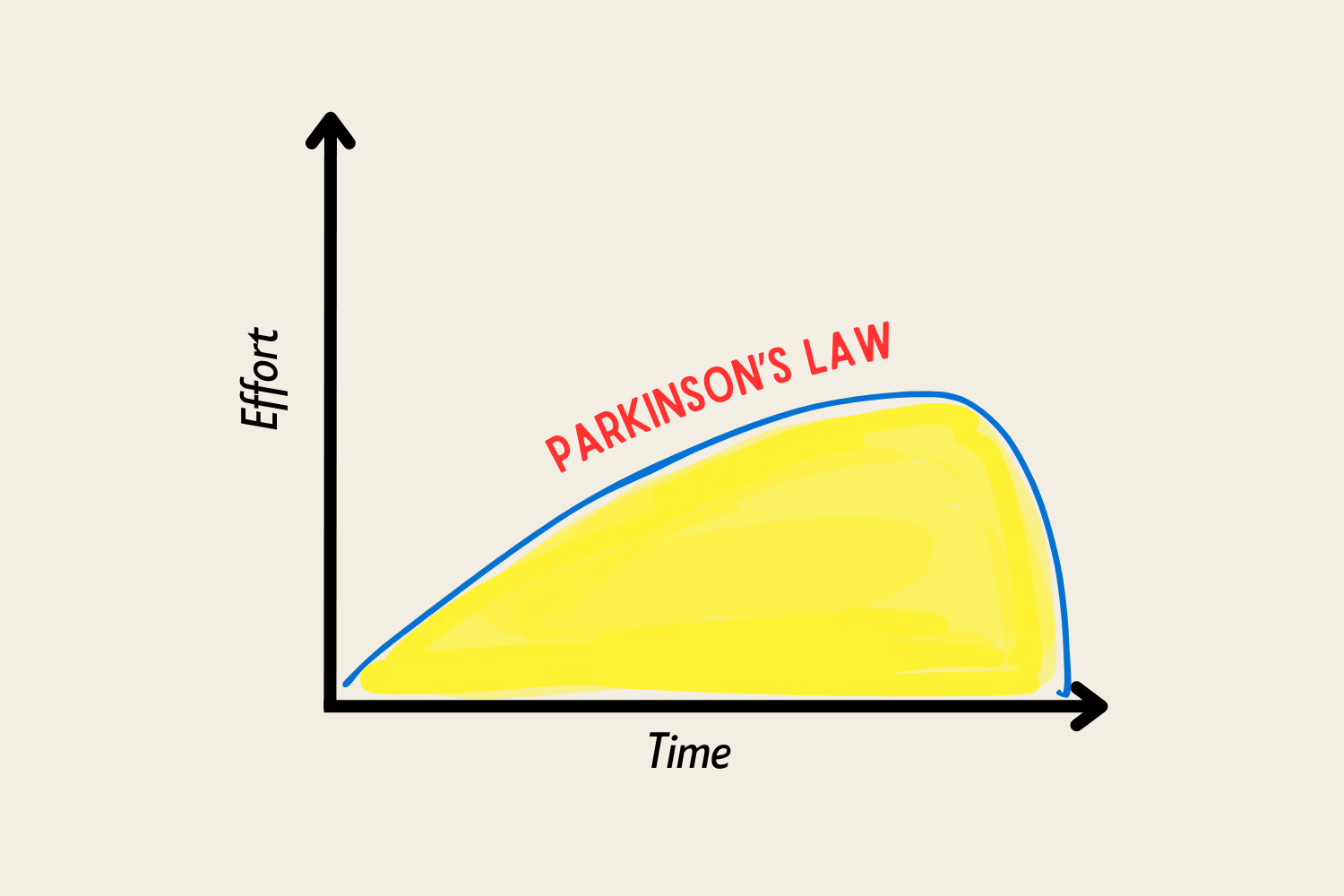
Parkinson's Law
Work expands to fill the time you give it — deadlines shape effort more than the work itself, so tighten deadlines.
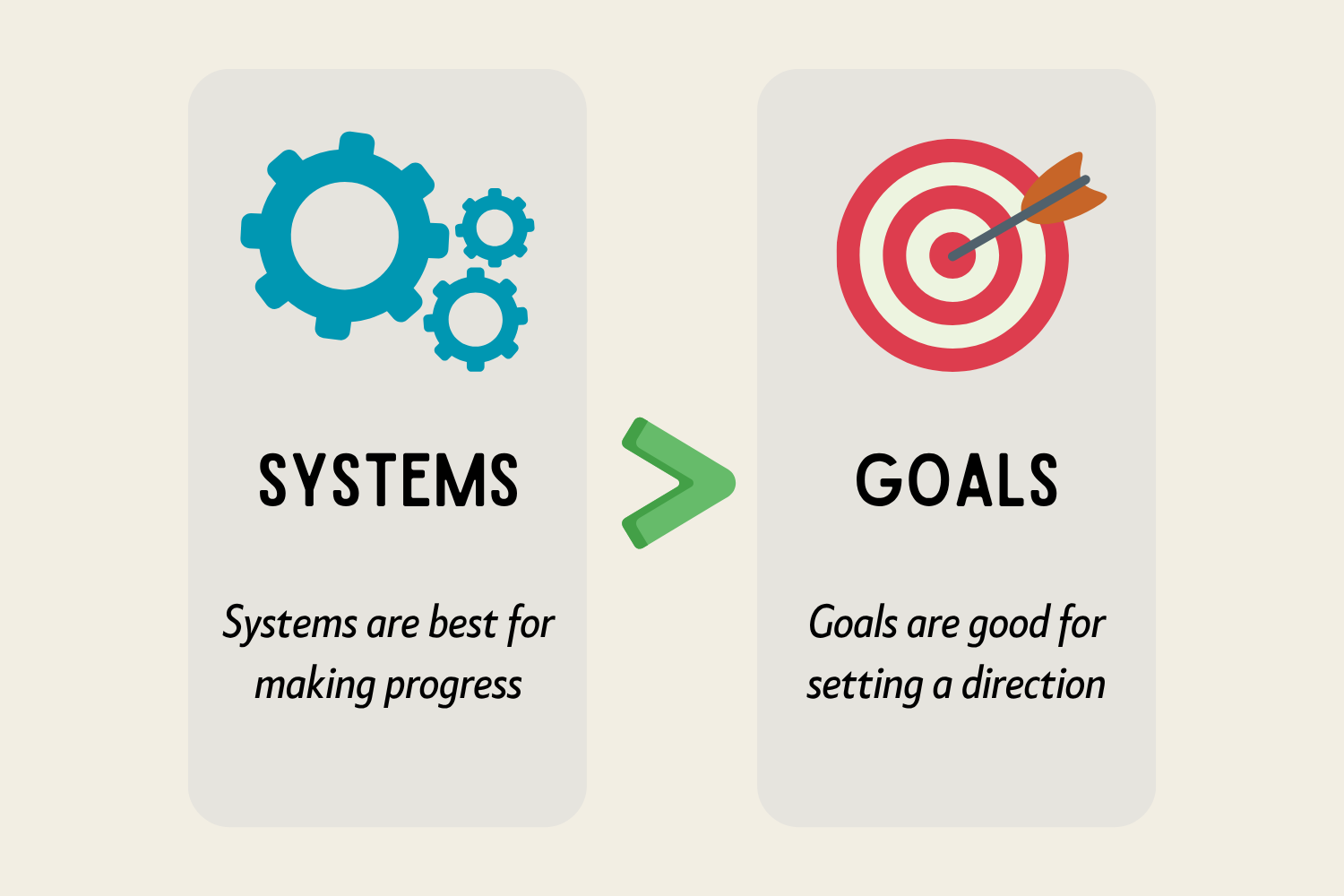
Systems > Goals
Results come from repeatable habits, not targets — turn every goal into a system of leading behaviors you design and track.

The 3 Pillars of Smart Work
Smart work isn't doing less — it's efficiency, creativity, and discipline together, not permission to coast on "work smart, not hard."
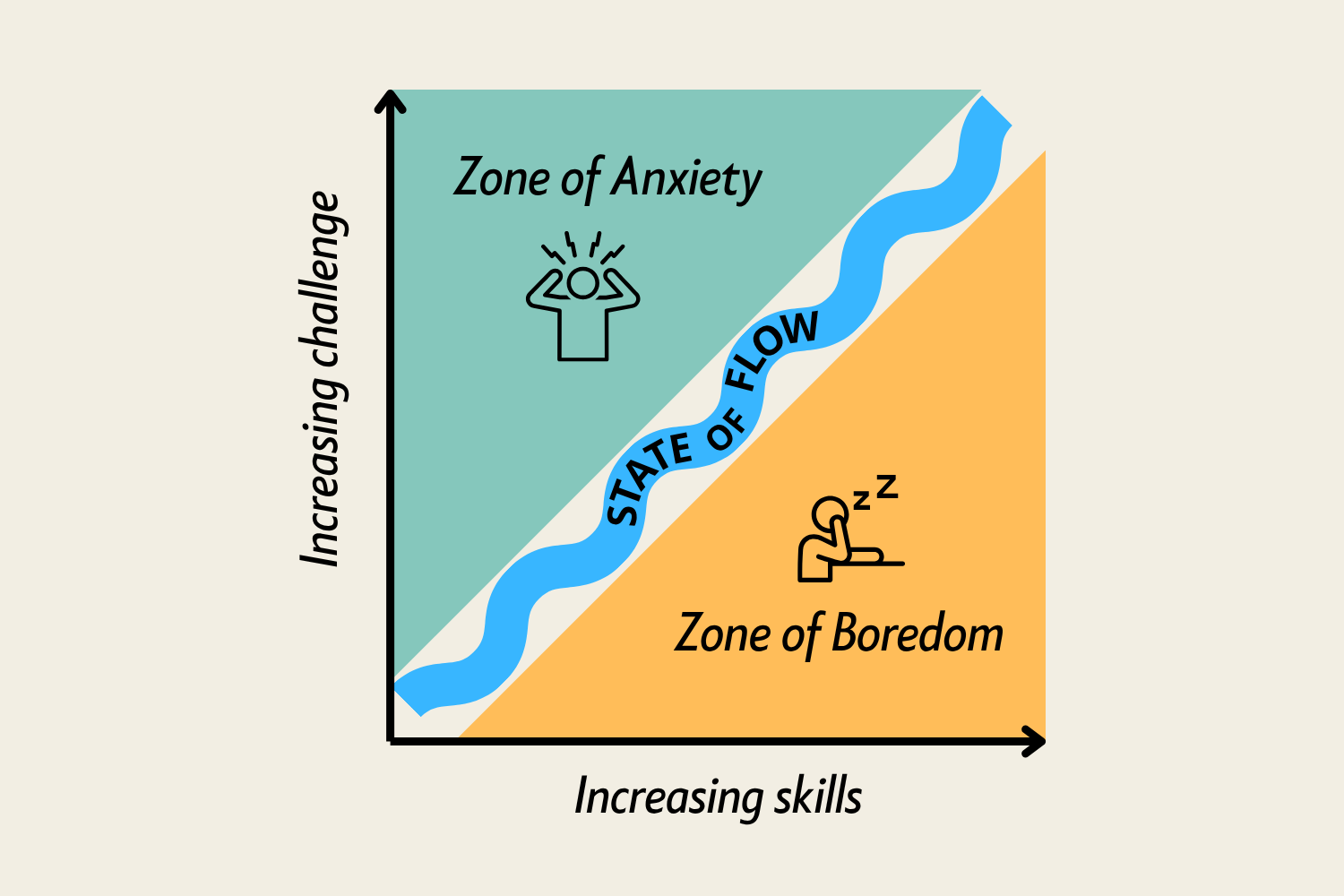
The State of Flow
The zone between anxiety and boredom, where challenge meets skill — your job is moving each person, with a different push.
Books related to Mind Boxing

Atomic Habits
James Clear's case that tiny, consistent changes compound into dramatic results, and that the system you build matters more than the goal you set, no matter how motivated you feel on day one.

Deep Work
Cal Newport's case that the ability to focus without distraction on a hard problem is becoming rare and valuable at the exact moment most of the modern workday (email, meetings, constant notifications) is organized to make it nearly impossible.

Focus
Daniel Goleman's case that attention, not raw intelligence or emotional intelligence alone, is the overlooked resource behind effective leadership, and that most leaders are depleting it faster than they realize.

The 4-Hour Workweek
Timothy Ferriss's provocation that most of what fills a workday isn't actually producing most of the value. A useful, if deliberately extreme, lens for any manager who's never actually audited where their hours go.

The Power of Habit
Charles Duhigg's deep dive into why habits form and how they change, and a practical mechanism for any manager who's tired of relying on willpower to fix behavior that structure should be fixing instead.