The 4-Hour Workweek
Timothy Ferriss's provocation that most of what fills a workday isn't actually producing most of the value. A useful, if deliberately extreme, lens for any manager who's never actually audited where their hours go.
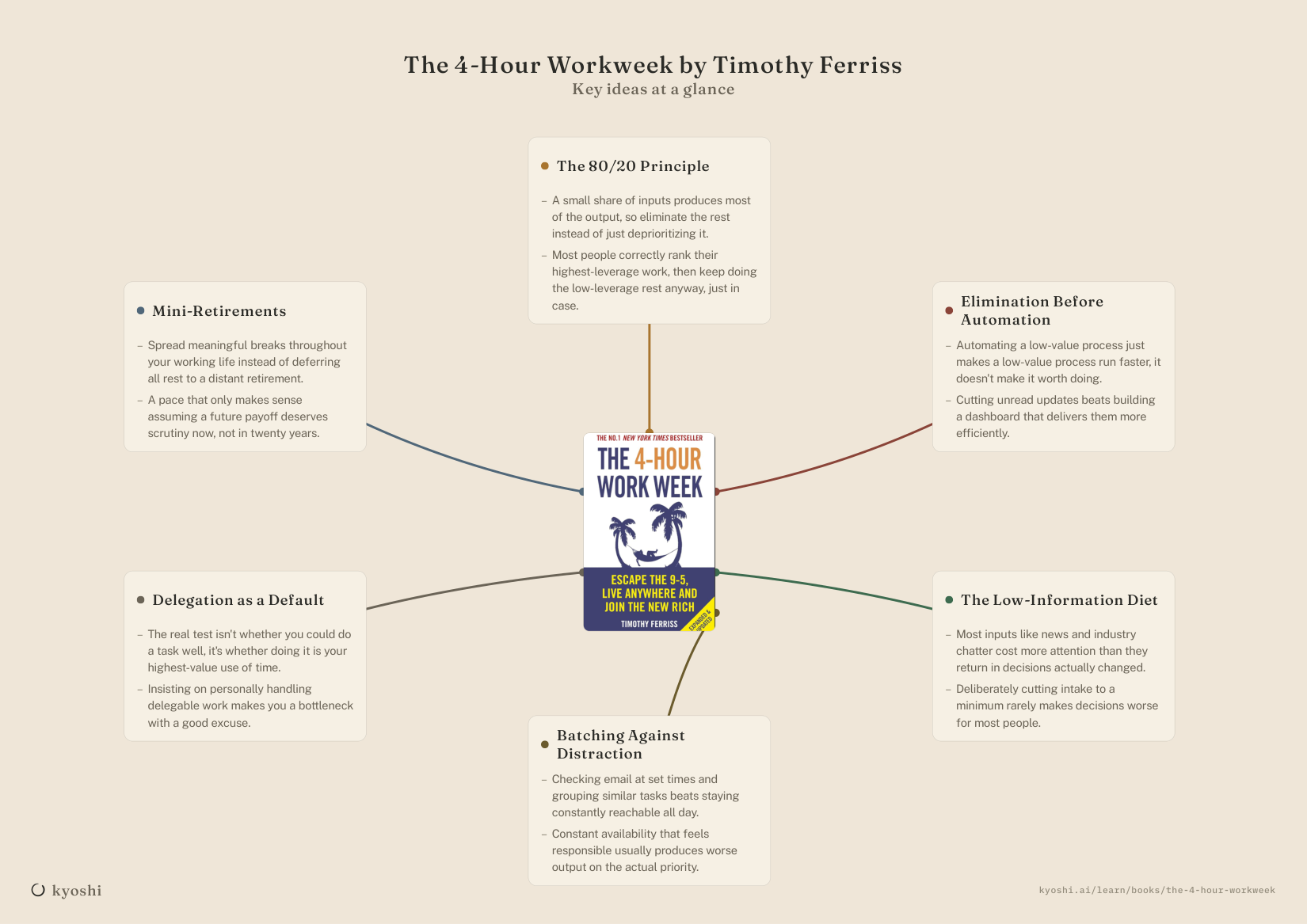
 Find this on the mind-map
Introduction
Timothy Ferriss's title is a deliberate exaggeration, but the underlying claim is genuinely useful: most people's time, attention, and effort are wildly misallocated relative to what actually produces results, and almost nobody has audited the gap. The book's real subject isn't working four hours a week. It's the idea that you can design a smaller, deliberately chosen set of high-leverage activities instead of defaulting to busyness as a proxy for productivity, and that most "necessary" work turns out to be optional once you actually check.
The 80/20 Principle, Applied Relentlessly
Ferriss leans hard on the Pareto observation that a small share of inputs tends to produce most of the outputs, and pushes managers to apply it far more aggressively than they usually do: not just "focus on the important 20%," but actively eliminate the 80% rather than just deprioritizing it. Most people correctly identify their highest-leverage clients, tasks, or projects, and then keep doing all the low-leverage ones anyway "just in case." Ferriss's version of the exercise ends with cutting, not just ranking.
Elimination Before Automation
The book's DEAL framework (Definition, Elimination, Automation, Liberation) puts elimination deliberately before automation, which is a common ordering mistake. Automating a low-value process just makes a low-value process run faster; it doesn't make it worth doing. Picture two managers drowning in status update requests. One builds an elaborate automated dashboard so updates flow out faster. The other asks which updates anyone actually acts on, cuts the rest, and only then automates what's left. The second manager did less total work and produced more useful output.
The Low-Information Diet
Ferriss argues that most inputs, like news, industry chatter, and a constant stream of "useful to know" information, cost far more attention than they return in decisions actually changed. His proposed discipline is a conscious low-information diet: deliberately reducing intake to a chosen minimum and checking whether decisions get noticeably worse. For most people, including most managers, they don't. The anxiety of missing something rarely matches the actual cost of having missed it.
Batching and Single-Tasking Against Distraction
Against the instinct to stay constantly reachable, the book pushes batching: checking email at set times rather than continuously, grouping similar tasks instead of context-switching between them all day, and treating interruption as a cost to be minimized by design rather than absorbed as the normal texture of work. The constant availability that feels responsible usually produces worse output on the actual priority than a shorter, protected, uninterrupted block would.
Outsourcing and Delegation as a Default, Not a Last Resort
Ferriss pushes delegation, including outsourcing tasks to other people or services entirely, much further than most managers are comfortable with, treating "I should just do this myself" as a default worth questioning rather than trusting. The test isn't whether you could do a task well; it's whether your doing it personally is actually the highest-value use of your specific time. A manager who insists on personally handling work that's genuinely delegable isn't being diligent. They're being a bottleneck with a good excuse.
Mini-Retirements Instead of Deferred Living
Rather than saving all rest and travel for a distant retirement, Ferriss argues for distributing meaningful breaks, what he calls "mini-retirements," throughout a working life, on the logic that deferring everything enjoyable to a hypothetical future is a bad bet against health, circumstance, and plain uncertainty. The underlying challenge to a manager's own life design: if your current pace only makes sense assuming a distant payoff, that assumption deserves scrutiny now, not in twenty years.
Putting It Together
The throughline across elimination, the low-information diet, batching, and delegation is the same question asked five different ways: is this actually earning the time and attention it's getting, or is it just familiar? Ferriss's answer, applied honestly, usually cuts far more than it adds. And the point was never really four hours a week. It was making that audit a habit instead of a one-time New Year's exercise.
Why It Matters for Leaders
The useful version of this book for a manager isn't logistics, it's the discipline of asking "does this actually need to happen" before asking "how do I do it faster." Most of a manager's calendar is full of things nobody has checked in years: inherited status meetings, recurring reports nobody reads end to end, approval steps that exist because someone once got burned. Ferriss's real contribution is giving you permission to just stop doing some of it, on purpose, rather than tolerating it as the cost of the job.
The place this shows up most is in a manager's own time, not their team's. A manager who answers every message within minutes, sits in every meeting out of habit, and personally handles tasks a direct report could own, isn't actually being more responsible. They're avoiding the harder question: is this the best use of the specific thing only I can do right now? Ferriss's test cuts straight through the guilt that usually blocks that question.
The hardest part to apply isn't cutting the obviously low-value stuff. It's cutting the stuff that feels responsible to keep doing: the recurring report you built yourself and are proud of, the standing 1:1 that slowly turned into a status update. The discipline is running the same test on your own habits that you'd run on anyone else's: would removing this, just once, actually break anything?
Picture a product manager, Dana, who spends two hours every Friday compiling a status deck nobody has asked a follow-up question about in months. She assumes it's expected. One week she's out sick and skips it entirely. Nobody notices. That's the whole book in one data point: the work that feels mandatory and the work that's actually valued are two different lists, and most managers have never checked whether theirs match.
What to do next
Reinforce your understanding of The 4-Hour Workweek
Books related to The 4-Hour Workweek

Atomic Habits
James Clear's case that tiny, consistent changes compound into dramatic results, and that the system you build matters more than the goal you set, no matter how motivated you feel on day one.

Deep Work
Cal Newport's case that the ability to focus without distraction on a hard problem is becoming rare and valuable at the exact moment most of the modern workday (email, meetings, constant notifications) is organized to make it nearly impossible.

Focus
Daniel Goleman's case that attention, not raw intelligence or emotional intelligence alone, is the overlooked resource behind effective leadership, and that most leaders are depleting it faster than they realize.

The Power of Habit
Charles Duhigg's deep dive into why habits form and how they change, and a practical mechanism for any manager who's tired of relying on willpower to fix behavior that structure should be fixing instead.
Skills related to The 4-Hour Workweek

Frameworks related to The 4-Hour Workweek

Mind Boxing
A six-box grid crossing People, Process, Product against Strategy and Tactics — deciding where your leadership time actually goes.
Parkinson's Law
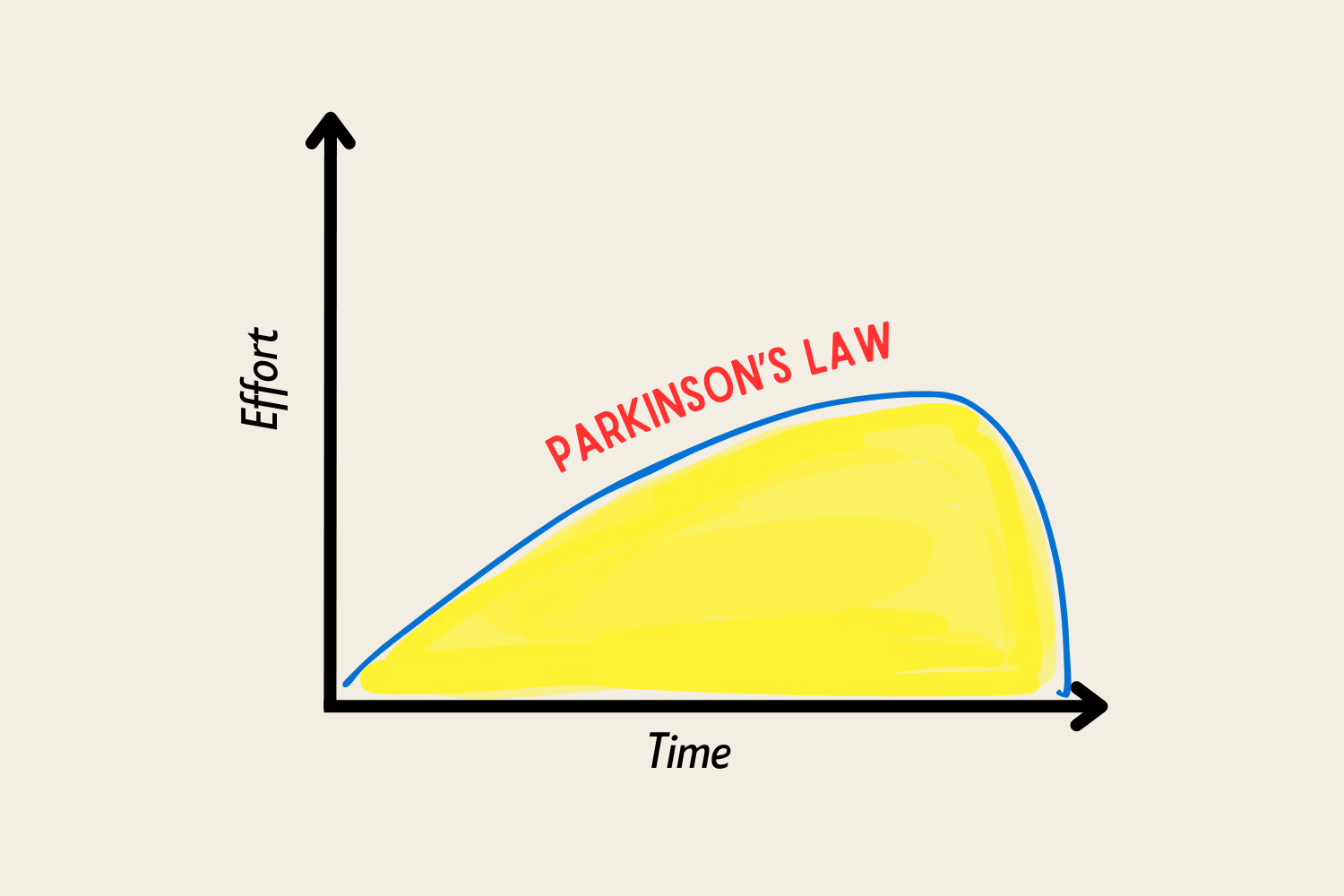
Work expands to fill the time you give it — deadlines shape effort more than the work itself, so tighten deadlines.
Systems > Goals
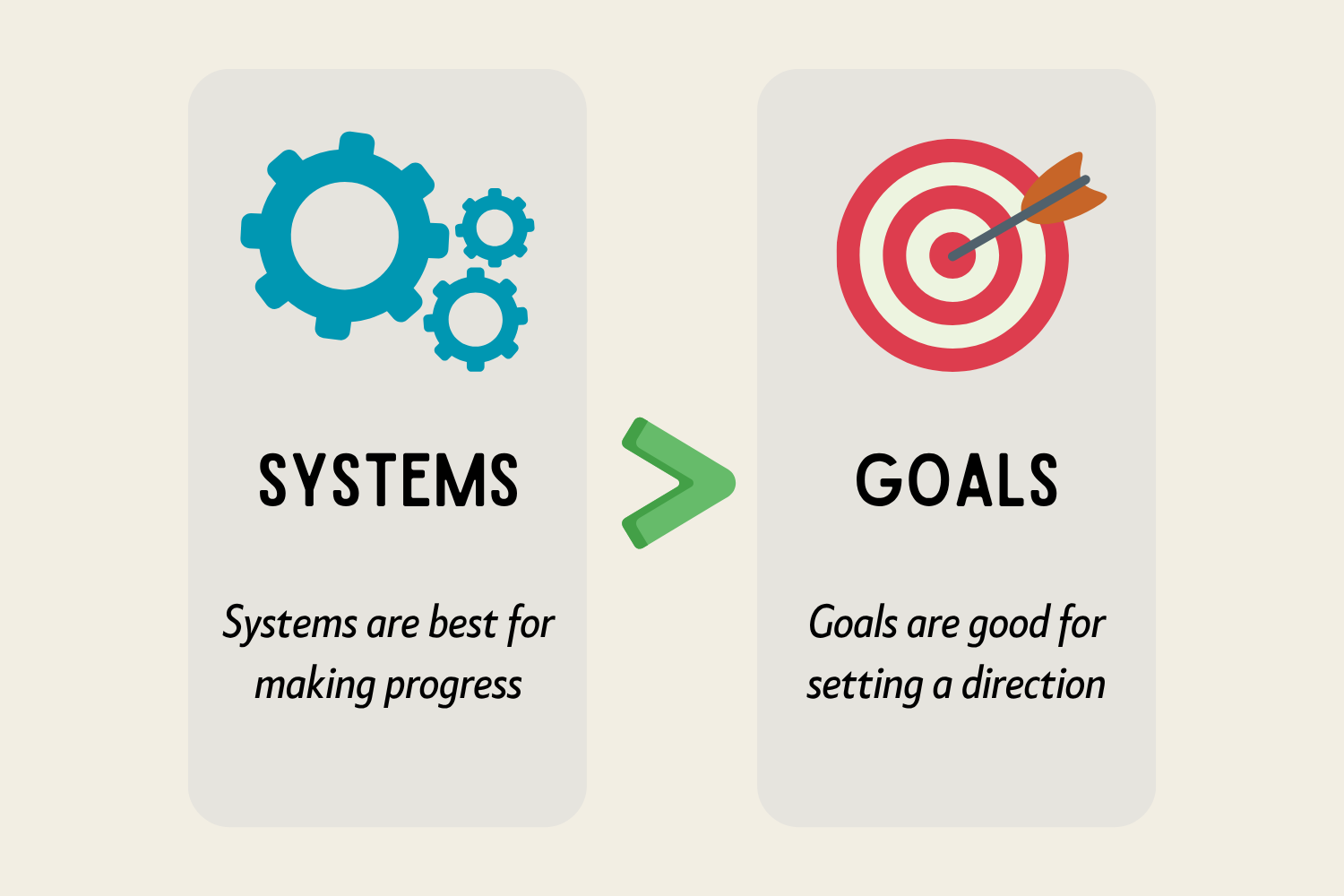
Results come from repeatable habits, not targets — turn every goal into a system of leading behaviors you design and track.

The 3 Pillars of Smart Work
Smart work isn't doing less — it's efficiency, creativity, and discipline together, not permission to coast on "work smart, not hard."
The State of Flow
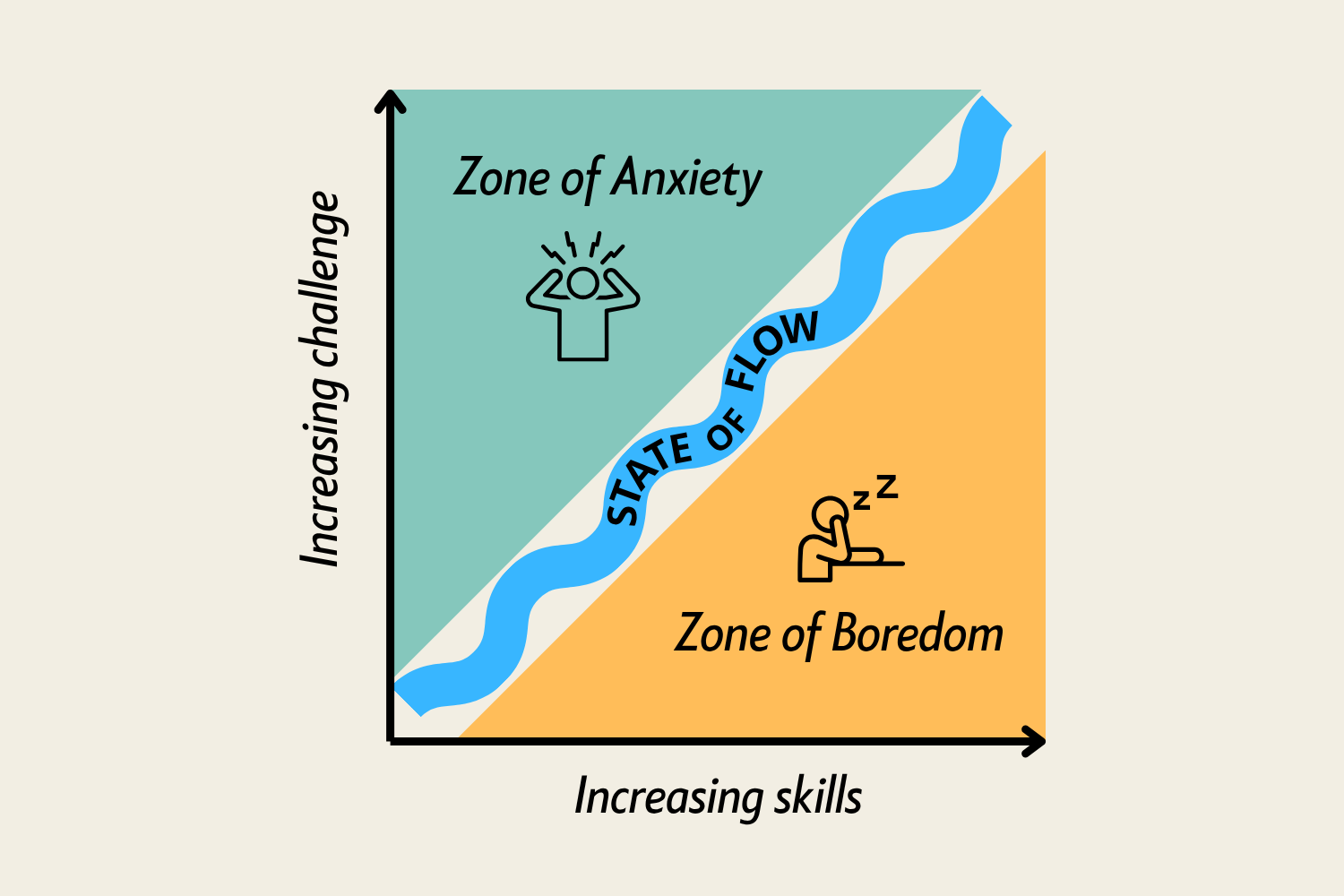
The zone between anxiety and boredom, where challenge meets skill — your job is moving each person, with a different push.