Porter's Five Forces
Porter's answer to why some industries are brutal for profit — five forces shaping any market, telling you where to compete.
 Find this on the mind-map
Introduction
In 1979, Michael Porter, a professor at Harvard Business School, published a piece in Harvard Business Review that changed how people thought about competition, then expanded it into a full book the following year, Competitive Strategy. His argument cut against the instinct of the time: how profitable an industry is has less to do with how hard the players fight and more to do with the structure of the industry itself. Five forces set that structure, and once you can name them, it becomes obvious why some industries print money easily and others grind out thin margins no matter how well they're run.
How It Works
Every industry is being pulled on by five forces at once. Score each one and you get a real read on where the pressure is actually coming from.
| Force | The question | What raises the pressure |
|---|---|---|
| Competitive rivalry | How hard do existing players fight each other? | Many similar competitors, slow market growth, high fixed costs, low switching costs, undifferentiated products |
| Threat of new entrants | How easy is it to start competing here? | Low capital requirements, no regulatory barrier, weak brands, easy access to distribution |
| Bargaining power of buyers | How much leverage do customers have on price? | Few large buyers, many alternatives, low switching costs, price transparency |
| Bargaining power of suppliers | How much leverage do suppliers have on your costs? | Few suppliers, unique inputs, high cost to switch, credible threat of forward integration |
| Threat of substitutes | Can the customer meet the need another way entirely? | A different technology or business model that solves the same job at lower cost |
Substitutes are the one you're most likely to miss, because a substitute almost never looks like a competitor. Video conferencing substitutes for business air travel — but you'd never find one on the other's competitor list, because they're not fighting over the same customer with the same product. They're just solving the same problem a different way.
Running the five forces doesn't hand you a score. It hands you a judgment call: which force is actually doing the damage, and can you change it, or do you just have to live with it? Porter's own framing was that strategy is, at its core, about making choices and trade-offs — deliberately choosing to be different, not just doing everything a little better than the next guy.
Why It Matters for Leaders
If you only watch your named competitors, you'll get blindsided. Your margin usually gets worn down by what's happening underneath the business, not by some clever move from a rival — a supplier consolidates, buyers suddenly get a comparison tool that didn't exist last year, a substitute shows up from an entirely different industry you weren't even watching. Five Forces gives you somewhere to look for that before it hits your numbers.
It also saves you from diagnosing your own team wrong. When results are down, the reflex is to blame execution and push harder. But if the real story is that your buyers now have five equivalent options to pick from, pushing your team harder just produces the same margin at a higher cost — and burns everyone out doing it.
Even if you're not the one setting company strategy, this is worth knowing. Understanding which force is actually constraining the business explains why leadership is funding one initiative and starving another, and it makes your own roadmap pitches sharper when you frame them as raising a barrier or cutting buyer power, instead of "this would be nice to have."
Pair it with a SWOT Analysis and you get real rigor on the external half of the picture — a lot more than a brainstorm ever produces.
What to do next
Test your knowledge of Porter's Five Forces
Apply Porter's Five Forces to a real situation
Skills related to Porter's Five Forces

Frameworks related to Porter's Five Forces
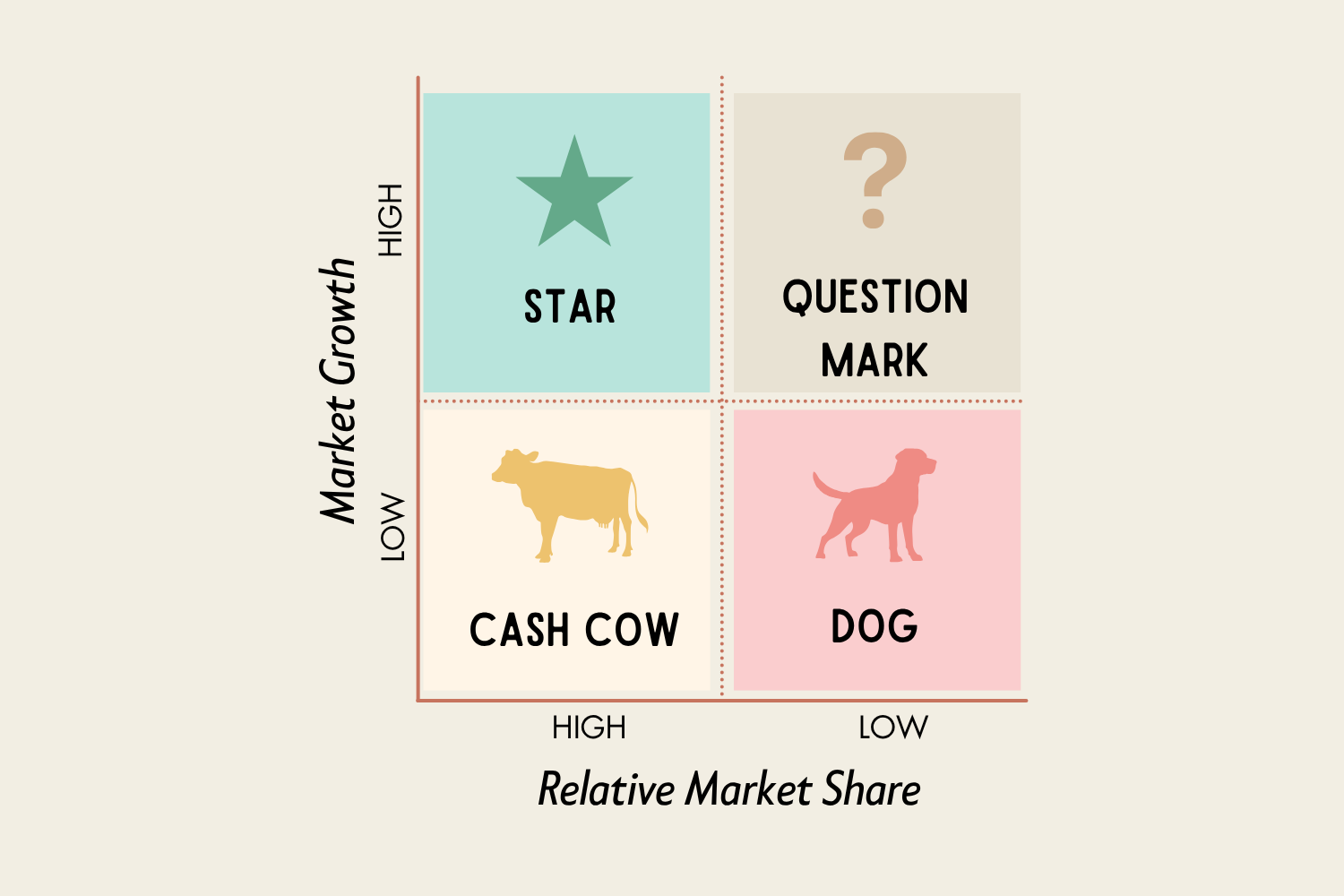
BCG Matrix
A 2x2 that sorts products or units by market growth and share — telling you what to fund, milk, or kill.

McKinsey's Three Horizons Model
Split your team's effort across three time frames — defend the core, grow what's emerging, seed future bets — without mortgaging tomorrow.
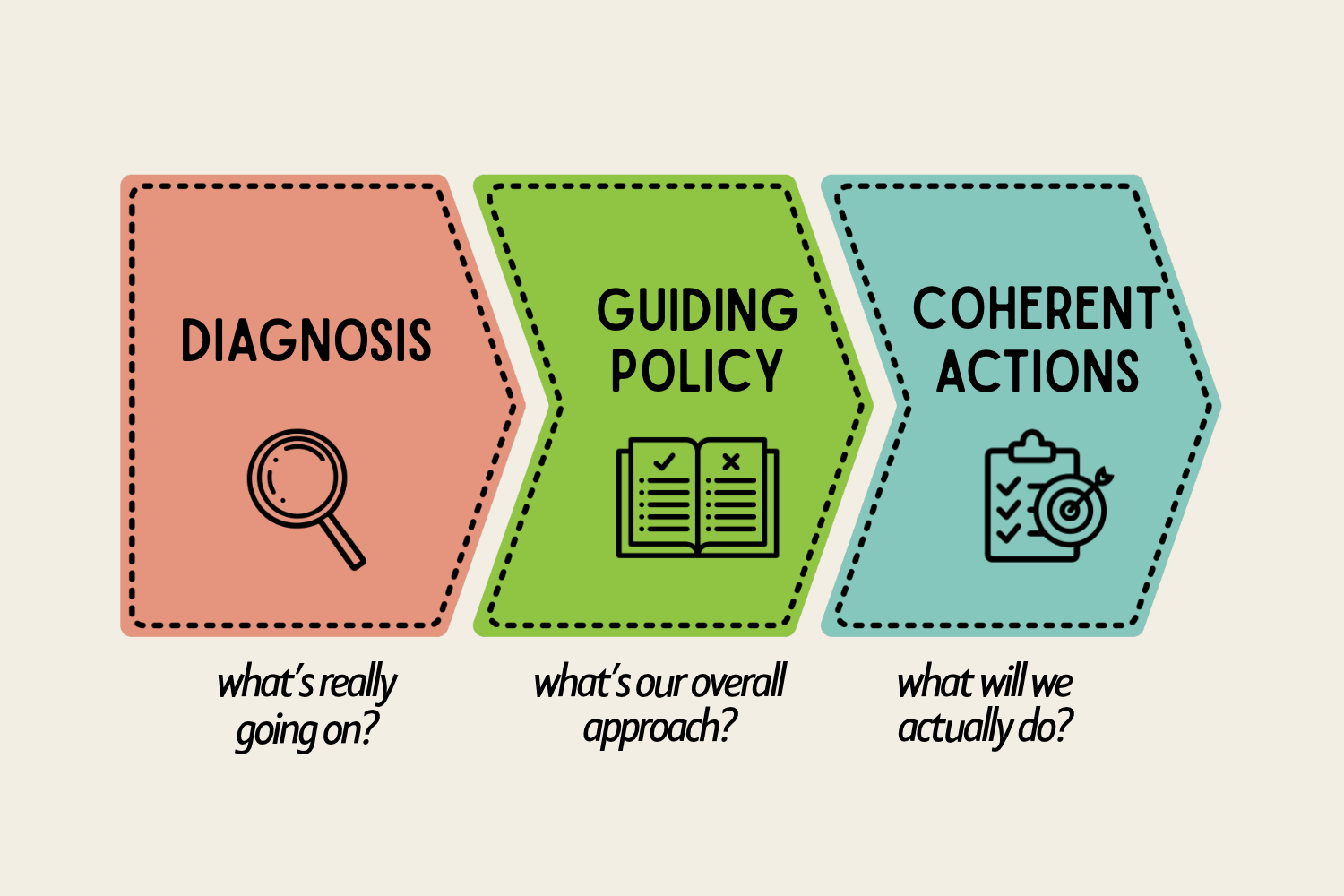
Rumelt's Kernel
Richard Rumelt's test for telling a real strategy from a list of goals — a diagnosis, a guiding policy, and coherent actions. Miss any one of the three and what you have is a wish, not a strategy.

The Innovator's Dilemma
Clayton Christensen's explanation for why great companies fail doing everything right — serving your best customers blinds you to cheap newcomers.
Books related to Porter's Five Forces

Built to Last
Collins and Porras' earlier, lesser-known study of visionary companies: the research that came before Good to Great, built around a single hard question: what actually survives past the founder, the product, and the current strategy?

Good Strategy Bad Strategy
Richard Rumelt's blunt case that most of what gets called "strategy" in a typical planning meeting is actually a wish list dressed up in strategic language, plus a concrete test for telling the two apart.

Good to Great
Jim Collins' research into why some companies go from average to sustained market dominance, and others don't. Read less as a book about companies and more as a book about the kind of leader you have to become before a company (or a team) can get great.

Start With Why
Simon Sinek's argument that people don't buy what you do, they buy why you do it, and that most organizations have never actually answered the question, even the ones that think they have.

Sun Tzu and The Art of Business
Mark McNeilly's translation of Sun Tzu's 2,500-year-old military strategy into six concrete business principles, built around a point most business books skip: the best wins are the ones nobody had to fight for.

The Art of War
The original 2,500-year-old military treatise, read the way most modern leaders actually use it. Not as a manual for fighting better, but as a manual for needing to fight less.

The Infinite Game
Simon Sinek's case that most leaders are playing the wrong game entirely: treating an endless competition as something you can win, when the only real goal is staying in it, strong enough to keep playing.

The Innovator's Dilemma
Clayton Christensen's answer to a puzzle that looks impossible: well-run companies, doing everything their best customers ask for, still lose to products that look worse on every spec sheet, right up until the moment they don't. The book every leader cites and few actually apply to their own team.

Walmart
A retail-industry case study of how Walmart built, and is now fighting to defend, the position it spent sixty years earning. Less a biography of Sam Walton and more a hard look at what scale economics can and can't protect you from in the age of Amazon.

Your Next Five Moves
Patrick Bet-David's chess-inspired framework for strategic leadership, built around five "moves" every founder or executive has to master in order, from knowing yourself to running power plays against bigger competitors, instead of just reacting to whatever just happened.