The Innovator's Dilemma
Clayton Christensen's explanation for why great companies fail doing everything right — serving your best customers blinds you to cheap newcomers.
 Find this on the mind-map
Introduction
Harvard Business School professor Clayton Christensen coined the Innovator's Dilemma in the late 1990s, in the book of the same name. What he found was a genuine paradox: great companies don't fail because they screw up. They fail because they do everything right.
How It Works
Christensen split innovation into two kinds:
| Type | What it does | Who's good at it |
|---|---|---|
| Sustaining innovation | Makes the product better for your best customers. Faster, bigger, more capable. Think iPhone cameras improving every single year. | Incumbents, reliably |
| Disruptive innovation | Starts out worse. Lower quality, smaller market, thinner margins. Solves the problem differently, usually for people nobody's currently serving. Improves until it swallows the mainstream. | Entrants, structurally |
The trap has three walls — together, what you could call the Dilemma Zone:
- Not good enough for your core customers. The disruptive product genuinely isn't ready for them, so they dismiss it, and you do too.
- Too small for your business. The new market looks trivial next to your current revenue.
- Too risky for your process. The numbers don't clear your bar, so your own approval system kills it before it starts.
Kodak is the textbook case. Best engineers, best brand, owned the film market — and Kodak invented the digital camera. But its customers wanted better film, and film was where the money was, so Kodak doubled down on film while digital sat there looking like a low-quality toy nobody would ever pay for.
Netflix ran the same play from the other side. Mailing DVDs was slow and clunky, and Blockbuster laughed it off — but it appealed to a small group of customers who hated late fees and store trips. When broadband made streaming possible, Netflix doubled down on it, and Blockbuster never recovered its footing.
The practical half of the framework is what Christensen called the 4 Lenses — four angles for spotting disruption before it lands on your desk.
| Lens | The question it forces |
|---|---|
| Product Vision | Are you only making the product better for current customers, or exploring new ways to solve the underlying problem? BlackBerry kept improving email on the go; Apple asked what if the phone could do everything. |
| Customer Feedback | Are you only listening to your top customers, or curious about the people who aren't buying yet? Hotels optimized for loyalty members while Airbnb served travelers who were never hotel customers to begin with. |
| Resource Allocation | Are you only funding safe, high-ROI bets, or also funding small, risky ones? An online bookstore building cloud infrastructure made zero spreadsheet sense — and AWS became Amazon's biggest profit engine. |
| Process and Structure | Do your processes, metrics, and structure support small autonomous teams, or do they kill new ideas before they start? Christensen argued disruptive projects often need to live outside the core business — which is exactly why Google runs X separately. |
Why It Matters for Leaders
Disruption almost never arrives looking like a threat. It arrives looking bad. A competitor ships something clunky with half the features, your team laughs it off in a meeting, and six months later customers stop renewing. The newcomer's real advantage was never the product — it was speed and a different definition of the problem.
You're watching this exact pattern play out with AI right now. Established software companies dismissed early tools as impressive demos, not serious products — and within a short window they were good enough to take over real workflows in support, writing, coding, and design, leaving incumbents bolting AI features onto old products while startups just moved.
Three traps catch leaders at different levels. As a product manager, you fill the roadmap with sustaining features for your loudest enterprise customers while a stripped-down competitor quietly spreads among freelancers nobody on your team was serving. As an engineering leader, you kill a rough internal idea because the UX is clunky and the code's below your bar — then watch a startup ship it eighteen months later. As a general manager, you pass on a small new product line because the projected revenue is a rounding error next to your current unit, and a few years later that idea is the heart of a competitor's business while your own unit has gone flat.
None of these leaders were lazy or careless. They were smart, hardworking, and focused on today's success at the cost of tomorrow's — which is exactly the dilemma. The counter is a portfolio mindset: protect the core while planting seeds elsewhere, the same discipline the McKinsey's Three Horizons Model forces onto your calendar.
The lesson underneath all three traps: perfection is the enemy of disruption. Shipping something that isn't ready is often the only way you ever find out what the market actually wants.
What to do next
Test your knowledge of The Innovator's Dilemma
Practice The Innovator's Dilemma
Apply The Innovator's Dilemma to a real situation
Skills related to The Innovator's Dilemma

Frameworks related to The Innovator's Dilemma
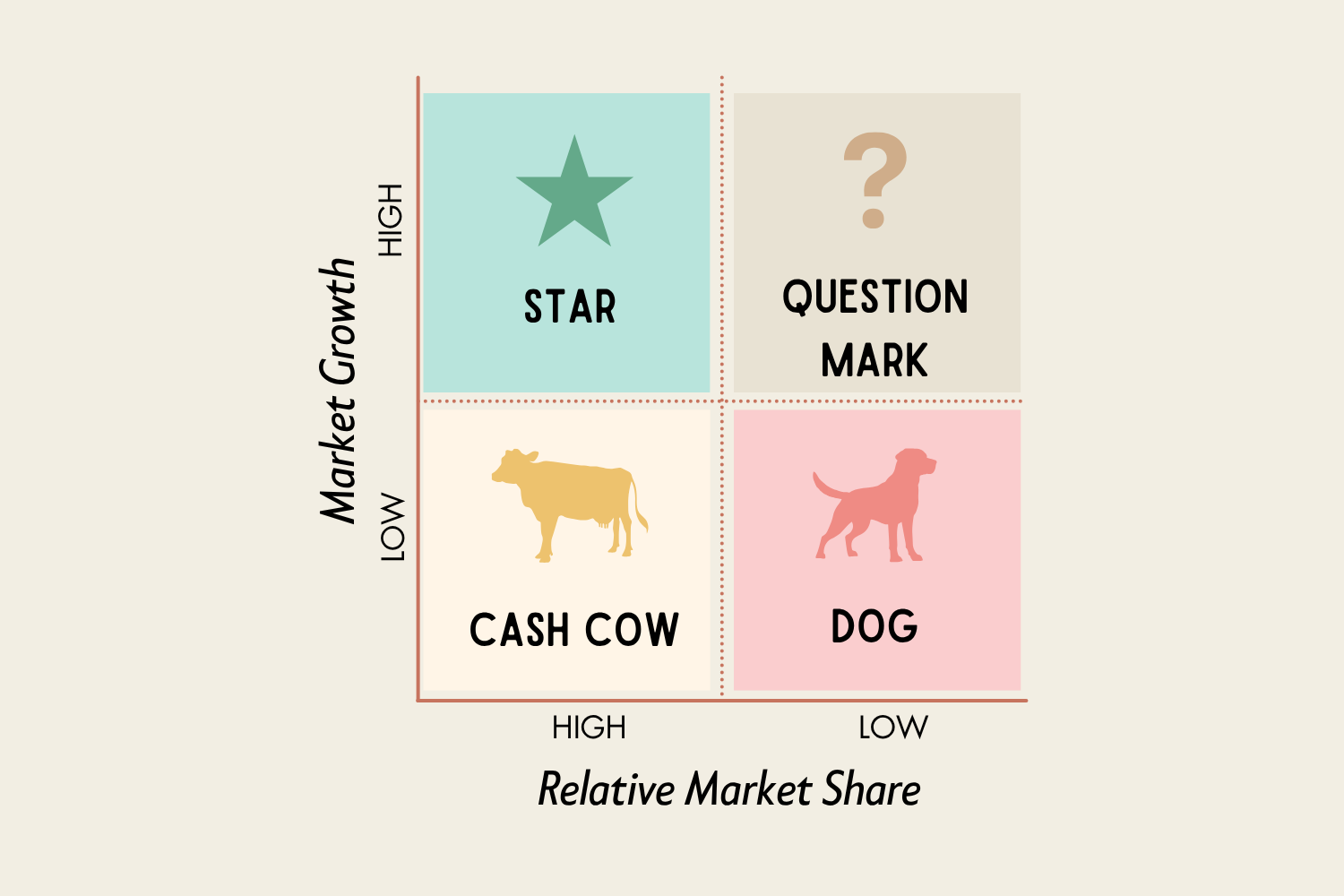
BCG Matrix
A 2x2 that sorts products or units by market growth and share — telling you what to fund, milk, or kill.

McKinsey's Three Horizons Model
Split your team's effort across three time frames — defend the core, grow what's emerging, seed future bets — without mortgaging tomorrow.

Porter's Five Forces
Porter's answer to why some industries are brutal for profit — five forces shaping any market, telling you where to compete.
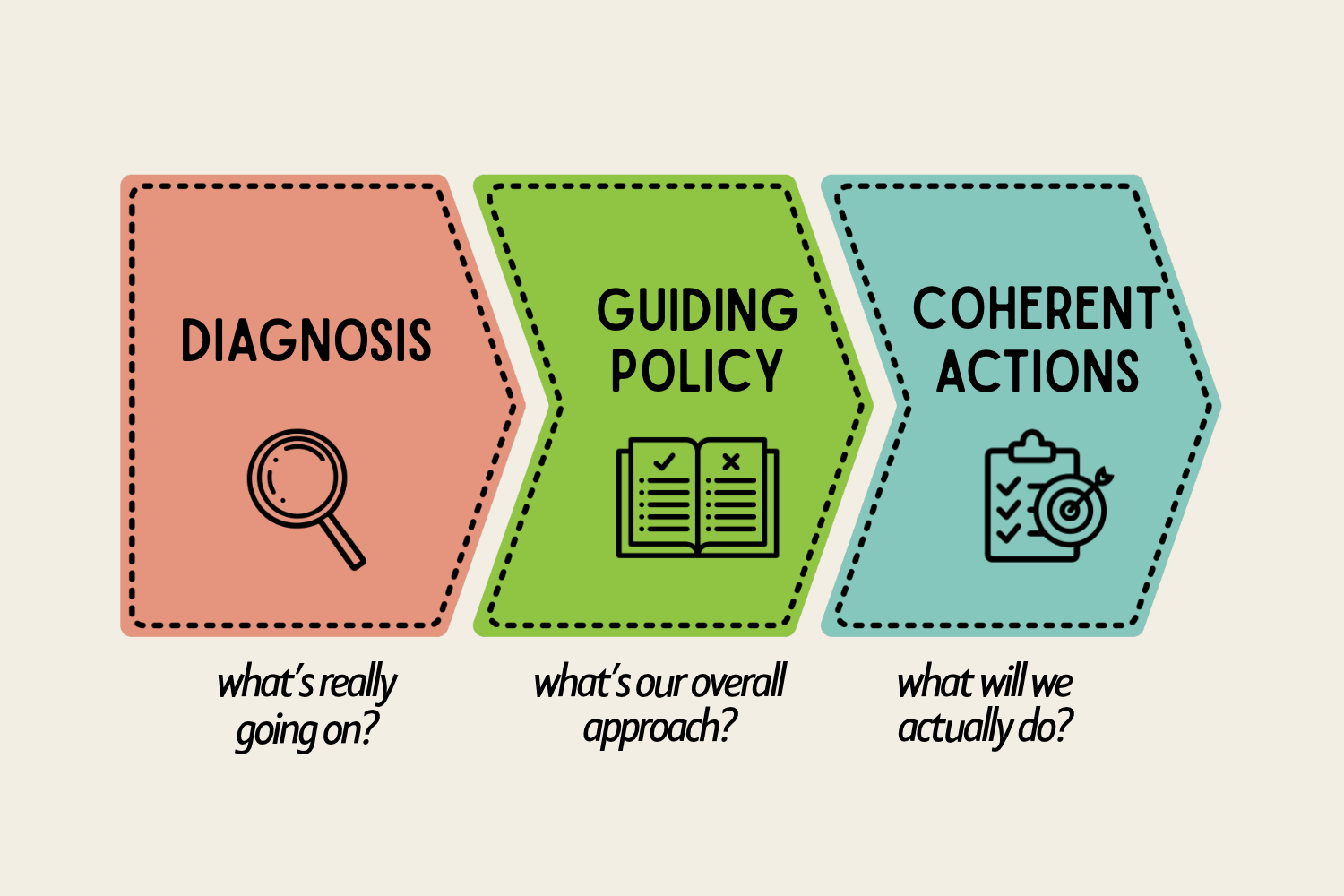
Rumelt's Kernel
Richard Rumelt's test for telling a real strategy from a list of goals — a diagnosis, a guiding policy, and coherent actions. Miss any one of the three and what you have is a wish, not a strategy.
Books that reference this framework
Books related to The Innovator's Dilemma

Built to Last
Collins and Porras' earlier, lesser-known study of visionary companies: the research that came before Good to Great, built around a single hard question: what actually survives past the founder, the product, and the current strategy?

Good Strategy Bad Strategy
Richard Rumelt's blunt case that most of what gets called "strategy" in a typical planning meeting is actually a wish list dressed up in strategic language, plus a concrete test for telling the two apart.

Good to Great
Jim Collins' research into why some companies go from average to sustained market dominance, and others don't. Read less as a book about companies and more as a book about the kind of leader you have to become before a company (or a team) can get great.

Start With Why
Simon Sinek's argument that people don't buy what you do, they buy why you do it, and that most organizations have never actually answered the question, even the ones that think they have.

Sun Tzu and The Art of Business
Mark McNeilly's translation of Sun Tzu's 2,500-year-old military strategy into six concrete business principles, built around a point most business books skip: the best wins are the ones nobody had to fight for.

The Art of War
The original 2,500-year-old military treatise, read the way most modern leaders actually use it. Not as a manual for fighting better, but as a manual for needing to fight less.

The Infinite Game
Simon Sinek's case that most leaders are playing the wrong game entirely: treating an endless competition as something you can win, when the only real goal is staying in it, strong enough to keep playing.

The Innovator's Dilemma
Clayton Christensen's answer to a puzzle that looks impossible: well-run companies, doing everything their best customers ask for, still lose to products that look worse on every spec sheet, right up until the moment they don't. The book every leader cites and few actually apply to their own team.

Walmart
A retail-industry case study of how Walmart built, and is now fighting to defend, the position it spent sixty years earning. Less a biography of Sam Walton and more a hard look at what scale economics can and can't protect you from in the age of Amazon.

Your Next Five Moves
Patrick Bet-David's chess-inspired framework for strategic leadership, built around five "moves" every founder or executive has to master in order, from knowing yourself to running power plays against bigger competitors, instead of just reacting to whatever just happened.