Business Strategy
Making the focused calls about where to compete, what to prioritize, and what to say no to, because a strategy is defined as much by what it rules out as by what it commits to.
 Find this on the mind-map
Introduction
Strategy is the set of choices that turns a direction into an actual route: which market or problem you commit to, what you're betting will let you win there, and which opportunities you decline in order to fund that bet.
The work itself is a sequence of narrowing decisions.
- You take an honest look at who you're actually competing against.
- You find the overlap between what your organization can be genuinely good at and what the market will actually pay for.
- You put people and money behind that overlap.
- And then you stick with that choice the next time an attractive, unrelated opportunity shows up and tempts you to chase it.
Strategy, at its core, means deciding what matters most and deliberately ignoring the rest.
As Michael Porter put it: "Strategy is about making choices, trade-offs; it's about deliberately choosing to be different."
Why It Matters for Leaders
Without a clear strategy, you end up spread too thin. You try to do too many things at once, and as a result you do none of them well.
The warning signs show up before the results do:
- every function insists its priority is the top priority,
- headcount gets spread evenly instead of concentrated where it counts,
- nothing ever gets stopped so the portfolio only grows, and
- nobody in your organization can actually tell you what the company has decided not to do.
Research from McKinsey found that companies with a strong, focused strategy are 2.5 times more likely to succeed in competitive markets.
When you have this skill, the payoff shows up as speed. Decisions that would otherwise escalate all the way up to you get settled locally, because everyone already knows the criteria.
What to do next
Master Business Strategy by taking the mini-course
Frameworks related to Business Strategy
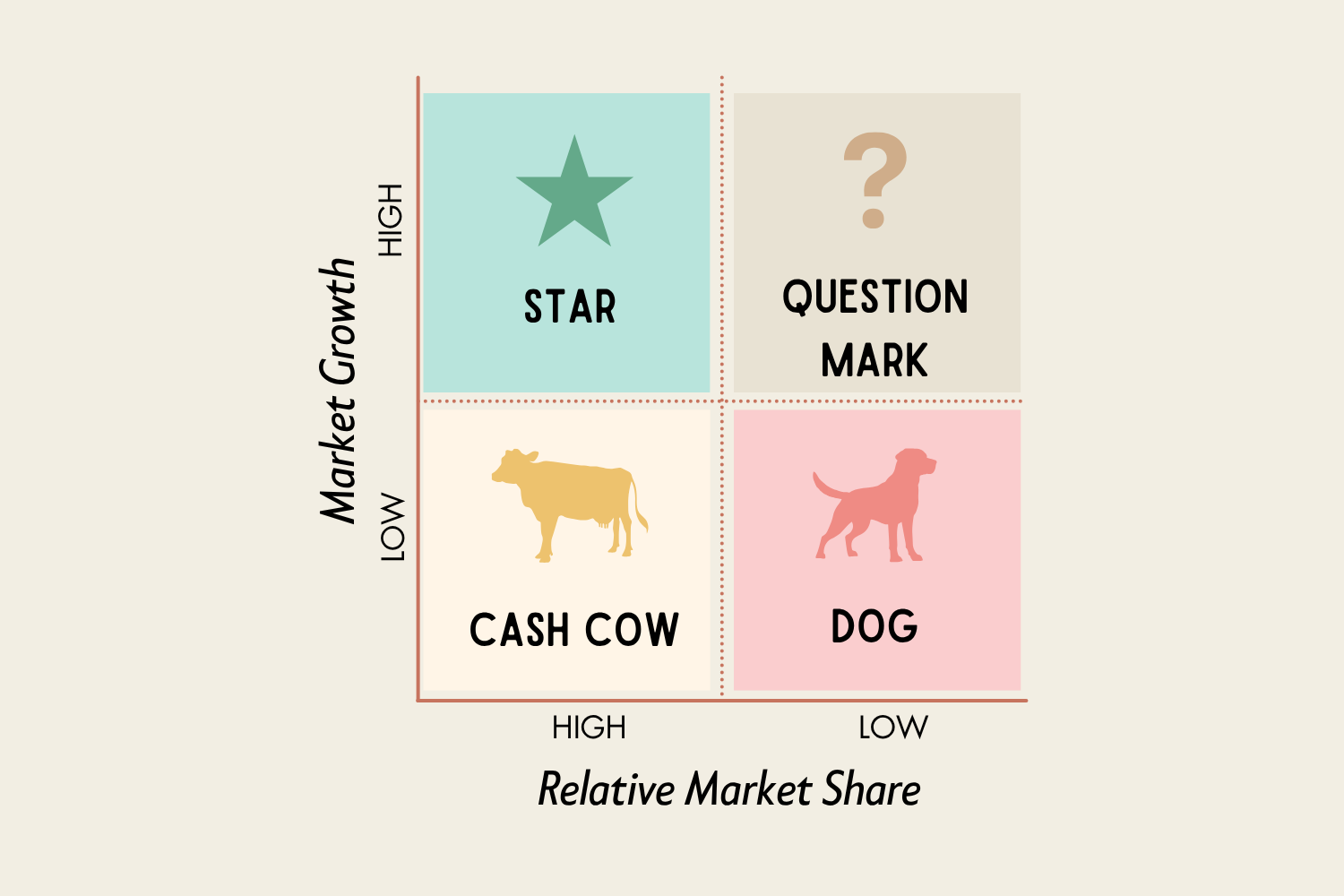
BCG Matrix
A 2x2 that sorts products or units by market growth and share — telling you what to fund, milk, or kill.

McKinsey's Three Horizons Model
Split your team's effort across three time frames — defend the core, grow what's emerging, seed future bets — without mortgaging tomorrow.

Porter's Five Forces
Porter's answer to why some industries are brutal for profit — five forces shaping any market, telling you where to compete.
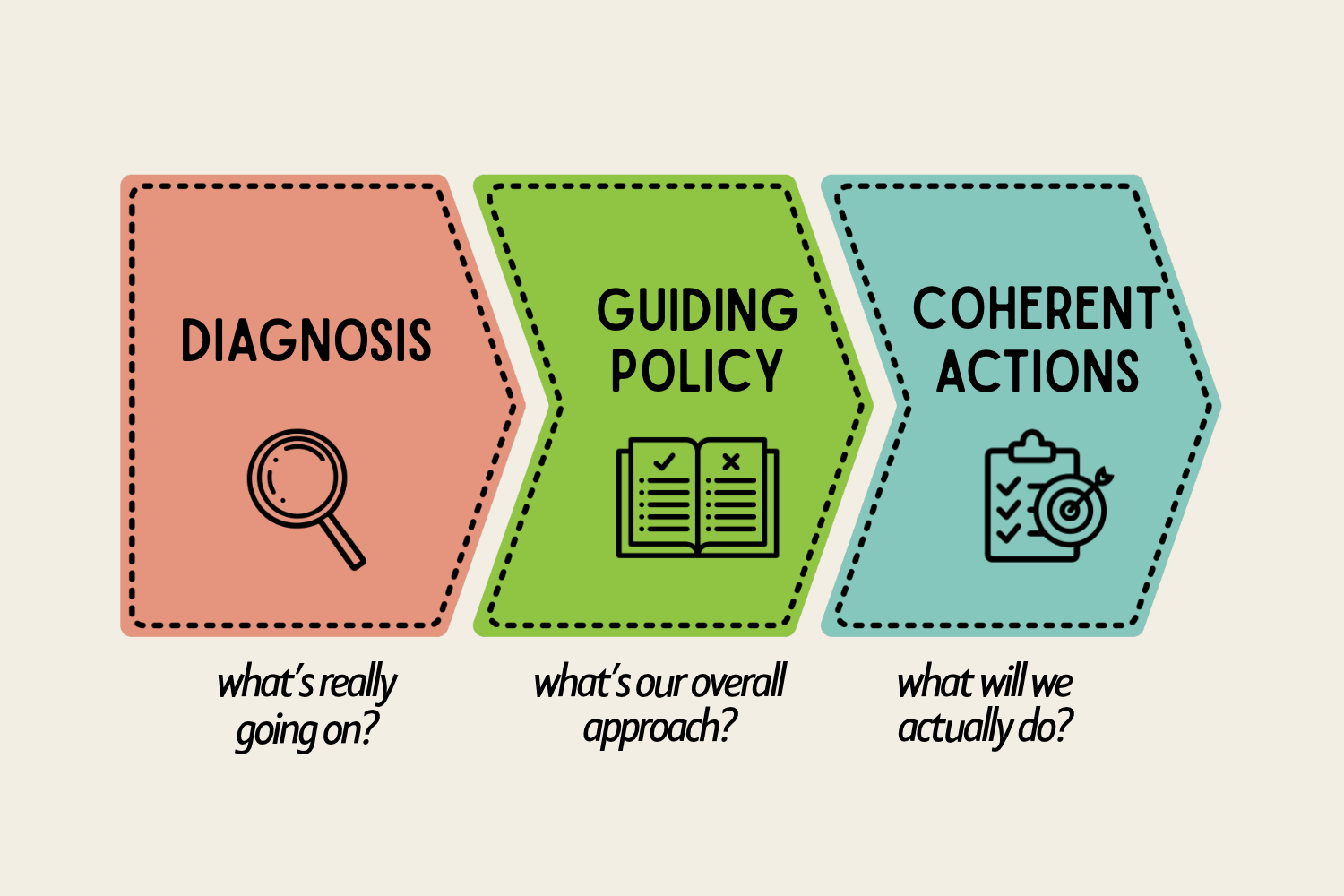
Rumelt's Kernel
Richard Rumelt's test for telling a real strategy from a list of goals — a diagnosis, a guiding policy, and coherent actions. Miss any one of the three and what you have is a wish, not a strategy.

The Innovator's Dilemma
Clayton Christensen's explanation for why great companies fail doing everything right — serving your best customers blinds you to cheap newcomers.
Books related to Business Strategy

Built to Last
Collins and Porras' earlier, lesser-known study of visionary companies: the research that came before Good to Great, built around a single hard question: what actually survives past the founder, the product, and the current strategy?

Good Strategy Bad Strategy
Richard Rumelt's blunt case that most of what gets called "strategy" in a typical planning meeting is actually a wish list dressed up in strategic language, plus a concrete test for telling the two apart.

Good to Great
Jim Collins' research into why some companies go from average to sustained market dominance, and others don't. Read less as a book about companies and more as a book about the kind of leader you have to become before a company (or a team) can get great.

Start With Why
Simon Sinek's argument that people don't buy what you do, they buy why you do it, and that most organizations have never actually answered the question, even the ones that think they have.

Sun Tzu and The Art of Business
Mark McNeilly's translation of Sun Tzu's 2,500-year-old military strategy into six concrete business principles, built around a point most business books skip: the best wins are the ones nobody had to fight for.

The Art of War
The original 2,500-year-old military treatise, read the way most modern leaders actually use it. Not as a manual for fighting better, but as a manual for needing to fight less.

The Infinite Game
Simon Sinek's case that most leaders are playing the wrong game entirely: treating an endless competition as something you can win, when the only real goal is staying in it, strong enough to keep playing.

The Innovator's Dilemma
Clayton Christensen's answer to a puzzle that looks impossible: well-run companies, doing everything their best customers ask for, still lose to products that look worse on every spec sheet, right up until the moment they don't. The book every leader cites and few actually apply to their own team.

Walmart
A retail-industry case study of how Walmart built, and is now fighting to defend, the position it spent sixty years earning. Less a biography of Sam Walton and more a hard look at what scale economics can and can't protect you from in the age of Amazon.

Your Next Five Moves
Patrick Bet-David's chess-inspired framework for strategic leadership, built around five "moves" every founder or executive has to master in order, from knowing yourself to running power plays against bigger competitors, instead of just reacting to whatever just happened.
Skills related to Business Strategy

Business Analysis
Gathering real evidence about how the business is performing, reading the trends inside it, and keeping your strategy anchored to reality instead of assumption.

Change Management
Carrying your team through a transition, from the moment you announce a change to the point where the new way of working has just become the ordinary one.

Driving Execution
Turning an agreed plan into delivered results through the focus, systems, and accountability that keep a team moving from decision to outcome.

Process Improvement
Finding where the work slows down, repeats itself, or breaks, and clearing that friction so effort turns into output instead of overhead.

Risk Management
Naming what could go wrong before it does, sizing each threat by likelihood and impact, and acting on the ones that matter.

Visioning
Defining and communicating a compelling direction, and connecting your team's daily work to that.