Change Management
Carrying your team through a transition, from the moment you announce a change to the point where the new way of working has just become the ordinary one.
 Find this on the mind-map
Introduction
Change is constant. Markets shift, companies restructure, priorities get reset, and none of that stops for anyone. What isn't constant is how people react to it: some pick it up fast, others get anxious, resistant, or lost, and a single announcement will usually produce all three reactions in the very same room.
Most of the real work happens around the announcement, not in it.
- You state clearly why the change is happening and what's expected of each person, and specific enough that they can actually act on it.
- You surface objections early, while the plan can still absorb them.
- You sequence things so an early win is visible fast.
- And you keep reinforcing the new behavior long after the launch, because that's exactly the point where most change initiatives slowly get abandoned.
There's a real difference between a change being decided and a change actually being adopted. As Peter Senge put it: "People don't resist change. They resist being changed." A team that doesn't understand why a change is happening, or what's expected of them, will resist it, and that resistance is a reasonable response to missing information, not a bad attitude.
Why It Matters for Leaders
A McKinsey study found that 70% of organizational change initiatives fail, and the cause usually isn't that the change itself was wrong. The failures trace back to leaders who didn't communicate effectively, didn't address concerns, or never built a clear transition plan.
When you're missing this skill, you'll notice a few typical signs:
- The announcement gets treated as the implementation. Everyone nods along in the room, and three weeks later nothing has moved.
- Resistance gets read as a bad attitude, so you repeat the message louder instead of figuring out whether the real gap is awareness, desire, knowledge, or ability.
- The old process keeps running alongside the new one, giving everybody a way back to it.
- And you declare the change complete at go-live, before anyone has actually done the work the new way under real pressure.
When you've built the skill, people can state the reason for the change in their own words and name their own part in it. Objections show up early enough to actually improve the plan.
What to do next
Master Change Management by taking the mini-course
Frameworks related to Change Management

ADKAR Model
Five building blocks — Awareness, Desire, Knowledge, Ability, Reinforcement — track change person by person, pinpointing exactly where it's stuck.
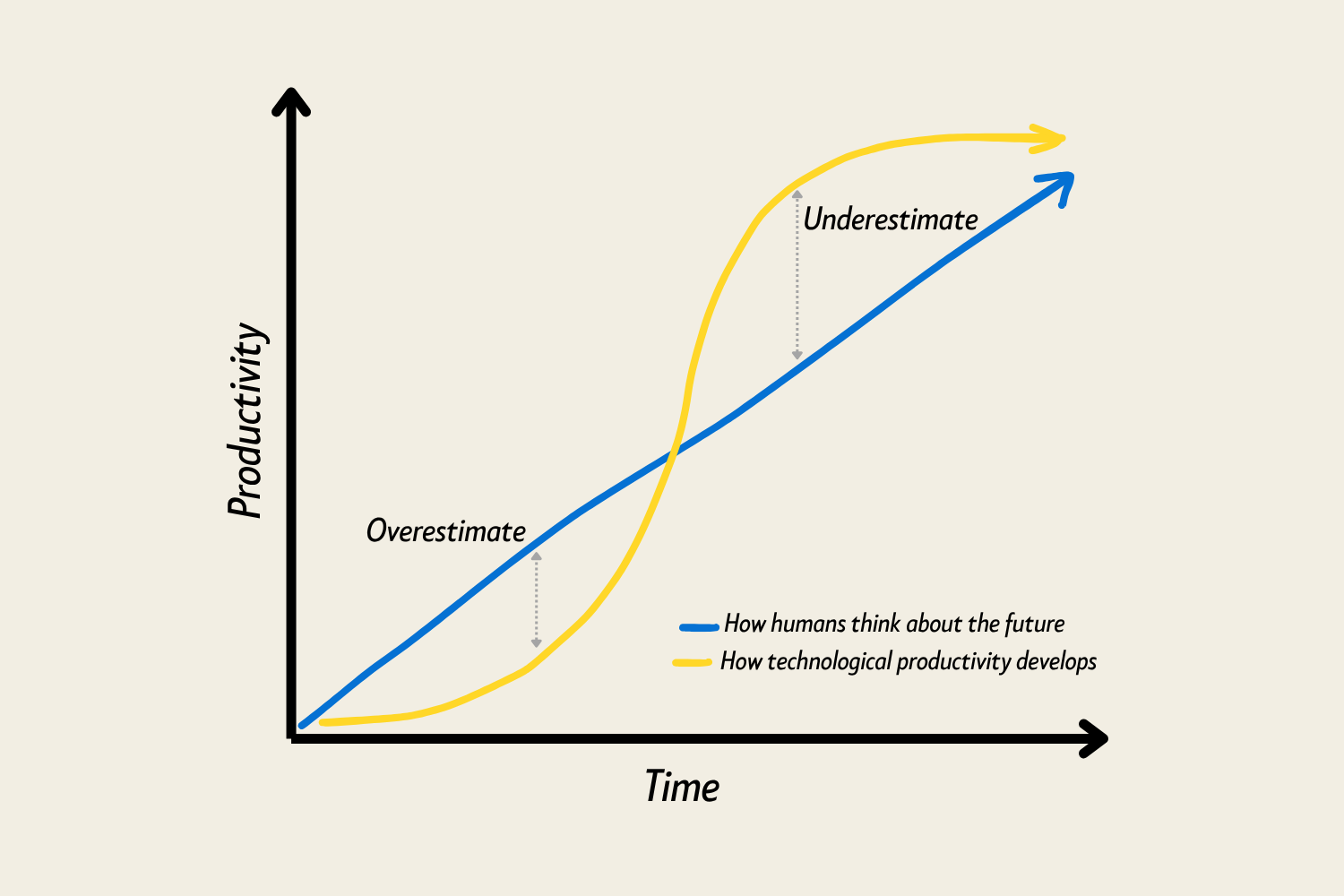
Amara's Law
You overestimate new tech's short-run impact and underestimate its long-run impact — so ask if you're early, not whether it's working.

IKEA Effect
You value things more when you helped build them — which is why a strategy handed to a team lands flat.
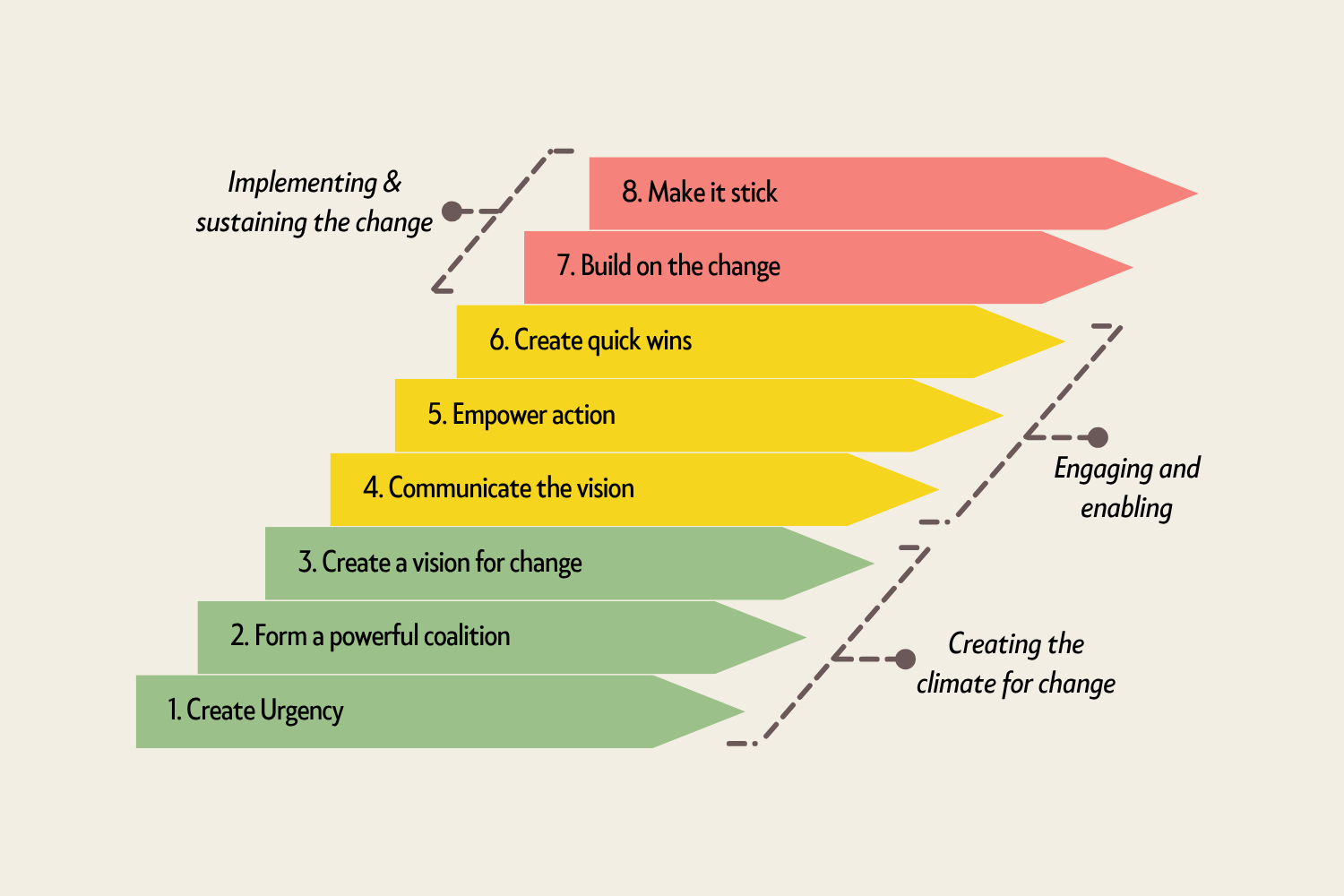
Kotter's 8-Step Change Model
John Kotter's eight-step process for leading change, from creating urgency to anchoring new behavior in culture — keeping transformations from reversing.

The 3 Conditions for Change
A team can agree in the room and change nothing after — change needs three conditions at once: Willingness, Desire, Courage.
Books related to Change Management

Leading Change
John Kotter's eight-step anatomy of organizational change, built from studying why most change efforts fail, and a blunt diagnosis that most failures trace back to skipping step one, not step eight.

Switch
Chip and Dan Heath's case that most change efforts fail from a basic misdiagnosis, treating a willpower problem as if it were an information problem, and a three-part framework for directing the rational mind, motivating the emotional one, and reshaping the environment around both.

The Heart of Change
Kotter's own follow-up to Leading Change, built on a single correction: people don't change their behavior because an analysis changed their thinking. They change because something made them actually feel differently first.

The Ride of a Lifetime
Disney CEO Bob Iger's own account of betting the company three times, on Pixar, Marvel, and Lucasfilm, and then again on streaming, and the specific discipline of leaving what you just paid billions for alone long enough for it to actually work.
Skills related to Change Management

Business Analysis
Gathering real evidence about how the business is performing, reading the trends inside it, and keeping your strategy anchored to reality instead of assumption.

Business Strategy
Making the focused calls about where to compete, what to prioritize, and what to say no to, because a strategy is defined as much by what it rules out as by what it commits to.

Driving Execution
Turning an agreed plan into delivered results through the focus, systems, and accountability that keep a team moving from decision to outcome.

Process Improvement
Finding where the work slows down, repeats itself, or breaks, and clearing that friction so effort turns into output instead of overhead.

Risk Management
Naming what could go wrong before it does, sizing each threat by likelihood and impact, and acting on the ones that matter.

Visioning
Defining and communicating a compelling direction, and connecting your team's daily work to that.