Leading Change
John Kotter's eight-step anatomy of organizational change, built from studying why most change efforts fail, and a blunt diagnosis that most failures trace back to skipping step one, not step eight.
 Find this on the mind-map
Introduction
John Kotter's research into failed corporate change efforts led to an uncomfortable pattern: the vast majority didn't fail in execution. They failed in sequence. Leaders skipped an early foundational step, usually because it felt like it was slowing things down, and every later step then had to fight against a problem that should never have existed. Leading Change lays out eight steps, in order, and argues the order is the actual lesson, not just the list.
Step 1: Establish a Genuine Sense of Urgency
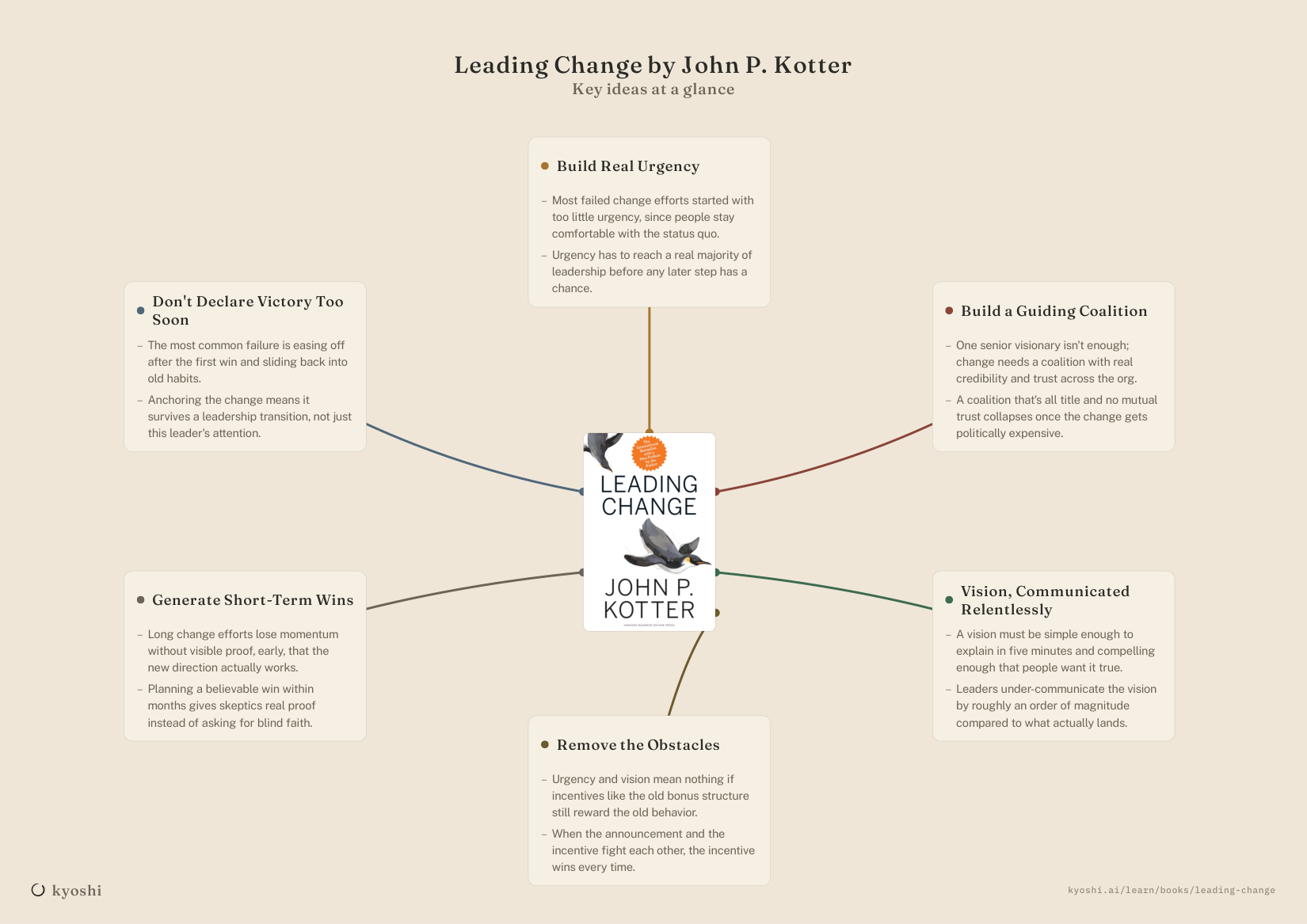
Not manufactured panic. A real, widely shared understanding that the status quo is more dangerous than the change. Most failed change efforts Kotter studied started with too little urgency, because leaders underestimated how comfortable people are leaving things as they are, even when they'll privately agree something is wrong. Urgency has to reach a substantial majority of the organization's leadership before the next step has a chance.
Step 2: Build a Guiding Coalition
Change led by one visionary executive, however senior, isn't enough. It needs a coalition with real credibility, expertise, and relationships across the organization, working as a genuine team rather than a sign-off committee. A coalition that's all title and no trust among its members collapses the first time the change gets politically expensive.
Steps 3 and 4: Vision, and Communicating It Relentlessly
A vision has to be simple enough to describe in under five minutes and compelling enough that people want it to be true. It also has to be communicated far more than leaders expect. Kotter's blunt observation is that most leaders under-communicate the vision by roughly an order of magnitude, treating one all-hands announcement as if it were the same as the message actually landing.
Step 5: Empower Action by Removing Obstacles
Urgency and vision mean nothing if the org chart, the incentive structure, or a specific blocking manager makes the new behavior harder than the old one. Picture a company that announces a bold new customer-first initiative while leaving the sales bonus structure exactly as it was, rewarding the old behavior. The announcement and the incentive are now actively fighting each other, and the incentive wins every time.
Step 6: Generate Short-Term Wins
Long change efforts lose momentum without visible proof, early, that the new direction actually works. Deliberately planning for a believable win within the first several months, rather than waiting for the full change effort to prove itself, gives skeptics concrete proof instead of asking for blind faith for years.
Steps 7 and 8: Don't Declare Victory Too Soon, and Anchor the Change
The single most common failure Kotter flags isn't a lack of effort early on. It's declaring victory after the first win, easing off, and watching the organization slowly slide back to old habits once attention moves elsewhere. Anchoring the change means it survives a leadership transition; if the new behavior only exists because of this leader's attention, it was never actually institutionalized.
Putting It Together
The eight steps aren't independent options to pick from. They're load-bearing, in sequence. Urgency makes the coalition possible; the coalition makes the vision credible; the vision makes communication worth doing; communication makes removing obstacles urgent; removed obstacles make short-term wins achievable; wins build the momentum that lets you keep going instead of declaring victory; and only sustained momentum, continued past the first win, actually anchors the change in the culture permanently.
Why It Matters for Leaders
The practical value of this model is that it tells you where to look when a change effort stalls, instead of just telling you to push harder. Most leaders, watching an initiative lose steam, reach for more communication or more pressure. That's only the right move if the problem is actually steps three and four. If the real break is back at step one, urgency that was assumed rather than actually built, no amount of vision-crafting or extra town halls will fix it, because the foundation under all of it was never there.
The step most leaders skip without realizing it is the first one. It feels slow and a little indulgent to spend real time making sure people believe the status quo is actually dangerous, especially when you can already see the better path and just want to start building it. But skipping urgency doesn't save time. It just moves the cost downstream, where it shows up later as resistance that looks like stubbornness but is really just people who were never convinced there was a problem.
The failure leaders are worst at catching in themselves is step seven: declaring victory too early. A real win early in a change effort feels like proof you were right, and it's tempting to treat it as the finish line and move your attention elsewhere. Kotter's point is that the old habits are still right there, waiting, and the moment leadership attention moves on is exactly when they come back. The discipline isn't celebrating the win less. It's staying on the change for months after the win, specifically because it finally looks like it's working.
Picture a manager, Grace, whose team adopted a new on-call process after months of friction, and the first month under it genuinely went better: fewer pages, faster fixes. Grace announces the win in the all-hands, feels the relief of being done with it, and turns her attention to the next priority. Three months later, half the team has drifted back to the old habit of paging the same two senior engineers for everything, and Grace doesn't find out until a postmortem. Nobody kept checking that the new process was actually sticking once she stopped watching. The process wasn't wrong. It just was never anchored, because the leader moved on the moment it looked like success.
What to do next
Reinforce your understanding of Leading Change
Books related to Leading Change

Switch
Chip and Dan Heath's case that most change efforts fail from a basic misdiagnosis, treating a willpower problem as if it were an information problem, and a three-part framework for directing the rational mind, motivating the emotional one, and reshaping the environment around both.

The Heart of Change
Kotter's own follow-up to Leading Change, built on a single correction: people don't change their behavior because an analysis changed their thinking. They change because something made them actually feel differently first.

The Ride of a Lifetime
Disney CEO Bob Iger's own account of betting the company three times, on Pixar, Marvel, and Lucasfilm, and then again on streaming, and the specific discipline of leaving what you just paid billions for alone long enough for it to actually work.
Skills related to Leading Change

Frameworks referenced from this book
Frameworks related to Leading Change

ADKAR Model
Five building blocks — Awareness, Desire, Knowledge, Ability, Reinforcement — track change person by person, pinpointing exactly where it's stuck.
Amara's Law
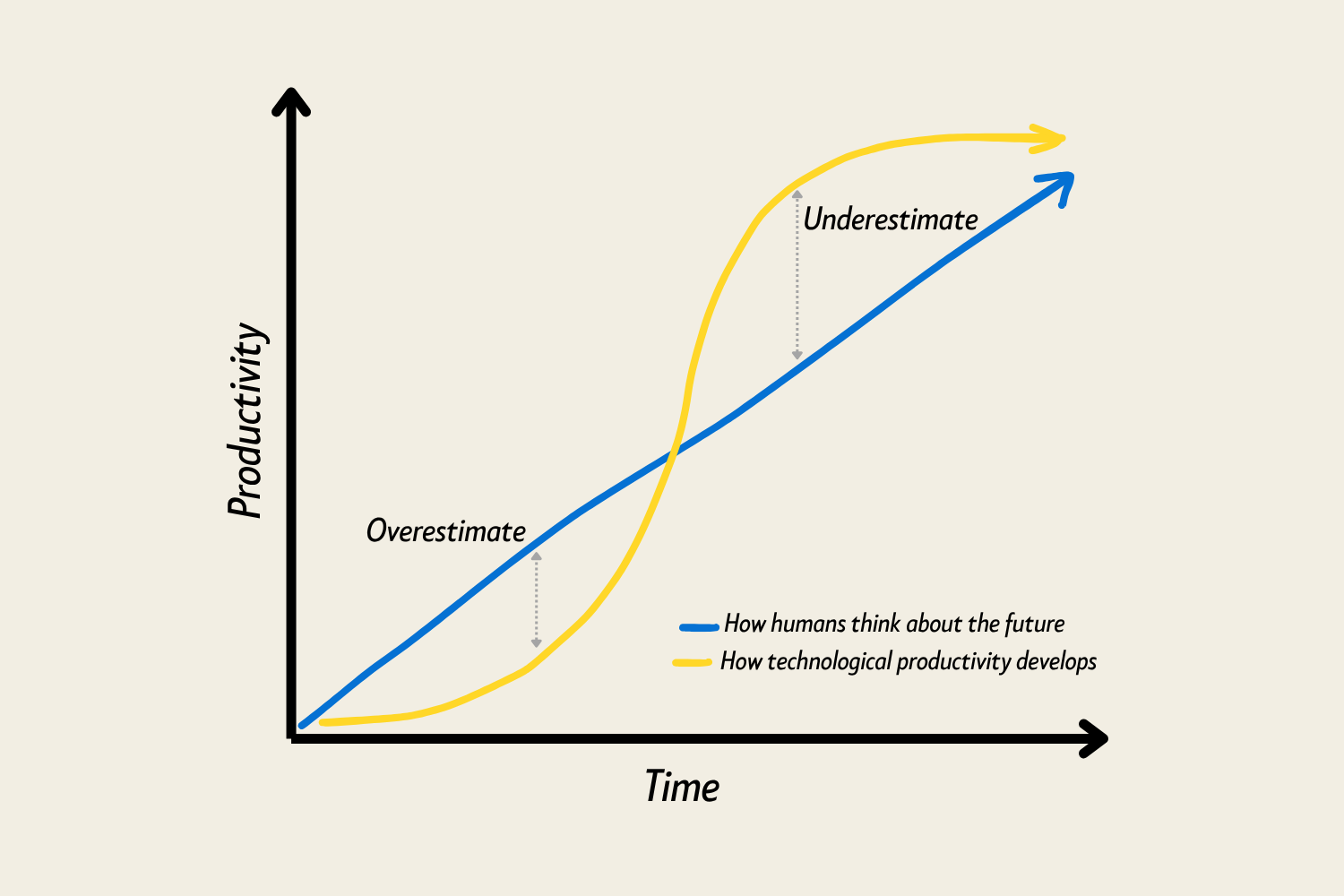
You overestimate new tech's short-run impact and underestimate its long-run impact — so ask if you're early, not whether it's working.

IKEA Effect
You value things more when you helped build them — which is why a strategy handed to a team lands flat.
Kotter's 8-Step Change Model
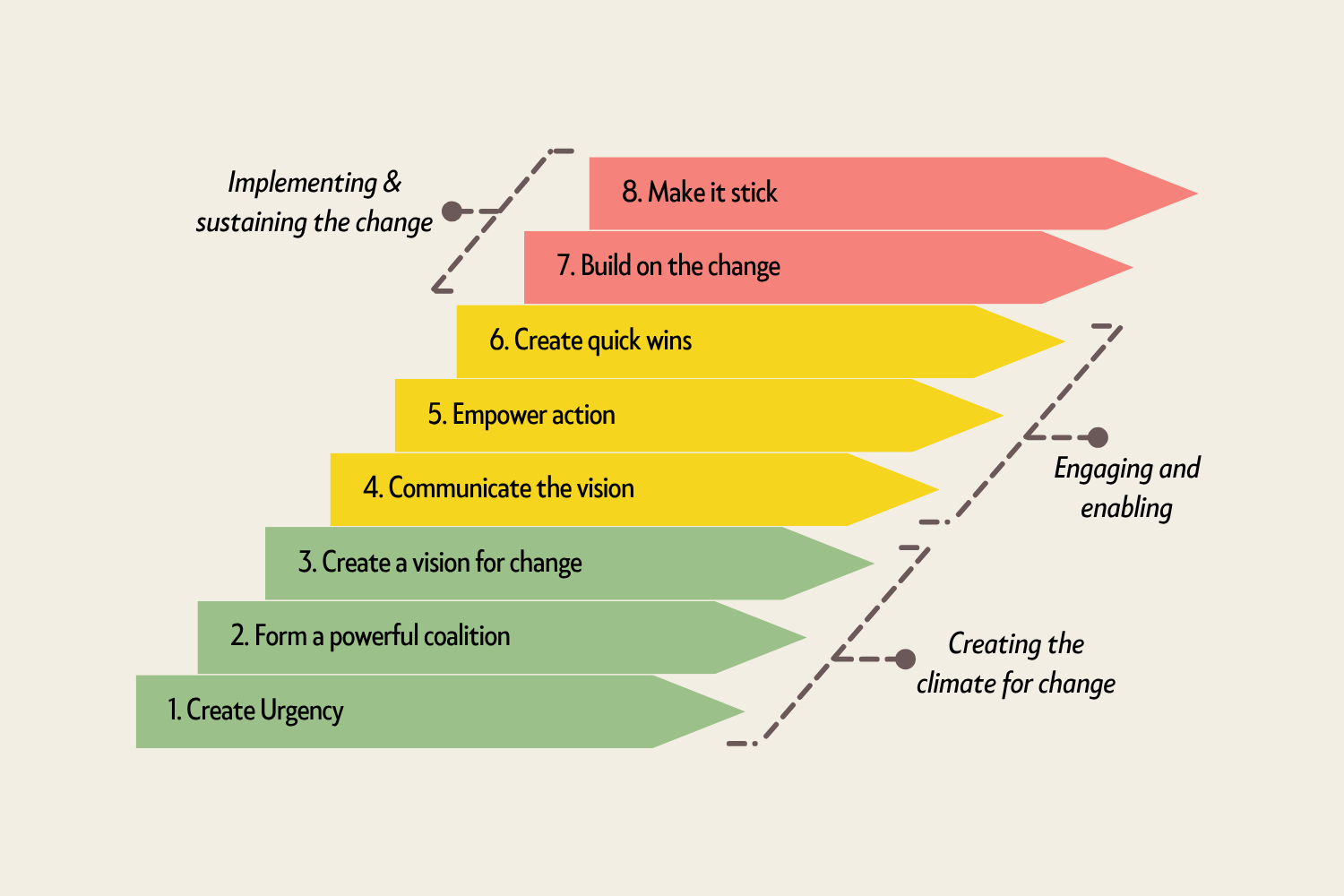
John Kotter's eight-step process for leading change, from creating urgency to anchoring new behavior in culture — keeping transformations from reversing.

The 3 Conditions for Change
A team can agree in the room and change nothing after — change needs three conditions at once: Willingness, Desire, Courage.