The 3 Conditions for Change
A team can agree in the room and change nothing after — change needs three conditions at once: Willingness, Desire, Courage.
 Find this on the mind-map
Introduction
This one, also called the Change Triangle, comes from Gaurav Jain at The Good Boss, and it starts from a failure pattern you've almost certainly lived through. A team spots a problem, talks it through, and aligns on what to do. The conversation feels productive. Then nothing moves. The new behavior never shows up, the old patterns come right back, and a few weeks later you're having the exact same conversation again.
How It Works
Most leaders misdiagnose this moment. They assume the gap is understanding, so they explain more, add detail, repeat the message a different way. But understanding was rarely what was missing.
People don't act on logic alone. They act on a mix of logic, emotion, and instinct. Something can make total sense and still not move a person, because it doesn't matter enough to them, or because acting on it means stepping into risk and giving up something familiar.
The framework names three conditions, each tied to a different driver.
| Condition | Seat | The question it answers | What you see when it's missing |
|---|---|---|---|
| Willingness | Head | Does this make sense, and is it valid? | Basic questions, challenges to the premise, confusion about the goal |
| Desire | Heart | Do I care enough about this to act? | Agreement without energy, the change treated as someone else's priority |
| Courage | Gut | Am I ready to take the risk of acting? | Delay, avoidance, quiet reversion to old habits under pressure |
Willingness lives in the head, and it's where you'll spend most of your time as a leader: explaining, sharing data, walking people through the reasoning. Desire lives in the heart, and it decides whether the change connects to something people actually value — pride in their work, less daily frustration. When desire is missing there's usually no visible resistance, which is exactly why it's easy to miss. Courage comes from the gut and turns intent into action, because change always means trying something new, exposing your own gaps, and stepping out of a comfortable routine.
These three don't add up on their own — each one can block the others. Willingness without desire gives you people who understand the change but don't care enough to act on it. Desire without courage gives you people who want the change but hesitate the moment it's time to move. Courage without willingness gives you motion with no clear direction. Willingness gives clarity, desire gives energy, courage gives movement — you need all three, every time.
This pairs cleanly with the ADKAR Model, which splits the same territory differently: Awareness maps onto Willingness, Desire stays Desire, and Knowledge plus Ability cover much of what Courage requires.
Why It Matters for Leaders
The real value here is that it helps you diagnose the problem. When change stalls, your job isn't to push harder — it's to figure out which condition is actually missing, because the fix for each one is different, and applying the wrong fix just burns effort.
You'll see this pattern in ordinary situations constantly. A retrospective where the team agrees stories are too big, and nothing changes two sprints later, is usually a courage gap: breaking stories down properly means pushing back on scope and slowing down in the short term, and that feels risky under a deadline. The fix is to make the action easier — sit down with the team and break down the first few stories together.
A team that agrees quality needs to improve, then keeps rushing reviews and skipping tests the moment timelines tighten, is usually a desire gap. Speed is what gets noticed, so quality stays theoretical. The fix is to make it matter: surface the time actually lost to bug-fixing, name the frustration it causes, and give visible credit for clean releases.
A new process that keeps drawing "do we really need this step?" looks like resistance and is usually a willingness gap — your team hasn't felt the pain you've felt. Pushing harder makes it worse; rebuilding the clarity is what works.
Agreement in a meeting is not proof the work is done. The better question after alignment is always whether people understand, whether they care, and whether they're actually ready to act.
What to do next
Test your knowledge of The 3 Conditions for Change
Practice The 3 Conditions for Change
Apply The 3 Conditions for Change to a real situation
Skills related to The 3 Conditions for Change

Frameworks related to The 3 Conditions for Change

ADKAR Model
Five building blocks — Awareness, Desire, Knowledge, Ability, Reinforcement — track change person by person, pinpointing exactly where it's stuck.
Amara's Law
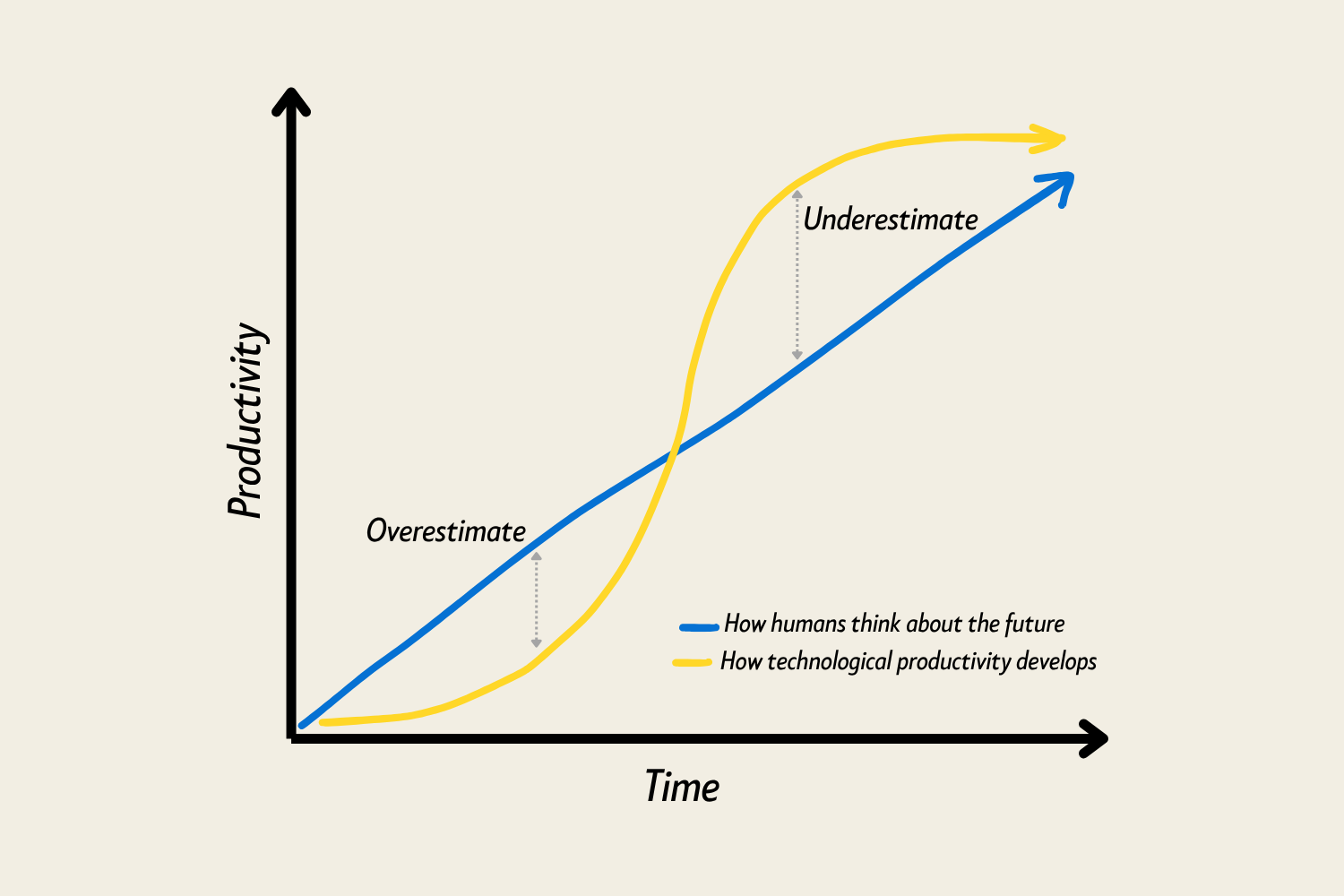
You overestimate new tech's short-run impact and underestimate its long-run impact — so ask if you're early, not whether it's working.

IKEA Effect
You value things more when you helped build them — which is why a strategy handed to a team lands flat.
Kotter's 8-Step Change Model
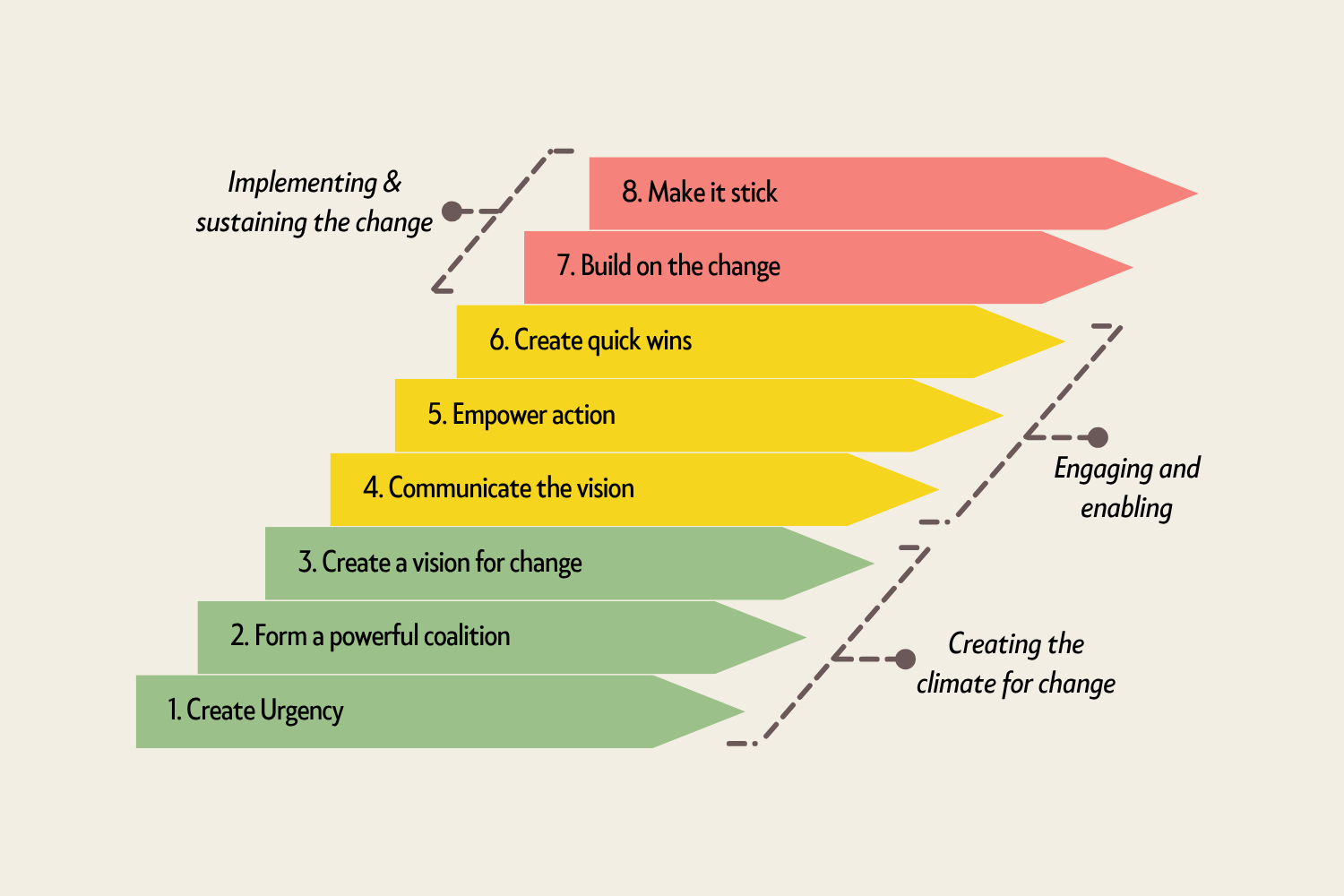
John Kotter's eight-step process for leading change, from creating urgency to anchoring new behavior in culture — keeping transformations from reversing.
Books related to The 3 Conditions for Change

Leading Change
John Kotter's eight-step anatomy of organizational change, built from studying why most change efforts fail, and a blunt diagnosis that most failures trace back to skipping step one, not step eight.

Switch
Chip and Dan Heath's case that most change efforts fail from a basic misdiagnosis, treating a willpower problem as if it were an information problem, and a three-part framework for directing the rational mind, motivating the emotional one, and reshaping the environment around both.

The Heart of Change
Kotter's own follow-up to Leading Change, built on a single correction: people don't change their behavior because an analysis changed their thinking. They change because something made them actually feel differently first.

The Ride of a Lifetime
Disney CEO Bob Iger's own account of betting the company three times, on Pixar, Marvel, and Lucasfilm, and then again on streaming, and the specific discipline of leaving what you just paid billions for alone long enough for it to actually work.