ADKAR Model
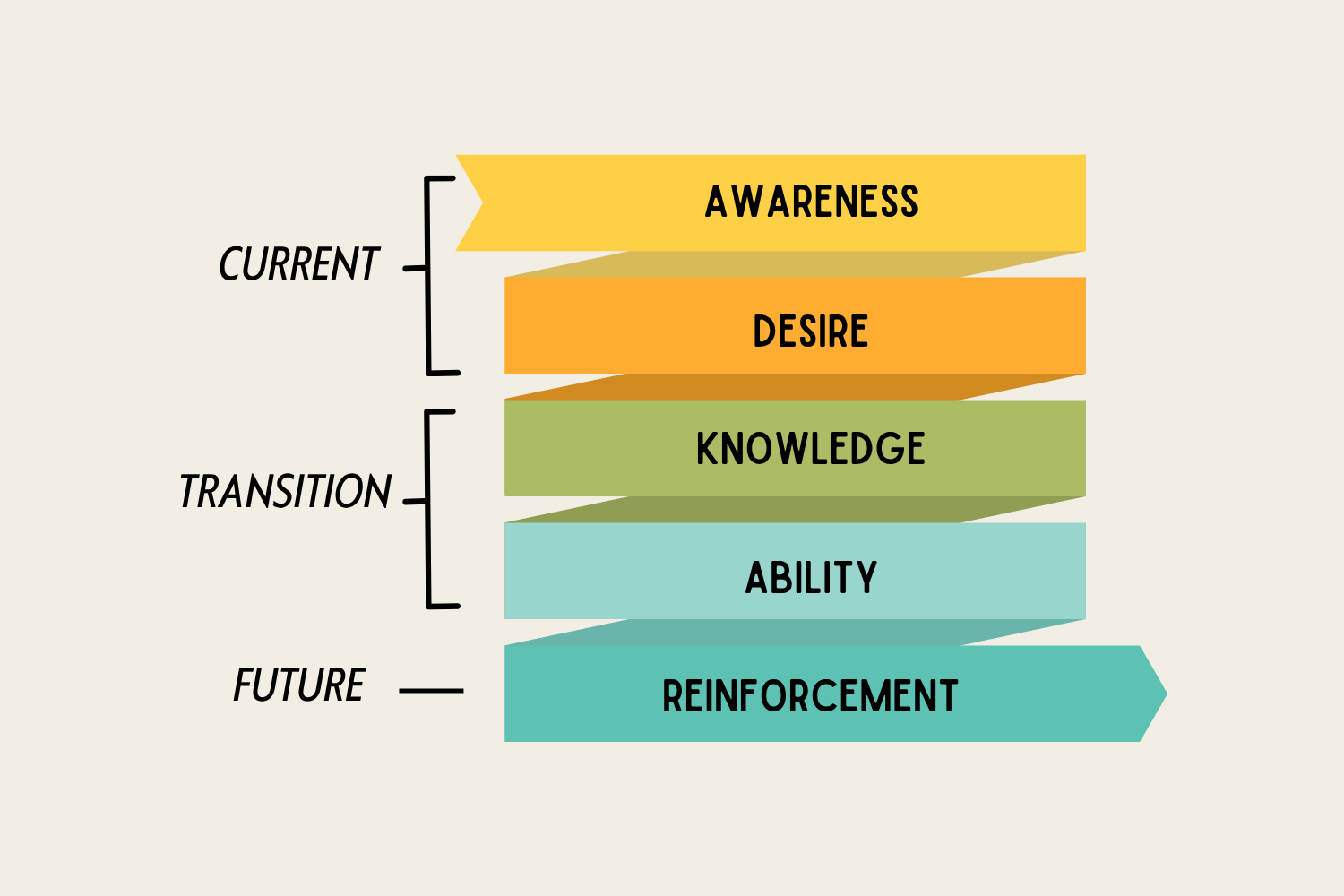
Five building blocks — Awareness, Desire, Knowledge, Ability, Reinforcement — track change person by person, pinpointing exactly where it's stuck.
 Find this on the mind-map
Introduction
Back in the early 2000s, a researcher named Jeff Hiatt noticed something odd: most change management advice was written for organizations, not people. Roadmaps, timelines, change-readiness scorecards — all of it treated "the company" as the thing that needed to change. So he founded a research firm called Prosci and went and studied how change actually happens, one person at a time. What he found became ADKAR, and he laid it all out in his 2006 book, ADKAR: A Model for Change in Business, Government and Our Community.
The insight underneath it is simple: your organization doesn't change. Your people do — one at a time — and only when each of them completes their own personal transition. ADKAR gives you a way to track exactly where each person is in that process, instead of guessing why a change "isn't sticking."
How It Works
ADKAR breaks any change a person goes through into five building blocks, always in this order:
| Stage | The question it answers | What's missing when it fails |
|---|---|---|
| Awareness | Why is this change happening? | They can't explain the reason in their own words |
| Desire | Do I want to be part of it? | They get the logic but feel no urgency |
| Knowledge | How exactly do I do this? | They keep asking for the mechanics |
| Ability | Can I do it under real conditions? | They know the steps but revert under pressure |
| Reinforcement | Will it still be happening in 60 days? | It quietly slides back once nobody's watching |
Here's the part that matters most: each block depends on the one before it, and skipping one doesn't make the next one show up on its own. You can have a team that's fully aware of a change, genuinely wants it, and still fails — because nobody actually built the skill to execute it.
Most change efforts don't fail because people are against the change. They fail because you, the leader, nail the first block and just assume the rest will follow.
Why It Matters for Leaders
Here's a pattern worth watching for in yourself: most leaders are fluent in exactly one stage — Awareness. The all-hands, the Slack post, the deck explaining the "why." Everything after the announcement gets a lot less attention, because it's a lot less comfortable.
The first trap is assuming that telling people "why" automatically makes them want it. Awareness and Desire are different states. Someone can understand a change completely and still not want to be the one who absorbs the short-term pain of it — especially when the upside is the company's and the cost is theirs.
The second trap is treating Knowledge and Ability as the same thing. Knowledge is understanding a new process in theory. Ability is doing it mid-sprint, under deadline pressure, before the muscle memory has formed. One training session builds the first. It almost never builds the second.
The third trap is dropping Reinforcement the moment a change looks like it's taken. Old habits don't disappear at launch — they fade slowly, and they creep back the second your attention moves somewhere else.
Picture this: you roll out a new project management tool, run a solid training session, and a month later half your team is still tracking work in spreadsheets. One engineer admits he understood the tool fine in theory — he just froze trying to use it live, mid-sprint. That's not resistance. That's a Knowledge-to-Ability gap, and the fix is concrete: pair him with a "tool buddy" for two real sprints until it's second nature.
Or this one: you announce a reporting-line change, explain the reasoning clearly, and get nods all around. Then nothing changes on the ground, because nobody actually knows what it means for their own role or their relationship with their new manager. That's not confusion about the "why" — that's a Desire gap, and it closes with individual conversations about what's actually at stake for each person.
If you only ever manage Awareness, you'll spend your career re-announcing changes that never actually took hold.
What to do next
Test your knowledge of ADKAR Model
Practice ADKAR Model
Apply ADKAR Model to a real situation
Skills related to ADKAR Model

Frameworks related to ADKAR Model
Amara's Law
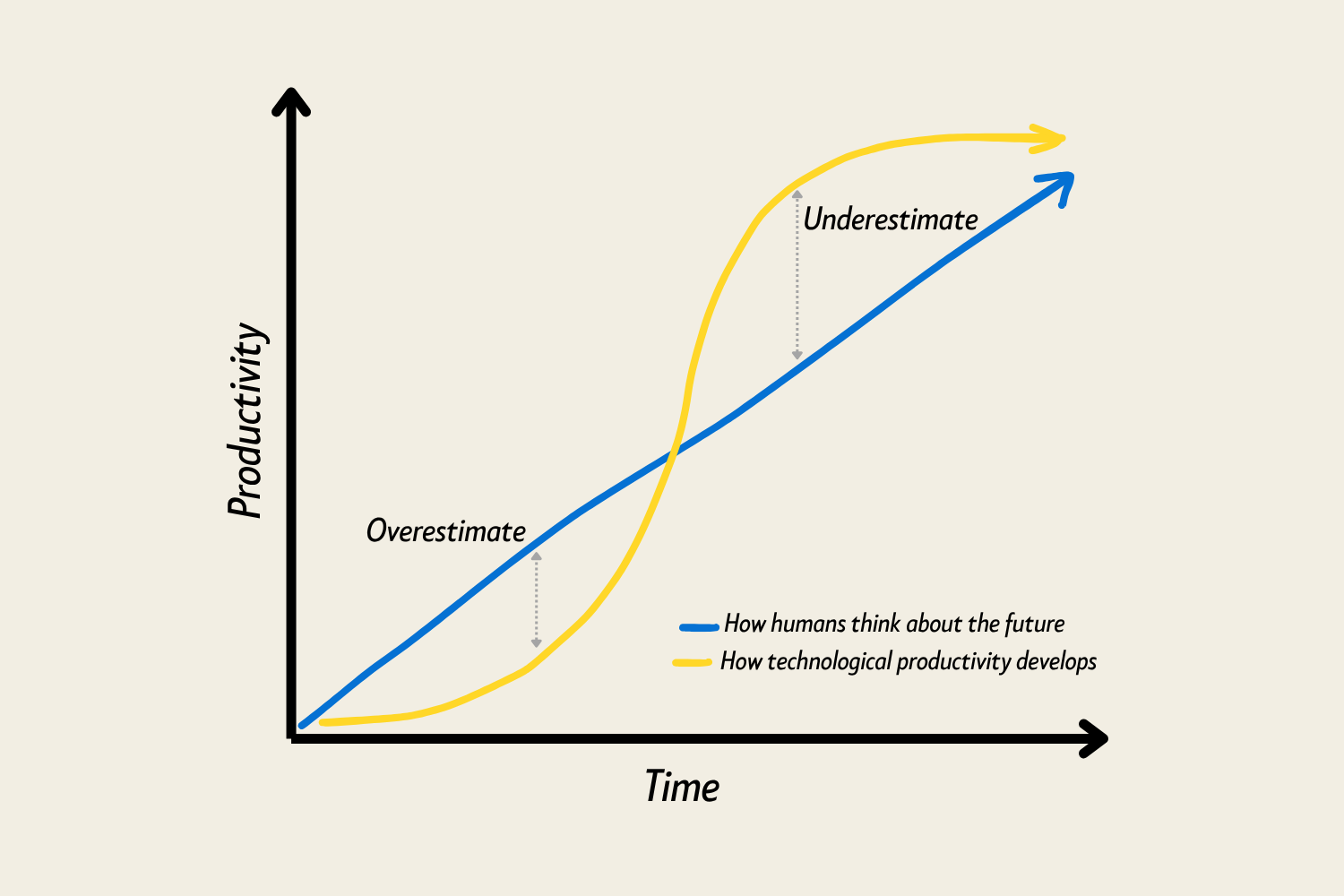
You overestimate new tech's short-run impact and underestimate its long-run impact — so ask if you're early, not whether it's working.

IKEA Effect
You value things more when you helped build them — which is why a strategy handed to a team lands flat.
Kotter's 8-Step Change Model
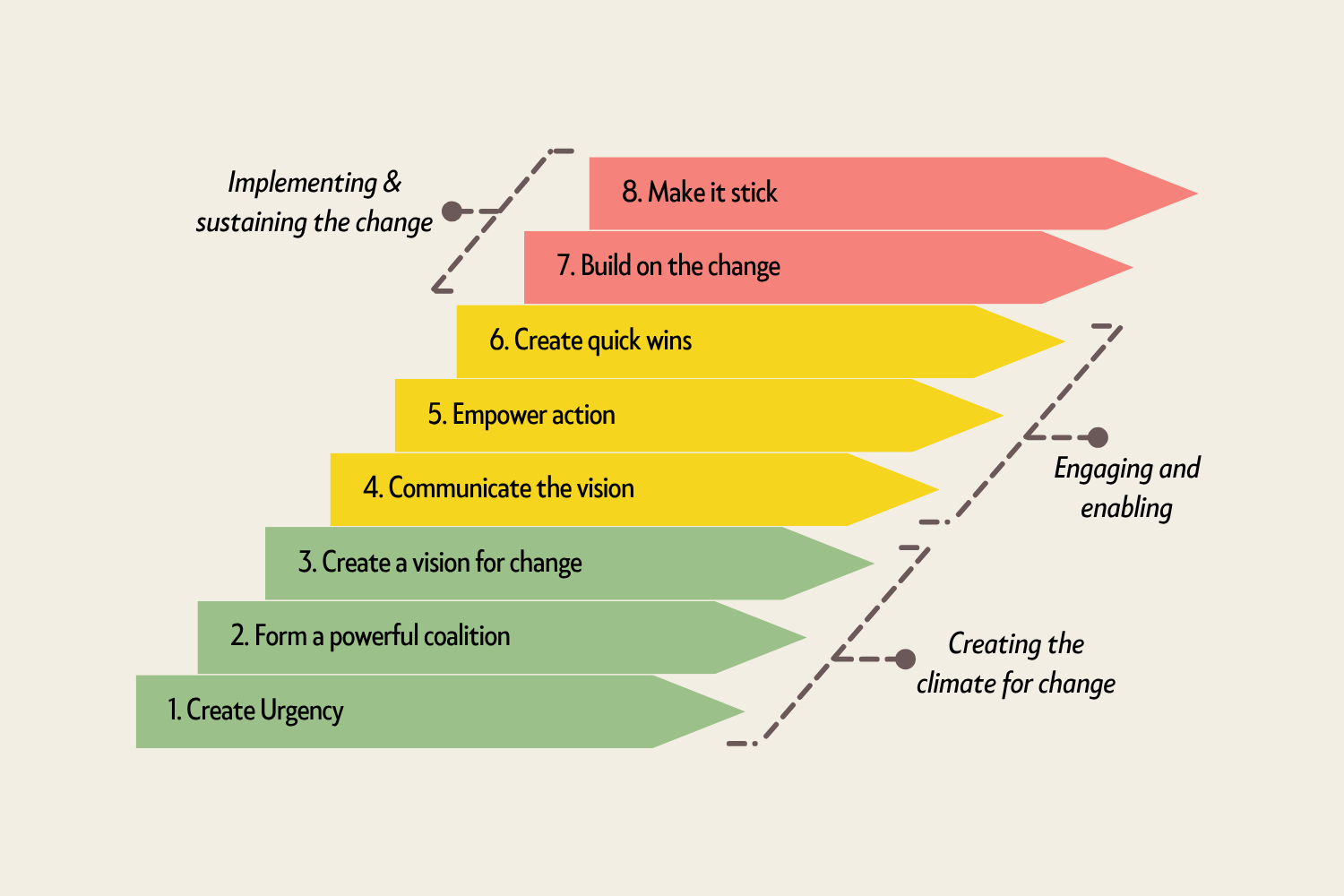
John Kotter's eight-step process for leading change, from creating urgency to anchoring new behavior in culture — keeping transformations from reversing.

The 3 Conditions for Change
A team can agree in the room and change nothing after — change needs three conditions at once: Willingness, Desire, Courage.
Books related to ADKAR Model

Leading Change
John Kotter's eight-step anatomy of organizational change, built from studying why most change efforts fail, and a blunt diagnosis that most failures trace back to skipping step one, not step eight.

Switch
Chip and Dan Heath's case that most change efforts fail from a basic misdiagnosis, treating a willpower problem as if it were an information problem, and a three-part framework for directing the rational mind, motivating the emotional one, and reshaping the environment around both.

The Heart of Change
Kotter's own follow-up to Leading Change, built on a single correction: people don't change their behavior because an analysis changed their thinking. They change because something made them actually feel differently first.

The Ride of a Lifetime
Disney CEO Bob Iger's own account of betting the company three times, on Pixar, Marvel, and Lucasfilm, and then again on streaming, and the specific discipline of leaving what you just paid billions for alone long enough for it to actually work.