The Ride of a Lifetime
Disney CEO Bob Iger's own account of betting the company three times, on Pixar, Marvel, and Lucasfilm, and then again on streaming, and the specific discipline of leaving what you just paid billions for alone long enough for it to actually work.
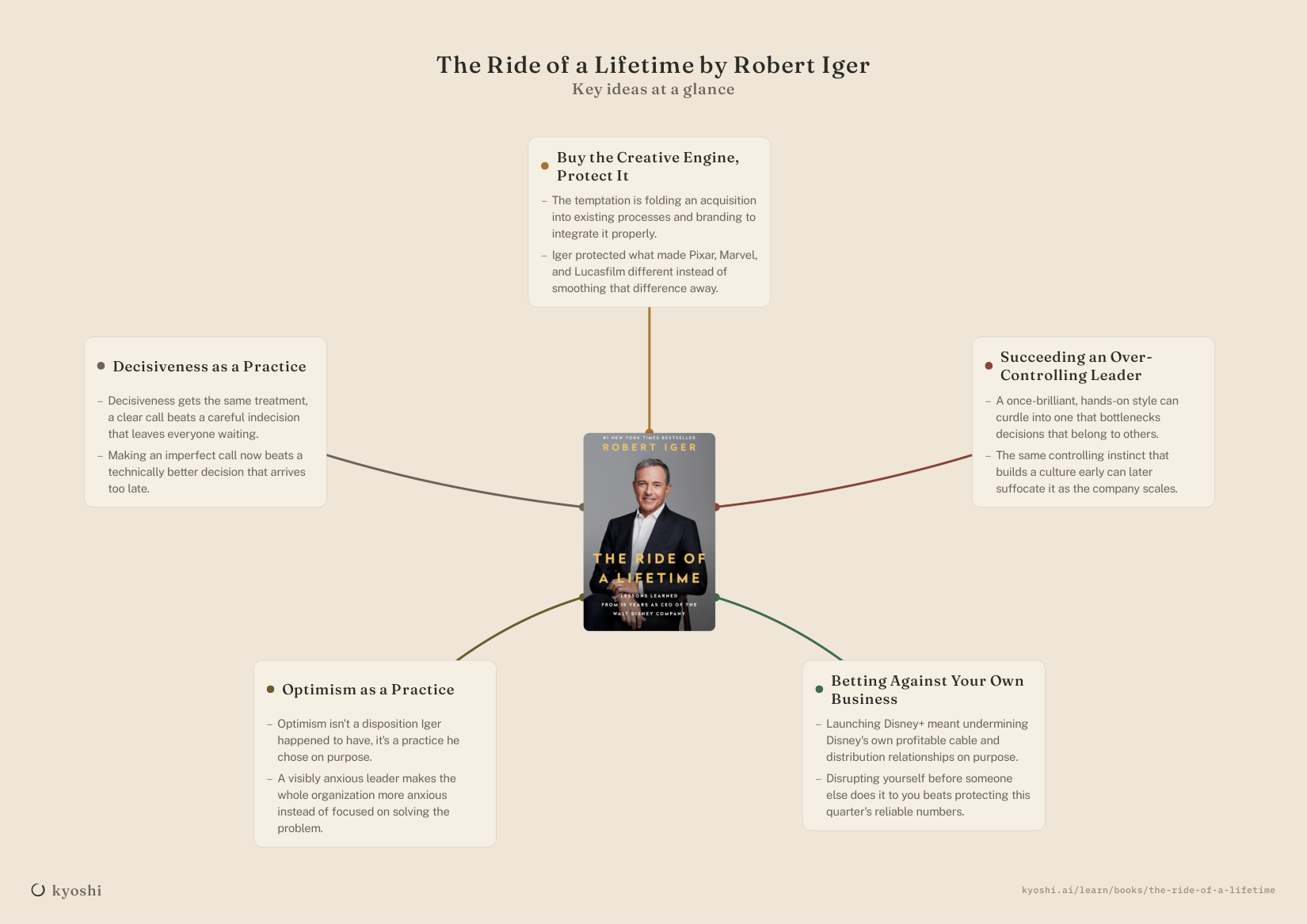
 Find this on the mind-map
Introduction
Bob Iger took over a Disney that had spent years in a defensive crouch under his predecessor, and spent the next decade and a half making some of the largest, most visible bets in corporate history: Pixar, Marvel, Lucasfilm, and eventually Disney's own streaming service, built in direct competition with its own profitable legacy business. His memoir is less a victory lap than a record of a specific, repeatable discipline: knowing exactly what to change about an acquisition, and what to deliberately leave alone.
Buy the Creative Engine, Then Protect It
Each major acquisition (Pixar, Marvel, Lucasfilm) carried the same obvious temptation: fold the smaller company into Disney's existing processes, brand guidelines, and management layers, to "integrate" it properly. Iger's actual move was closer to the opposite: buy the creative culture specifically because it worked differently than Disney's, then protect that difference from Disney's own bureaucracy rather than smoothing it away. The value Disney paid billions for was the exact thing a standard integration playbook would have dissolved within a year or two.
Succeeding a Leader Who Over-Controlled
Iger spent years working directly under Michael Eisner, watching a once-brilliant, hands-on leadership style curdle into something that second-guessed and bottlenecked decisions that should have belonged to the people closer to them. The lesson he draws isn't a personal grievance. It's that the same controlling instinct that builds a great creative culture early can, left unchecked as the company scales, become the thing that slowly suffocates it. Iger's own stated leadership style afterward was deliberately less centralized.
Betting Against Your Own Profitable Business
Launching Disney+ meant deliberately undermining Disney's extremely profitable existing relationships with cable providers and other distribution partners, in favor of a direct-to-consumer bet whose economics looked worse in the near term. Picture a leadership team facing this choice honestly: protect this quarter's reliable, profitable distribution deals, or disrupt them yourself before someone else does it to you. Iger's bet was that the second option, however painful short-term, was the only one that wasn't eventually fatal. It's a bet with the same shape as the self-disruption problem described in The Innovator's Dilemma, just made from inside the company under real pressure instead of studied from outside after the fact.
Optimism and Decisiveness as Deliberate Practices
Iger is explicit that optimism isn't a disposition he happened to have. It's a practice he chose, because a visibly anxious leader makes an organization more anxious, and a leader who projects calm, grounded confidence in difficult moments gives people room to actually solve the problem instead of just reacting to the leader's fear. Decisiveness gets the same treatment: making a clear call, even an imperfect one, beats a technically-more-careful indecision that leaves an entire organization waiting.
Putting It Together
The thread across the book isn't "take big risks." It's knowing which parts of a bet require protection (a newly acquired creative culture, a painful but necessary long-term pivot) and which parts require your direct, decisive presence (setting the strategic bet, projecting calm under real pressure), and not confusing the two, the way an over-controlling leader confuses "my presence everywhere" with "my judgment where it matters."
Why It Matters for Leaders
The test this book sets up isn't whether you can make a bold call. Plenty of leaders can do that once. It's whether you know, after you've made it, which parts of what you just built need your hands off it. Most leaders default to the opposite instinct: the more something matters, the more they want to stay close to it. Iger's record says that instinct is usually backward.
Think about how this actually plays out when you acquire a team, inherit a function, or absorb a group through a reorg. The temptation is to fold them into your existing way of working fast, matching your tools, your meeting cadence, your reporting structure, because consistency feels like good management. But if the reason that team was worth taking on was that it worked differently than the rest of your org, standardizing it is how you pay for something valuable and then destroy the thing you paid for without even noticing you did it. The question to ask isn't "how do I integrate this," it's "what specifically made this worth having, and how do I protect that from my own default process."
The same discipline shows up in a smaller, more personal way: noticing when your own closeness to a decision has become the bottleneck. A leader who built their reputation being hands-on with every call has to actively watch for the point where that stops being thoroughness and starts being the thing slowing everyone else down. That's a harder thing to see in yourself than in someone else's org chart.
And it shows up in the decision nobody wants to make: whether to disrupt your own best-performing part of the business before someone else does it to you. That call rarely feels urgent in the moment, because the current numbers are fine. Picture a general manager named Alvaro running a division that still prints money every quarter off a channel he knows, deep down, is shrinking. The safe move is to protect this year's numbers. The harder move, the one this book argues for, is funding the thing that competes with his own cash cow, on purpose, while there's still time to do it on his own terms instead of someone else's.
What to do next
Reinforce your understanding of The Ride of a Lifetime
Books related to The Ride of a Lifetime

Leading Change
John Kotter's eight-step anatomy of organizational change, built from studying why most change efforts fail, and a blunt diagnosis that most failures trace back to skipping step one, not step eight.

Switch
Chip and Dan Heath's case that most change efforts fail from a basic misdiagnosis, treating a willpower problem as if it were an information problem, and a three-part framework for directing the rational mind, motivating the emotional one, and reshaping the environment around both.

The Heart of Change
Kotter's own follow-up to Leading Change, built on a single correction: people don't change their behavior because an analysis changed their thinking. They change because something made them actually feel differently first.
Skills related to The Ride of a Lifetime

Frameworks related to The Ride of a Lifetime

ADKAR Model
Five building blocks — Awareness, Desire, Knowledge, Ability, Reinforcement — track change person by person, pinpointing exactly where it's stuck.
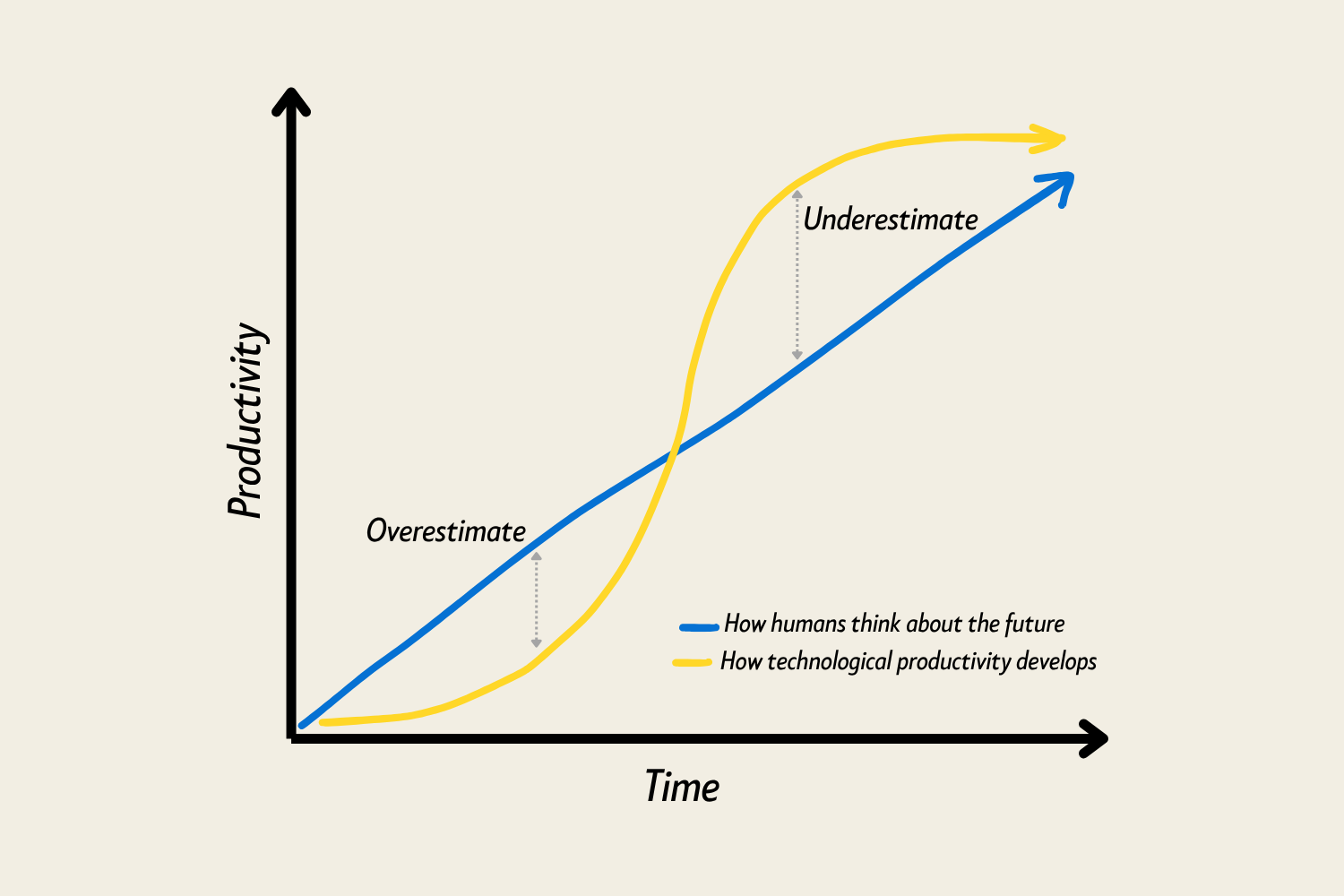
Amara's Law
You overestimate new tech's short-run impact and underestimate its long-run impact — so ask if you're early, not whether it's working.

IKEA Effect
You value things more when you helped build them — which is why a strategy handed to a team lands flat.
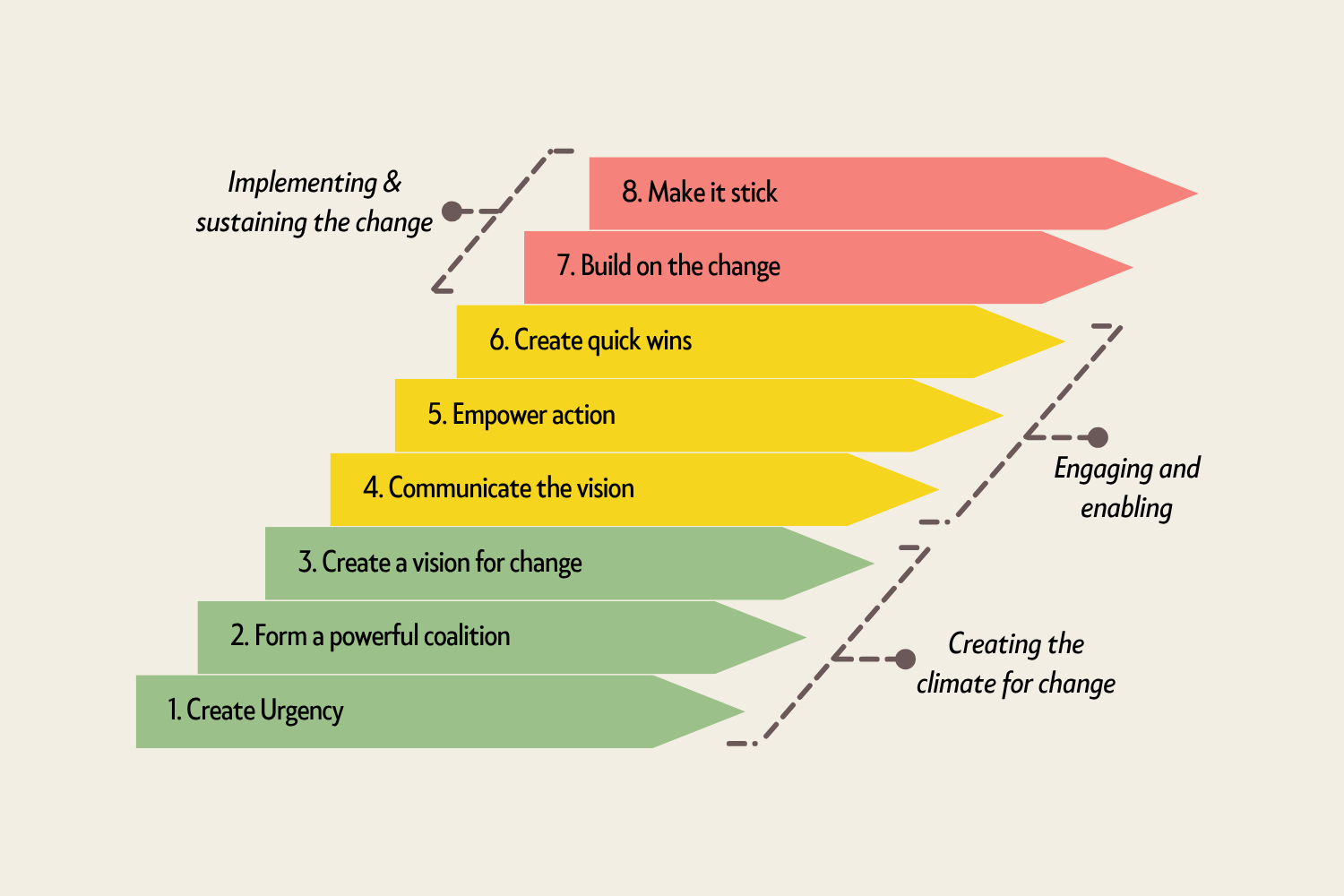
Kotter's 8-Step Change Model
John Kotter's eight-step process for leading change, from creating urgency to anchoring new behavior in culture — keeping transformations from reversing.

The 3 Conditions for Change
A team can agree in the room and change nothing after — change needs three conditions at once: Willingness, Desire, Courage.