Amara's Law
You overestimate new tech's short-run impact and underestimate its long-run impact — so ask if you're early, not whether it's working.
 Find this on the mind-map
Introduction
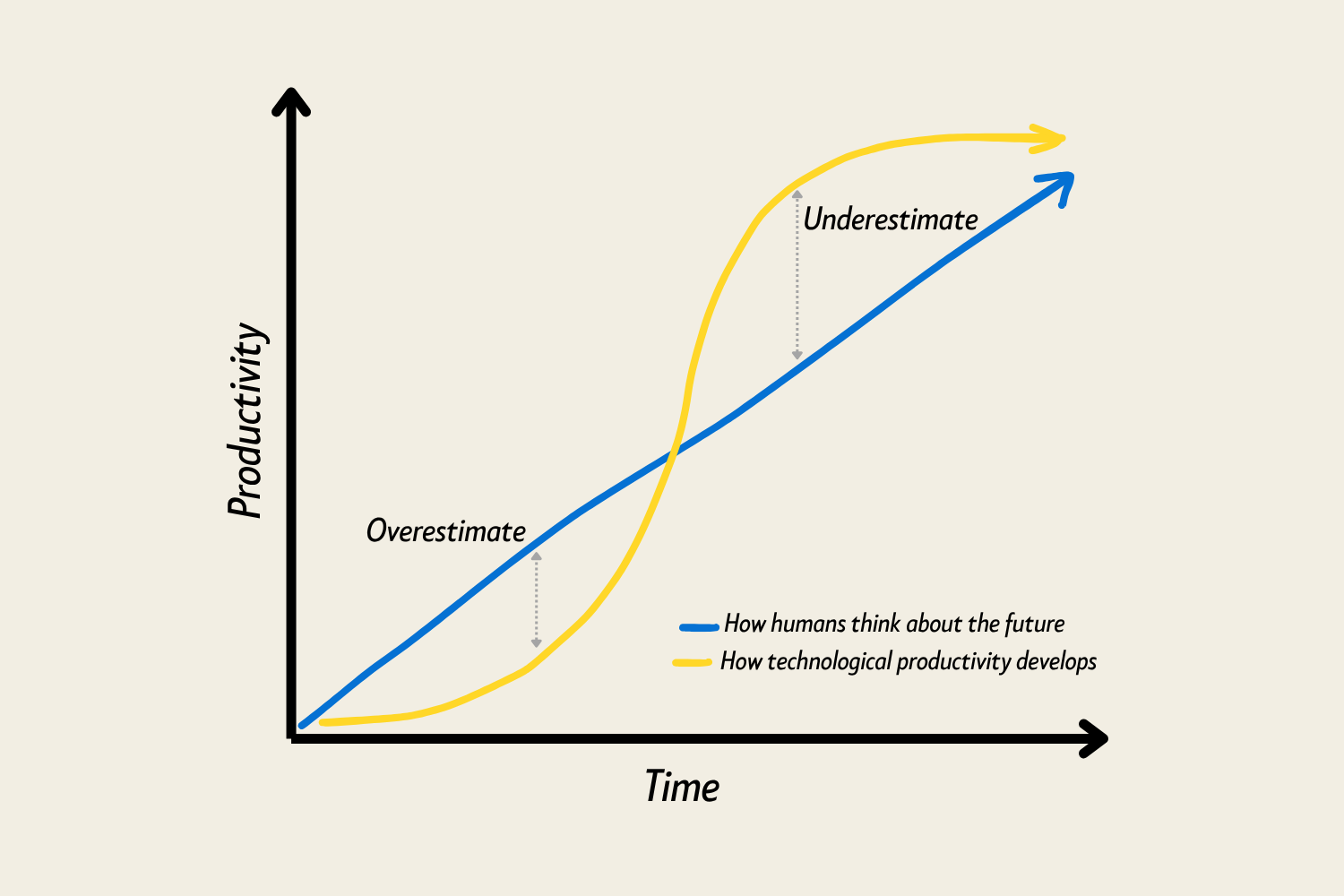
Roy Amara, a researcher who went on to lead the Institute for the Future, put a name to a pattern he kept noticing: we tend to overestimate the effect of a new technology in the short run, and underestimate its effect in the long run.
Here's why it happens: expectation and capability move at different speeds, and they cross at a point almost nobody's watching for.
How It Works
The pattern runs in three phases:
| Phase | What expectations do | What capability does |
|---|---|---|
| Hype | Spike on announcement — "this changes everything, right now" | Still early and rough |
| Trough | Collapse as the real version disappoints, and people write it off | Keeps improving, unnoticed |
| Quiet arrival | Nobody's talking about it anymore | Good enough that it's simply the default way of working |
The iPod is a clean example. The promise was carrying your entire music collection everywhere. The first reality was skipping playback and a battery that died too fast — that's the trough. Storage, sync speed, and battery life kept improving generation after generation while most people had stopped paying attention, and at some point the thing stopped being a gadget and just became how you listened to music.
You'll see the same shape play out inside teams. Say a manager rolls out an AI coding assistant and adoption stalls — one engineer dismisses it as fancy autocomplete. The tools keep getting better, adoption picks up slowly and then quickly, and a year later the whole team is using AI assistants for coding, testing, documentation, and full spec-driven workflows. Nobody asks whether they should use it anymore, and nobody even remembers being skeptical. That forgetting is part of the pattern.
Amara's Law isn't a prediction machine — it doesn't say every hyped technology eventually arrives. What it says is that a single snapshot of a technology, taken at any one moment, is a bad basis for guessing where it's headed.
Why It Matters for Leaders
You can make two mistakes here, and they're the same mistake pointed in opposite directions.
The hype mistake is getting excited too early — telling a VP that AI will cut delivery time in half by next quarter, missing that target, and having every claim you make after that carry a credibility discount.
The dismissal mistake is writing something off too early — calling a tool "fancy autocomplete" and sitting it out, only to find a few months later that it's improved enough to be impossible to ignore, with your team now behind.
Both mistakes come from the same error: you looked at the technology once, at one point in time, and used that single look to decide where it was heading.
The dismissal mistake usually costs you more, because you pay for it under pressure. Picture an engineering manager who moves part of his team's infrastructure to the cloud, sees no efficiency gain and worse reliability after two months, and reverts to self-hosting. A year later the whole company moves to the cloud anyway, and he's restarting the migration from scratch — this time on someone else's timeline. That first migration wasn't a failed project. It just hadn't been given time to settle.
There's a version of this about people, too, not just tools. Say a principal engineer pushes to break a growing monolith into smaller services and gets outvoted — including by her own manager — on the grounds that it's too much work for too little payoff. Eighteen months later the codebase is hard enough to maintain that customer escalations are climbing and every fix takes days, and the team takes on that exact project anyway. The person telling you where things are heading is worth listening to, even when their timing is inconvenient.
The real value of this law is that it shows both patience and urgency can be the right call, depending on where you're standing. If you can't tell which one applies in a given moment, you'll default to whichever one matches your personality.
What to do next
Test your knowledge of Amara's Law
Practice Amara's Law
Apply Amara's Law to a real situation
Skills related to Amara's Law

Change Management
Carrying your team through a transition, from the moment you announce a change to the point where the new way of working has just become the ordinary one.

Mental Agility
Matching how you lead to the situation in front of you and the person you're leading, because the approach that worked yesterday might be exactly wrong today.
Frameworks related to Amara's Law

ADKAR Model
Five building blocks — Awareness, Desire, Knowledge, Ability, Reinforcement — track change person by person, pinpointing exactly where it's stuck.

IKEA Effect
You value things more when you helped build them — which is why a strategy handed to a team lands flat.
Kotter's 8-Step Change Model
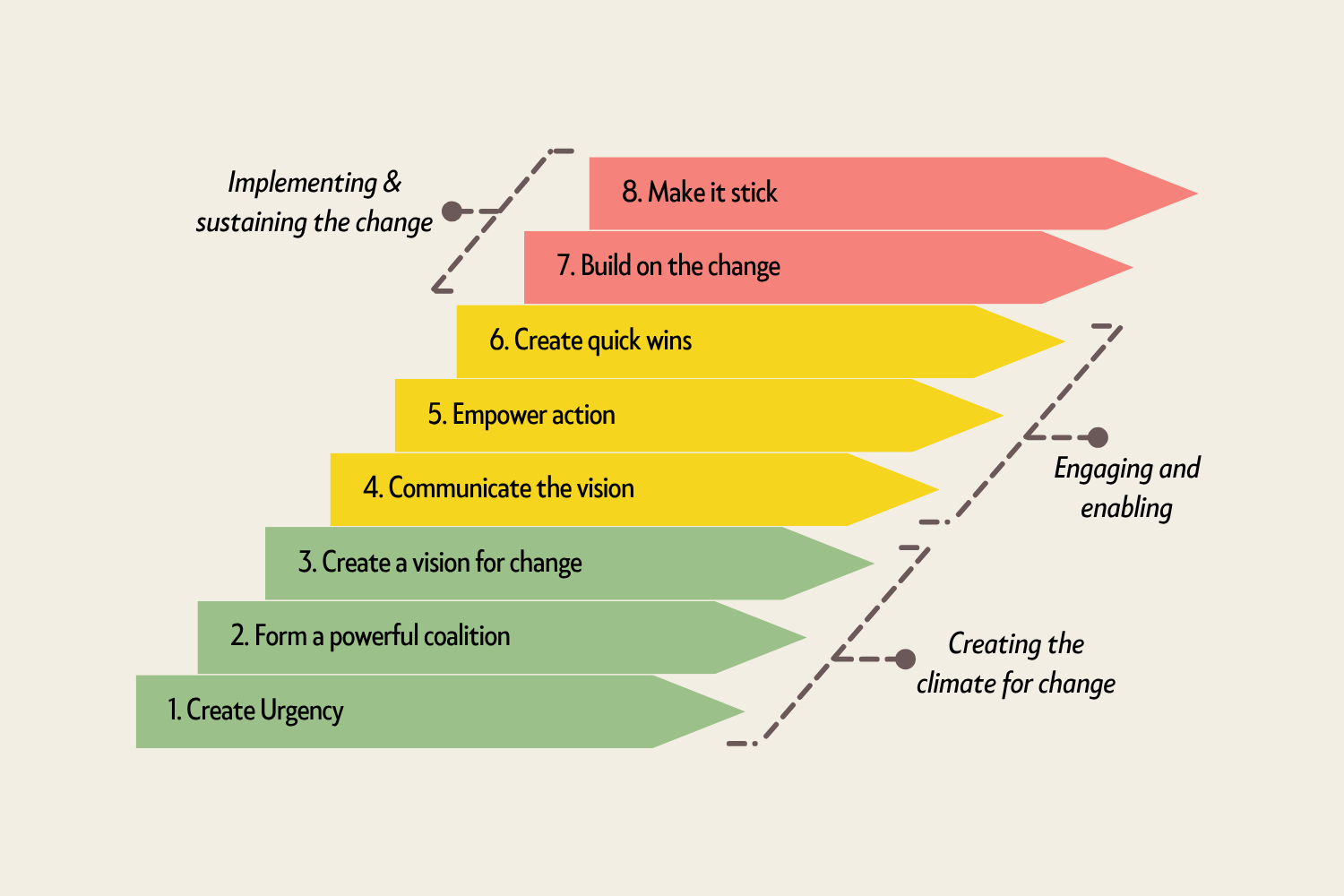
John Kotter's eight-step process for leading change, from creating urgency to anchoring new behavior in culture — keeping transformations from reversing.
Situational Leadership
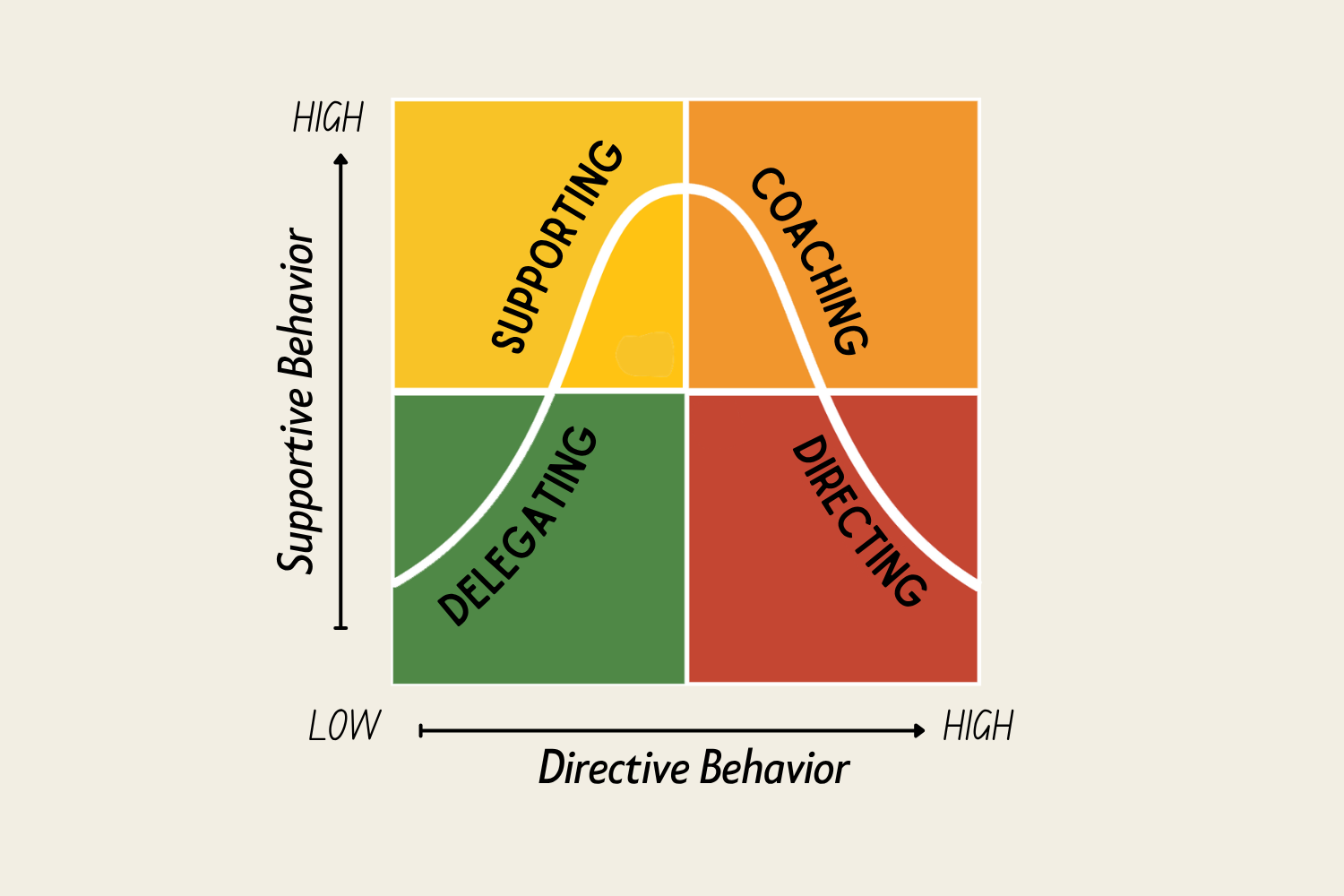
There's no right way to lead — only the right way for this person right now: direct, coach, support, or delegate.

The 3 Conditions for Change
A team can agree in the room and change nothing after — change needs three conditions at once: Willingness, Desire, Courage.
Books related to Amara's Law

Leading Change
John Kotter's eight-step anatomy of organizational change, built from studying why most change efforts fail, and a blunt diagnosis that most failures trace back to skipping step one, not step eight.

Switch
Chip and Dan Heath's case that most change efforts fail from a basic misdiagnosis, treating a willpower problem as if it were an information problem, and a three-part framework for directing the rational mind, motivating the emotional one, and reshaping the environment around both.

The Heart of Change
Kotter's own follow-up to Leading Change, built on a single correction: people don't change their behavior because an analysis changed their thinking. They change because something made them actually feel differently first.

The Ride of a Lifetime
Disney CEO Bob Iger's own account of betting the company three times, on Pixar, Marvel, and Lucasfilm, and then again on streaming, and the specific discipline of leaving what you just paid billions for alone long enough for it to actually work.