Switch
Chip and Dan Heath's case that most change efforts fail from a basic misdiagnosis, treating a willpower problem as if it were an information problem, and a three-part framework for directing the rational mind, motivating the emotional one, and reshaping the environment around both.
 Find this on the mind-map
Introduction
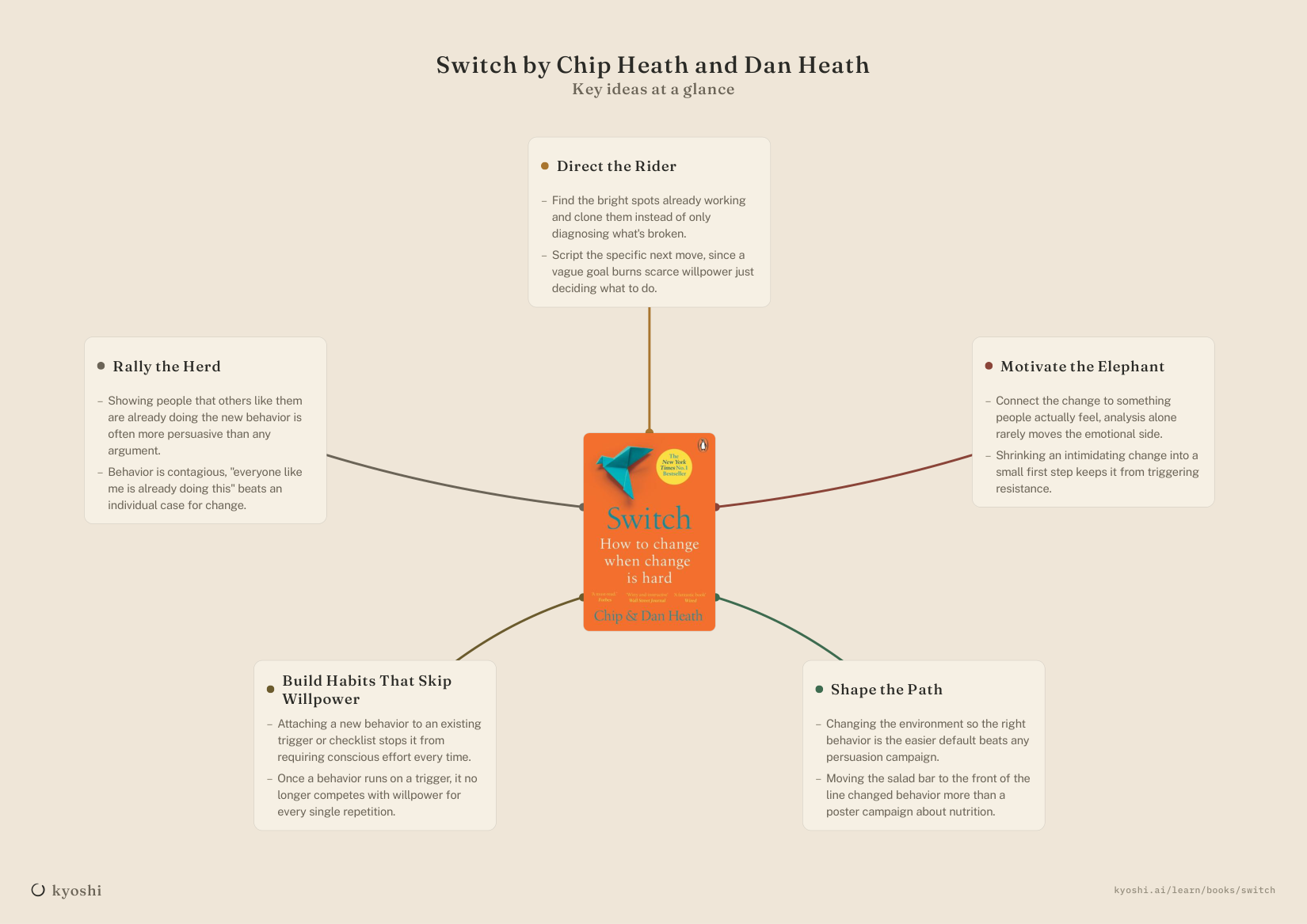
Most change efforts assume that if people just understood the reasons clearly enough, they'd change. Chip and Dan Heath's argument, borrowing a metaphor from psychologist Jonathan Haidt, is that this misdiagnoses the actual mechanism: a small, rational "Rider" sits on top of a much larger, much stronger emotional "Elephant," and no amount of the Rider explaining the destination matters if the Elephant doesn't want to walk there. Real change requires directing the Rider, motivating the Elephant, and, the part most change efforts skip entirely, shaping the Path they're both walking on.
Direct the Rider
The rational mind is good at analysis and bad at sustained willpower, so its job in a change effort is to provide clear direction, not more analysis. Three moves matter here: find the "bright spots," what's already working, somewhere, that you can study and clone, instead of only diagnosing what's broken; script the critical moves, give specific behaviors, not a vague goal, because ambiguity burns scarce willpower deciding what to do; and point to the destination, a vivid, specific picture of the successful future, a "destination postcard" people can actually picture themselves inside.
Motivate the Elephant
Analysis rarely moves the Elephant. Feeling does. Three levers: find the feeling, connect the change to something people actually feel strongly about, not just a logical case; shrink the change, break an intimidating, identity-threatening change into a step small enough that it doesn't trigger the Elephant's resistance, the way a goal to "switch to low-fat milk" succeeds better framed as "just try 1% for a month" than as a permanent lifestyle overhaul; and grow your people, cultivate a mindset where struggling with something new reads as normal and expected, not as proof of failure.
Shape the Path
This is the piece most change efforts miss completely, because it doesn't involve persuading anyone. It involves changing the environment so the desired behavior becomes the easier default. Picture two cafeterias trying to get people to eat healthier. One runs a persuasive poster campaign about nutrition. The other just moves the salad bar to the front of the line and the fries to a less convenient spot. The second cafeteria changes behavior more, and does it without asking anyone's willpower to do any extra work at all.
Build Habits, Then Rally the Herd
Once a behavior starts happening, two more environmental levers lock it in: building habits, attaching the new behavior to a trigger or checklist so it stops requiring conscious willpower every single time; and rallying the herd, showing people that others like them are already doing the new behavior, because behavior is contagious and "everyone like me is already doing this" is often more persuasive than any individual argument for doing it.
Putting It Together
The Heaths' real insight isn't that willpower is weak; everyone already suspects that. It's that most change plans only ever address the Rider (more information, a clearer case) and completely ignore the Elephant (what people actually feel) and the Path (what the environment makes easy or hard), which means they're fighting the two strongest forces in the system with the weakest one.
Why It Matters for Leaders
Most managers running a change effort spend almost all their energy on the Rider: a clearer deck, a better business case, one more all-hands explaining the reasoning. This book's practical value is pointing out that the Rider was never the part resisting you. If a change isn't sticking, the real question isn't "did I explain this well enough," it's "what does this feel like to the people living it, and what does the environment make easy or hard."
Start with the smallest version of the ask. A team told to "collaborate more across functions" has no idea what to actually do differently on Monday morning. A team told "put a cross-functional reviewer on your next design doc before it ships" knows exactly what changed. Vague change asks burn willpower deciding what compliance even looks like; specific ones don't.
Then look at the environment you've left in place. If you want faster code reviews and the only tool anyone has is a shared Slack channel buried under forty other conversations, no amount of urging is going to beat that friction. Change the default (a dedicated channel, a bot that pings the right reviewer automatically) and you get the behavior without asking for more willpower from anyone.
Don't skip the feeling, either. A reorg explained purely through org charts and reporting lines leaves the Elephant completely unaddressed, and the Elephant is what decides whether people actually buy in or just comply until you stop watching.
Picture a manager named Jordan trying to get her team to write better incident postmortems, something everyone agrees matters and nobody actually does well. Instead of sending another reminder email, she finds the one postmortem on the team that's genuinely excellent, a bright spot, and turns it into the new template everyone starts from. She also moves the postmortem review into the same meeting where the team already discusses what's next, so it's no longer a separate task competing for willpower. Within a month, postmortems that used to get skipped are just part of how the team closes out an incident.
What to do next
Reinforce your understanding of Switch
Books related to Switch

Leading Change
John Kotter's eight-step anatomy of organizational change, built from studying why most change efforts fail, and a blunt diagnosis that most failures trace back to skipping step one, not step eight.

The Heart of Change
Kotter's own follow-up to Leading Change, built on a single correction: people don't change their behavior because an analysis changed their thinking. They change because something made them actually feel differently first.

The Ride of a Lifetime
Disney CEO Bob Iger's own account of betting the company three times, on Pixar, Marvel, and Lucasfilm, and then again on streaming, and the specific discipline of leaving what you just paid billions for alone long enough for it to actually work.
Skills related to Switch

Frameworks related to Switch

ADKAR Model
Five building blocks — Awareness, Desire, Knowledge, Ability, Reinforcement — track change person by person, pinpointing exactly where it's stuck.
Amara's Law
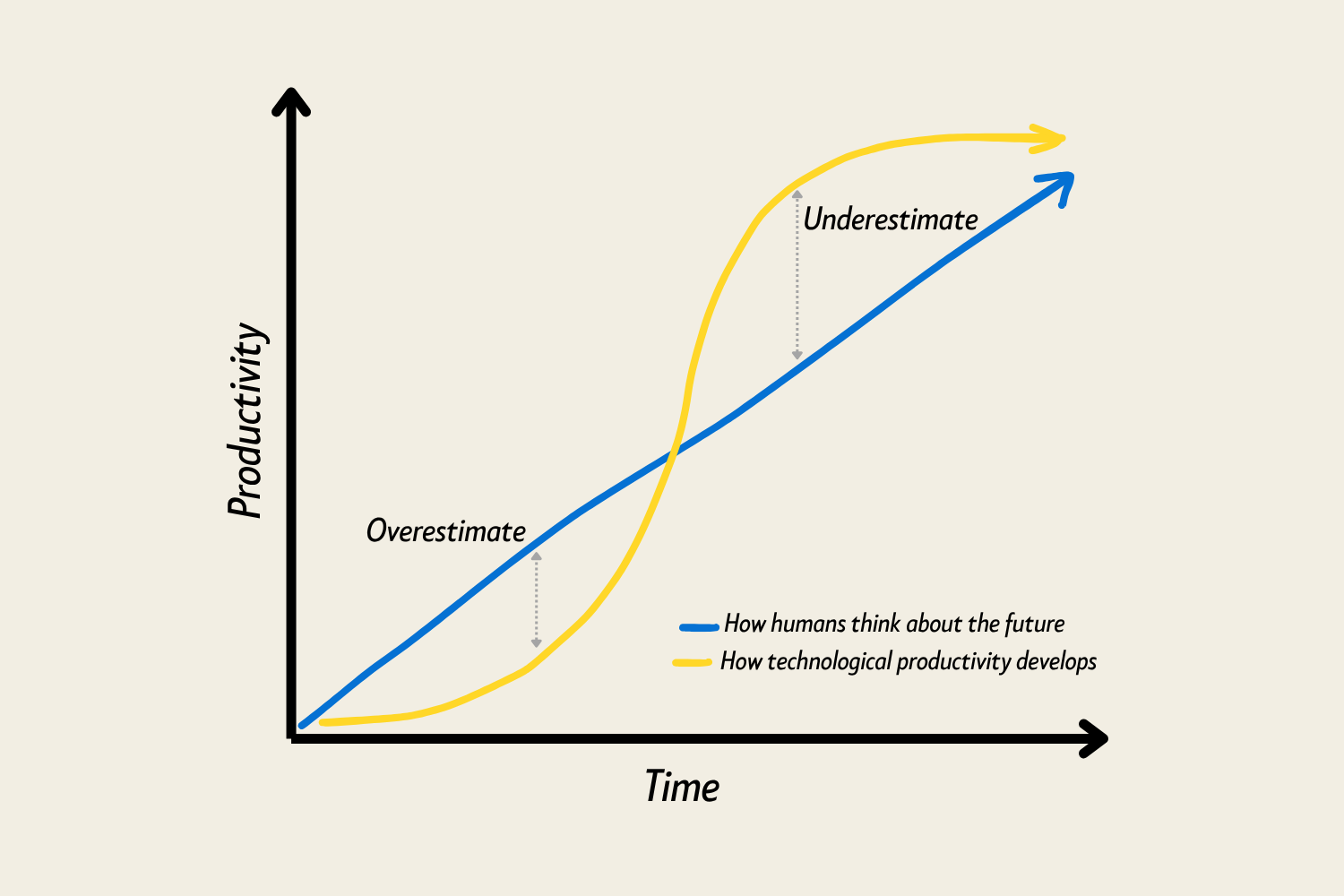
You overestimate new tech's short-run impact and underestimate its long-run impact — so ask if you're early, not whether it's working.

IKEA Effect
You value things more when you helped build them — which is why a strategy handed to a team lands flat.
Kotter's 8-Step Change Model
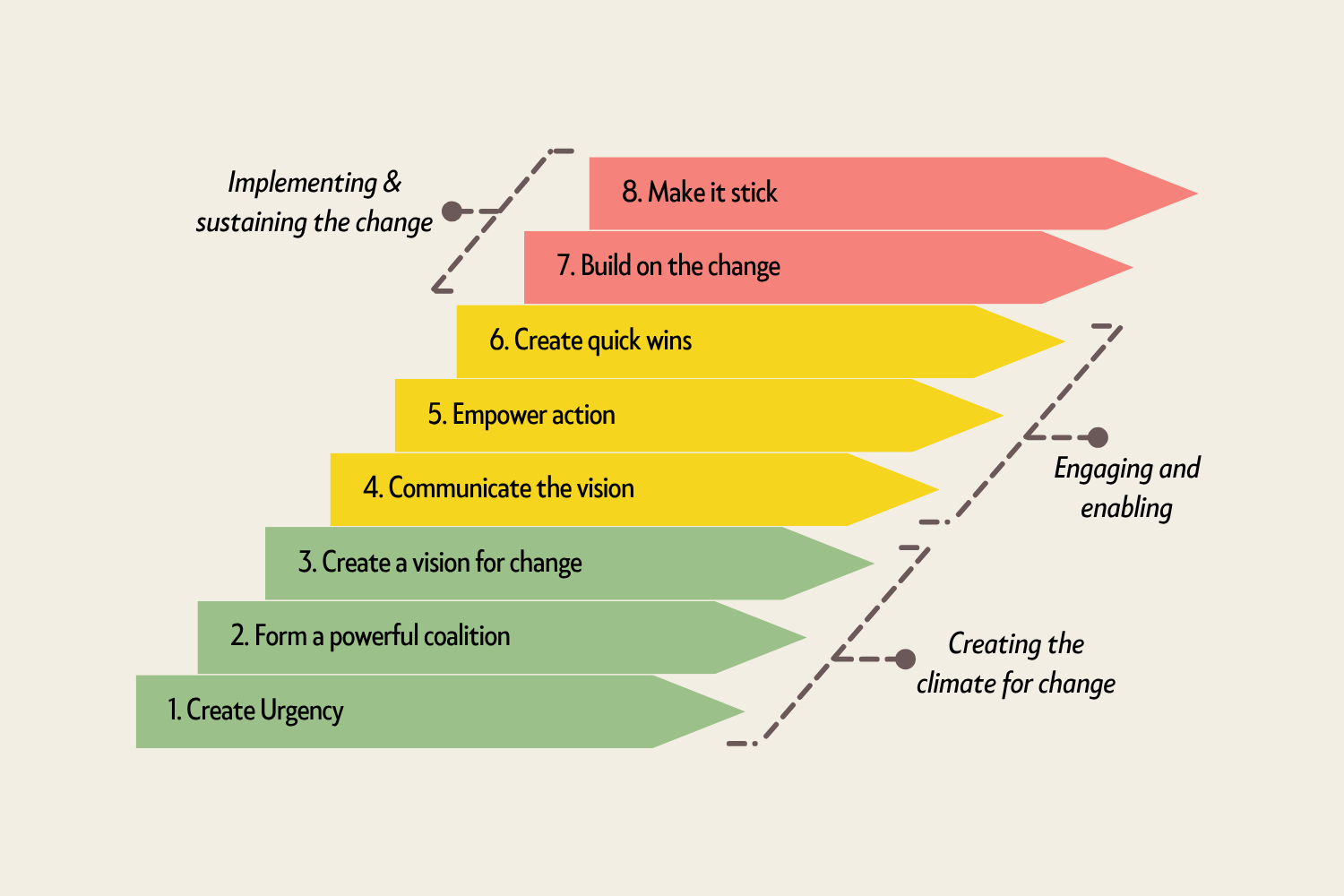
John Kotter's eight-step process for leading change, from creating urgency to anchoring new behavior in culture — keeping transformations from reversing.

The 3 Conditions for Change
A team can agree in the room and change nothing after — change needs three conditions at once: Willingness, Desire, Courage.