Kotter's 8-Step Change Model
John Kotter's eight-step process for leading change, from creating urgency to anchoring new behavior in culture — keeping transformations from reversing.
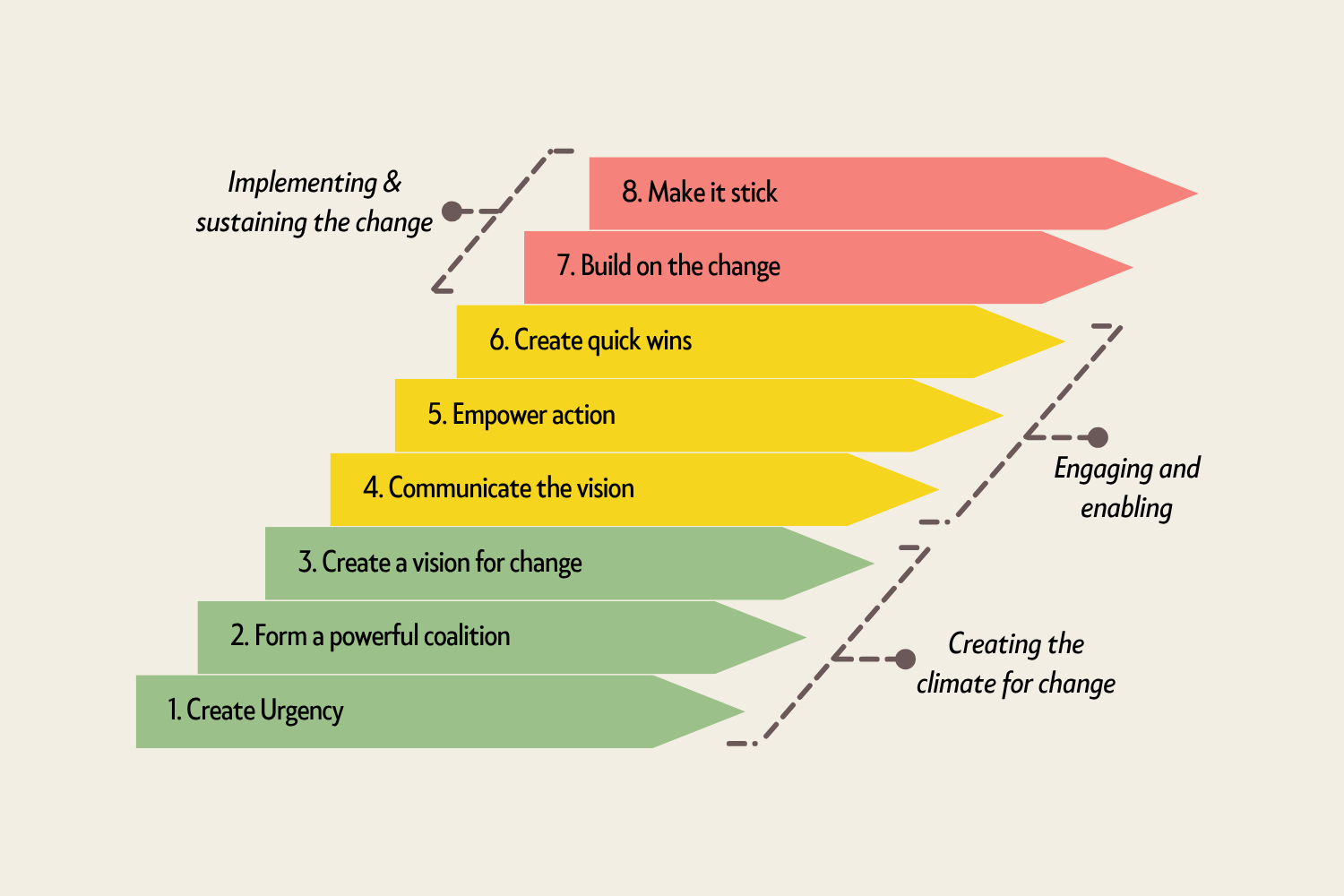 Find this on the mind-map
Introduction
Harvard Business School professor John Kotter built this model from a study of more than 100 organizations attempting major transformation. He published the findings in a 1995 Harvard Business Review article, "Leading Change: Why Transformation Efforts Fail," then expanded them into the 1996 book Leading Change. His central finding: most transformations fall short, and they fail in the same predictable ways — steps get skipped, or declared complete before they actually are.
How It Works
The eight steps run in sequence. Each one builds the conditions the next one needs to work.
| # | Step | What it produces |
|---|---|---|
| 1 | Create urgency | A felt reason to act now — not a slide about it |
| 2 | Build a guiding coalition | A group with enough power, credibility, and commitment to actually lead |
| 3 | Form a strategic vision | A clear picture of how the future differs from the present |
| 4 | Communicate the vision | Shared understanding, reinforced through every channel and by example |
| 5 | Remove obstacles | Systems, processes, and people that were blocking the new behavior |
| 6 | Generate short-term wins | Visible, unambiguous proof that the change actually works |
| 7 | Consolidate gains | Momentum you spend on the harder structural changes still to come |
| 8 | Anchor the change in culture | New behavior tied to norms, hiring, promotion, and succession |
Kotter later reframed these same eight items as continuous "accelerators" in his 2014 book Accelerate, arguing that in fast-moving environments they run in parallel and repeatedly, rather than once through in strict order.
The model works at the organizational level. ADKAR Model covers the same ground at the individual level — Kotter describes what the organization does, ADKAR describes what has to be true inside each person for any of it to actually land.
Why It Matters for Leaders
Change itself is rarely the problem. What trips your team up is confusion and a lack of support, and your job is to make change feel clear, structured, and human.
The most common failure is starting at step 3. You show up with a vision, present it well, and can't understand why nobody's moving. That's because urgency was never established and no coalition exists yet — so nobody is championing the vision, and people have no reason to stop doing what they're already doing with their time.
The second most common failure is stopping at step 6. The first visible win shows up, you treat it as the finish line, and your attention drifts elsewhere. Steps 7 and 8 exist because that's exactly the window where change reverses — quietly, without any announcement, before the new behavior gets anchored in how the organization hires, promotes, and rewards people.
The model also gives you the words to name exactly where things broke down. When a transformation stalls, naming the exact step it stalled on is far more useful than arguing about whether your team is just being resistant.
What to do next
Test your knowledge of Kotter's 8-Step Change Model
Apply Kotter's 8-Step Change Model to a real situation
Skills related to Kotter's 8-Step Change Model

Frameworks related to Kotter's 8-Step Change Model

ADKAR Model
Five building blocks — Awareness, Desire, Knowledge, Ability, Reinforcement — track change person by person, pinpointing exactly where it's stuck.
Amara's Law
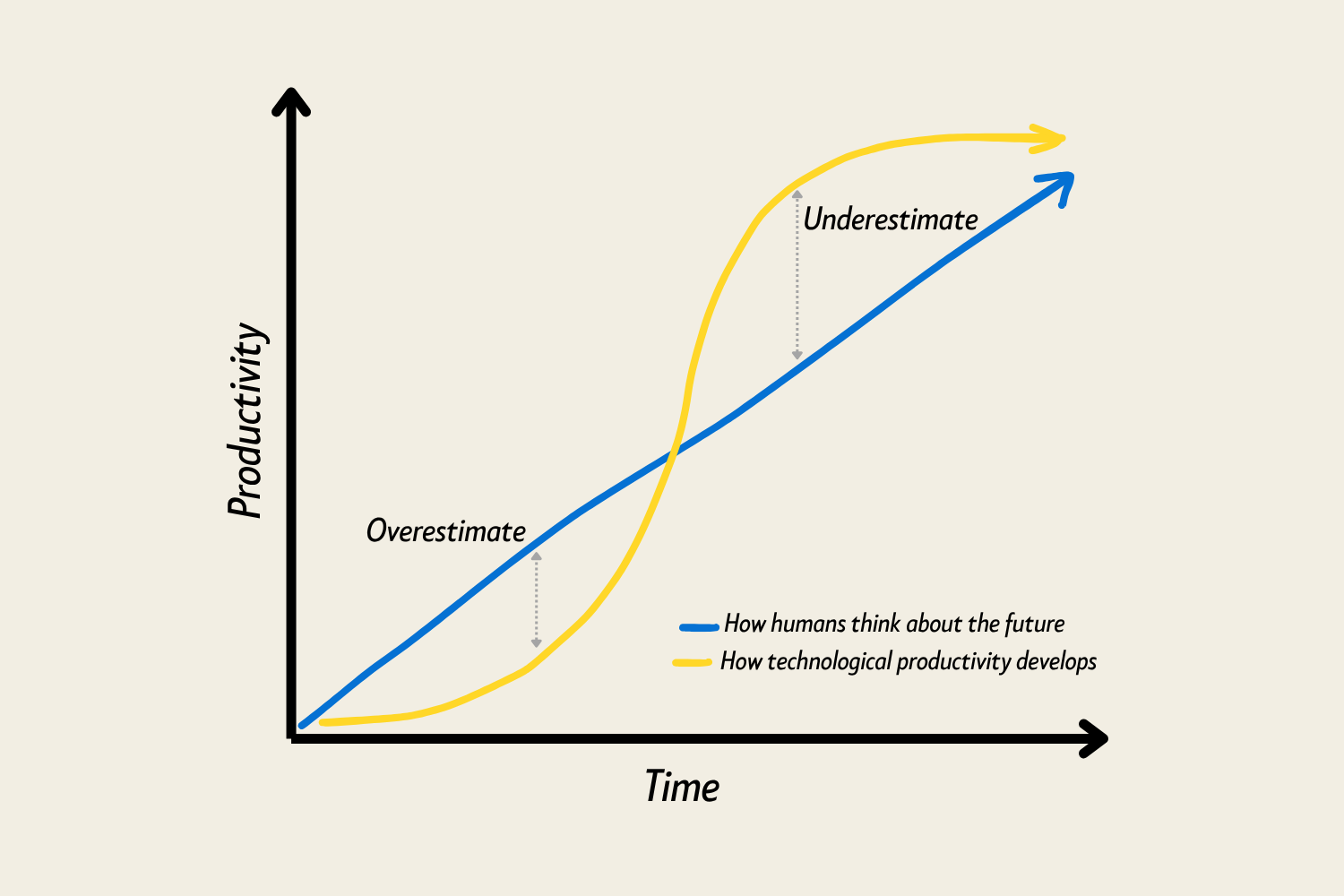
You overestimate new tech's short-run impact and underestimate its long-run impact — so ask if you're early, not whether it's working.

IKEA Effect
You value things more when you helped build them — which is why a strategy handed to a team lands flat.

The 3 Conditions for Change
A team can agree in the room and change nothing after — change needs three conditions at once: Willingness, Desire, Courage.
Books that reference this framework
Books related to Kotter's 8-Step Change Model

Leading Change
John Kotter's eight-step anatomy of organizational change, built from studying why most change efforts fail, and a blunt diagnosis that most failures trace back to skipping step one, not step eight.

Switch
Chip and Dan Heath's case that most change efforts fail from a basic misdiagnosis, treating a willpower problem as if it were an information problem, and a three-part framework for directing the rational mind, motivating the emotional one, and reshaping the environment around both.

The Heart of Change
Kotter's own follow-up to Leading Change, built on a single correction: people don't change their behavior because an analysis changed their thinking. They change because something made them actually feel differently first.

The Ride of a Lifetime
Disney CEO Bob Iger's own account of betting the company three times, on Pixar, Marvel, and Lucasfilm, and then again on streaming, and the specific discipline of leaving what you just paid billions for alone long enough for it to actually work.