Driving Execution
Turning an agreed plan into delivered results through the focus, systems, and accountability that keep a team moving from decision to outcome.
 Find this on the mind-map
Introduction
Plans that never turn into results are the normal case, not the exception. Teams get stuck in endless meetings, or spend months polishing details that never move the outcome. Execution is genuinely hard, and most teams struggle with it.
The quality of the plan matters less than the quality of the delivery: a mediocre strategy well-executed beats a brilliant strategy poorly executed, every time.
This skill is about building systems that keep a team focused, moving, and delivering, instead of you having to personally push every single time. In practice, that means limiting how many goals are in flight at once, defining what "finished" actually means and who owns it, putting progress somewhere everyone can see, and running a short, repeating check-in where commitments are made out loud and checked the following week.
Why It Matters for Leaders
Where this skill is missing:
- Everything is in progress and almost nothing is finished.
- Status gets reported as activity, so effort is visible and outcomes aren't.
- Deadlines slip in silence until the day they arrive.
- Decisions sit in a queue waiting for the one person authorized to make them
Where it's present, your team can name the handful of things that actually matter this quarter and exactly what each person owns inside them. Problems surface early, while there's still room to respond to them. And you get to spend your own time removing obstacles instead of chasing status updates.
Picture two versions of the same team hitting the same rough patch mid-quarter. In one, the slip gets discovered in a status meeting three weeks after it started, buried inside a green dashboard. In the other, it surfaces the week it happens, in the regular check-in, while there's still time to reroute. Same team, same problem, but the difference is entirely in whether the systems for surfacing it were already running before it hit.
What to do next
Master Driving Execution by taking the mini-course
Frameworks related to Driving Execution

Agile Methodology
Short cycles beat long plans — build a slice, ship it, get real feedback, adjust, and repeat until it fits.

Dreamboxing
A model for turning vision into disciplined execution by cycling through three stages — Dream, Drive, Do — rather than favoring one.

Lean Startup
Eric Ries's Build-Measure-Learn loop: test your riskiest assumption with the smallest product, measure what people do, then pivot or persist.
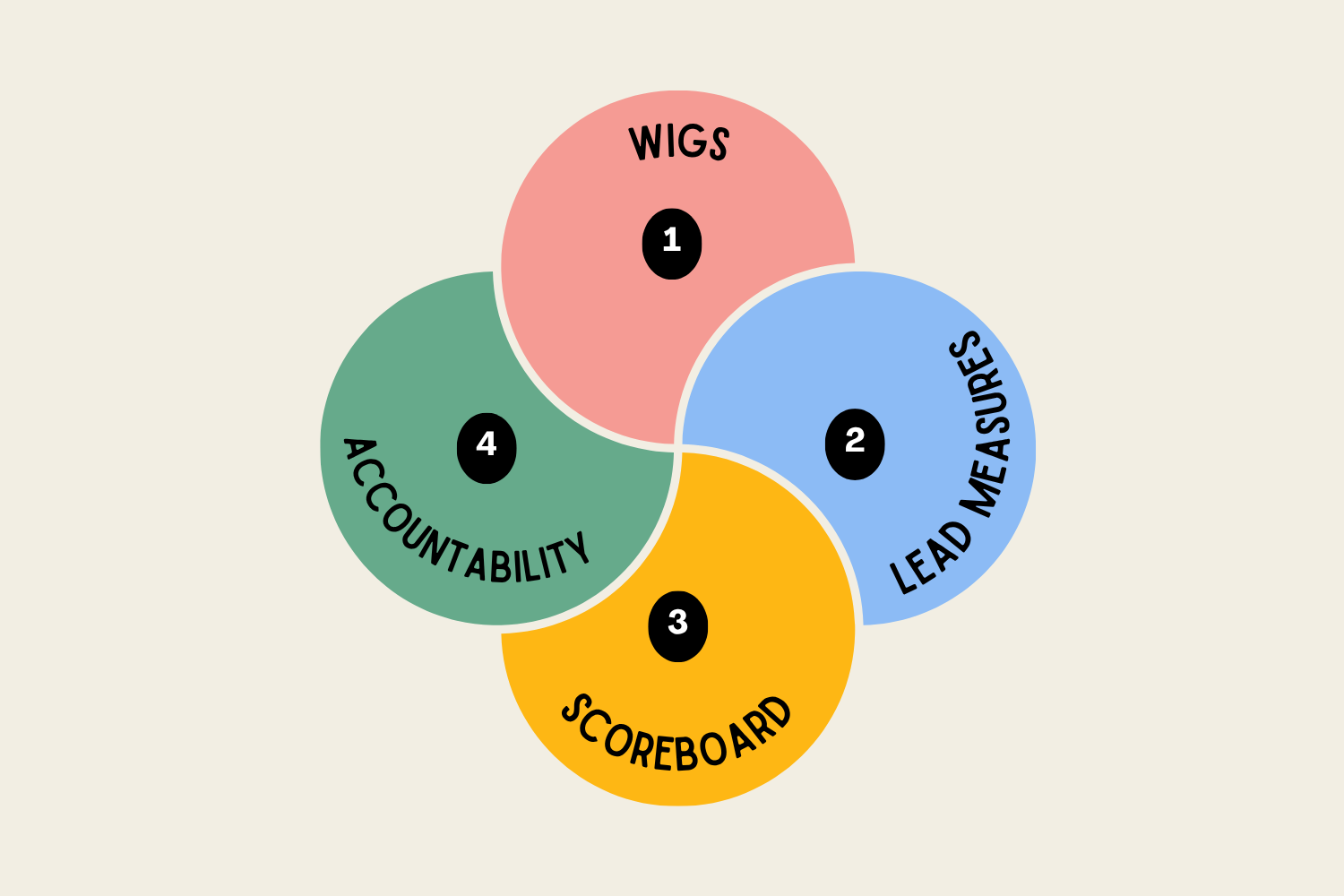
The 4 Disciplines of Execution
Four disciplines for hitting your important goals: narrow focus, act on lead measures, keep a visible scoreboard, run weekly accountability.

The Value Triangle
A modern replacement for the Iron Triangle — swap cost, time, scope for investment, frequency, and incremental value — levers, not constraints.
Books related to Driving Execution

High Output Management
Andy Grove's field manual for management as a production problem. Your output is the output of the people you influence, which reframes nearly everything a manager does as a question of leverage, not effort.

Team of Teams
General Stanley McChrystal's account of rebuilding a special-operations task force to fight a decentralized enemy network, and the argument that efficient hierarchy, the thing most organizations are explicitly built for, is the wrong design for a fast, complex environment.
Skills related to Driving Execution

Business Analysis
Gathering real evidence about how the business is performing, reading the trends inside it, and keeping your strategy anchored to reality instead of assumption.

Business Strategy
Making the focused calls about where to compete, what to prioritize, and what to say no to, because a strategy is defined as much by what it rules out as by what it commits to.

Change Management
Carrying your team through a transition, from the moment you announce a change to the point where the new way of working has just become the ordinary one.

Process Improvement
Finding where the work slows down, repeats itself, or breaks, and clearing that friction so effort turns into output instead of overhead.

Risk Management
Naming what could go wrong before it does, sizing each threat by likelihood and impact, and acting on the ones that matter.

Visioning
Defining and communicating a compelling direction, and connecting your team's daily work to that.