The Value Triangle
A modern replacement for the Iron Triangle — swap cost, time, scope for investment, frequency, and incremental value — levers, not constraints.
 Find this on the mind-map
Introduction
Back in 1969, the Iron Triangle showed up in the context of contract costing, and it's shaped how people run projects ever since. It holds that every project is bounded by three constraints — cost, time, and scope — and that moving one always forces a trade-off in the others.
Gaurav Jain built the Value Triangle as a modern replacement for that idea, because the world it was designed for doesn't really exist anymore.
How It Works
Here's how the Iron Triangle reads its three constraints:
| Constraint | What it governs | How the Iron Triangle reads it |
|---|---|---|
| Cost | Budget, funding, resource allocation | Expense to be minimized |
| Time | Dates, schedules, commitments | Deadline to be met |
| Scope | Objectives, features, boundaries | Quantity of output to be delivered |
The three interact constantly. Expand scope and you need more time or more people. Cut cost and you either shrink scope or stretch the timeline. In this reading, quality is whatever gets squeezed while you juggle the other three.
The Value Triangle argues that this reading no longer fits how work actually happens. Technology cycles are shorter, market boundaries have blurred, competition is dense, and customers have short attention spans and endless options. Nobody rewards an on-time, on-budget delivery that misses what they actually needed. People reward value, delivered soon, specific to their situation.
So the framework makes three shifts in thinking about those same three levers.
Cost becomes investment. Money spent isn't a leak to plug — it's money you put toward where you want to end up. That includes research, tooling, automation, and skills that won't pay back inside the current project alone.
Time becomes frequency. The question stops being "will we hit the date" and becomes "how often can we ship." This puts the spotlight on your internal operations: release speed, issue turnaround, how fast you respond to escalation. Agility becomes the clock you're running against.
Scope becomes incremental value. Scope stops measuring how much got built and starts measuring how much value actually landed. A huge feature nobody uses scores zero. A small increment that solves a real, live customer problem scores.
Put those together and you get the Value Triangle: investment, frequency, and incremental value.
Frequency and incremental value reinforce each other. Shipping more often only helps if each release actually carries value, and delivering value in increments only works if your release pace is fast enough to get feedback while it still matters.
Why It Matters for Leaders
Run a project on Iron Triangle logic and you'll spend most of your attention defending a plan. Every meeting turns into a negotiation over which of the three to sacrifice, and your team learns that the goal is surviving the trade-off rather than producing something worth having.
This framework came directly out of that exact experience. Taking on a high-stakes engineering project in 2015 with a tight deadline, a rigid budget, and a scope that kept growing week over week, the constant juggling of trade-offs produced no real progress. The shift came from asking a different question: instead of "how do I work around these limitations," try "how do I use them to make something valuable possible."
You'll feel the practical difference in what you report. Iron Triangle reporting says the project is on budget and two weeks behind. Value Triangle reporting says three increments shipped this quarter, feedback reshaped the next two, and this much investment went into capability that outlives the project itself.
It also changes what your team aims for. When the measure is quantity delivered, teams build big and defend the estimate. When the measure is incremental value, teams get rewarded for cutting the parts nobody actually needs. That's a much healthier incentive to build around.
What to do next
Test your knowledge of The Value Triangle
Practice The Value Triangle
Apply The Value Triangle to a real situation
Skills related to The Value Triangle

Frameworks related to The Value Triangle

Agile Methodology
Short cycles beat long plans — build a slice, ship it, get real feedback, adjust, and repeat until it fits.

Dreamboxing
A model for turning vision into disciplined execution by cycling through three stages — Dream, Drive, Do — rather than favoring one.

Lean Startup
Eric Ries's Build-Measure-Learn loop: test your riskiest assumption with the smallest product, measure what people do, then pivot or persist.
The 4 Disciplines of Execution
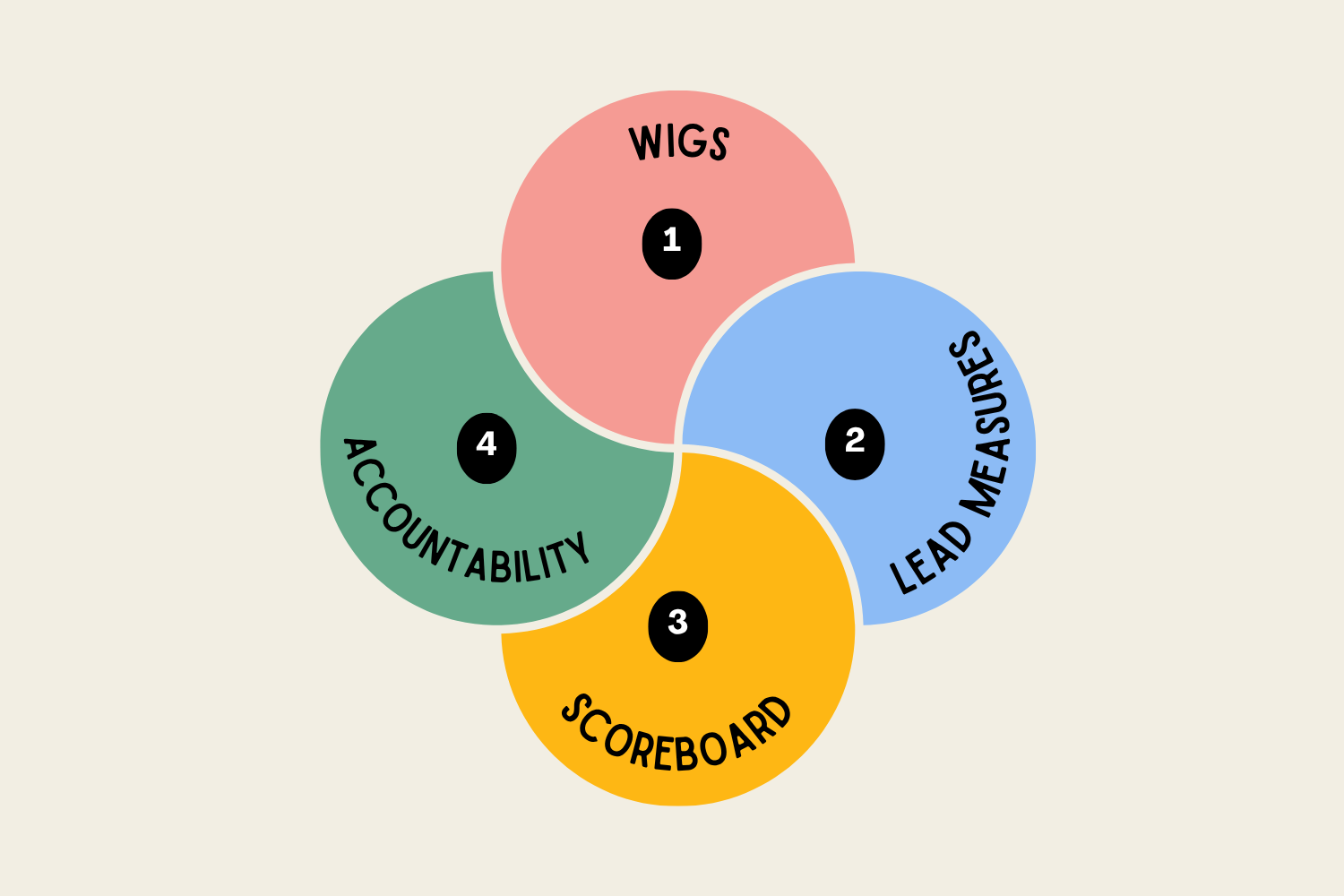
Four disciplines for hitting your important goals: narrow focus, act on lead measures, keep a visible scoreboard, run weekly accountability.
Books related to The Value Triangle

High Output Management
Andy Grove's field manual for management as a production problem. Your output is the output of the people you influence, which reframes nearly everything a manager does as a question of leverage, not effort.

Team of Teams
General Stanley McChrystal's account of rebuilding a special-operations task force to fight a decentralized enemy network, and the argument that efficient hierarchy, the thing most organizations are explicitly built for, is the wrong design for a fast, complex environment.