Agile Methodology
Short cycles beat long plans — build a slice, ship it, get real feedback, adjust, and repeat until it fits.
 Find this on the mind-map
Introduction
In 2001, seventeen software developers gathered in Utah, tired of watching projects die under the weight of their own planning documents. The standard approach back then — waterfall — locked in every requirement upfront and delivered nothing until the very end, by which point half of those requirements were already wrong. This group wrote down four short value statements and called it the Agile Manifesto. It became the foundation for how modern teams actually get things done.
How It Works
The Manifesto boils down to four trade-offs. Both sides have value, but when they clash, the left side wins:
| Favor this | Over this |
|---|---|
| Individuals and interactions | Processes and tools |
| Working output | Comprehensive documentation |
| Customer collaboration | Contract negotiation |
| Responding to change | Following a plan |
Underneath those values is a simple, repeating loop. You break the work into small slices, pulled from one prioritized backlog. You commit to a set of slices for a fixed cycle — usually one to four weeks — called a sprint. At the end of that cycle, you deliver something that actually works and show it to the people who'll use it. Their feedback re-prioritizes the backlog, and the next cycle starts.
Two practices do most of the heavy lifting. The demo forces you to show evidence instead of giving a status update — no more "it's going well," just working output people can react to. The retrospective asks what went well, what didn't, and what changes next cycle, which turns the whole loop into a system that actually learns, not just a delivery rhythm.
You'll see this loop implemented differently from team to team — Scrum runs it with fixed sprints and defined roles, Kanban runs it as continuous flow with limits on how much work is in progress at once. The specific implementation matters far less than protecting the loop itself.
Why It Matters for Leaders
Most execution failures aren't effort problems — they're feedback problems. Picture a team that plans for six months, builds for six months, and only finds out on delivery day that the requirement changed back in month two. Agile shortens the distance between making a decision and getting evidence about that decision, so your mistakes stay cheap instead of catastrophic.
Without this loop, you end up managing by status report. You ask how things are going, get an optimistic answer, and learn the truth much later — usually too late to do anything about it. A working increment every two weeks replaces opinion with actual proof.
Agile also changes what your job looks like day to day. In a waterfall world, your job is approving the plan and checking in occasionally. In an Agile world, your job is protecting focus, keeping the backlog honestly prioritized, and clearing whatever blockers your team surfaces along the way.
What to do next
Test your knowledge of Agile Methodology
Apply Agile Methodology to a real situation
Skills related to Agile Methodology

Frameworks related to Agile Methodology

Dreamboxing
A model for turning vision into disciplined execution by cycling through three stages — Dream, Drive, Do — rather than favoring one.

Lean Startup
Eric Ries's Build-Measure-Learn loop: test your riskiest assumption with the smallest product, measure what people do, then pivot or persist.
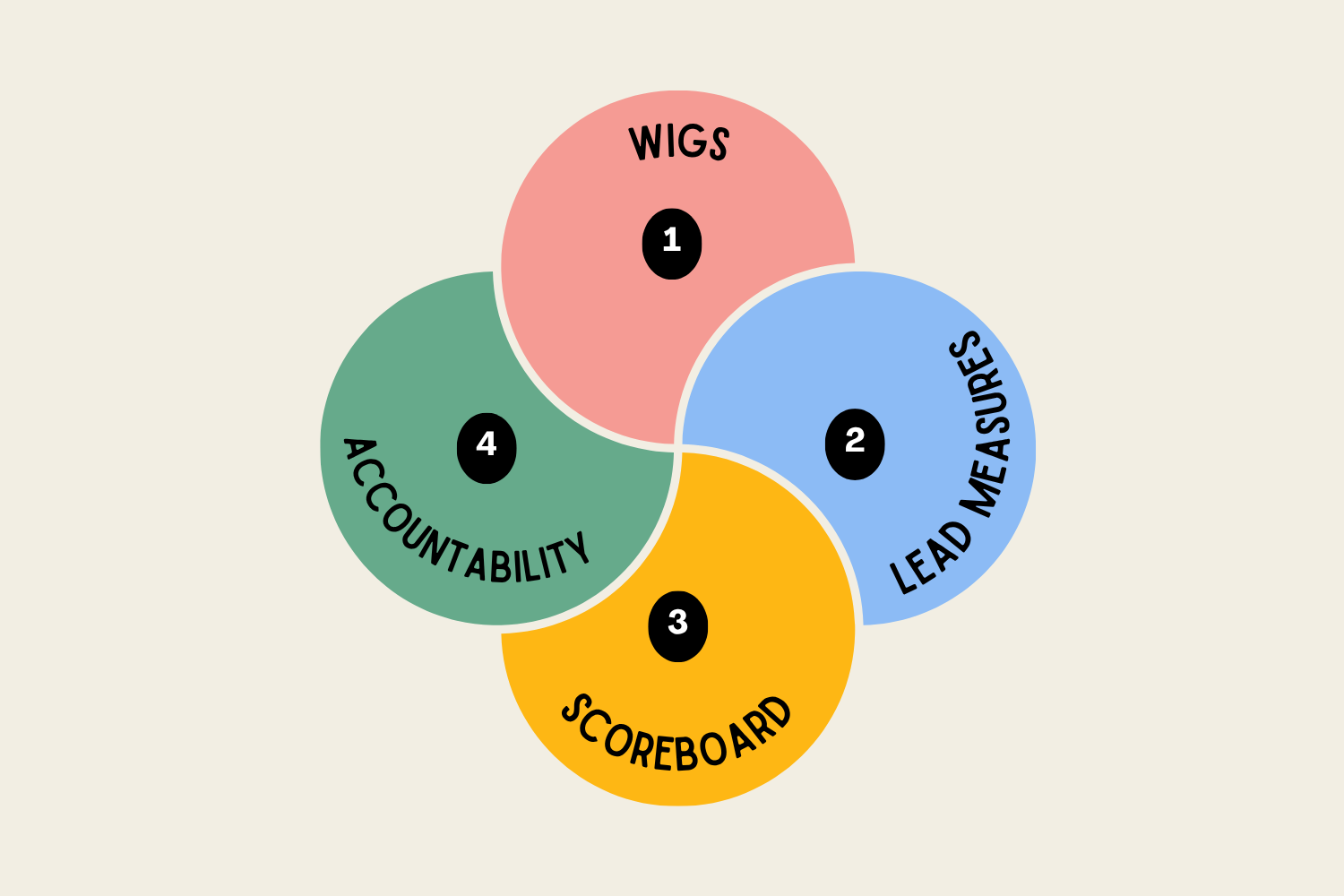
The 4 Disciplines of Execution
Four disciplines for hitting your important goals: narrow focus, act on lead measures, keep a visible scoreboard, run weekly accountability.

The Value Triangle
A modern replacement for the Iron Triangle — swap cost, time, scope for investment, frequency, and incremental value — levers, not constraints.
Books related to Agile Methodology

High Output Management
Andy Grove's field manual for management as a production problem. Your output is the output of the people you influence, which reframes nearly everything a manager does as a question of leverage, not effort.

Team of Teams
General Stanley McChrystal's account of rebuilding a special-operations task force to fight a decentralized enemy network, and the argument that efficient hierarchy, the thing most organizations are explicitly built for, is the wrong design for a fast, complex environment.