Dreamboxing
A model for turning vision into disciplined execution by cycling through three stages — Dream, Drive, Do — rather than favoring one.
 Find this on the mind-map
Introduction
Gaurav Jain built Dreamboxing as a mindset shift, not a productivity system — designed to close the gap between the bold ideas you have and the results you actually deliver.
How It Works
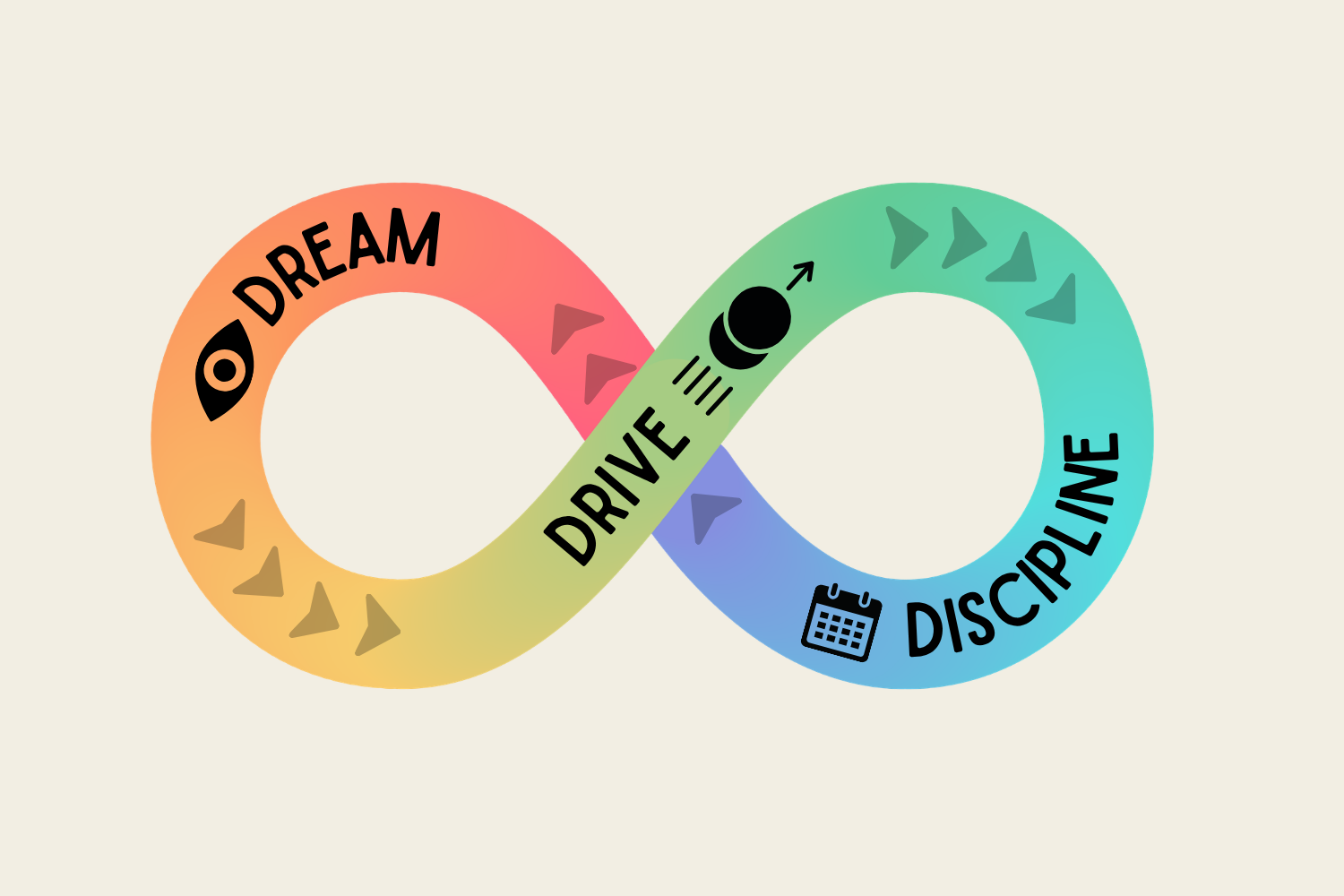
The model breaks the journey from idea to outcome into three stages:
| Stage | What it is | What it produces |
|---|---|---|
| Dream | The idea, the ambition, the thing you want to create | Direction |
| Drive | The energy, the push, the initial surge that gets things moving | Momentum |
| Do (Discipline) | The system, the habits that lead to results | Delivery |
Most leaders are naturally strong in one or two of these. Some of you generate bold ideas easily; others are excellent taskmasters. Very few people are good at all three — and whichever stage you're weakest in is where your initiatives go to die.
Dream
Dream is where you come up with ideas, and the trap is that refining an idea feels like progress.
Signs you're stuck in Dream: the same strategy document keeps getting revised but nothing ships; the work feels busy without pointing at real progress; buy-in never quite shows up; you keep deferring the start because it's "not quite ready"; your team nods along but doesn't move. Your dream doesn't need to be flawless — it needs to be sharp enough to move on.
Drive
Drive is the burst: prototypes get built, feedback comes back fast, everyone's energized. The trap here is speed without structure — motion that scatters instead of building on itself.
Signs you're stuck in Drive: everyone's busy but nobody can tell you what's actually been delivered; constant motion with no system or review; reacting instead of executing; deadlines slip and nobody pauses to reflect; the early energy curdles into frustration. Motion isn't the same thing as progress.
Do (Discipline)
Do is the long, unglamorous stage: the systems get built, the habits repeat — the same Monday meeting, the same weekly data review, the same stakeholder check-in even when there's nothing new to report. This is where things actually ship, and it doesn't run itself.
Signs you're stuck in Do: the work happens but nobody remembers why it matters; systems run on autopilot, unquestioned; the team's disengaged while everything looks fine on paper; weeks have gone by since anyone revisited the vision. Progress only counts if it's pointed the right way.
The stages loop — they're not a sequence you run once. Cycle deliberately through Dream, Drive, and Do on every major initiative, every quarter, sometimes every week, and each pass back through Dream sharpens your vision with what the last pass taught you.
Why It Matters for Leaders
You've probably seen this pattern: a team leaves a session fired up, the vision is sharp, the direction feels bold. Weeks pass, everyone's busy, and the big idea quietly disappears from every conversation. Nobody killed it. It just stalled.
Naming the three stages helps you figure out what's actually wrong. Instead of asking the vague question "why is this stalling?", ask yourself which stage you're actually in and what's missing from it. A stalled initiative almost always has a specific problem: a dream too fuzzy to act on, drive with no structure underneath it, or discipline running with no purpose attached.
That diagnosis also reveals your own bias. If you're a visionary, you'll keep sharpening the dream when your team actually needs a sprint boundary. If you're an operator, you'll keep tightening the system when your team needs reminding what the system is even for.
Two situations show this working. A bold strategy launches, the team calls it a game-changer, and a few weeks later the energy dips — that's you stuck between Dream and Drive, and the fix is picking one or two outcomes you can move in 30 days plus weekly check-ins on visible progress. A team hitting every deadline but feeling scattered is stuck in Do with the Dream faded out — the fix is a short vision check-in: "are we still building what we set out to build?"
Dreamboxing sits above your goal systems rather than replacing them. The Golden Circle sharpens your Dream, OKR Model gives your Drive its structure, and habit-based systems carry your Do. It also pairs well with Mind Boxing as a way to structure your own leadership attention.
What to do next
Test your knowledge of Dreamboxing
Practice Dreamboxing
Apply Dreamboxing to a real situation
Skills related to Dreamboxing

Frameworks related to Dreamboxing

Agile Methodology
Short cycles beat long plans — build a slice, ship it, get real feedback, adjust, and repeat until it fits.

Lean Startup
Eric Ries's Build-Measure-Learn loop: test your riskiest assumption with the smallest product, measure what people do, then pivot or persist.
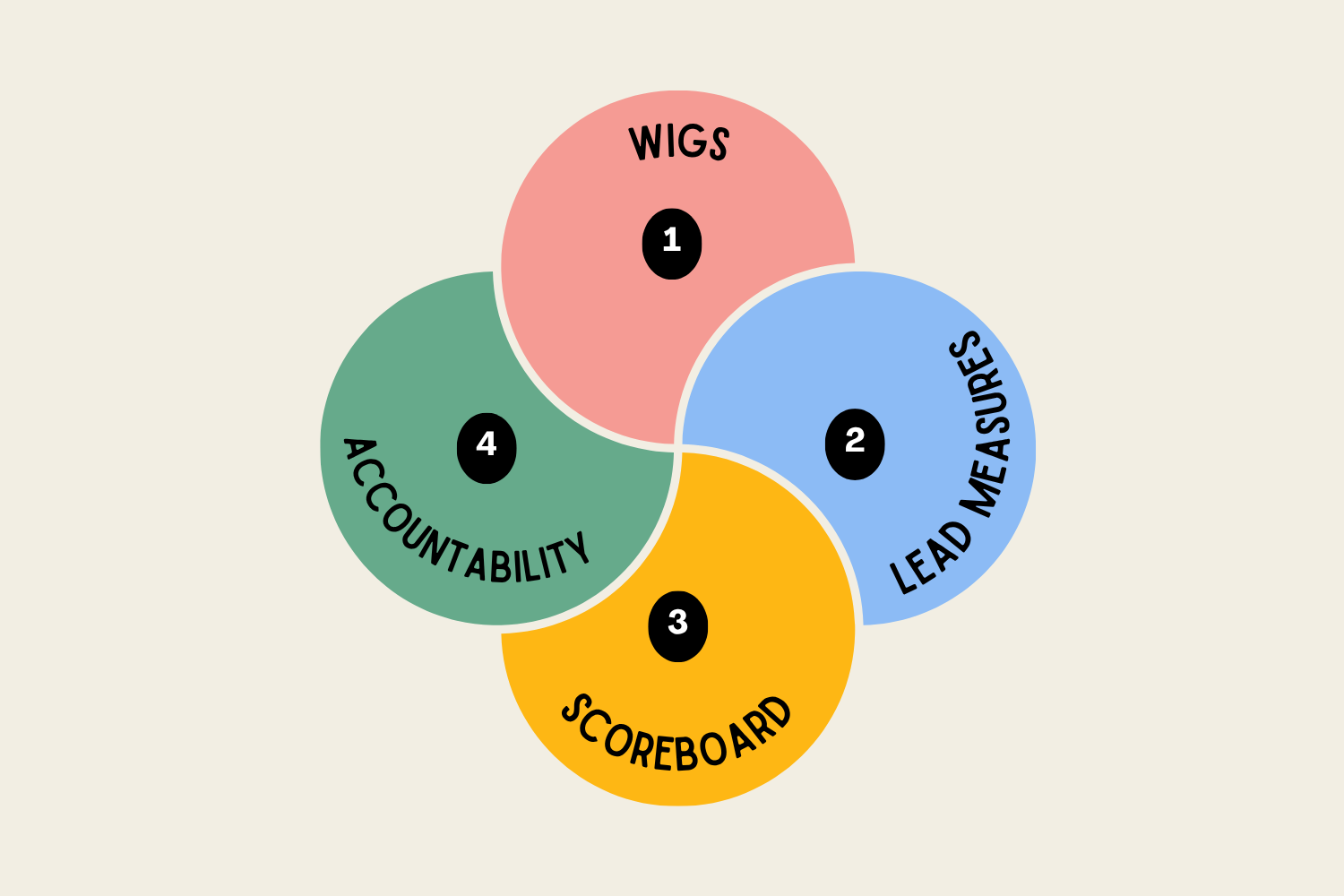
The 4 Disciplines of Execution
Four disciplines for hitting your important goals: narrow focus, act on lead measures, keep a visible scoreboard, run weekly accountability.

The Value Triangle
A modern replacement for the Iron Triangle — swap cost, time, scope for investment, frequency, and incremental value — levers, not constraints.
Books related to Dreamboxing

High Output Management
Andy Grove's field manual for management as a production problem. Your output is the output of the people you influence, which reframes nearly everything a manager does as a question of leverage, not effort.

Team of Teams
General Stanley McChrystal's account of rebuilding a special-operations task force to fight a decentralized enemy network, and the argument that efficient hierarchy, the thing most organizations are explicitly built for, is the wrong design for a fast, complex environment.