OKR Model
Objectives and Key Results: pair an ambitious objective with measurable key results and the initiatives that move them.
 Find this on the mind-map
Introduction
This one started at Intel with Andy Grove and got popularized by John Doerr, who carried it into Google in its early days. Doerr's book Measure What Matters turned it into the default goal-setting system across modern tech companies — Google, LinkedIn, and Spotify all run on it today.
How It Works
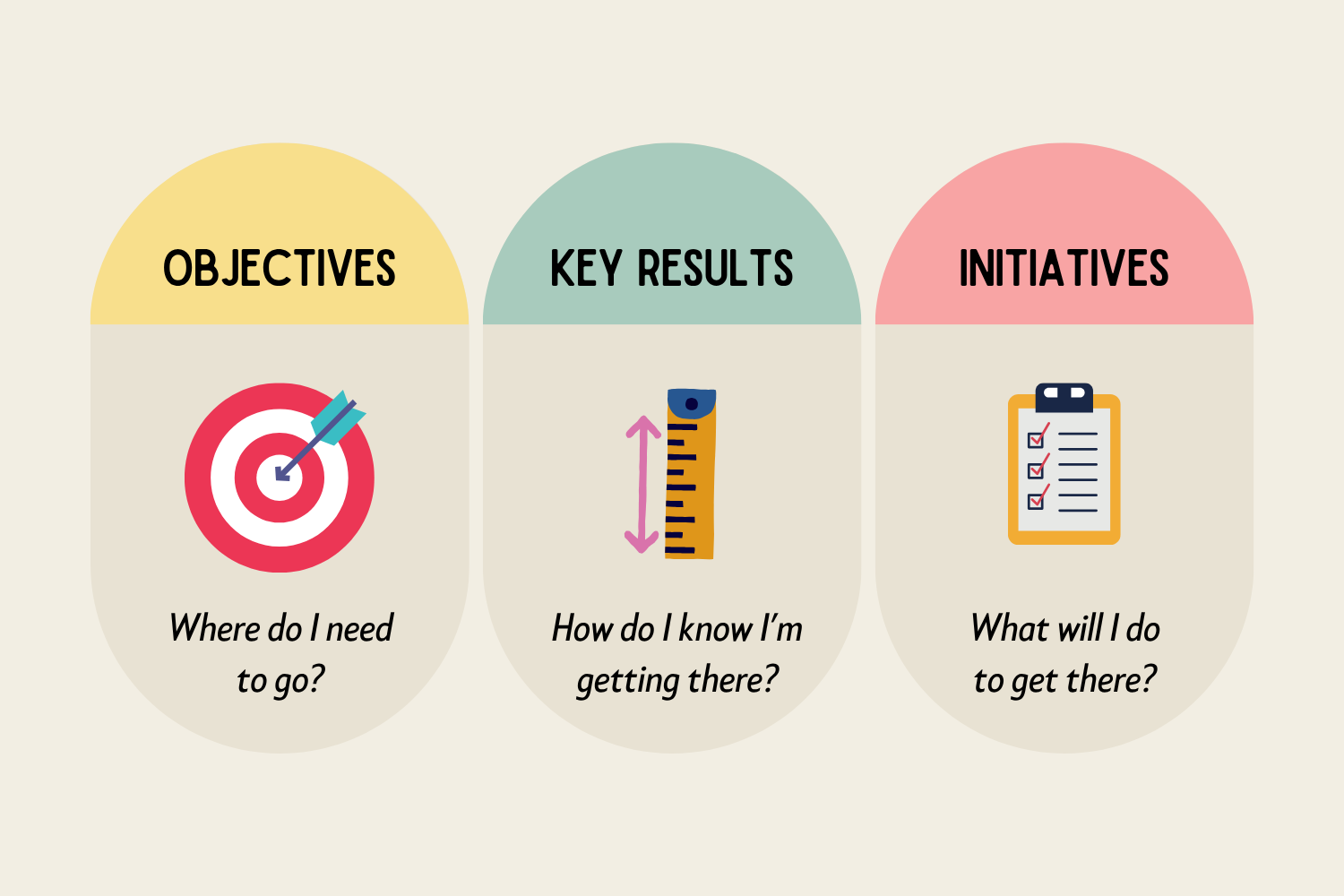
The model answers three questions, in sequence:
| Element | Question it answers | Nature |
|---|---|---|
| Objective | Where do we need to go? | Qualitative, directional, ambitious |
| Key Result | How do we know we're getting there? | Quantitative, outcome-based, time-bound |
| Initiative | What will we do to get there? | Executed, not measured |
Your Objectives aren't meant to be measured directly. They give you direction and focus, and a good one is bold, memorable, and motivating: "Become the most trusted product in our category." If an objective reads like a task list, it isn't one.
Key Results are your evidence. Each objective usually carries two to four of them, and each one is a number that moves: "Reduce average onboarding time from 8 days to 3 days." Here's the test — if you could check it off like a to-do, it's not a key result. "Launch onboarding emails" is a task. "Improve onboarding completion rate to 90%" is a result.
Initiatives are the third piece, and the one most often skipped. These are the projects, campaigns, and experiments you actually run to move the key results. Treat them as working hypotheses, not guarantees — finishing an initiative doesn't mean the number moved.
A useful picture: the objective is the destination, the key results are milestones along the way, and the initiatives are the road you take to get there. That analogy has a limit, though — key results tied to one objective often measure different aspects of it, so they don't have to happen in sequence.
OKRs also run at multiple levels — company, team, individual — and the real power comes from lining those levels up. One design principle worth holding onto: your OKRs should stretch. If you're hitting 100% every single cycle, your targets were probably too soft.
Why It Matters for Leaders
The common failure is setting direction without setting alignment. You announce the priorities, your teams are capable and motivated, and three weeks into the quarter each one is heads-down on something different — one on an unplanned feature, one on non-urgent bugs, one shipping a dashboard nobody asked for. Effort is high. Movement toward the actual goal is near zero.
OKRs change the question from "what are we doing?" to "what outcome are we driving?" That shift stops you from measuring effort and gets you measuring impact instead. Busy stops counting as progress.
They also fix cross-functional drift. When product, design, and engineering can all see the same objectives and key results, decisions get easier, because there's a shared scoreboard to argue against. The goals themselves keep everyone aligned, instead of you having to enforce it meeting by meeting.
If you're stuck in micromanagement, OKRs are your way out. Your team owns the initiatives, you hold the outcomes, and a regular review keeps accountability visible without you sitting in every thread and every approval.
The risk sits on the measurement side. Key results are metrics, and metrics under pressure distort — which is exactly why OKRs pair well with an understanding of Goodhart's Law and the Cobra Effect.
What to do next
Test your knowledge of OKR Model
Practice OKR Model
Apply OKR Model to a real situation
Skills related to OKR Model

Frameworks related to OKR Model
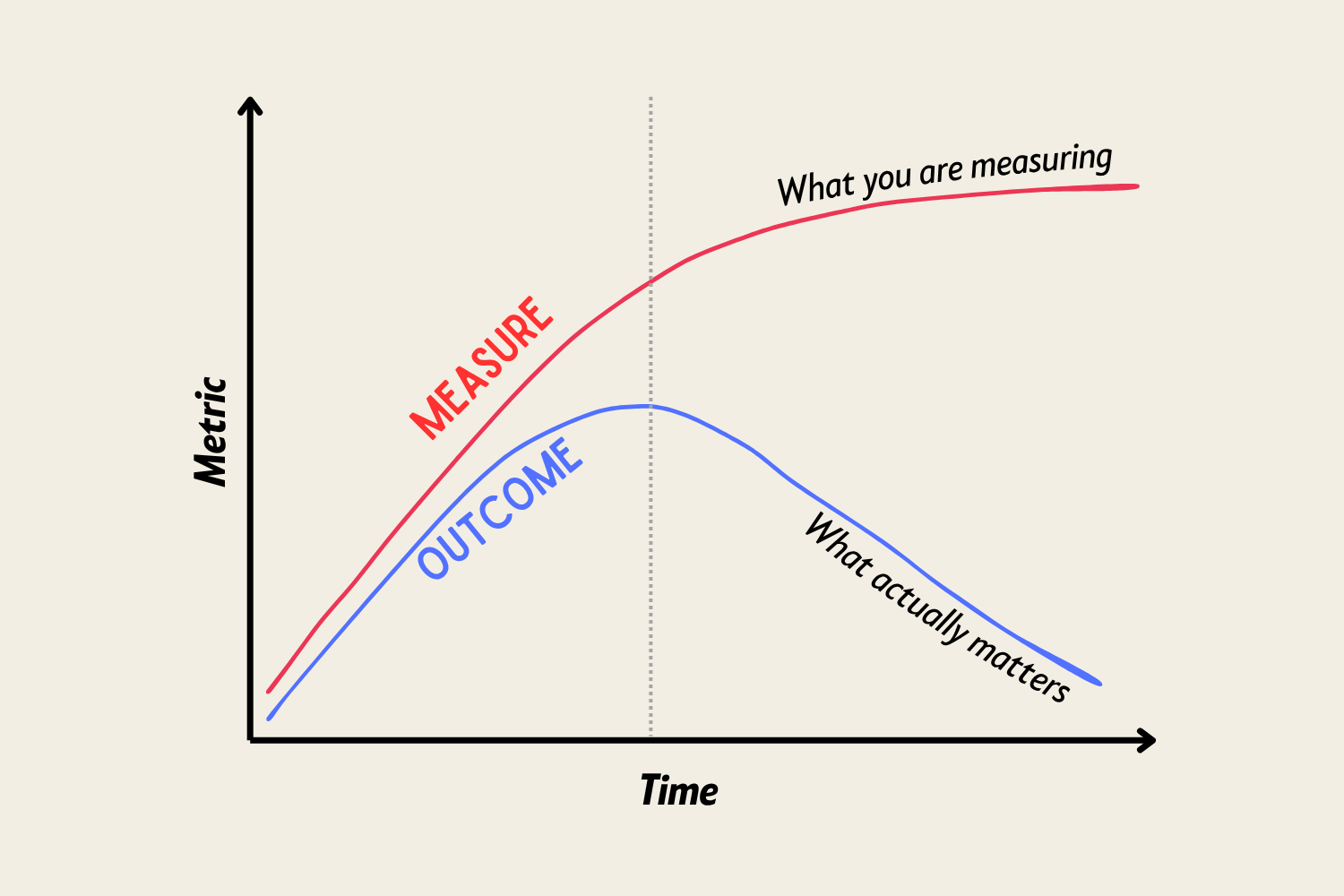
Goodhart's Law
"When a measure becomes a target, it stops being a good measure" — metrics with consequences get gamed.

SMART Goals
A five-letter test for turning an intention into an executable goal: Specific, Measurable, Achievable, Relevant, Time-bound — easy to get wrong.
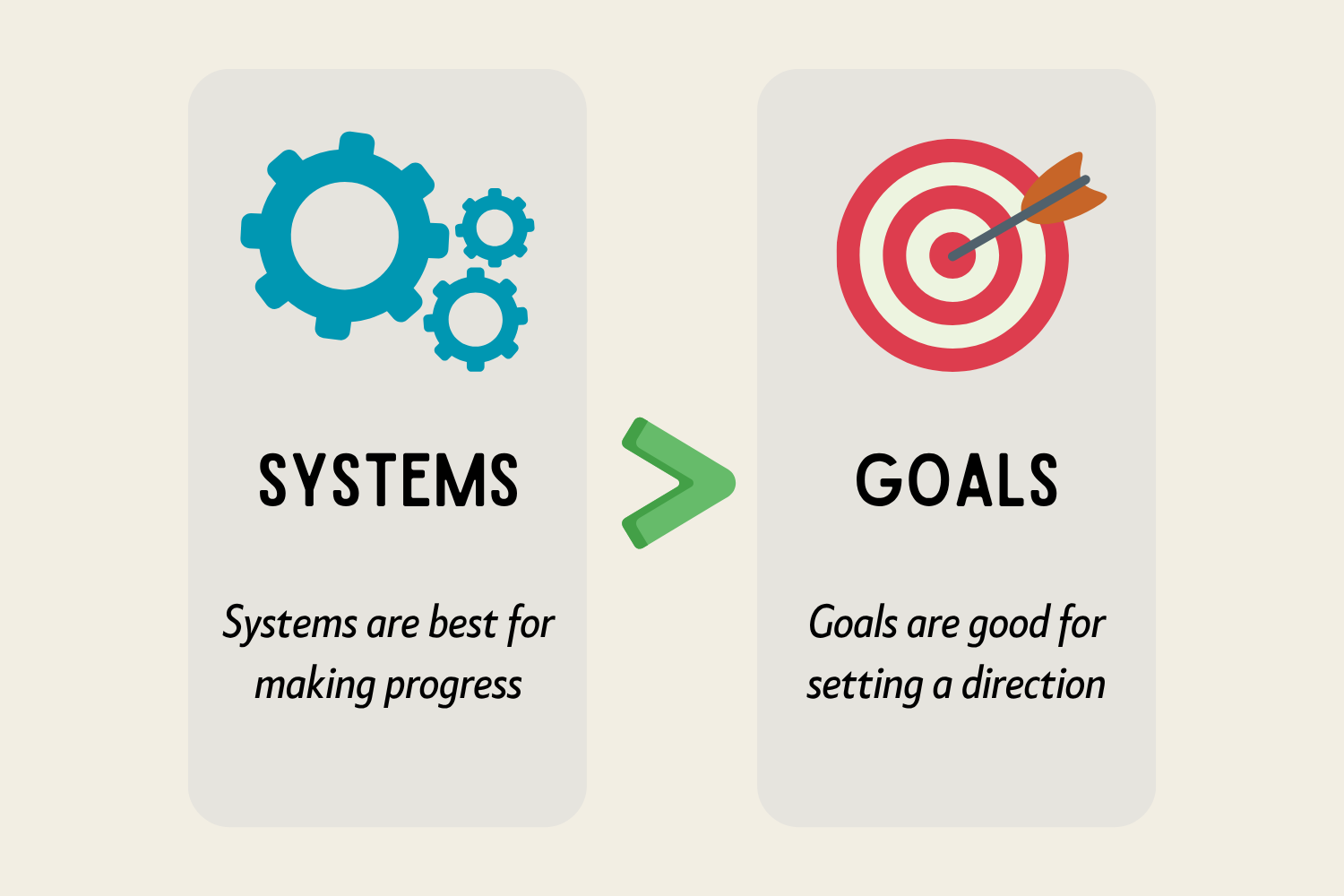
Systems > Goals
Results come from repeatable habits, not targets — turn every goal into a system of leading behaviors you design and track.
