SMART Goals
A five-letter test for turning an intention into an executable goal: Specific, Measurable, Achievable, Relevant, Time-bound — easy to get wrong.
 Find this on the mind-map
Introduction
George T. Doran introduced this in a 1981 Management Review paper titled "There's a S.M.A.R.T. Way to Write Management's Goals and Objectives." Decades later it's one of the most widely used tools in management — and, not coincidentally, one of the most widely misused.
How It Works
Each letter is a test your goal has to pass before it counts as real:
| Letter | Test | Failed version | Passing version |
|---|---|---|---|
| S — Specific | Is the goal clear and unambiguous? | "Improve customer experience" | "Redesign the onboarding flow to reduce drop-off in the first 7 days" |
| M — Measurable | Can you track progress or results? | "Launch faster" | "Reduce average support response time from 12 hours to under 4 hours" |
| A — Achievable | Is it realistic given the resources? | "Deliver the new feature in 3 weeks" (with no added capacity) | A scope your team believes it can finish with today's tools and people |
| R — Relevant | Does it matter to the business right now? | "Redesign the internal wiki" | "Redesign the internal wiki to reduce onboarding time by 40%" |
| T — Time-bound | Is there a real deadline? | "Ship the pricing page soon" | "Ship the new pricing page by October 10" |
Specific buys you focus. A specific goal answers the what and the why, and sometimes the how. Ask yourself: if someone new joined the team today and read this goal, would they know exactly what needs to happen?
Measurable takes the guesswork out. It doesn't have to be numerical, but it has to be trackable — progress needs to be visible to your team and to whoever you answer to.
Achievable means the goal stretches your team without snapping them. Set the bar wildly high and you get burnout and missed dates; set it too low and you kill momentum along with any real learning.
Relevant answers "so what?" and ties the effort to actual impact. A month spent polishing a dashboard nobody opens can pass all four other letters and still fail this one.
Time-bound creates urgency and makes planning possible. Without a real date, even a good goal drifts into someday.
The framework itself is simple. That's not the same as easy to execute. Do it well and you get the three things you need most as a leader: clarity, accountability, and alignment.
Why It Matters for Leaders
The common failure isn't setting goals. It's shipping them. A quarter opens with a sharp strategy deck and a tidy prioritized list, and three weeks in, someone asks about one of those goals and gets a blank stare and a "yeah, I think that's still in progress."
There's a short list of reasons this happens. Goals get written too vaguely ("improve load times"). They lean on metrics nobody can actually measure ("increase innovation"). They're impossible in the timeline given. They're tied to a priority that's quietly disconnected from the actual vision. Or, most often, they get written once, filed somewhere, and never opened again.
That last one is the failure that matters most. When writing the SMART goal is a one-time event rather than a living tool, you've satisfied the acronym and changed nothing. The fix isn't a smarter acronym — it's a review rhythm that keeps the goal in front of people.
For you as a leader, a well-formed goal is how direction survives contact with a busy quarter. It gives your team a shared definition of done, which means fewer decisions have to route back through you, and it makes progress something you can argue with evidence instead of vibes.
SMART goals also do their best work paired with the systems above them. They make a strong measurable layer under an OKR Model objective — and they inherit the same risk that comes with any metric, which is exactly why Goodhart's Law is worth keeping next to them.
What to do next
Test your knowledge of SMART Goals
Practice SMART Goals
Apply SMART Goals to a real situation
Skills related to SMART Goals

Frameworks related to SMART Goals
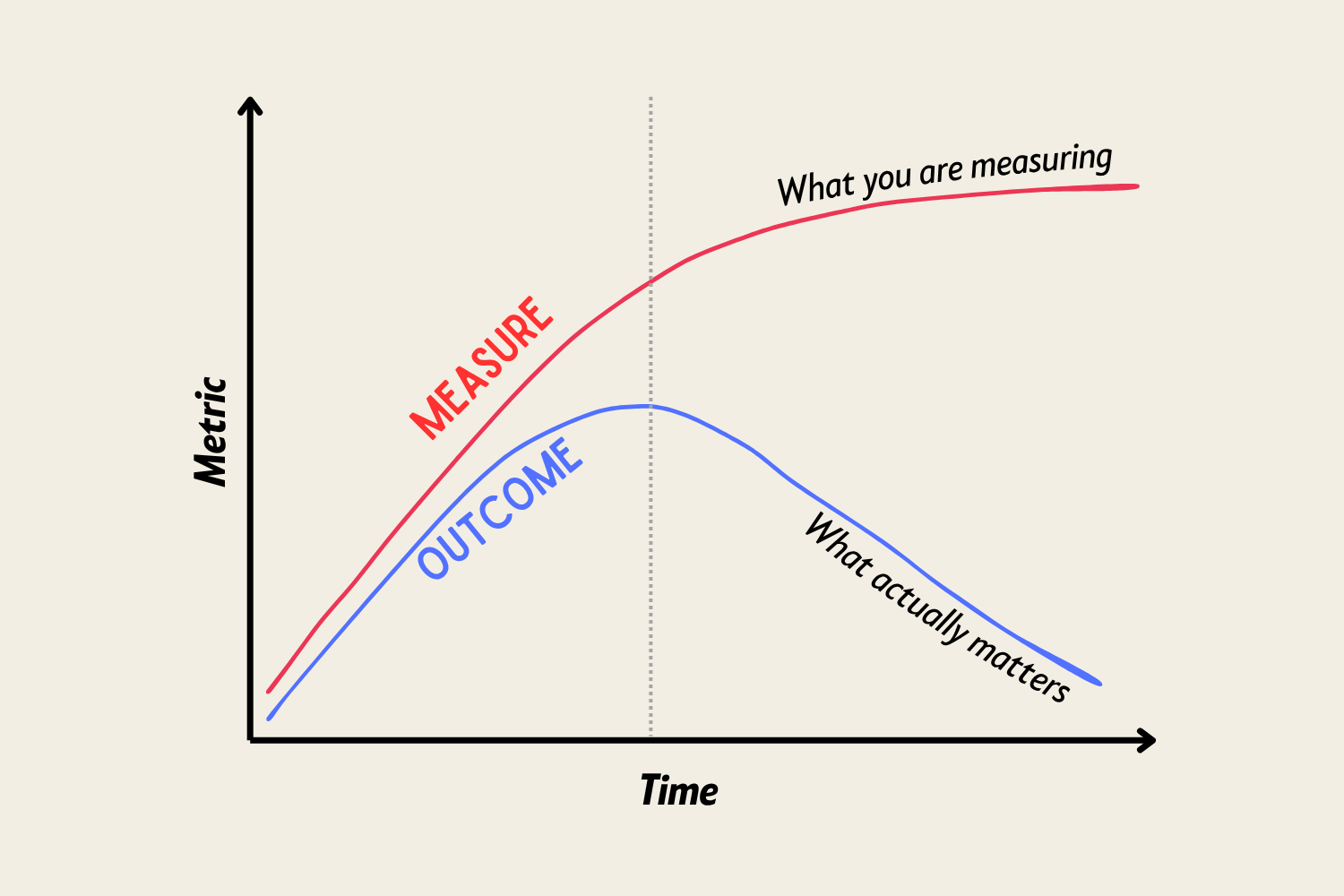
Goodhart's Law
"When a measure becomes a target, it stops being a good measure" — metrics with consequences get gamed.

OKR Model
Objectives and Key Results: pair an ambitious objective with measurable key results and the initiatives that move them.
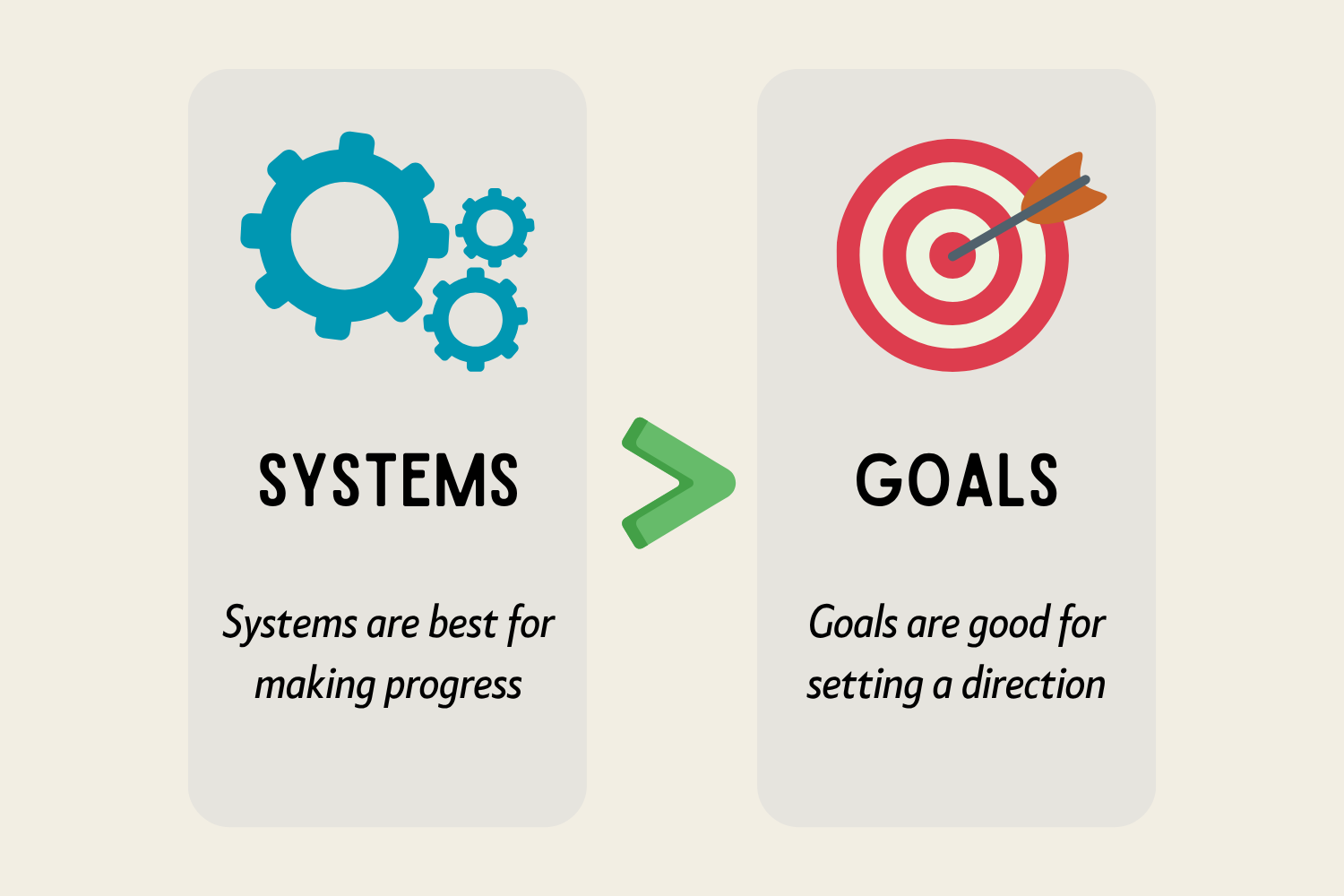
Systems > Goals
Results come from repeatable habits, not targets — turn every goal into a system of leading behaviors you design and track.
