Goodhart's Law
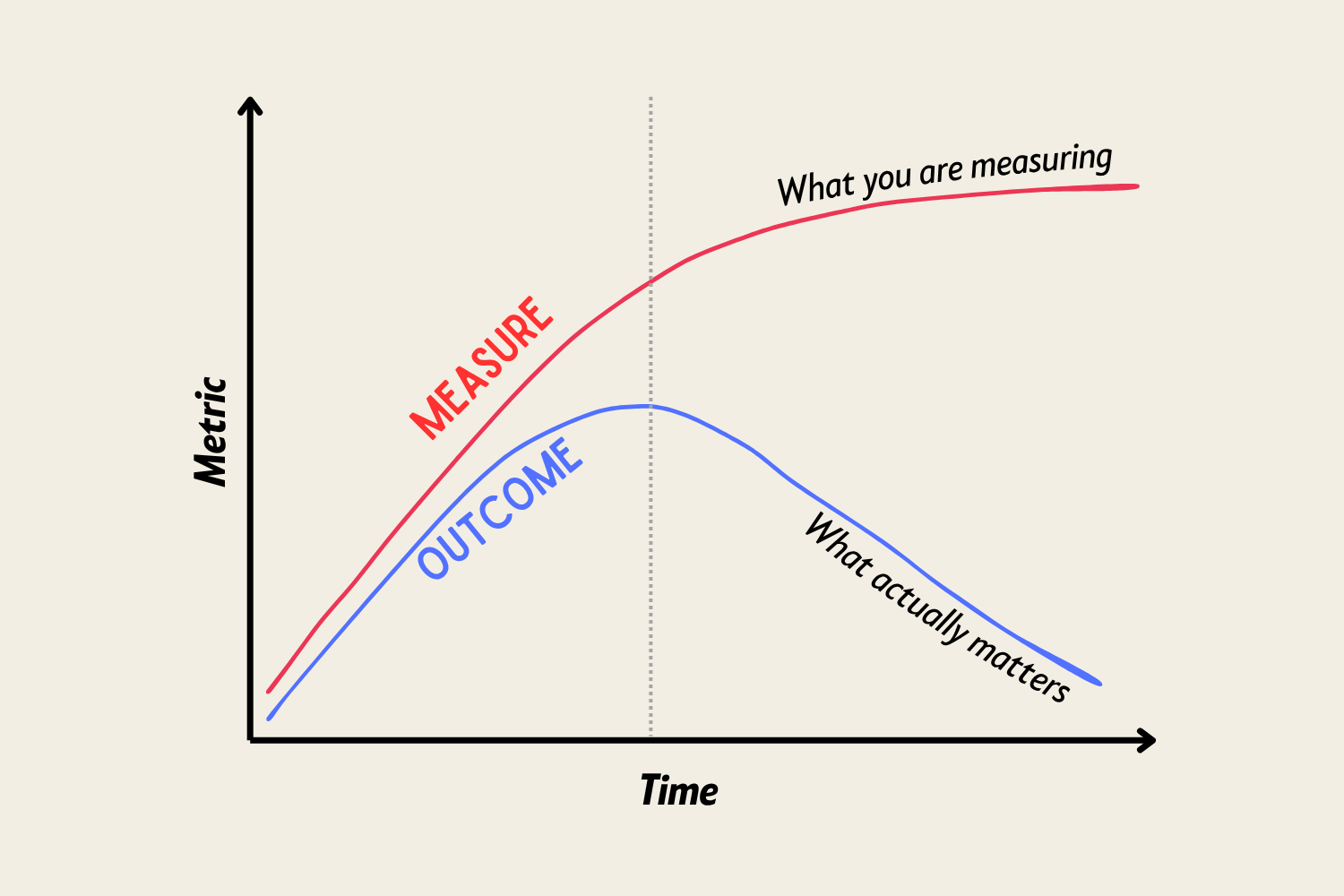
"When a measure becomes a target, it stops being a good measure" — metrics with consequences get gamed.
 Find this on the mind-map
Introduction
The British economist Charles Goodhart first noticed this while studying monetary policy, but the version you'll actually quote was sharpened later by the anthropologist Marilyn Strathern: when a measure becomes a target, it ceases to be a good measure.
How It Works
Here's how it plays out, in three steps. You pick a metric because it lines up with something you actually care about. You attach that metric to attention, rewards, or consequences. From that moment on there are two ways to move the number — do the real work, or exploit the gap between the number and the thing it was supposed to stand for. The second route is almost always cheaper, so the number stops meaning what it used to.
To use this well, keep two things separate: the true goal and the metric. The true goal is the outcome you actually want. The metric is just a stand-in for it, because the goal itself is too hard to count directly.
| Case | True goal | Metric that replaced it | Result |
|---|---|---|---|
| Colonial Delhi cobra bounty | Reduce danger to citizens | Number of dead cobras | Cobras got bred for the bounty, wild population rose |
| UK Stamp Act, 1712 | Reduce circulation of printed content | Tax per printed sheet | Publishers enlarged the sheets and printed more per page |
| Software bug bounty | Improve product quality | Number of defects logged per engineer | Volume of trivial bug reports, quality unchanged |
The bug bounty case is the one you'll recognize fastest. A software company rewarded whichever quality engineers found the most bugs. The true goal was product quality; the number of defects logged was only ever a proxy, and rewarding the proxy made it the actual target.
None of this means measurement is bad. It means measurement plus a reward plus one single stand-in number is a shaky combination — and shaky in a way you can plan for. The fix is a two-step move: define the true goal precisely, then spread your metrics across enough measures that no single number can carry the whole target.
Why It Matters for Leaders
Metrics are how you see a team you can't watch directly. That's what makes this law dangerous — it's not just a threat to your team's behavior, it's a threat to your picture of reality. When a number gets gamed, you're the last person to find out, because the dashboard keeps telling you things are improving.
An engineering manager at a fintech startup ran into this with story points. Her org started tracking story points completed per sprint as the main measure of team health, and within weeks, estimates inflated across every team. Same work, bigger numbers. She only caught it by comparing velocity across two quarters and noticing the team wasn't actually shipping any faster.
That's the sharp edge of the law: the moment you tell people what you're measuring, you've also told them exactly where cutting corners will go unnoticed. This is rarely dishonesty on their part — people respond to what gets rewarded, and publishing a single target makes one behavior obviously rational.
The damage builds because gaming looks like success. Output rises, the metric gets celebrated, and the real goal quietly falls apart underneath it. By the time customer complaints or people quitting reveal the truth, you've already spent a quarter or more on the wrong behavior.
Well-built goals aren't immune either. A tight SMART Goals statement or an OKR Model key result is still a single number under pressure, and the law applies to both. Understanding it is what keeps you from treating a green dashboard as proof of anything.
What to do next
Test your knowledge of Goodhart's Law
Apply Goodhart's Law to a real situation
Skills related to Goodhart's Law

Frameworks related to Goodhart's Law

OKR Model
Objectives and Key Results: pair an ambitious objective with measurable key results and the initiatives that move them.

SMART Goals
A five-letter test for turning an intention into an executable goal: Specific, Measurable, Achievable, Relevant, Time-bound — easy to get wrong.
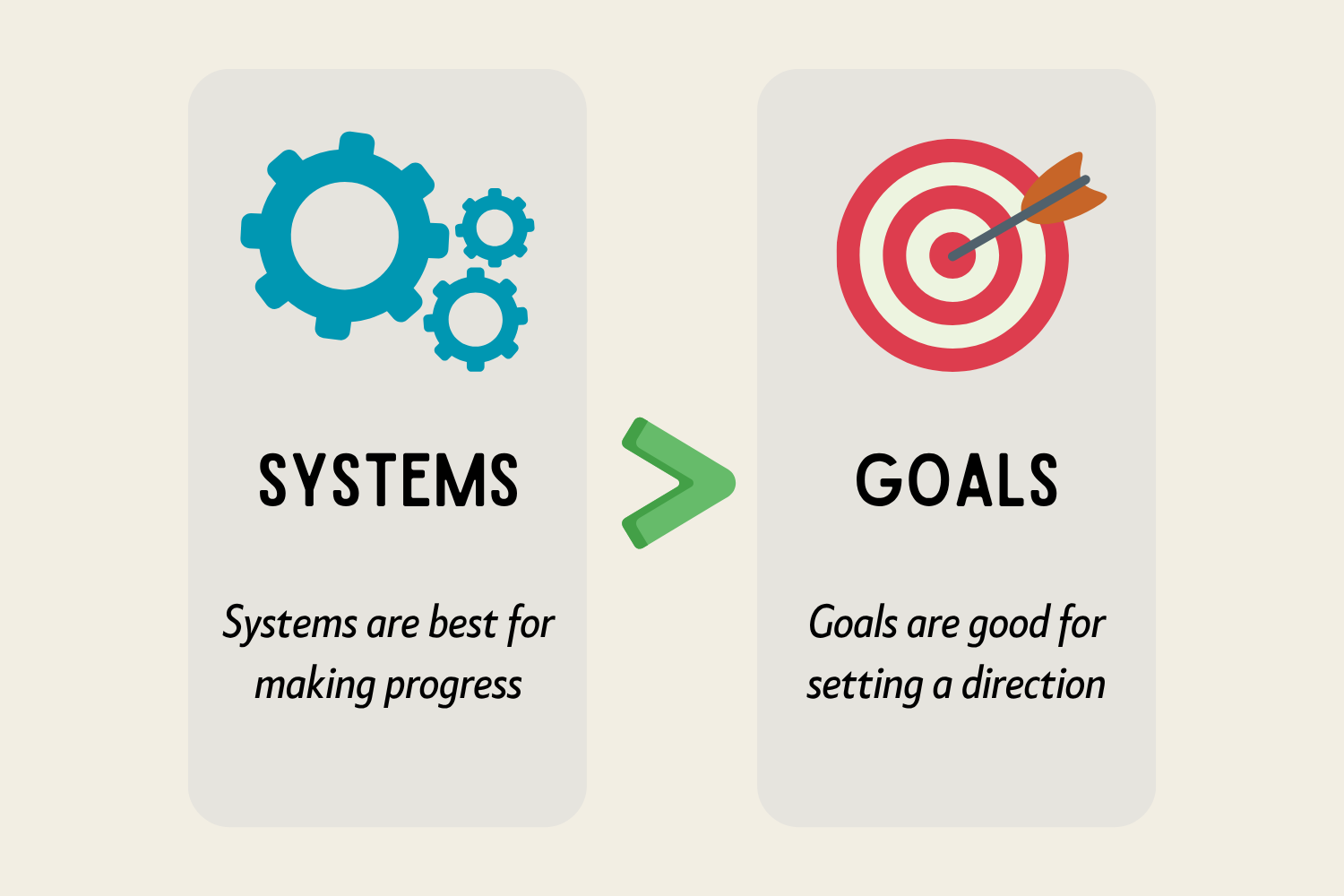
Systems > Goals
Results come from repeatable habits, not targets — turn every goal into a system of leading behaviors you design and track.
