Lean Startup
Eric Ries's Build-Measure-Learn loop: test your riskiest assumption with the smallest product, measure what people do, then pivot or persist.
 Find this on the mind-map
Introduction
Eric Ries popularized this approach in his 2011 book The Lean Startup, built out of two places you wouldn't expect a startup method to come from: lean manufacturing at Toyota, and Steve Blank's customer development work. He applied both to a condition most new products, new markets, and internal bets actually live in — extreme uncertainty — where the usual planning tools just don't hold up.
His core claim: a startup, or any new bet inside a company, isn't a small version of a big organization. It's an experiment machine. Its job isn't to execute a plan — it's to find out whether the plan is even true before the money runs out.
How It Works
It runs on the Build-Measure-Learn loop.
| Stage | What happens | The trap |
|---|---|---|
| Build | Create the minimum viable product, the smallest thing that tests the assumption | Building the whole product because the small version feels embarrassing |
| Measure | Get data from real users doing real things | Measuring vanity metrics such as total signups or page views |
| Learn | Decide to pivot or to persevere | Deciding on the loudest opinion in the room |
Three supporting ideas make the loop actually work:
- Validated learning — you measure progress by what you've proven, not by what you've shipped.
- Innovation accounting — pick metrics that move when your assumption is true and stay flat when it's false. Cohort retention beats a running total, every time.
- Pivot or persevere — a pivot changes one core assumption while keeping everything you've already learned. Persevering means the evidence actually backs your current direction.
The goal is to shrink the loop. Time through the loop, not features shipped, is the real measure of your productivity.
Why It Matters for Leaders
Your teams rarely fail because they moved too slowly. They fail because they built the wrong thing, carefully. Lean Startup hands you a way to spend small amounts of money buying information before you spend large amounts buying commitment.
It also solves a political problem for you. When a project has no explicit hypothesis, killing it looks like a judgment on the people who built it. When the hypothesis is written down and the experiment disproves it, stopping is just a result, not a failure, and your team can move on without losing face.
If you ignore this, you'll over-invest in roadmaps built on untested belief, then defend them because of the sunk cost. If you use it, every big bet becomes a series of smaller, cheaper questions instead.
What to do next
Test your knowledge of Lean Startup
Apply Lean Startup to a real situation
Skills related to Lean Startup

Frameworks related to Lean Startup

Agile Methodology
Short cycles beat long plans — build a slice, ship it, get real feedback, adjust, and repeat until it fits.

Dreamboxing
A model for turning vision into disciplined execution by cycling through three stages — Dream, Drive, Do — rather than favoring one.
The 4 Disciplines of Execution
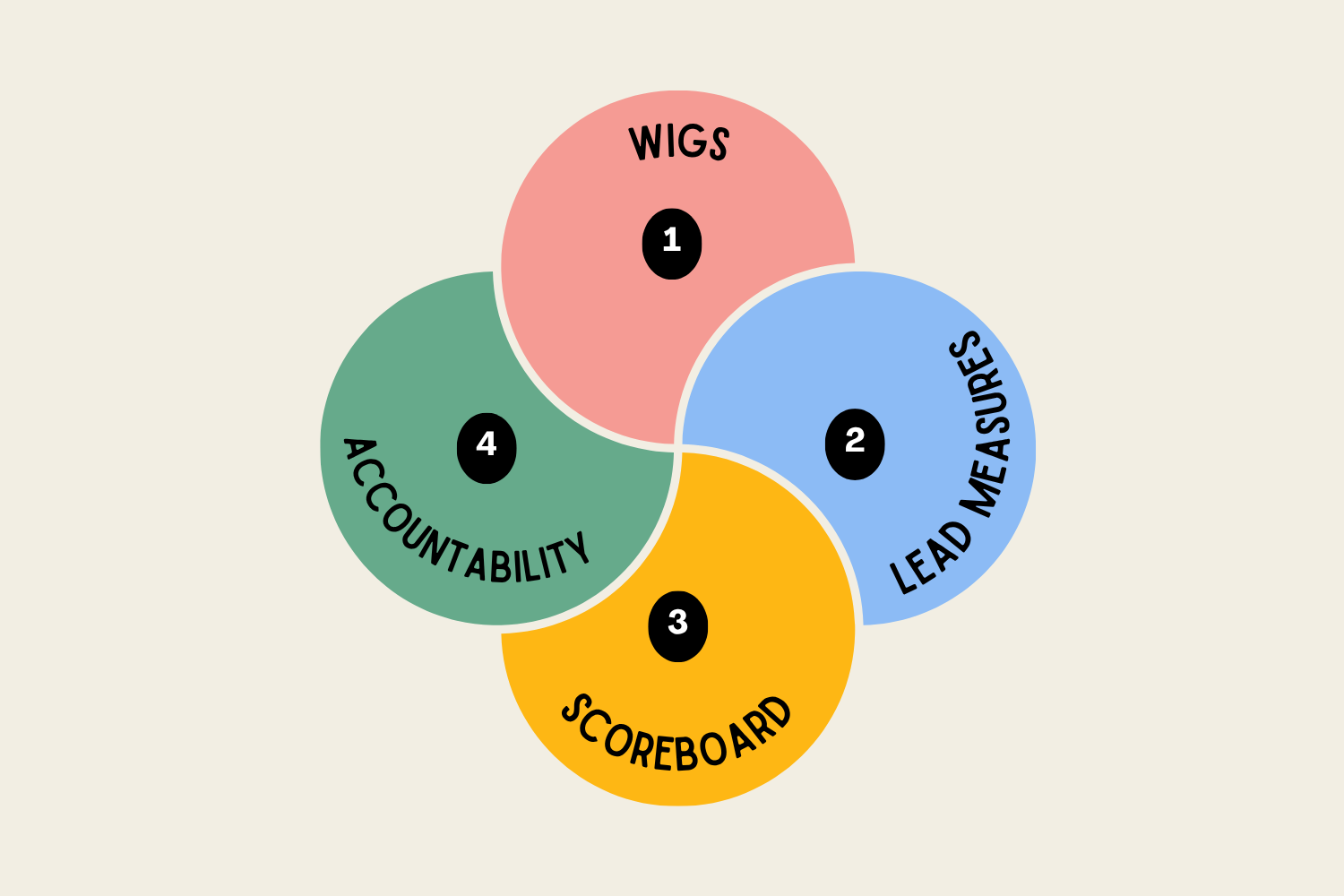
Four disciplines for hitting your important goals: narrow focus, act on lead measures, keep a visible scoreboard, run weekly accountability.

The Value Triangle
A modern replacement for the Iron Triangle — swap cost, time, scope for investment, frequency, and incremental value — levers, not constraints.
Books related to Lean Startup

High Output Management
Andy Grove's field manual for management as a production problem. Your output is the output of the people you influence, which reframes nearly everything a manager does as a question of leverage, not effort.

Team of Teams
General Stanley McChrystal's account of rebuilding a special-operations task force to fight a decentralized enemy network, and the argument that efficient hierarchy, the thing most organizations are explicitly built for, is the wrong design for a fast, complex environment.