Essentialism
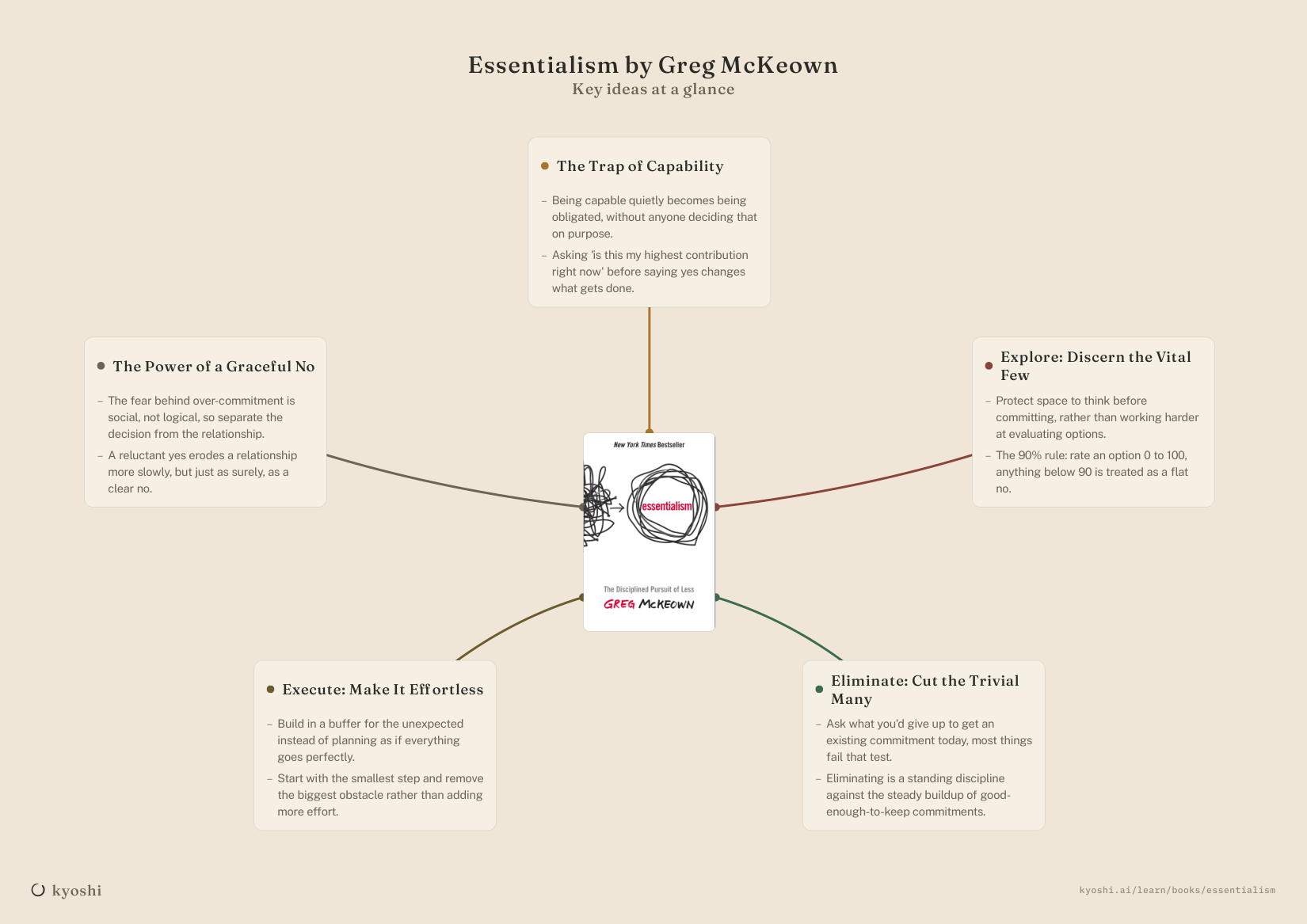
Greg McKeown's argument that "doing less, but better" isn't a time-management trick. It's a different operating system for deciding what deserves your effort at all, built on one uncomfortable premise: almost everything is non-essential.
 Find this on the mind-map
Introduction
Greg McKeown's premise is uncomfortable on purpose: almost everything is non-essential. Most people, and most organizations, operate as if every opportunity, every request, and every "yes" is roughly as worth pursuing as every other, and the result isn't a full life or a high-performing team, it's one stretched thin across too many things to do any of them well. Essentialism isn't about cramming in more; it's about ruthlessly narrowing to the vital few things that actually matter, and clearing out almost everything else to make room.
The Trap of "I Can Do Anything, So I Must Do Everything"
Being capable becomes being obligated, without anyone ever deciding that on purpose. Dana, a department head, says yes to nearly every cross-team request because she's good at this kind of work and saying no feels like letting someone down. Omar, running a similarly sized team, asks a different question before agreeing to anything new: "Is this the very highest and best contribution I could be making right now?" By quarter's end, Dana has helped with a dozen things adequately; Omar has moved two or three things that actually mattered. The same hours, spent on a different premise, produce very different years.
Explore: Discern the Vital Few
Before you can cut anything, you have to get genuinely selective about what's vital in the first place, not by working harder at evaluating options, but by protecting space to actually think, explore, and notice what matters before committing. McKeown's "90% rule" is a blunt filter: when weighing an option, rate it on a scale of 0 to 100. If it's not a 90 or above, treat it as a 0, a flat no, not a maybe. Most trade-off decisions aren't close calls; they only feel close because we haven't been honest about the rating.
Eliminate: Cut the Trivial Many
Once you know what's vital, essentialism gets its reputation as the "say no" book, but the point isn't no for its own sake. A useful reverse test: for anything already on your plate, ask "if I didn't already have this, how much would I be willing to give up to get it today?" Things that survive that test earn their place; most things that have simply accumulated over time do not. Eliminating isn't a one-time purge. It's a standing discipline against the steady accumulation of "good enough to keep" commitments.
Execute: Make It Effortless
Essentialists still have to get the vital few things done, and McKeown's advice here cuts against hustle culture: build in a buffer for the unexpected rather than planning as if everything will go perfectly, start with the smallest concrete step rather than waiting to feel ready, and remove the biggest obstacle in the way rather than just applying more effort against it. The goal is a system where the essential thing is easy to keep doing, not a system that depends on heroic willpower every day.
The Power of a Graceful No
The fear behind most over-commitment is social, not logical. Saying no feels like it will damage the relationship. McKeown's answer: separate the decision from the relationship explicitly. A clear, respectful no delivered with care protects both your priorities and the relationship far better than a reluctant yes you resent for the next six months, which erodes the relationship anyway, just more slowly.
Putting It Together
Explore, eliminate, and execute aren't a one-time exercise. They're a loop. Get selective about what's vital (Explore), cut what survived only by accumulation rather than genuine value (Eliminate), and build systems that make the vital few things easy to sustain (Execute). The graceful no is just the Eliminate step applied in the moment, under social pressure, which is exactly where it's hardest and most necessary.
Why It Matters for Leaders
The moment this model actually earns its keep isn't when you're deciding whether to take on a big new project. It's in the small, constant stream of asks that come at a manager all day: can you join this call, can you review this doc, can you weigh in on this decision that doesn't really need you. Each one feels too small to say no to on its own. Added up over a quarter, they're the whole reason the important work never gets real attention.
The practical shift is treating your calendar and your attention as a genuinely fixed container, not an elastic one you can always stretch a little further. When a new request comes in, the question isn't "can I technically fit this in." It's "is this one of the few things that actually deserves my best effort right now, and if I say yes, what am I agreeing to shortchange instead, without saying so out loud." Most managers skip that second question entirely, which is how a calendar fills up with a dozen "pretty good" uses of time and zero truly great ones.
This also reframes what a graceful no looks like at work. A manager who says yes to everything to avoid the discomfort of disappointing people isn't actually being generous. They're just moving the cost of their own indecision onto whichever project gets their worst, most distracted version of attention later. Saying no clearly and early, with an actual reason attached, respects the other person's time more than a reluctant yes you deliver late and half-heartedly.
Picture a manager, Felix, who gets asked to join a steering committee for a project that's adjacent to his real priorities, not core to them. Saying yes would look good, and declining feels like it might read as uncooperative. He asks himself McKeown's question: if he didn't already have this obligation, how much would he give up to get it today? The honest answer is not much. He declines, tells the organizer plainly why, and puts that freed-up time into the one project his team is actually behind on. Nobody remembers the committee he skipped. Everybody notices the project that shipped on time.
What to do next
Reinforce your understanding of Essentialism
Books related to Essentialism

Skills related to Essentialism

Frameworks related to Essentialism
Eisenhower Matrix
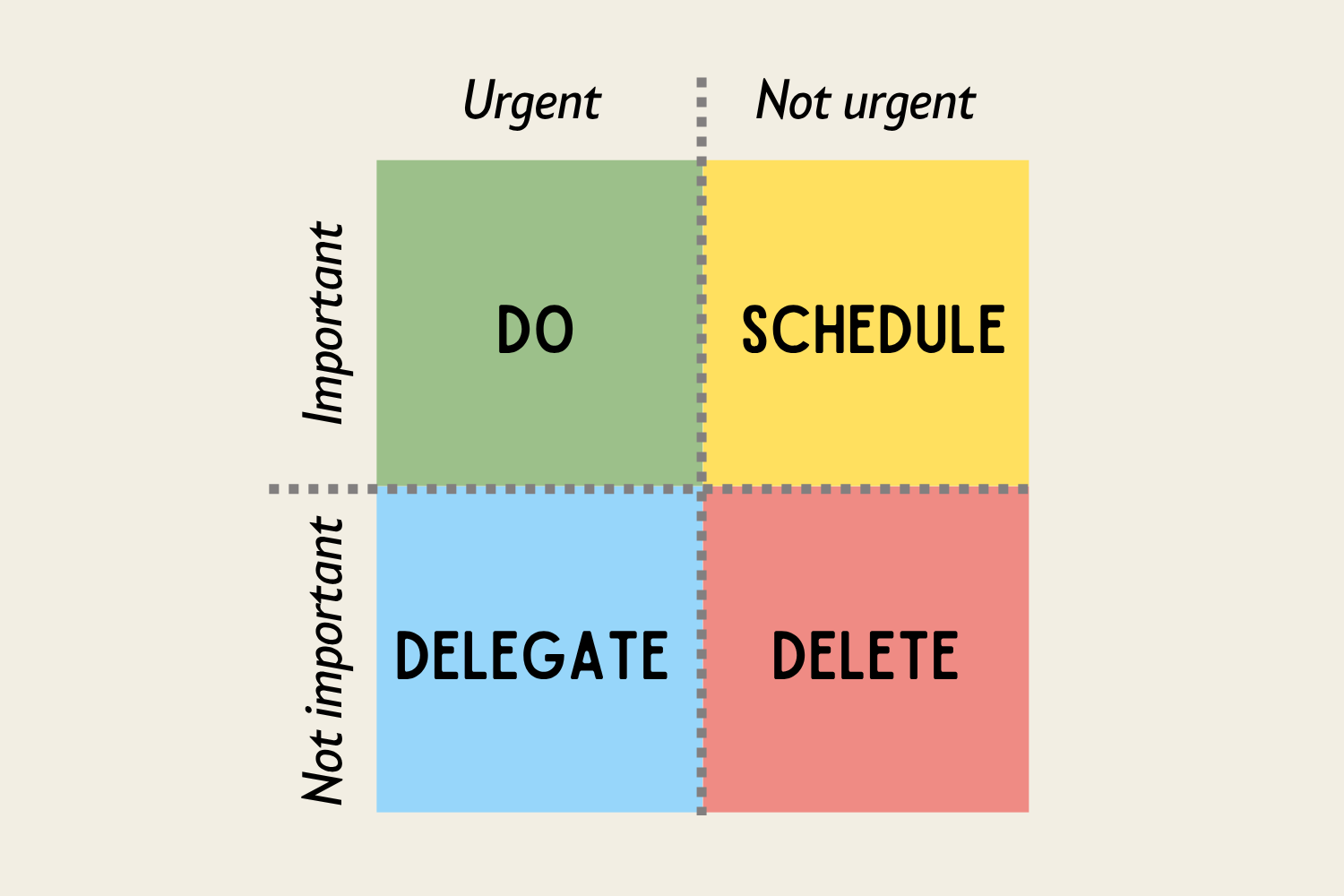
A simple 2x2 that sorts tasks by urgency and importance, so what actually matters gets scheduled instead of whatever's loudest.
Impact-Effort Matrix
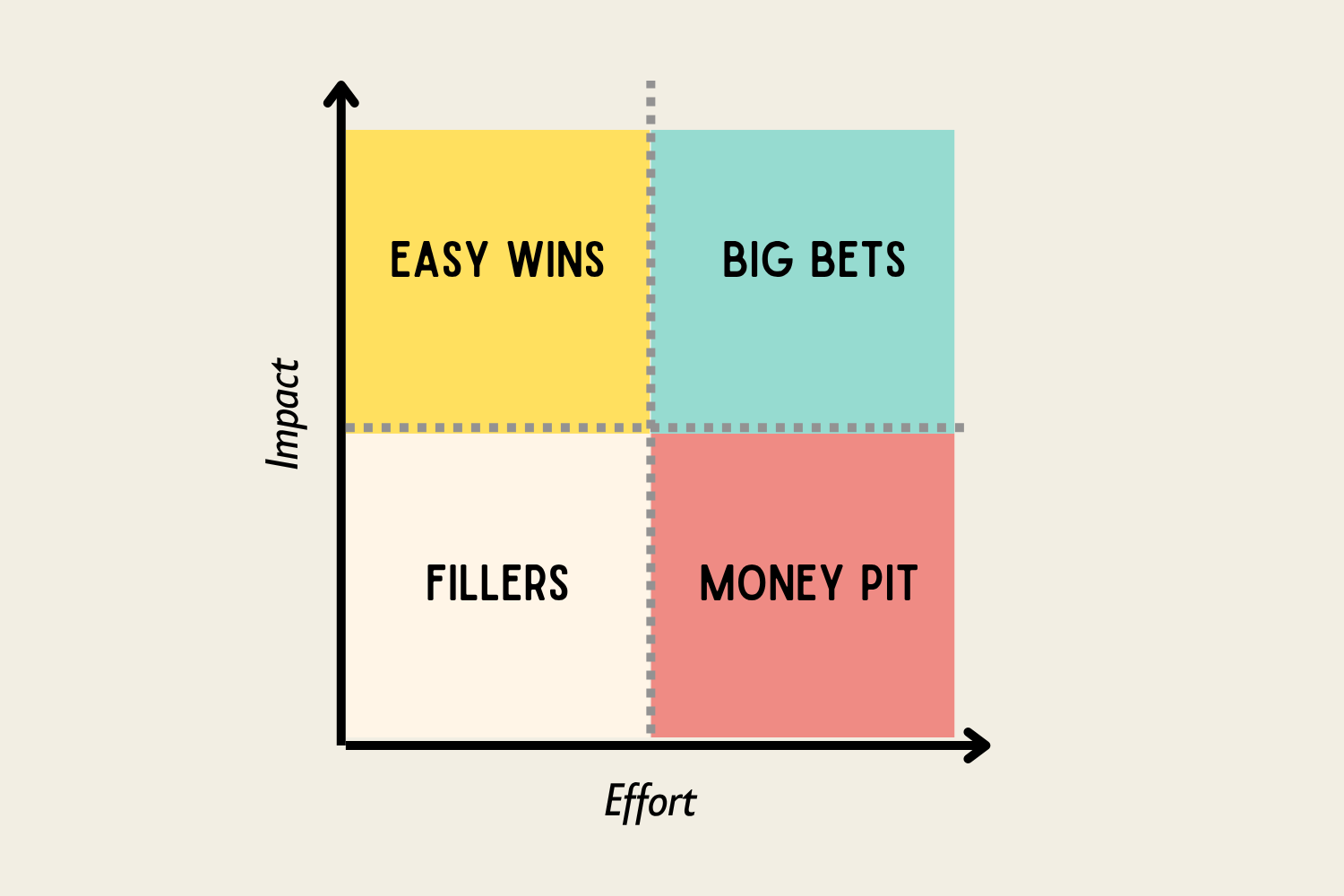
A 2x2 that plots initiatives by value against effort, so you see what to start now, plan for, or kill.

MoSCoW Method
A prioritization method sorting your plate into four buckets — Must have, Should have, Could have, Won't have — forcing trade-offs early.
Pareto Principle
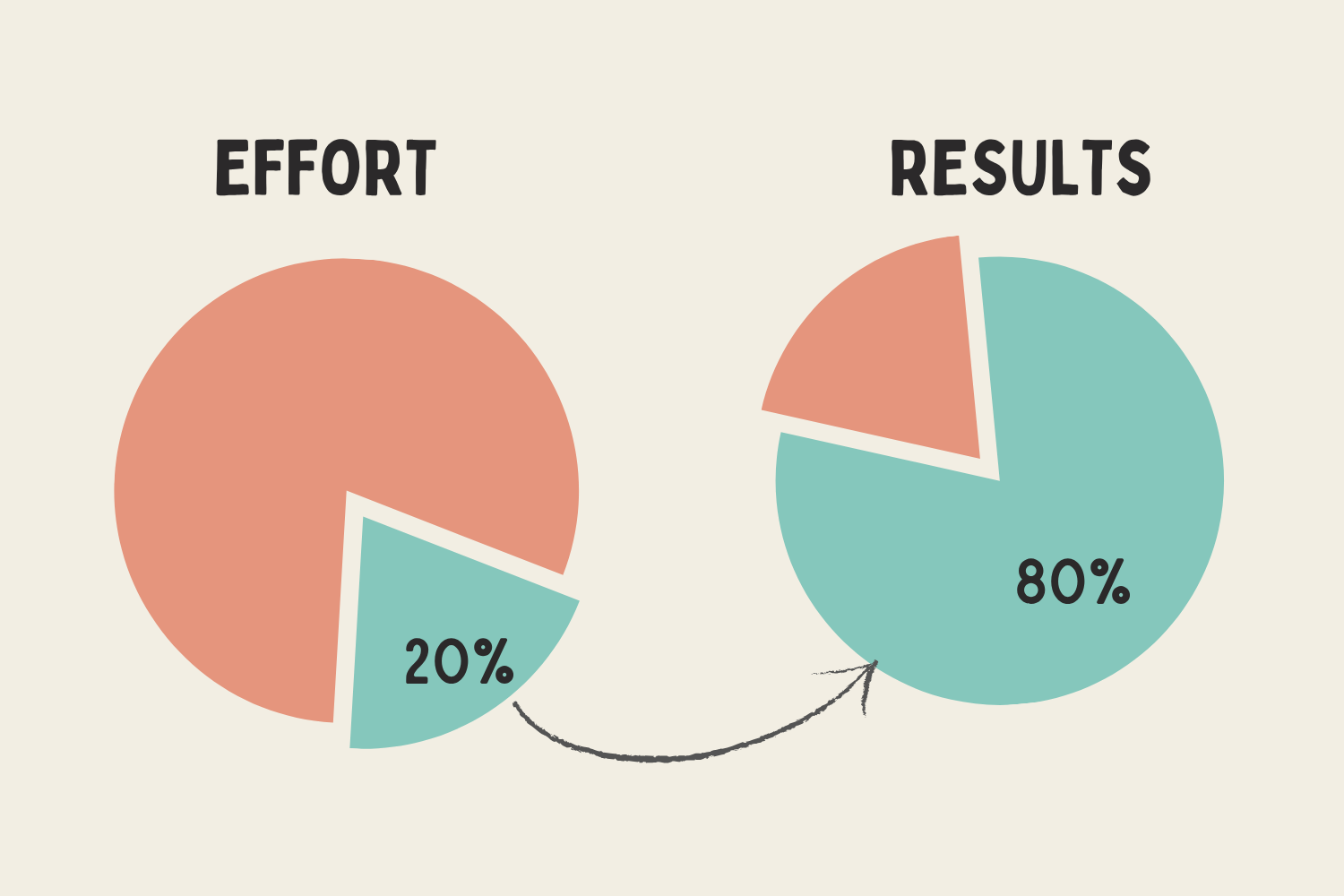
Roughly 80% of outcomes come from 20% of causes — find the vital few projects, people, and bottlenecks driving results.