Pareto Principle
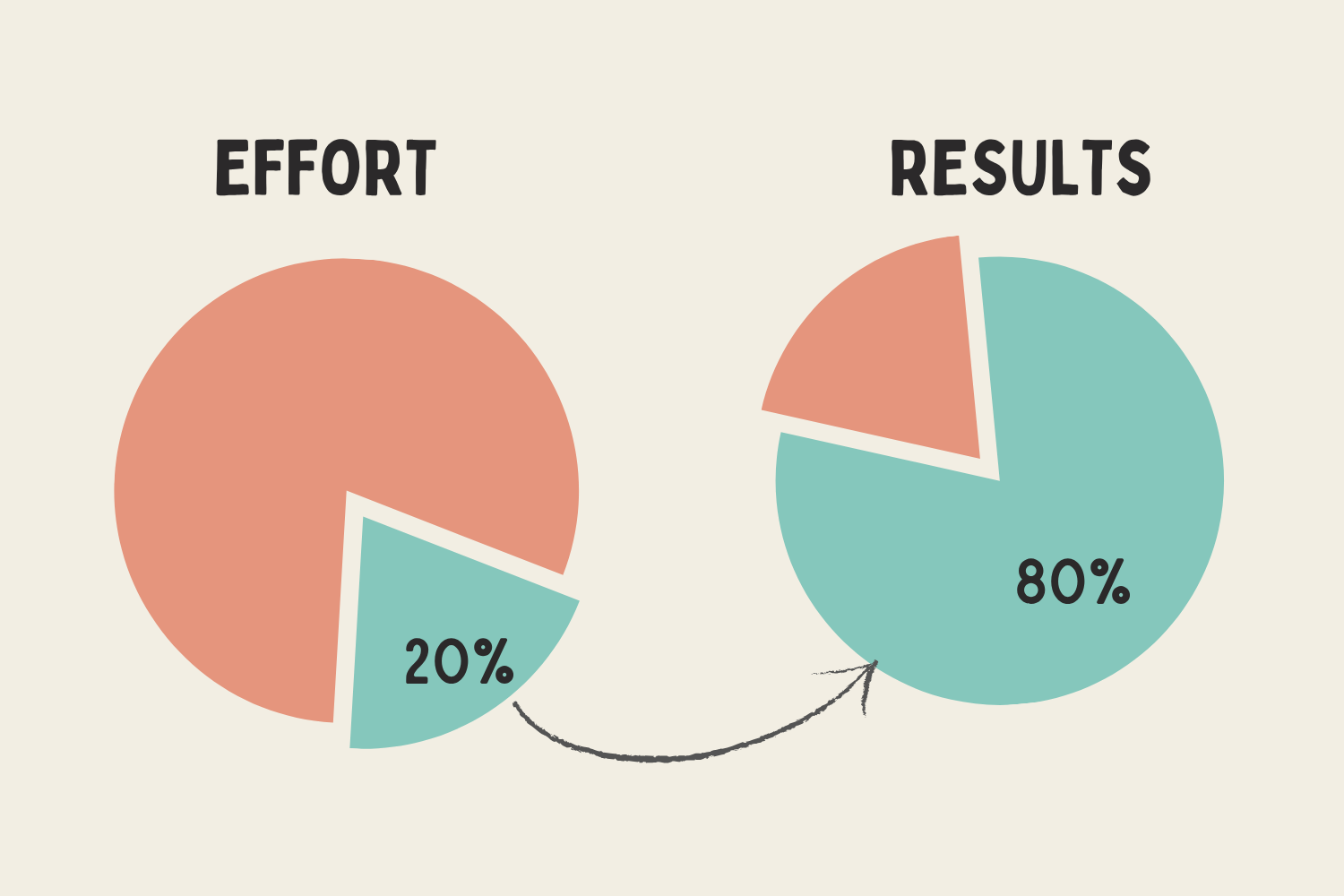
Roughly 80% of outcomes come from 20% of causes — find the vital few projects, people, and bottlenecks driving results.
 Find this on the mind-map
Introduction
Vilfredo Pareto was an Italian economist and sociologist working in the late 19th century, studying income distribution and how people make choices. While looking at land ownership in Italy, he noticed something odd: about 80% of the land was held by roughly 20% of the population.
In 1941, Joseph M. Juran, a Romanian-American engineer, carried that observation out of economics and into quality management, noting that 80% of problems typically trace back to 20% of the causes. Juran's extension is what turned a statistical curiosity into an actual management tool.
How It Works
Stated generally: for many outcomes, roughly 80% of the consequences come from 20% of the causes. In leadership terms, about 20% of your projects deliver 80% of your results, and about 20% of your effort produces about 80% of your output.
The ratio is a pattern, not a law — it has no rigorous scientific proof, and in practice the split might be 70/30 or 90/10. What stays true across contexts is this: your results never come from your inputs evenly. Some of what you do matters a lot more than the rest. You can check this against your own life. You're genuinely productive for maybe two or three hours of a workday, you wear about a fifth of your wardrobe, you use a fraction of the apps on your phone, and if you run a business, a small share of your customers is probably generating most of your profit. Apple pulls the bulk of its revenue from a handful of flagship products. Airlines earn a disproportionate share of their income from business and first-class passengers.
Why It Matters for Leaders
Your default response to an overloaded task list is to work harder. That fails, because effort spread evenly across a long list gets thin over the 80% that barely matters. Chasing inbox zero burns your energy on volume instead of consequence.
This principle reframes the job. Leadership isn't doing everything. It's identifying and protecting the vital few tasks, people, and processes that drive most of your results.
The pattern shows up most clearly in your calendar. One product manager at a growth-stage startup tracked every meeting for a month and rated each one on its actual effect on the roadmap. Out of roughly forty meetings, six moved the work forward. The other thirty-four — status updates, quick syncs, check-ins — felt productive in the moment and could mostly have been a Slack thread. After that audit, she started asking of every recurring invite whether it belonged to the 20% or the 80%.
The same uneven split applies to your own capacity. You'll always have more initiatives than you have room for, so this becomes a tool for cutting noise through ruthless prioritization, rather than negotiating everything down into a slower version of itself.
And the 20% isn't fixed. What drives your results this quarter might not drive them next quarter — which makes reassessing it regularly part of the framework, not an optional extra.
What to do next
Test your knowledge of Pareto Principle
Practice Pareto Principle
Apply Pareto Principle to a real situation
Skills related to Pareto Principle

Frameworks related to Pareto Principle
Eisenhower Matrix
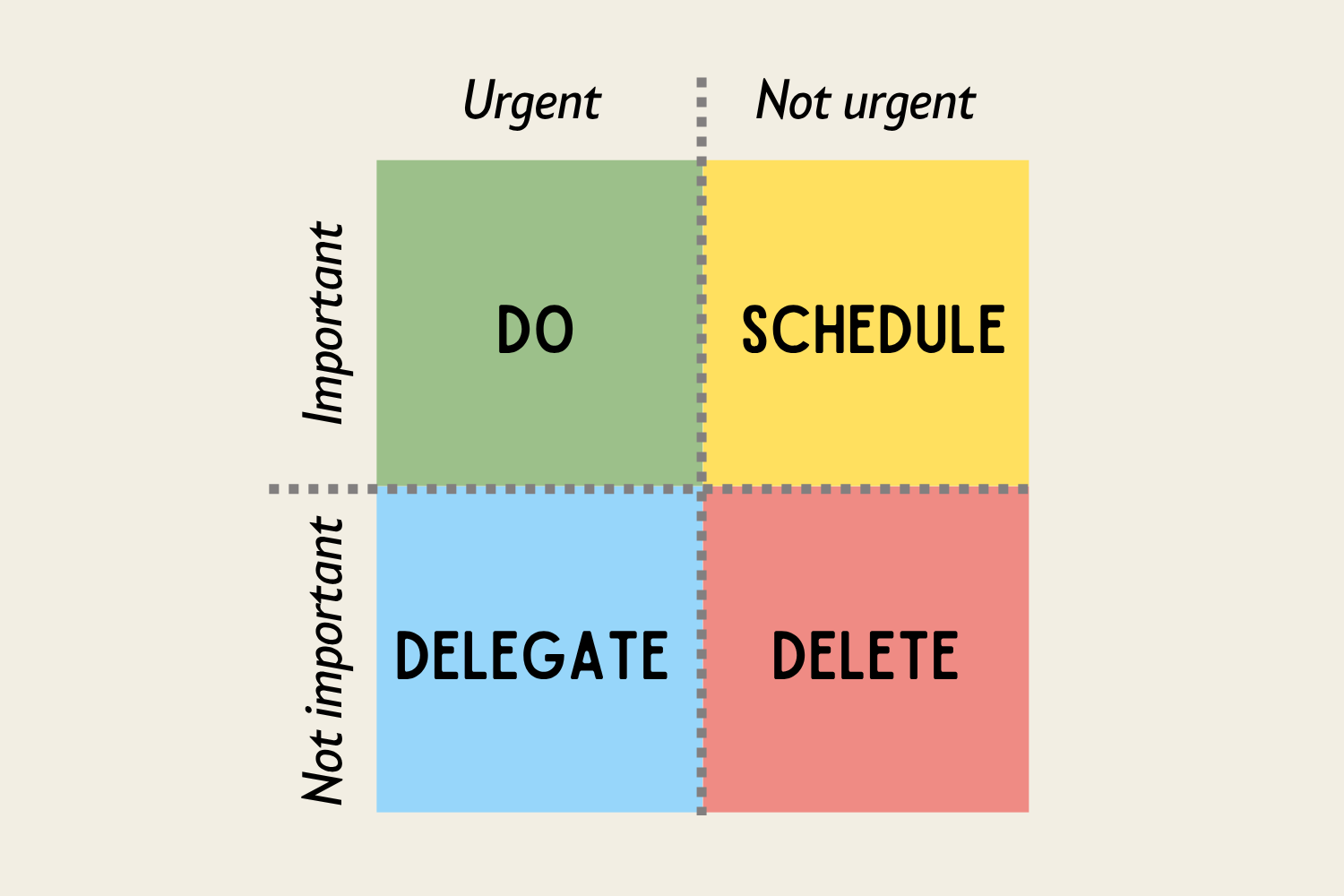
A simple 2x2 that sorts tasks by urgency and importance, so what actually matters gets scheduled instead of whatever's loudest.
Impact-Effort Matrix
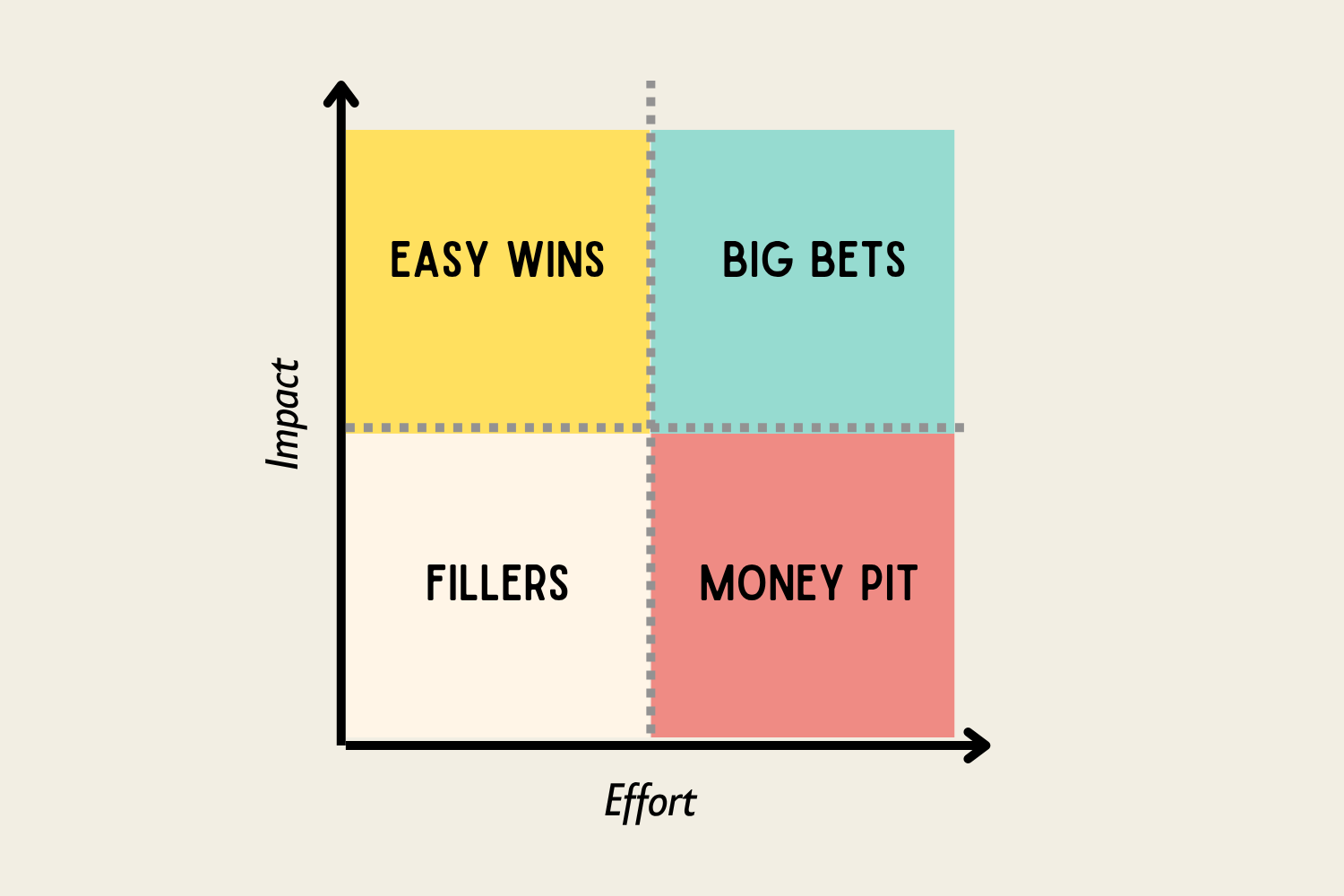
A 2x2 that plots initiatives by value against effort, so you see what to start now, plan for, or kill.

MoSCoW Method
A prioritization method sorting your plate into four buckets — Must have, Should have, Could have, Won't have — forcing trade-offs early.
Books related to Pareto Principle

Essentialism
Greg McKeown's argument that "doing less, but better" isn't a time-management trick. It's a different operating system for deciding what deserves your effort at all, built on one uncomfortable premise: almost everything is non-essential.

The One Thing
Gary Keller and Jay Papasan's case that most to-do lists are really long lists of ways to avoid asking the one question that matters. Success usually comes from sequencing, not from doing more things at once.