MoSCoW Method
A prioritization method sorting your plate into four buckets — Must have, Should have, Could have, Won't have — forcing trade-offs early.
 Find this on the mind-map
Introduction
Dai Clegg came up with this at Oracle in the mid-1990s to bring order to software development, and it's since spread into agile planning, business strategy, OKR setting, and plenty of people's personal to-do lists. The name has nothing to do with the city — it's an acronym, and a genuinely useful one.
How It Works
You sort everything on your list into four named buckets.
| Bucket | Meaning | Typical items |
|---|---|---|
| Must have | Non-negotiable. Without it, the project fails or loses its point. | Legal and compliance requirements, login and payment functionality, critical customer-facing bug fixes, infrastructure everything else depends on. |
| Should have | Important, but not critical. Adds real value, survives a delay. | UI polish, notifications, optional onboarding steps, internal dashboards. |
| Could have | Nice to have. Helpful someday, not needed now. | Animations, rarely used edge cases, internal-facing extras, early experiments. |
| Won't have (for now) | A deliberate no for this cycle — possibly a Must have in a future one. | Non-critical refactors, dashboard redesigns, anything with no clear reason behind the ask. |
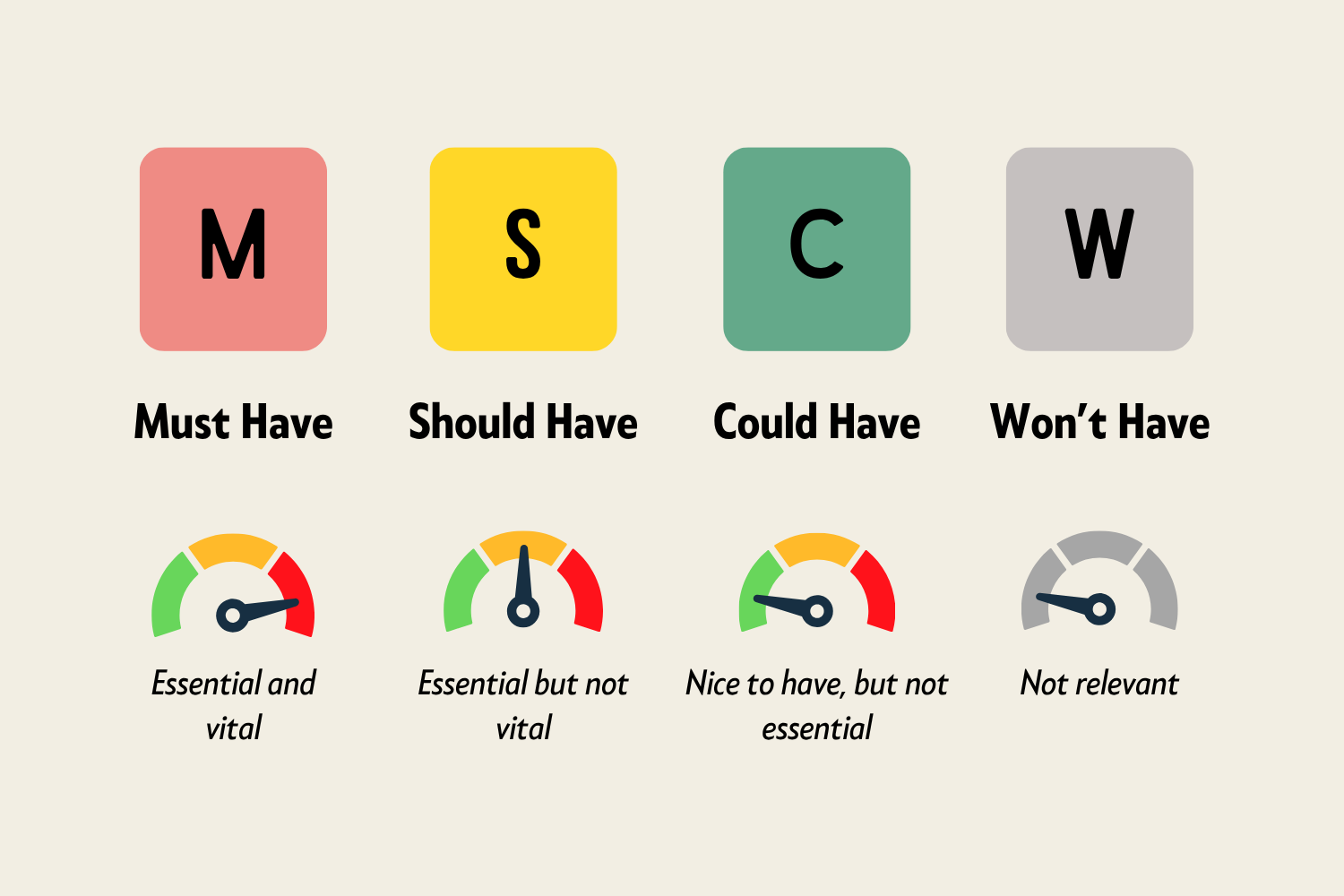
This works because it forces a real split. A ranked list lets everything crowd toward the top — four named buckets don't let you get away with that. Keeping the Must have bucket small raises your odds of actually delivering it, which is the Pareto Principle applied straight to scope. The Should have bucket is your flex zone, and it's also where most of the drift happens — Should haves quietly become Must haves the moment sorting turns emotional instead of objective. Could have works as a parking lot, not a rejection pile.
Won't have is the most underused bucket of the four, and the most powerful. Naming what you're deliberately not doing sets a visible boundary, gives your team room to breathe, and heads off scope creep by making the trade-off explicit instead of letting it happen by accident.
Why It Matters for Leaders
Most teams don't actually have a prioritization problem. They have a guilt problem — the guilt of saying no, the fear of disappointing a stakeholder, the worry about getting the call wrong. That's exactly what produces the planning meeting that starts with twenty goals and ends with fifteen of them somehow marked high priority.
The pressure on you isn't personal — it's coming at you from every direction at once. Product wants features, sales wants faster releases, finance wants cost cuts, leadership wants all of it at once, and your team is already at capacity. Making trade-offs and saying no when everyone in the room expects yes is the actual job — and doing it without burning your team out takes a method, not just willpower.
MoSCoW moves the hard conversation earlier. The trade-off happens in a planning session where you can actually discuss it, instead of surfacing three months later as a slipped date or an exhausted team.
It also does something politics rarely does on its own: it shows every stakeholder exactly where their ask landed, and why. On an overflowing roadmap, a GDPR compliance requirement is a Must have, a feature your top three clients are asking for is a Should have, a Slack chatbot integration is a Could have, and yet another dashboard redesign is a Won't have this quarter. Suddenly the roadmap is deliverable, and everyone can see how their own request fits into the whole.
The same method works on your own backlog. If you're a director ending every week exhausted and unfulfilled, sort your own commitments the same way: one-to-ones with your direct reports are Must have, a meeting with a prospective client is Should have, tinkering with a dashboard design is Could have, and that webinar invite with no clear payoff is a Won't have.
What to do next
Test your knowledge of MoSCoW Method
Practice MoSCoW Method
Apply MoSCoW Method to a real situation
Skills related to MoSCoW Method

Frameworks related to MoSCoW Method
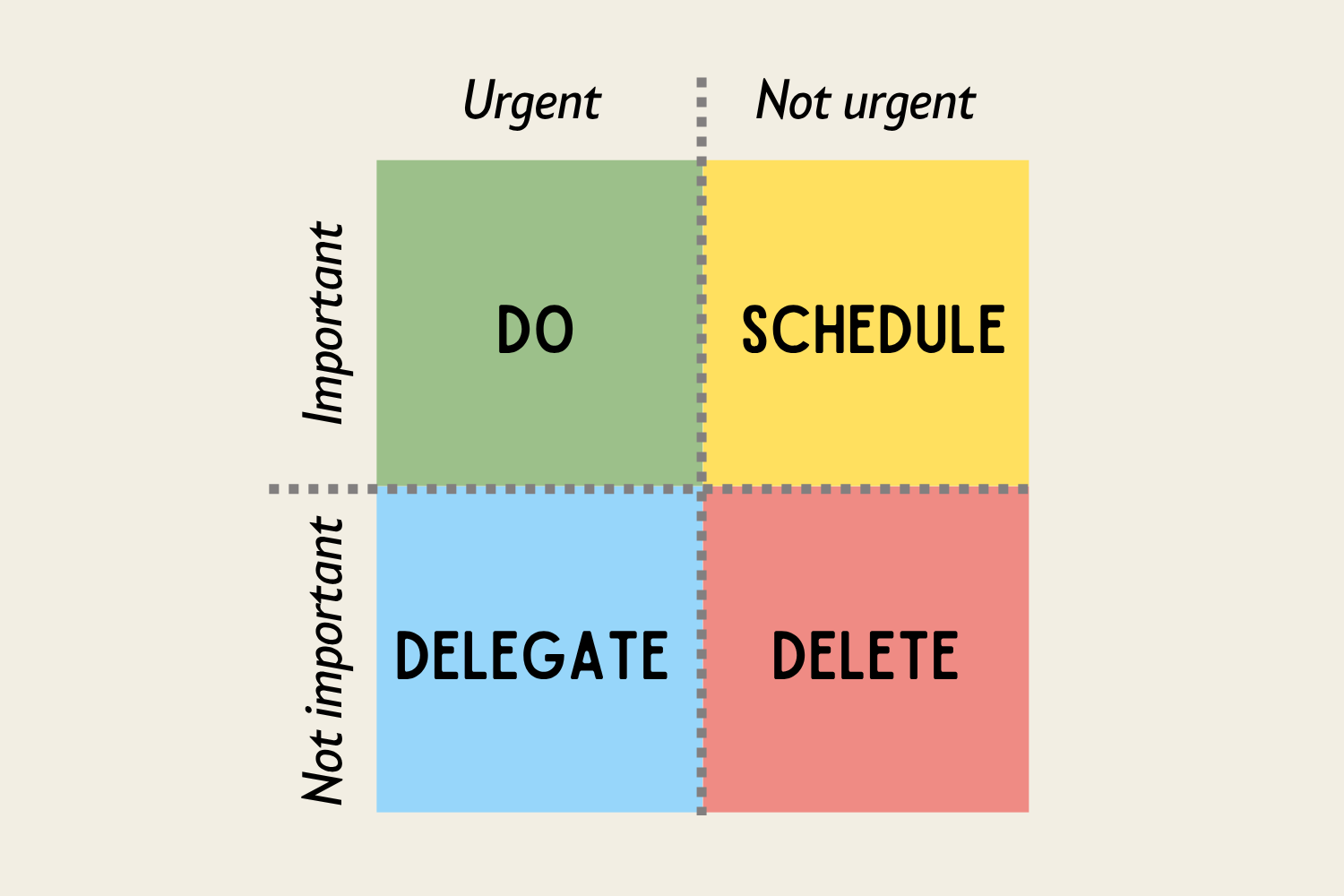
Eisenhower Matrix
A simple 2x2 that sorts tasks by urgency and importance, so what actually matters gets scheduled instead of whatever's loudest.
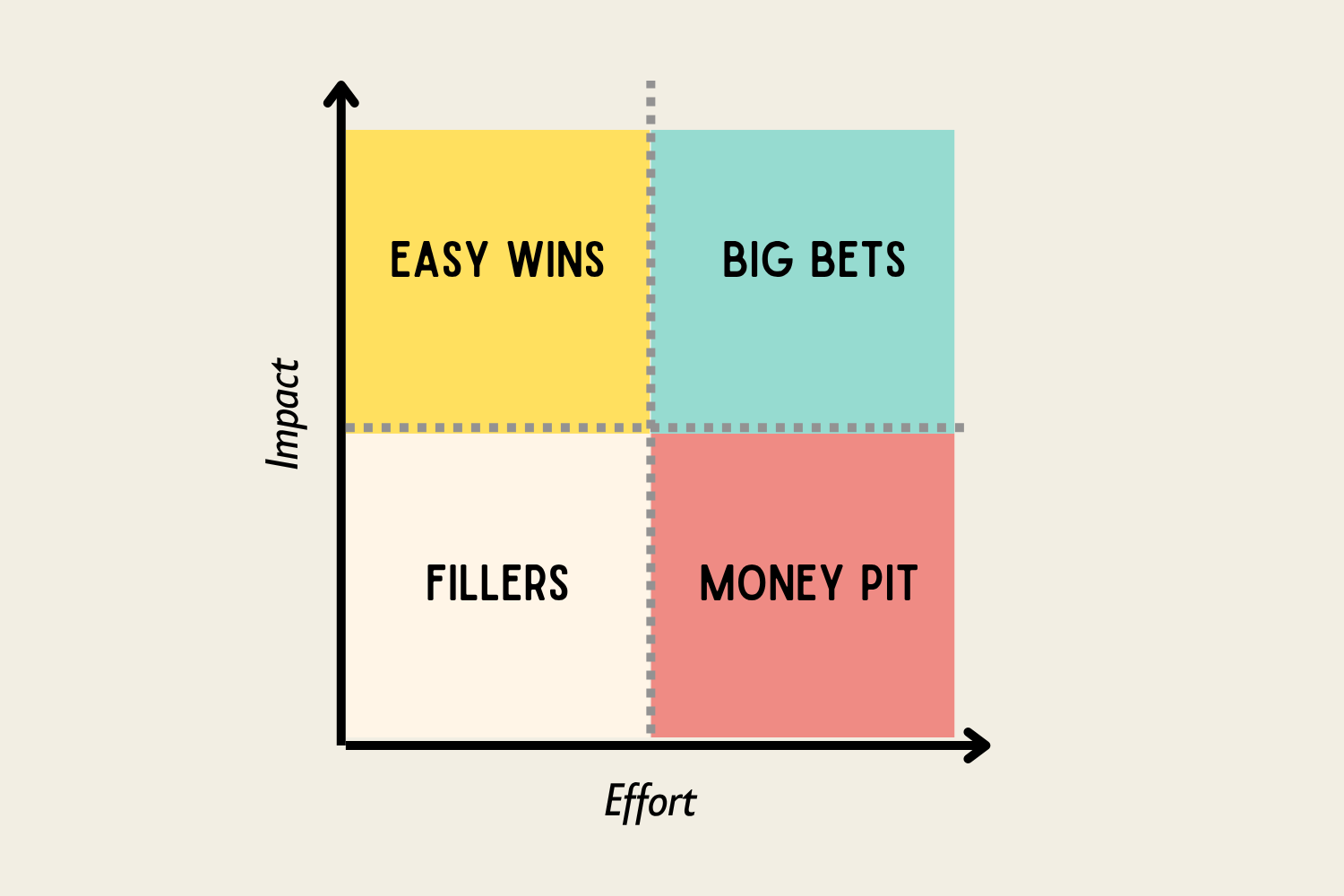
Impact-Effort Matrix
A 2x2 that plots initiatives by value against effort, so you see what to start now, plan for, or kill.
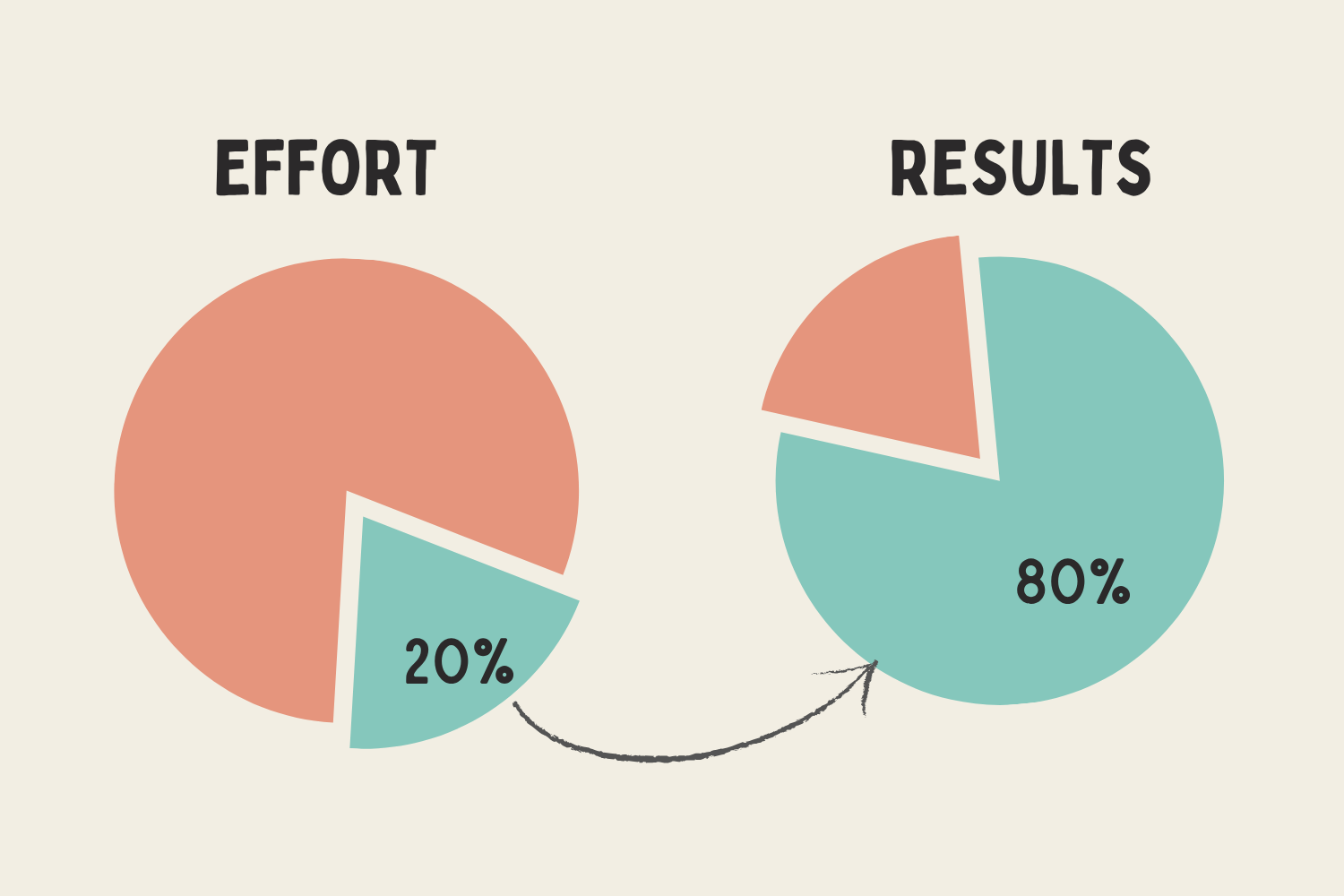
Pareto Principle
Roughly 80% of outcomes come from 20% of causes — find the vital few projects, people, and bottlenecks driving results.
Books related to MoSCoW Method

Essentialism
Greg McKeown's argument that "doing less, but better" isn't a time-management trick. It's a different operating system for deciding what deserves your effort at all, built on one uncomfortable premise: almost everything is non-essential.

The One Thing
Gary Keller and Jay Papasan's case that most to-do lists are really long lists of ways to avoid asking the one question that matters. Success usually comes from sequencing, not from doing more things at once.