Getting to Yes
Roger Fisher, William Ury & Bruce Patton
The original Harvard Negotiation Project playbook. Negotiate on interests and objective standards instead of trading positions back and forth, and you stop needing to choose between being "nice" and getting a good outcome.
 Find this on the mind-map
Introduction
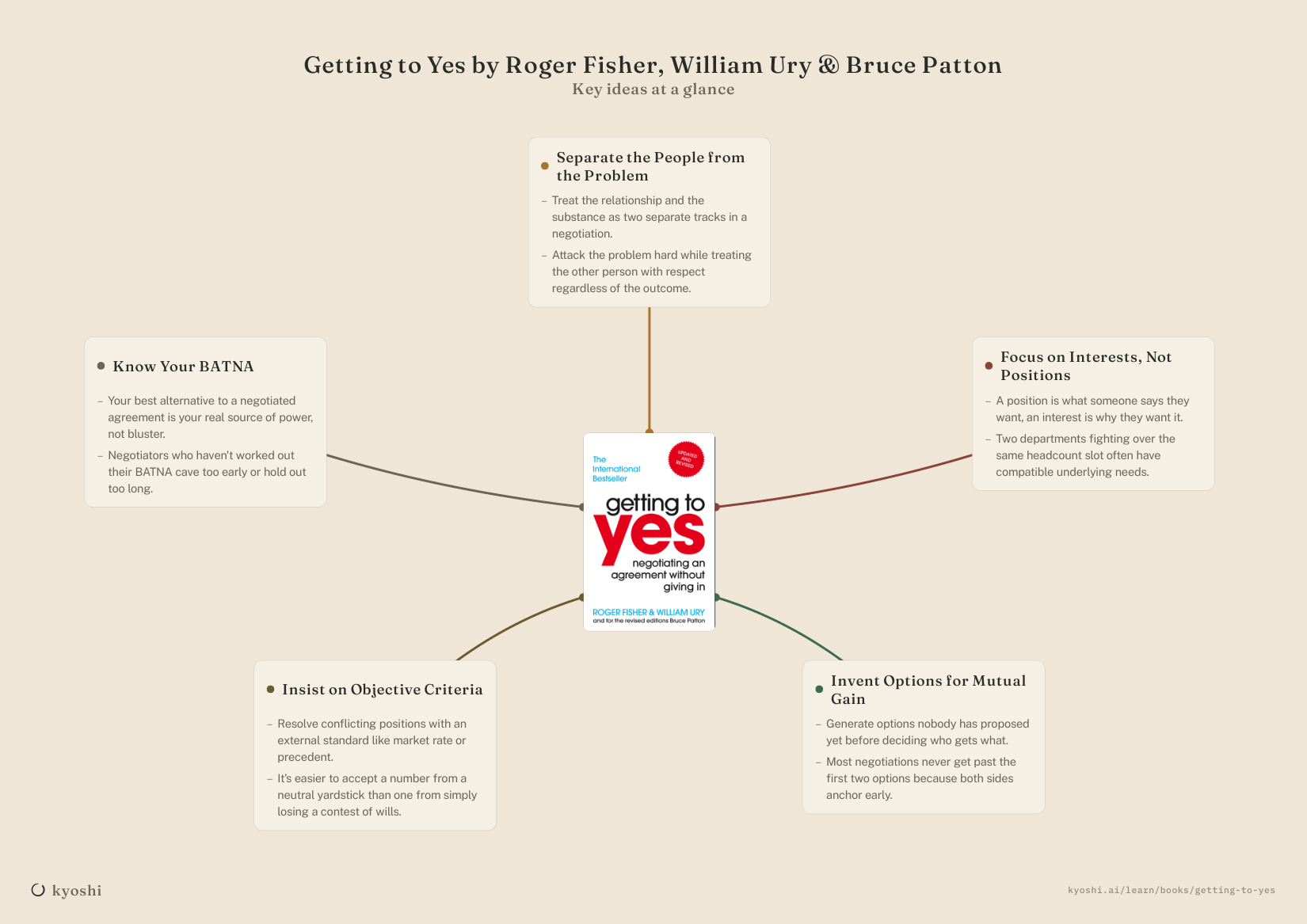
Getting to Yes starts from a simple observation: most people negotiate by picking a position and defending it, which produces either a stubborn standoff or a weak compromise nobody is happy with. Fisher, Ury, and Patton's alternative, principled negotiation, argues you can be both firm and fair by shifting the whole conversation from positions ("I want X") to the interests underneath them ("why do you want X, and what else would satisfy that need").
Separate the People from the Problem
Negotiations go sideways fastest when a disagreement about the issue turns into a judgment about the other person's character. The fix is treating the relationship and the substance as two separate tracks: attack the problem as hard as you want, while treating the person across the table with respect regardless of how the substance goes. A manager negotiating budget with a peer can disagree forcefully about the number while still explicitly affirming that the disagreement isn't personal, and meaning it.
Focus on Interests, Not Positions
A position is what someone says they want; an interest is why they want it. Two departments fighting over the same headcount slot might both drop their "I need this position" stance the moment someone asks what each department is actually trying to achieve. One needs faster turnaround on a specific deliverable, the other needs coverage for an employee going on leave. Interests, unlike positions, often turn out to be compatible even when the stated asks collide head-on.
Invent Options for Mutual Gain
Before deciding who gets what, spend real time generating options nobody has proposed yet, deliberately separating the brainstorm from the decision. Most negotiations never get past the first two options on the table, because the two sides anchor early and start defending instead of inventing. Widening the option set before evaluating any of them is what actually produces a deal better than either side's opening ask.
Insist on Objective Criteria
When positions genuinely conflict, resolve the gap with an external standard (market rate, a precedent, an independent benchmark) rather than a contest of who can hold out longest or push hardest. It converts a test of wills into a joint search for a fair answer, and it's far easier for either side to accept a number that came from a neutral yardstick than one that came from the other person simply winning.
Know Your BATNA
Your Best Alternative to a Negotiated Agreement is the real power behind any negotiation, not bluster, not leverage you claim to have. Knowing your actual walk-away option, concretely, tells you exactly when to accept, when to push, and when to leave. Negotiators who haven't worked out their BATNA tend to either cave too early out of vague anxiety or hold out too long chasing a deal that was never going to beat walking away.
Putting It Together
The four elements build in sequence: keep the relationship separate from the substance so the conversation stays productive, dig past positions to interests so you're solving the real problem, invent options widely before narrowing, and settle disputed points against objective criteria rather than willpower. Do all of that while knowing your BATNA well enough to recognize a good deal when it's actually in front of you.
Why It Matters for Leaders
Most managers negotiate more often than they realize: a budget number with a peer, a deadline with a stakeholder, a scope cut with a client, a raise with a direct report. The instinct in all of those is to pick a number and defend it. This book's real value is showing you a different first move: before you argue your number, ask what the other side's number is actually protecting.
It also fixes a trap a lot of "nice" managers fall into, which is treating firmness and warmth as a trade-off. You don't have to soften your ask to stay likable, and you don't have to get cold to hold your ground. You can disagree hard on the substance while telling the other person, plainly, that this isn't personal, and keep both true at once.
The BATNA piece changes how a negotiation actually feels in the room. A manager who hasn't worked out what they'll do if the deal falls through negotiates from anxiety, and it shows: they cave on points that didn't need to move. A manager who knows their real walk-away option negotiates from a steady place, because every offer gets measured against something concrete instead of against vague worry.
Picture Deepa, an engineering manager, in a headcount fight with a peer team over the same open role. Her first instinct is to argue that her team needs it more. Instead she asks the peer manager what he's actually trying to solve. It turns out he doesn't need a permanent hire at all, he needs coverage for the next two quarters while someone's on leave. Deepa offers to loan one of her senior engineers part-time for that stretch, and keeps the full-time slot for her own team. Neither side moved off a position. They just stopped arguing about the wrong thing.
What to do next
Reinforce your understanding of Getting to Yes
Books related to Getting to Yes

Crucial Conversations
A manager's guide to the book about the story you make up before you open your mouth. It's not really a book about talking, but about the half-second before you talk that decides whether the conversation goes well or badly.

Difficult Conversations
The Harvard Negotiation Project's case that every hard conversation you're avoiding is actually three conversations tangled together: a dispute over facts, a buried argument about feelings, and a quiet question about identity, and most people only ever engage the first one.

Games People Play
The psychiatrist who invented Transactional Analysis, explaining why so many conversations at work are really scripted performances with a hidden payoff. It's a guide to spotting the game before you're cast in a role you didn't agree to.

Give and Take
Adam Grant's organizational-psychology case that how you handle reciprocity, giving, taking, or matching, predicts long-run success better than talent does, as long as you give the right way.

Good Leaders Ask Great Questions
John Maxwell's case that the single clearest sign a leader has stopped growing is that they've stopped asking real questions, and that the habit of asking, not the gift of answering, is what keeps a leader's judgment sharp over time.

How to Win Friends and Influence People
The original relationship-building classic, decades before "emotional intelligence" had a name. Carnegie's bet is that nearly every influence problem is actually an ego-management problem, yours and theirs.

Influence
A social psychologist's field guide to the handful of automatic triggers that make people say yes, written so you can recognize them when they're used on you, and use them honestly when you're the one asking.

Leadership is Language
David Marquet's argument, built from his time commanding a nuclear submarine, that the exact words a leader habitually uses either keep an organization stuck in command-and-control execution mode or genuinely open it up to better thinking. Most leaders have no idea which one their default language is doing.

Made to Stick
Why urban legends, conspiracy theories, and your most forgettable all-hands deck follow completely different rules, and the six ingredients Chip and Dan Heath found in every idea that actually sticks in people's heads, whether or not it deserves to.

Never Split the Difference
A former FBI lead hostage negotiator's case against "splitting the difference," negotiation isn't a logic problem you solve at the table, it's an emotional one you solve before you ever get there.

Quiet
Susan Cain's case against the modern workplace's "Extrovert Ideal": the unexamined assumption that the loudest, fastest-talking, most group-comfortable person in the room is automatically the most capable one, and what gets lost, specifically, when organizations build around that assumption.

Radical Candor
Kim Scott's case that most managers who avoid giving hard feedback think they're being kind, and are actually doing the least kind thing possible, because withheld feedback doesn't disappear, it just shows up later as a surprise.

Surrounded by Idiots
A blunt, color-coded field guide to why the person across the table from you seems to be speaking a different language, because, behaviorally, they basically are.

The 16 Undeniable Laws of Communication
John Maxwell's case that communication is not a personality trait some leaders are simply born with, it's sixteen learnable, named laws, grouped around who's speaking, what's said, how it's said, when it's said, and why it's said.

The 48 Laws of Power
Robert Greene's amoral compendium of how power actually moves through organizations and courts, stripped of any pretense that fairness or merit is what decides who wins. Useful as a decoder, dangerous as a playbook.

The 7 Habits of Highly Effective People
Stephen Covey's classic, read through a modern-manager lens. Many of the ideas taught today as "new" leadership frameworks were already captured here decades ago.
Skills related to Getting to Yes

Frameworks related to Getting to Yes
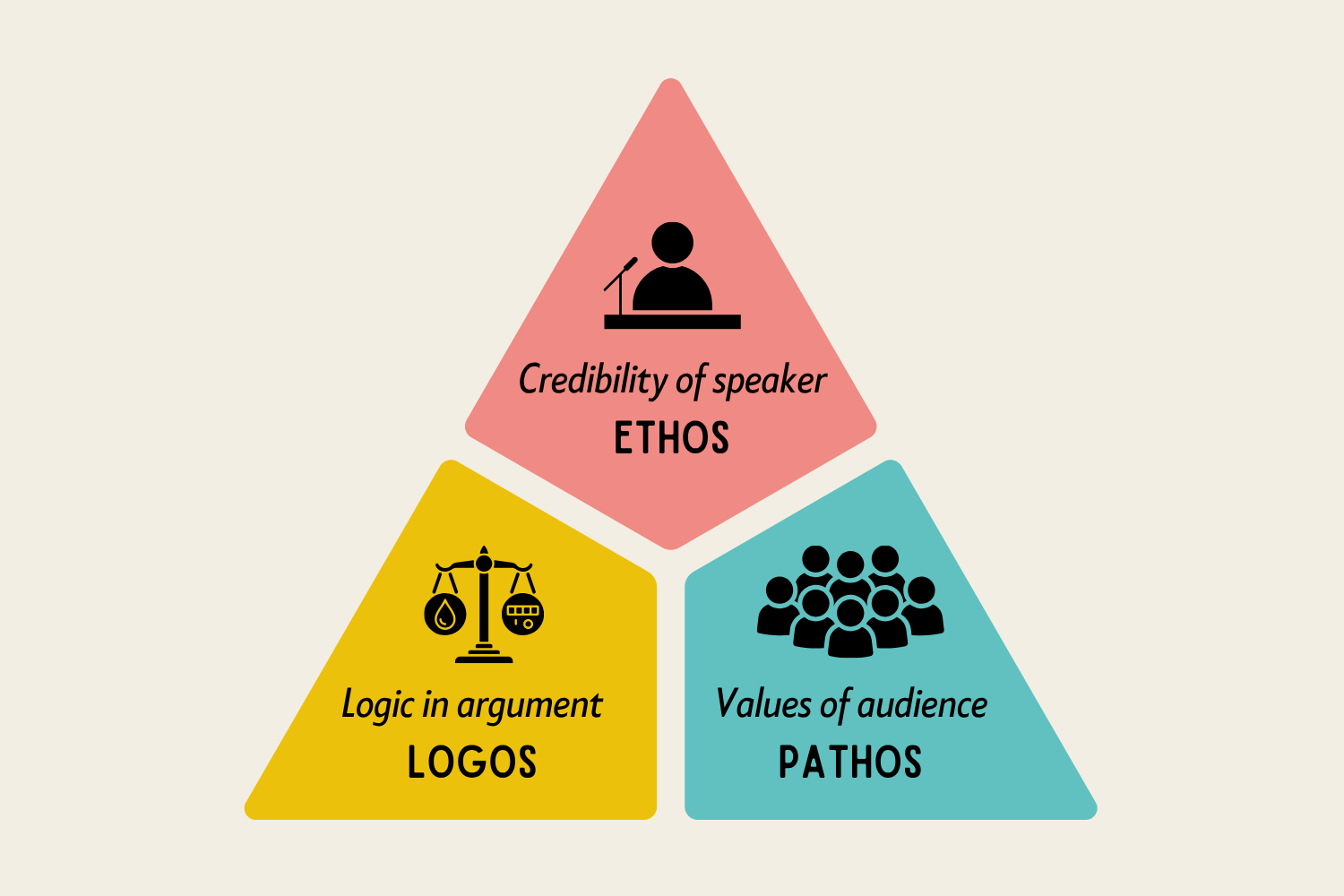
Aristotle's Rhetoric
Aristotle's persuasion rests on three appeals — ethos (credibility), pathos (emotion), logos (logic) — use all three or your message won't land.
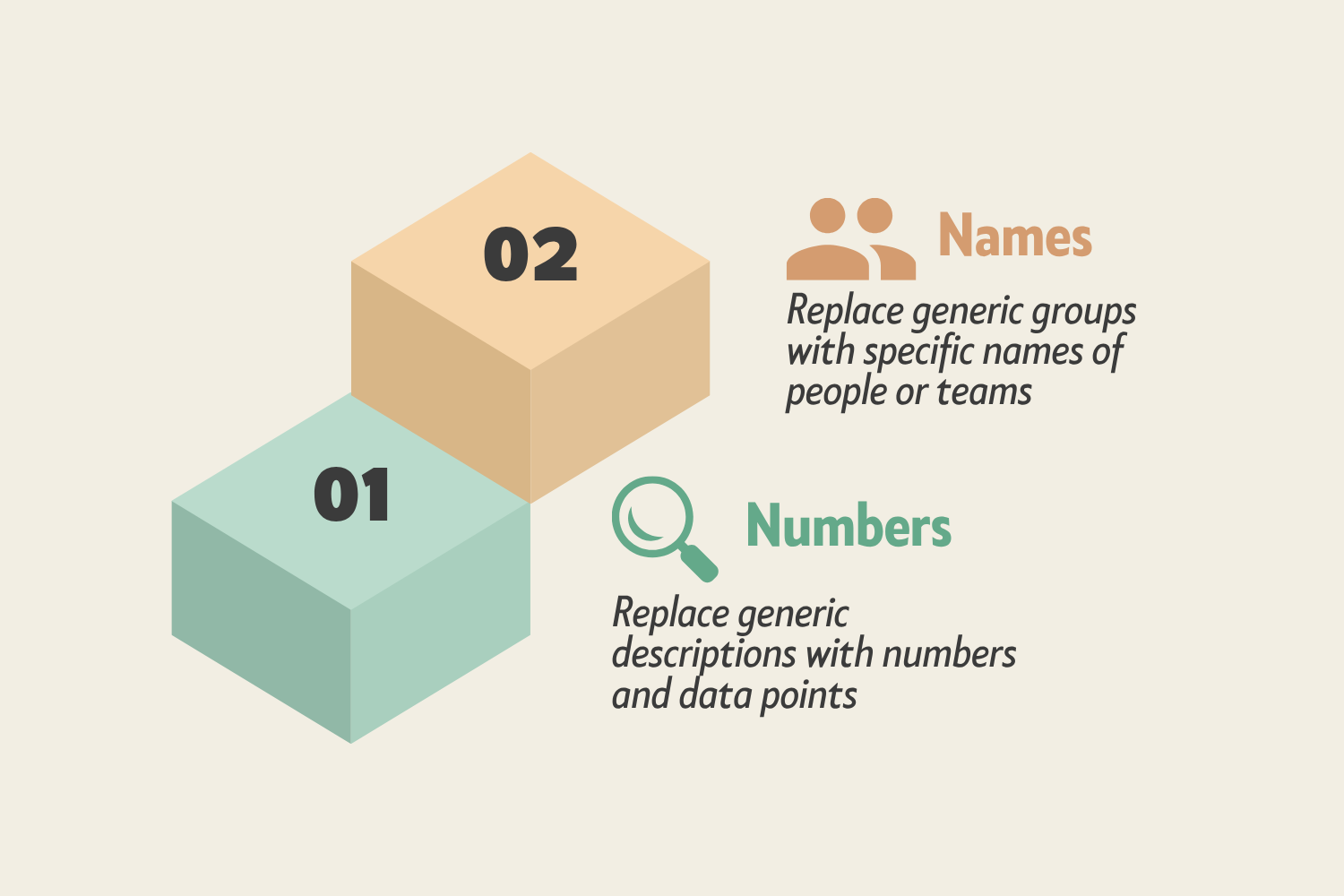
Cleverness to Clarity
Drop corporate jargon for clear, direct language — three reasons (trust, speed, growth) and the 2N Formula for doing it.

STAR Technique
Turn an experience into evidence in four parts — Situation, Task, Action, Result — to advocate for your people, make the case.
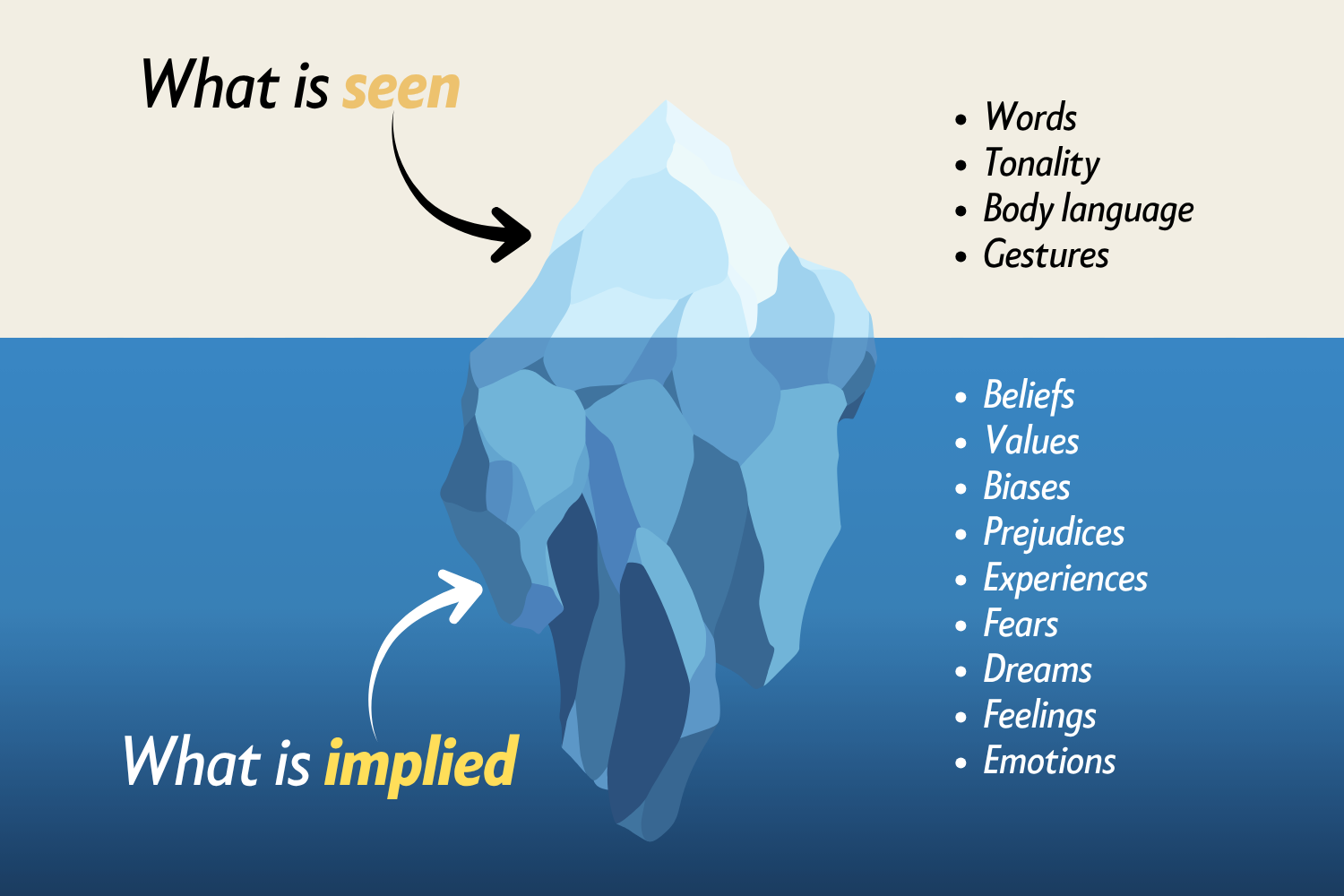
The Hemingway Iceberg Technique
A communication method from Hemingway's writing — say less, cut the padding, use specifics — letting what's unsaid carry the weight.
The Hero's Journey
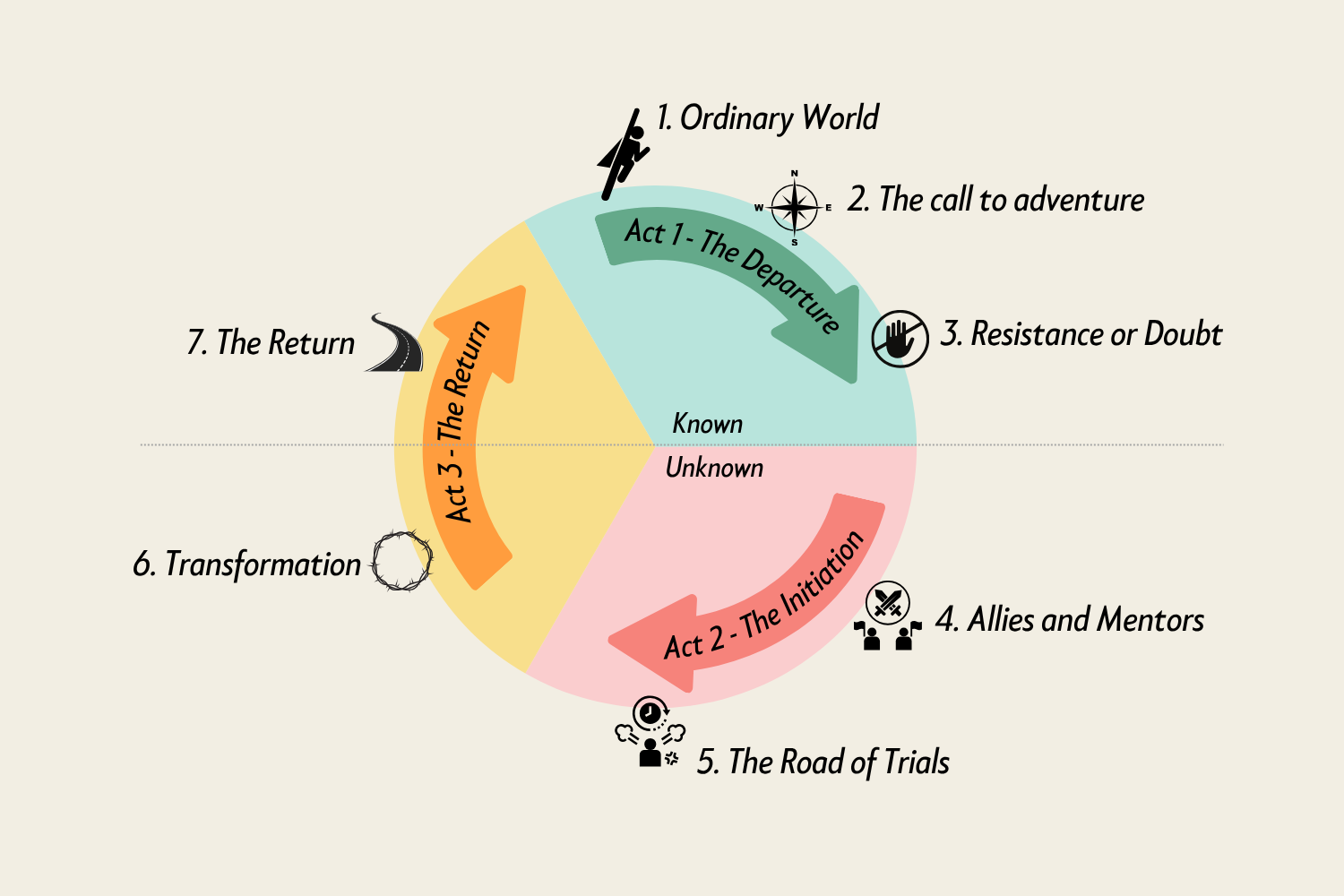
Joseph Campbell's story arc — struggle, growth, return — turned into a structure for leadership storytelling people remember and act on.

The Influence Flywheel
A model for building influence without authority — five reinforcing spokes: Credibility, Connection, Clarity, Communication, Courage — building on each other.
The Pyramid Principle
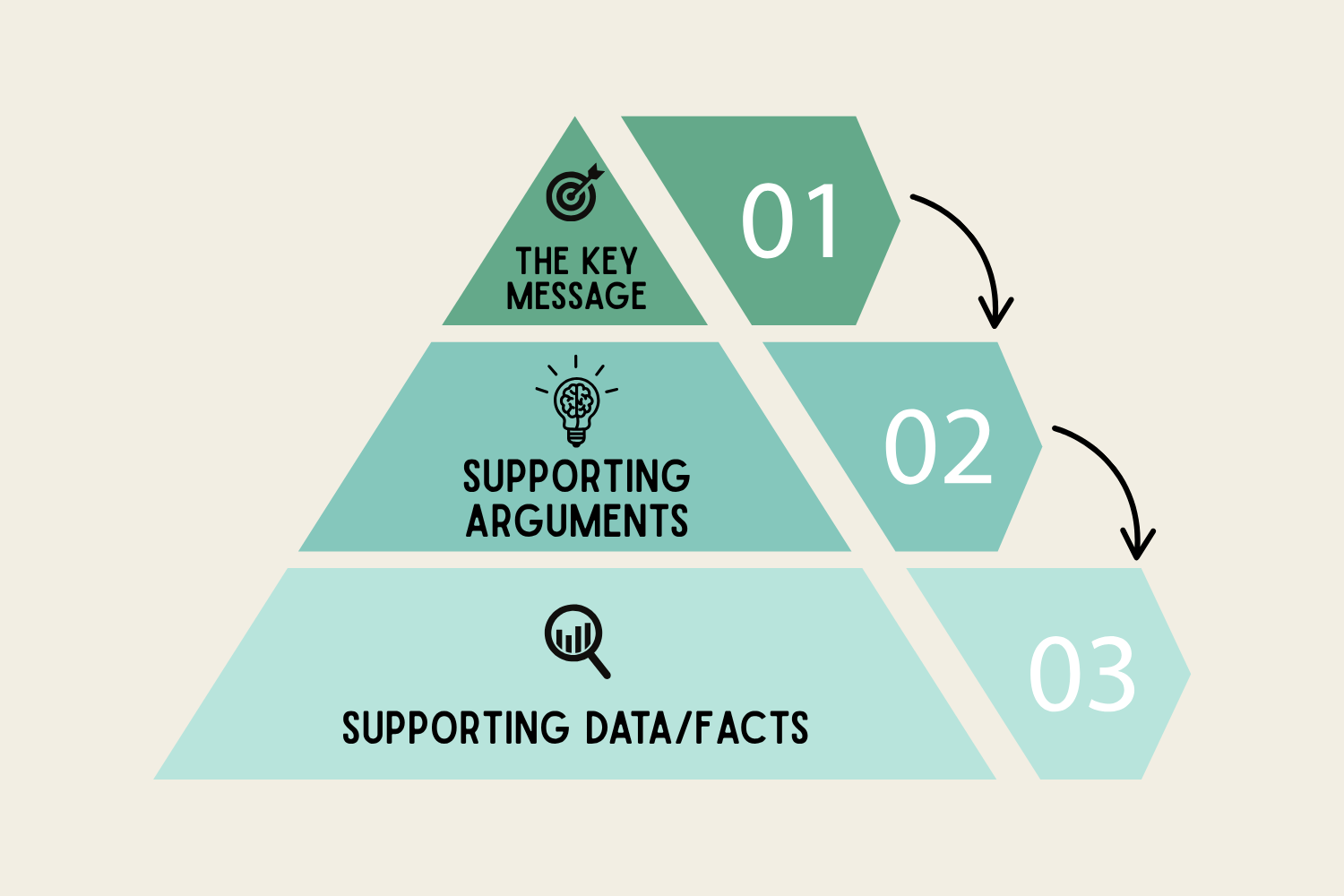
Barbara Minto's McKinsey-born rule: lead with your conclusion, back it with 2 to 4 grouped arguments, support each with evidence.
The Three Stages of Communication
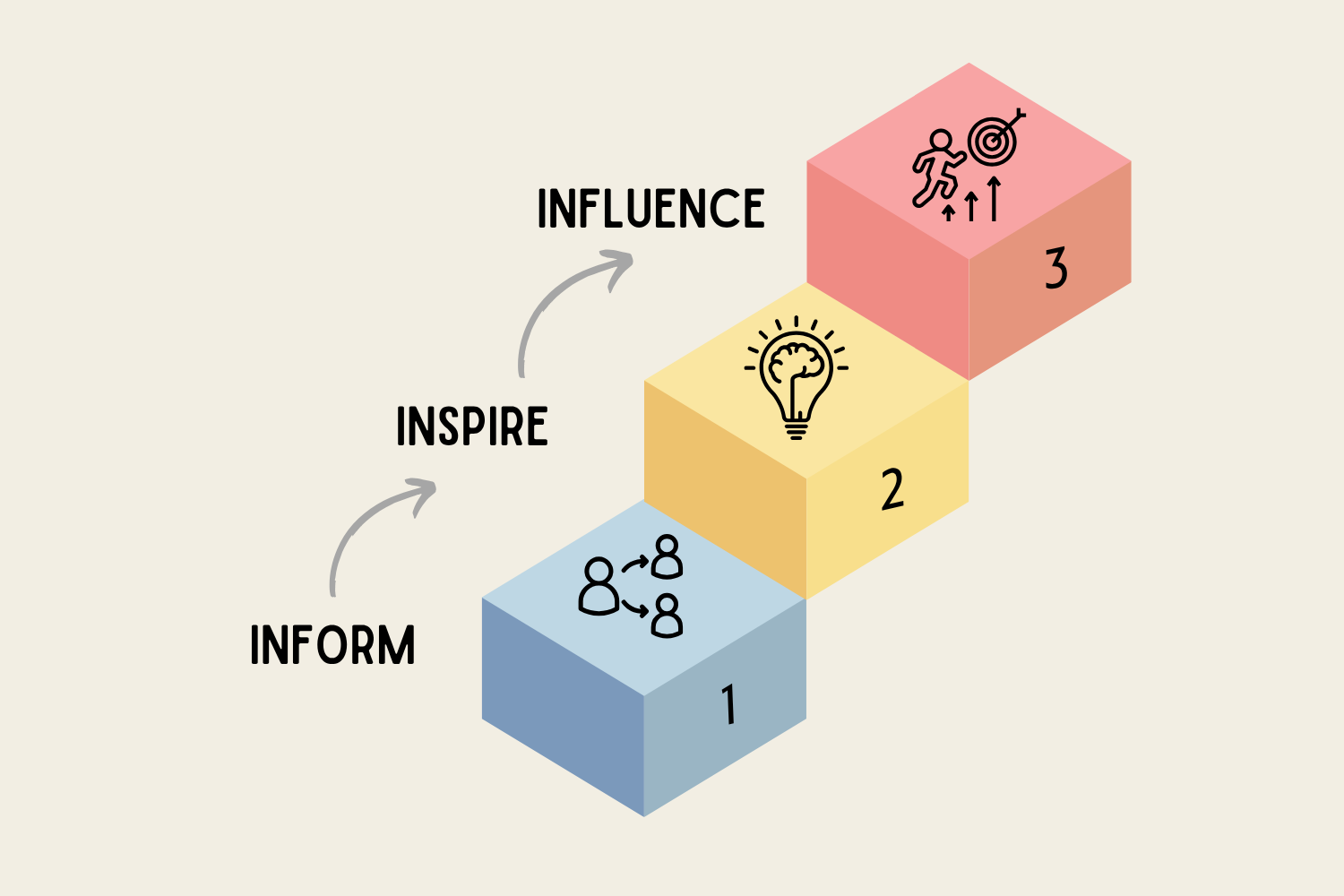
Leadership communication runs in three stages — Inform (facts), Inspire (emotion), Influence (action) — the one you're stuck in reveals the problem.