Aristotle's Rhetoric
Aristotle's persuasion rests on three appeals — ethos (credibility), pathos (emotion), logos (logic) — use all three or your message won't land.
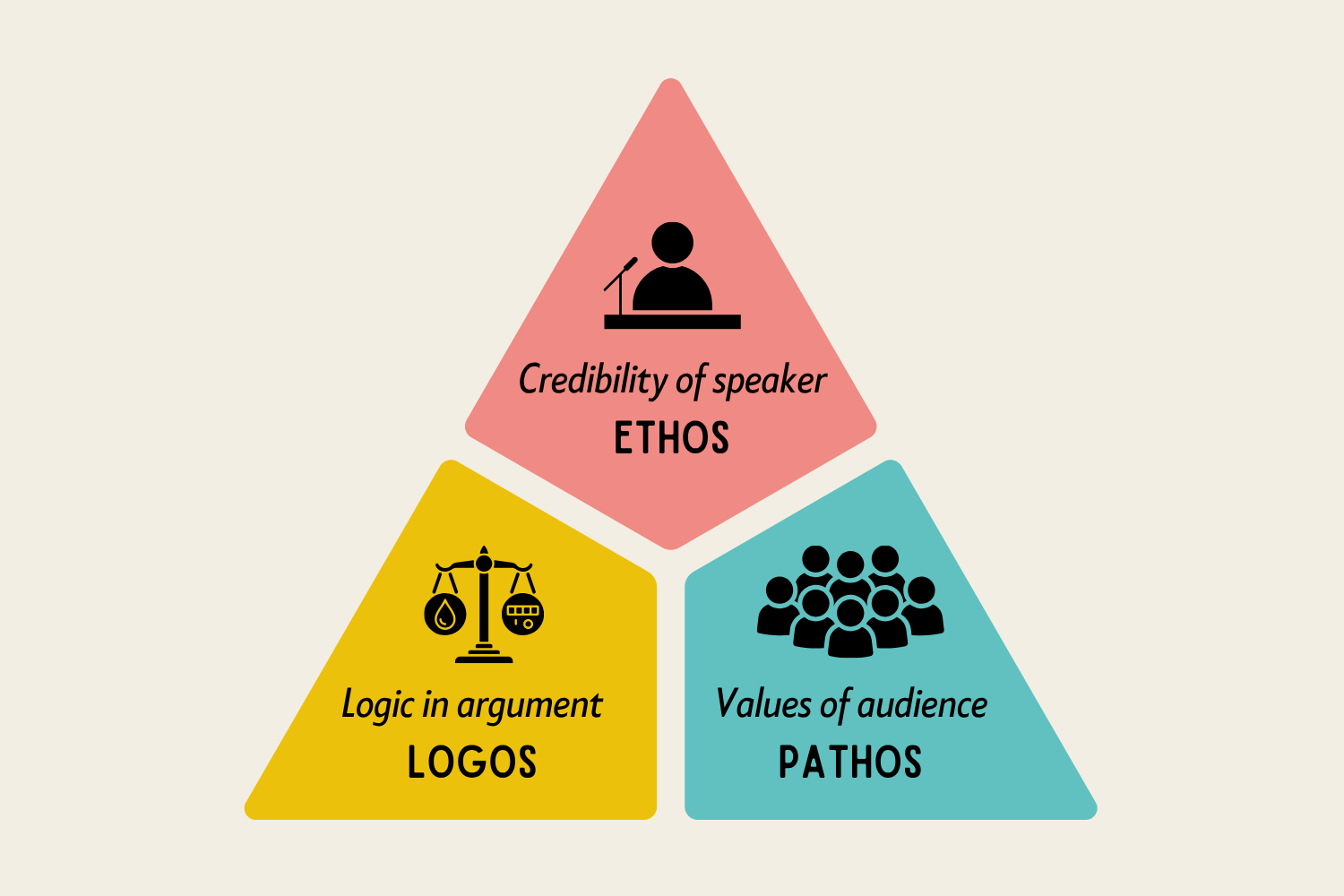 Find this on the mind-map
Introduction
Aristotle was born around 384 B.C., studied under Plato, and later taught Alexander the Great. His lectures on persuasion were compiled by his students into a book simply titled Rhetoric — and his contemporaries dismissed the ideas in it as immoral, unworthy of serious study. That criticism hasn't aged well; the framework has outlasted it by more than two thousand years.
Aristotle's core argument was that persuasion isn't a bag of verbal tricks. It's a discipline — understanding your audience, thinking clearly, and making a message actually land.
How It Works
The model is usually drawn as a triangle, with one appeal sitting at each corner.
| Appeal | Appeals to | The question your audience is silently asking |
|---|---|---|
| Ethos | Your credibility | Why should I trust you? |
| Pathos | The audience's values | Why should I care? |
| Logos | The logic of the argument | Why does this make sense? |
Ethos is your standing as the speaker — expertise, track record, character, genuine conviction. Modern research backs up the old claim: a speaker's credibility and experience genuinely shape whether an argument lands. It's why an established firm raises money more easily than an unknown startup, and why lesser-known TED speakers open with their background before they open their case.
Pathos is the audience's side of the triangle — what they value, fear, and hope for. People are emotional decision-makers, so your message needs to be tuned to the room. A tactical deep dive is wasted on an executive audience, and a strategy narrative is wasted on a junior engineer.
Logos is the argument itself — the facts, the evidence, the structure, and the order you deliver it in. It covers what you say, what you show, and the sequence you show it in.
None of the three work alone. Ethos opens the door, pathos invites the audience in, and logos makes them stay. Pull one out and the whole message wobbles — too emotional and people distrust it, too logical and they stop caring, credible but dry and they stop listening altogether.
Why It Matters for Leaders
Persuasion is one of the highest-value skills you can have as a leader, and one of the most commonly missing. You've probably watched a manager with a genuinely good idea lose the room because he leaned too hard on data and charts — and the meeting ends in polite nods and a promise to revisit next quarter.
The triangle explains exactly why that happens. A slide deck full of evidence is pure logos. It answers a question your audience hasn't reached yet, because they're still deciding whether to trust you and whether the problem even matters to them.
You'll run into this in the two situations you face most often. Pitching leadership for budget works when you open with a track record of delivered upgrades (ethos), name the frustration and the risk of losing people that the current system creates (pathos), and close with hard numbers — processing time cut by 40 percent, payback inside 18 months (logos). Rallying a team into a hard project works the same way: acknowledge you've been in their shoes, connect the work to pride and lasting impact, then lay out the phases and the milestones.
The triangle also works as a diagnostic. When you keep losing arguments you should be winning, one corner is usually starved. Naming which one turns a vague feeling of "I'm not getting through" into something specific you can actually fix before the next meeting.
What to do next
Test your knowledge of Aristotle's Rhetoric
Practice Aristotle's Rhetoric
Apply Aristotle's Rhetoric to a real situation
Skills related to Aristotle's Rhetoric

Communication & Influence
Using narrative, story, and structure to inspire, align, and actually move people, not just inform them.

Political Savvy
Reading the relationships, incentives, and unwritten rules that actually decide whether your idea gets adopted, not just whether it's the right one.
Frameworks related to Aristotle's Rhetoric
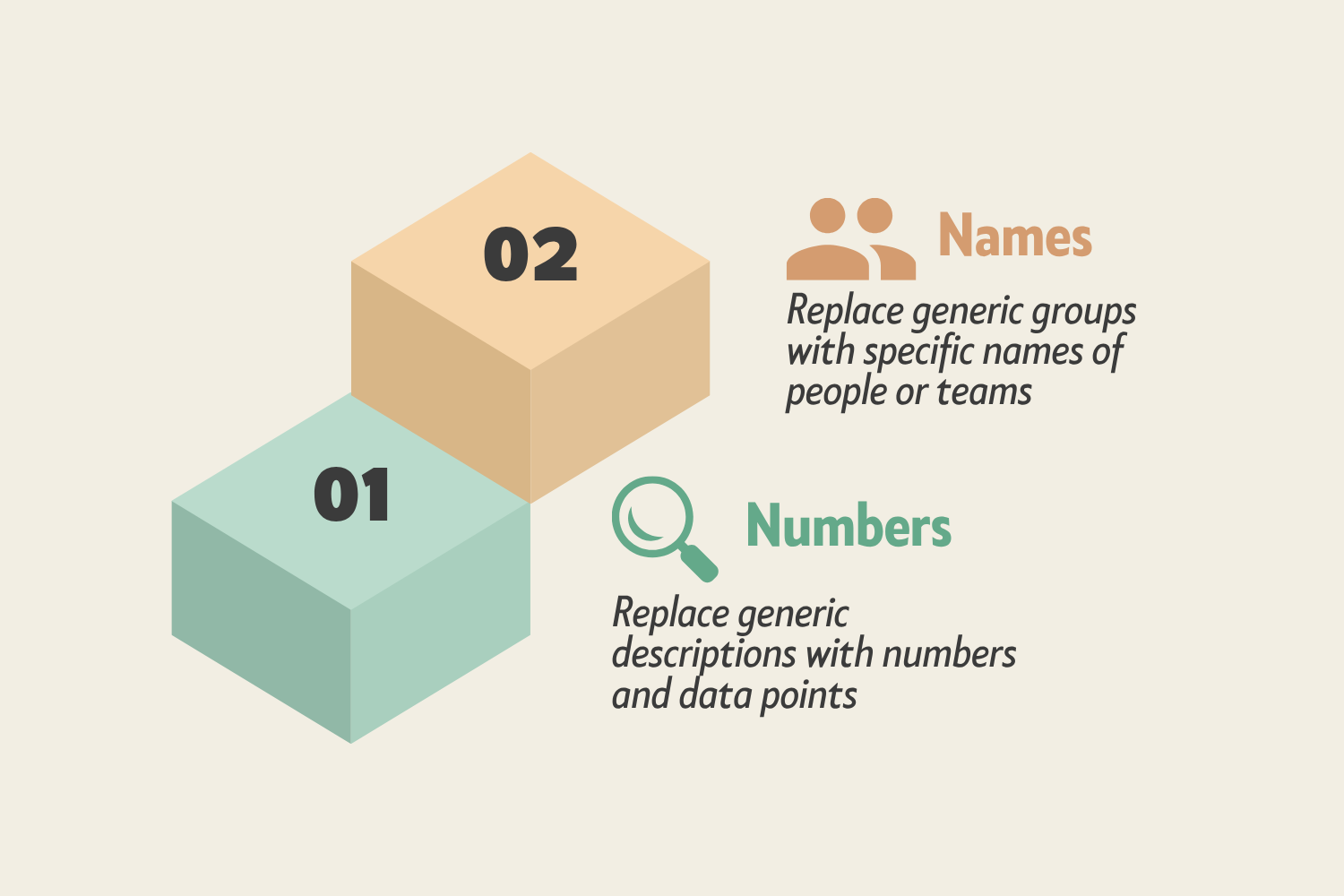
Cleverness to Clarity
Drop corporate jargon for clear, direct language — three reasons (trust, speed, growth) and the 2N Formula for doing it.

STAR Technique
Turn an experience into evidence in four parts — Situation, Task, Action, Result — to advocate for your people, make the case.
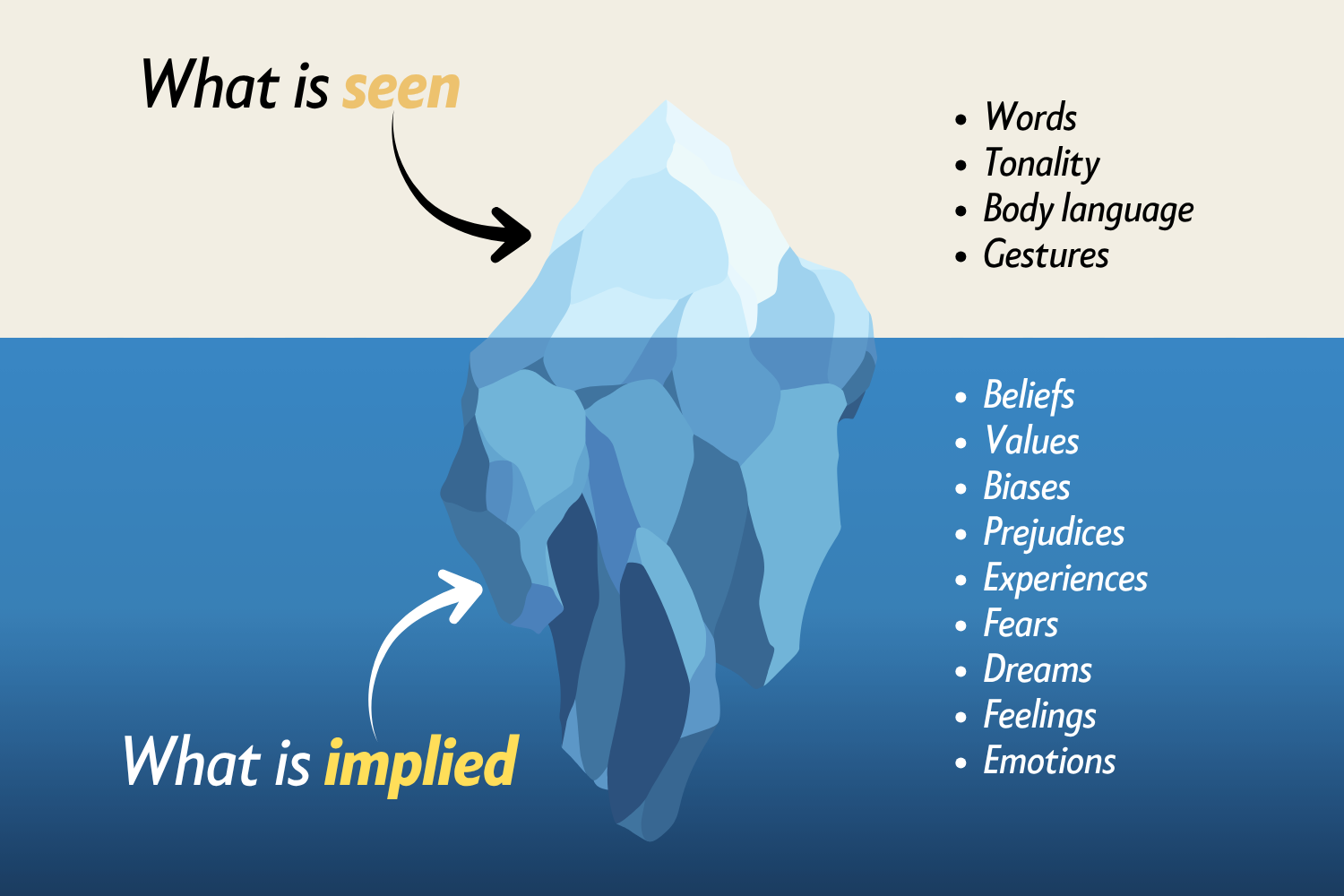
The Hemingway Iceberg Technique
A communication method from Hemingway's writing — say less, cut the padding, use specifics — letting what's unsaid carry the weight.
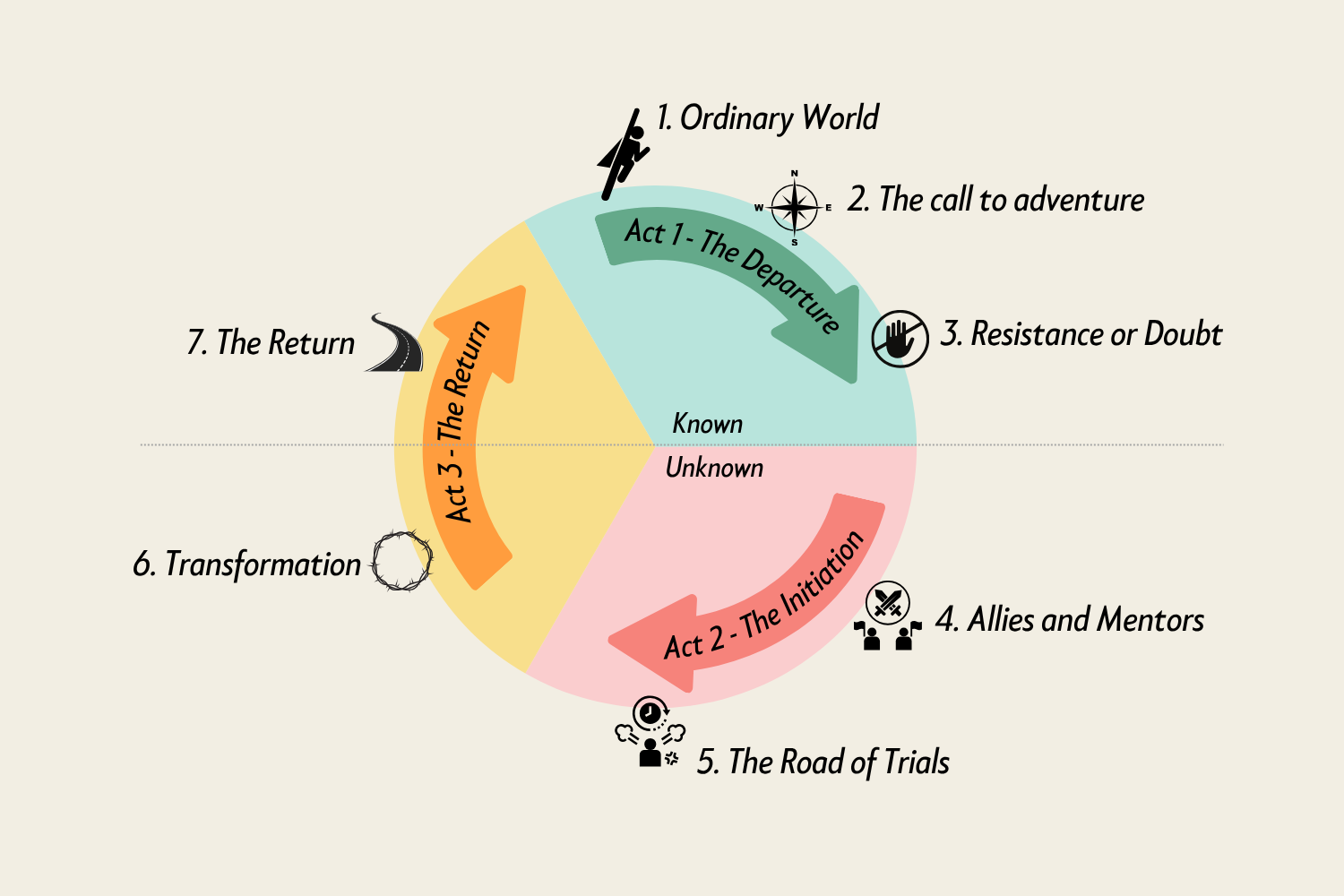
The Hero's Journey
Joseph Campbell's story arc — struggle, growth, return — turned into a structure for leadership storytelling people remember and act on.

The Influence Flywheel
A model for building influence without authority — five reinforcing spokes: Credibility, Connection, Clarity, Communication, Courage — building on each other.

The Power-Interest Grid
Plot each person by power and interest to know who to manage closely, who to keep happy, who needs updates.
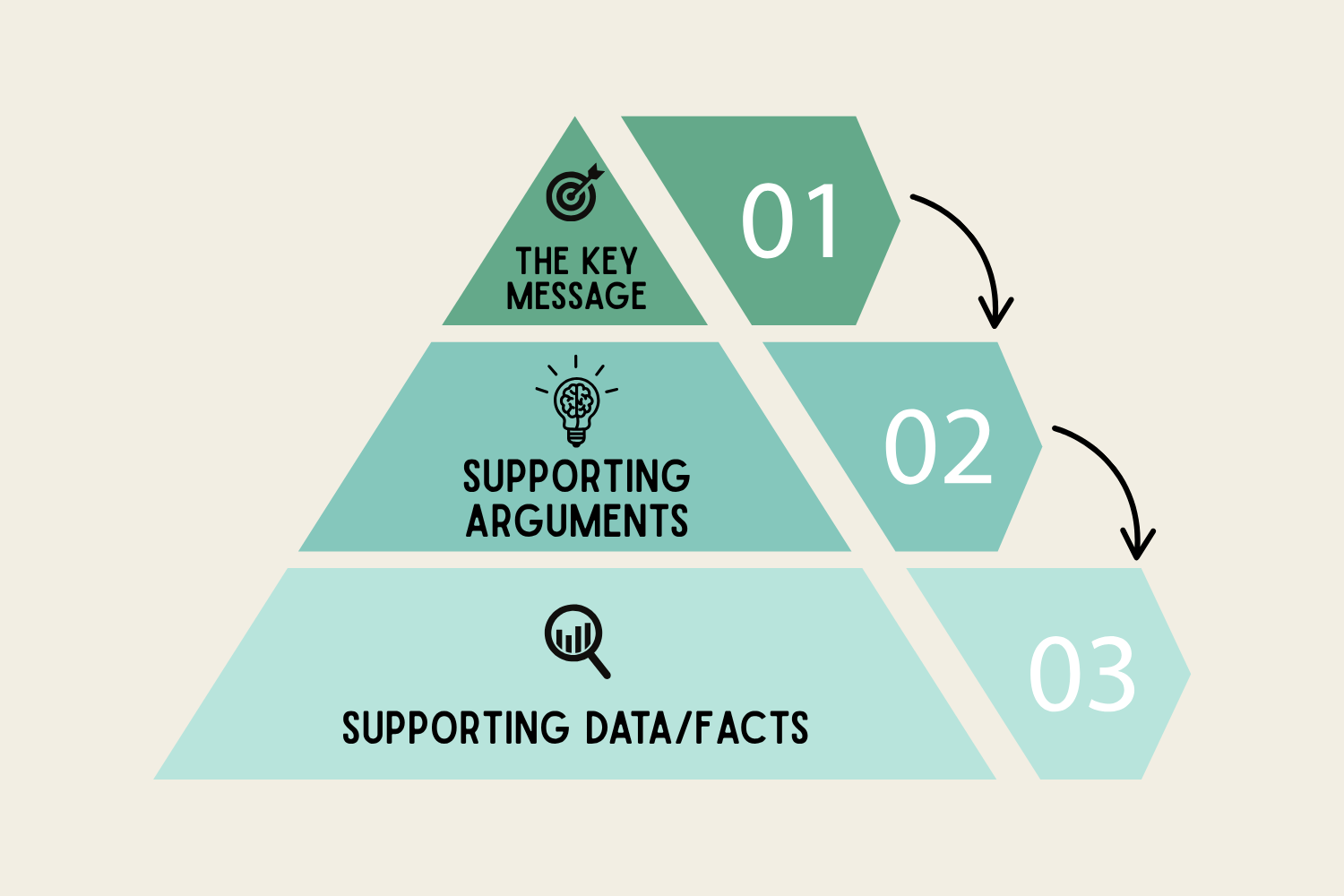
The Pyramid Principle
Barbara Minto's McKinsey-born rule: lead with your conclusion, back it with 2 to 4 grouped arguments, support each with evidence.
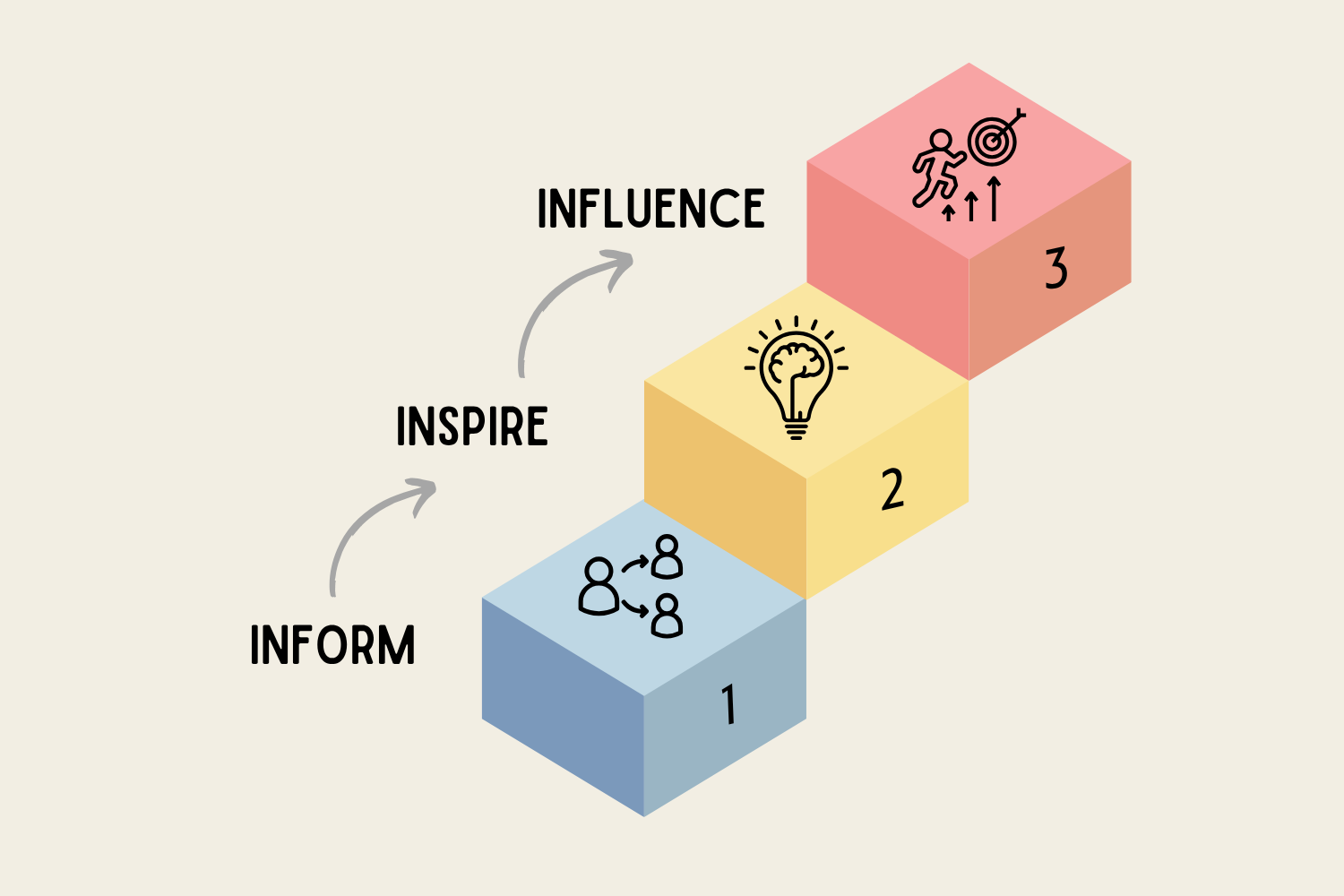
The Three Stages of Communication
Leadership communication runs in three stages — Inform (facts), Inspire (emotion), Influence (action) — the one you're stuck in reveals the problem.
Books related to Aristotle's Rhetoric

Crucial Conversations
A manager's guide to the book about the story you make up before you open your mouth. It's not really a book about talking, but about the half-second before you talk that decides whether the conversation goes well or badly.

Difficult Conversations
The Harvard Negotiation Project's case that every hard conversation you're avoiding is actually three conversations tangled together: a dispute over facts, a buried argument about feelings, and a quiet question about identity, and most people only ever engage the first one.

Games People Play
The psychiatrist who invented Transactional Analysis, explaining why so many conversations at work are really scripted performances with a hidden payoff. It's a guide to spotting the game before you're cast in a role you didn't agree to.

Getting to Yes
The original Harvard Negotiation Project playbook. Negotiate on interests and objective standards instead of trading positions back and forth, and you stop needing to choose between being "nice" and getting a good outcome.

Give and Take
Adam Grant's organizational-psychology case that how you handle reciprocity, giving, taking, or matching, predicts long-run success better than talent does, as long as you give the right way.

Good Leaders Ask Great Questions
John Maxwell's case that the single clearest sign a leader has stopped growing is that they've stopped asking real questions, and that the habit of asking, not the gift of answering, is what keeps a leader's judgment sharp over time.

How to Win Friends and Influence People
The original relationship-building classic, decades before "emotional intelligence" had a name. Carnegie's bet is that nearly every influence problem is actually an ego-management problem, yours and theirs.

Influence
A social psychologist's field guide to the handful of automatic triggers that make people say yes, written so you can recognize them when they're used on you, and use them honestly when you're the one asking.

Leadership is Language
David Marquet's argument, built from his time commanding a nuclear submarine, that the exact words a leader habitually uses either keep an organization stuck in command-and-control execution mode or genuinely open it up to better thinking. Most leaders have no idea which one their default language is doing.

Made to Stick
Why urban legends, conspiracy theories, and your most forgettable all-hands deck follow completely different rules, and the six ingredients Chip and Dan Heath found in every idea that actually sticks in people's heads, whether or not it deserves to.

Never Split the Difference
A former FBI lead hostage negotiator's case against "splitting the difference," negotiation isn't a logic problem you solve at the table, it's an emotional one you solve before you ever get there.

Quiet
Susan Cain's case against the modern workplace's "Extrovert Ideal": the unexamined assumption that the loudest, fastest-talking, most group-comfortable person in the room is automatically the most capable one, and what gets lost, specifically, when organizations build around that assumption.

Radical Candor
Kim Scott's case that most managers who avoid giving hard feedback think they're being kind, and are actually doing the least kind thing possible, because withheld feedback doesn't disappear, it just shows up later as a surprise.

Surrounded by Idiots
A blunt, color-coded field guide to why the person across the table from you seems to be speaking a different language, because, behaviorally, they basically are.

The 16 Undeniable Laws of Communication
John Maxwell's case that communication is not a personality trait some leaders are simply born with, it's sixteen learnable, named laws, grouped around who's speaking, what's said, how it's said, when it's said, and why it's said.

The 48 Laws of Power
Robert Greene's amoral compendium of how power actually moves through organizations and courts, stripped of any pretense that fairness or merit is what decides who wins. Useful as a decoder, dangerous as a playbook.

The 7 Habits of Highly Effective People
Stephen Covey's classic, read through a modern-manager lens. Many of the ideas taught today as "new" leadership frameworks were already captured here decades ago.