Rebel Ideas
Matthew Syed's case that the smartest team in the room is rarely the one stacked with the highest individual IQs, it's the one with the widest range of genuinely different ways of seeing the same problem. A pointed argument against hiring people who think like you, no matter how impressive they are.
 Find this on the mind-map
Introduction
Rebel Ideas makes an uncomfortable claim: a team of brilliant people who all think alike is, collectively, less intelligent than a team of competent people who see the problem from genuinely different angles. Matthew Syed's real subject isn't diversity as a moral good. It's diversity as a cognitive technology. Teams fail not because they lack talent, but because they lack the range of perspectives needed to see their own blind spots.
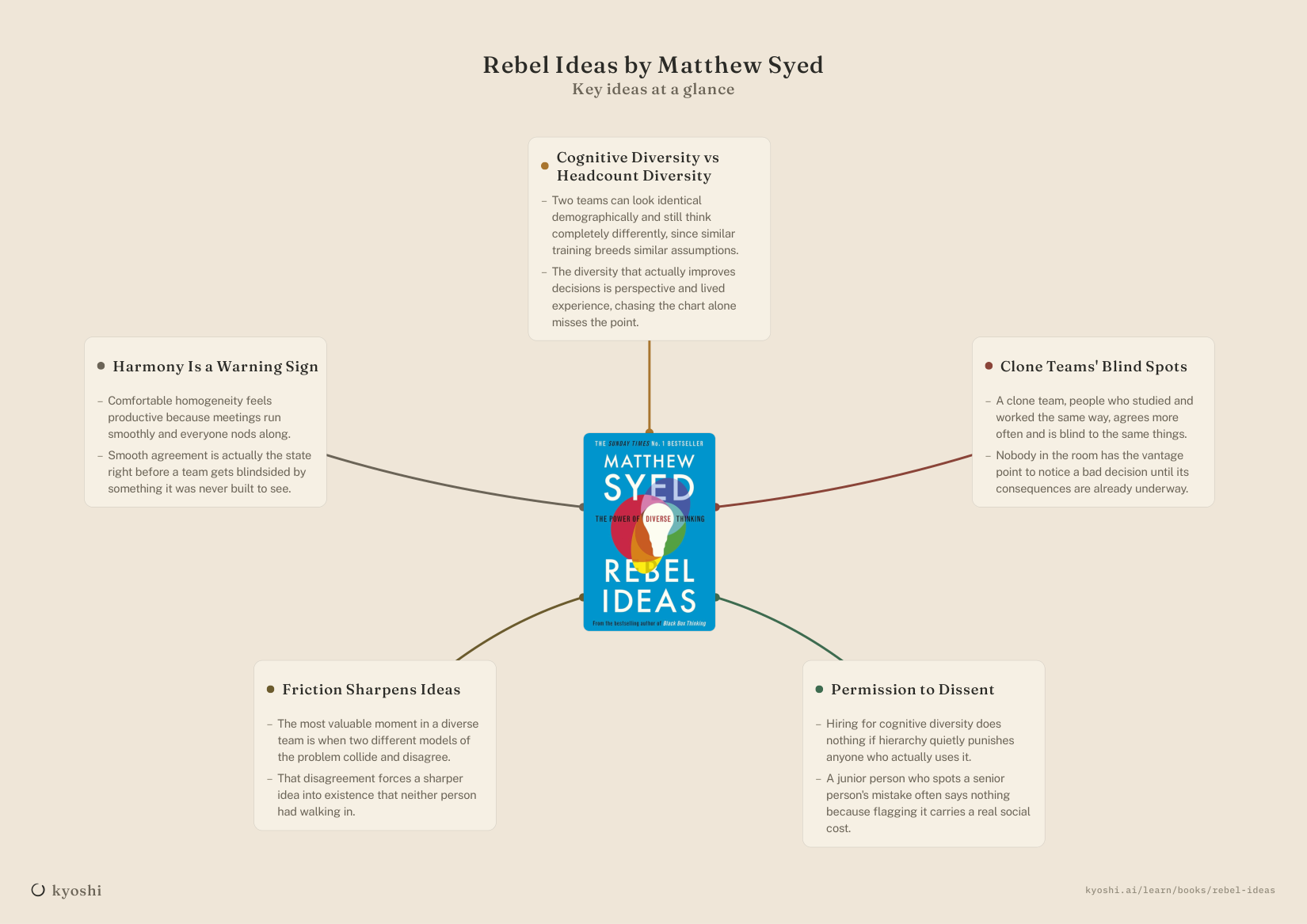
Cognitive Diversity Is Not the Same as Headcount Diversity
Two teams can look identical on a demographic chart and still differ enormously in how they actually think, because people with the same training, the same career path, and the same professional culture tend to converge on the same assumptions regardless of their backgrounds. The diversity that actually improves decisions is diversity of perspective, training, and lived experience: who notices what, who questions what, who's even capable of spotting a given blind spot. Demographic diversity often correlates with this, but it isn't the same thing, and chasing the chart without chasing the thinking misses the point.
Clone Teams Miss What They're Structurally Unable to See
A "clone team" (people who studied the same things, worked the same jobs, moved through the same filters to get in the room) doesn't just agree more often. It's blind to the same things, in the same places, for the same reasons. The danger isn't that clone teams make bad individual decisions. It's that nobody in the room has the vantage point to notice the decision is bad until the consequences are already underway. Picture a product team where every member came up through the same three companies and the same elite engineering programs: they'll optimize brilliantly for the failure modes they all learned to watch for, and miss entirely the one nobody on the team was ever trained to see.
Rebels Need Permission to Dissent, Not Just a Seat at the Table
Hiring for cognitive diversity solves nothing if the organization's hierarchy punishes anyone who uses it, without ever announcing that it does. Status differences train people to defer. A junior person who spots a senior person's mistake usually says nothing, not because they lack the insight, but because flagging it carries a real social cost. Syed's point: diverse perspectives only pay off if the culture actively rewards voicing them, especially upward. A team that hired for difference and then built a culture where disagreeing with the most senior person in the room is a career risk has bought the diversity and thrown away the return on it.
Friction Produces Better Ideas Than Harmony Does
The most valuable moment in a diverse team isn't the meeting where everyone nods along. It's the one where two people with genuinely different models of the problem disagree, and the disagreement itself forces a sharper idea into existence that neither of them had walking in. Comfortable homogeneity feels productive because meetings run smoothly. It's actually the more dangerous state, because smooth agreement is what a team looks like right before it gets blindsided by something it was never built to see.
Putting It Together
The argument runs in a simple line: hire for genuine cognitive difference, not just a diverse-looking roster; recognize that status and hierarchy will suppress that difference unless you deliberately counter it; and treat the resulting friction as the point, not a problem to smooth over. A team that does all three sees more of the problem than any individual member could. That was Syed's whole case for why the smartest room isn't the one with the highest average IQ.
Why It Matters for Leaders
The uncomfortable part of this book isn't the idea that different perspectives help. Most leaders already agree with that in the abstract. It's that a team can look diverse on paper and still be a clone team underneath, because people converge on the same assumptions once they've been through the same training, the same career ladder, and the same kind of company. Checking your hiring chart for demographic variety tells you almost nothing about whether anyone in the room can actually catch the mistake the rest of you are all primed to miss.
The practical move is to stop asking "do we have diverse people" and start asking "who on this team would have caught our last three mistakes, and why didn't they." If the honest answer is nobody, that's not bad luck, it's a structural blind spot built into who you hired and how they all learned to think.
Syed's harder point is that hiring for difference accomplishes nothing if your culture still makes dissent expensive. A junior analyst who spots a senior leader's error and says nothing isn't lacking insight, they're doing simple math about what pushing back will cost them. If you want the range you hired for, you have to make it visibly, repeatedly safe to use, especially pointed upward, or you've paid for diversity and thrown away the return on it.
Picture a director, Oluwaseun, reviewing a go-to-market plan with his leadership team. Everyone in the room came up through the same two competitors and the same MBA program, and the meeting ends, as usual, in quick agreement. He starts asking the newest hire, a former operations manager with no marketing background, to speak first in every planning meeting before anyone senior weighs in. Three meetings in, she flags that the plan assumes a sales cycle that matches her old industry's, not this one's, a gap nobody else in the room had the vantage point to see.
What to do next
Reinforce your understanding of Rebel Ideas
Books related to Rebel Ideas

Inclusify
Stefanie Johnson's argument that most leaders miss inclusion by over-indexing on one of two basic human needs, belonging or uniqueness, and her six named archetypes for exactly how that imbalance shows up, from the "Meritocracy Manager" to the "White Knight."

Leaders Eat Last
Simon Sinek's case that leadership is a biological deal, not a rank. The people at the top give up safety and comfort first, so everyone below them doesn't have to spend their energy watching their back instead of doing the work.

Lean In
Sheryl Sandberg's argument that the barriers keeping women out of leadership are real on both sides: structural bias in how organizations operate, and self-imposed caution in how women are taught to see their own ambition. Fixing only one side leaves the other fully intact.

No Rules Rules
Netflix co-founder Reed Hastings, with culture researcher Erin Meyer, on why Netflix removed vacation policies, expense approvals, and most of the rulebook most companies treat as non-negotiable, and the two things that have to be true first, or the whole thing backfires.

The Culture Code
Daniel Coyle's reverse-engineering of highly successful groups: not through their strategy or talent, but through small, repeated signals that most leaders never notice they're sending, or failing to send.

The Culture Map
Erin Meyer's field guide to why a management style that works perfectly in one country reads as either rude or weak in another, and why "just be yourself" is actually terrible advice for anyone leading across cultures.

The Fearless Organization
Amy Edmondson's case that psychological safety isn't a soft perk for making people feel nice. It's a hard performance requirement, because teams without it make worse decisions, catch fewer errors, and learn slower than teams that have it.

The Person You Mean to Be
Dolly Chugh's case for giving up on being a "good person" (a fixed, defensive identity) in favor of becoming a "good-ish person": someone actively building toward better, who treats their own blind spots as something to work on instead of something to deny.

Tribal Leadership
A model for diagnosing a team's culture by literally listening to how people talk: five stages of "tribal" language, from "life sucks" to "life is great," and a surprisingly specific playbook for moving a team up one stage at a time.
Skills related to Rebel Ideas

Frameworks related to Rebel Ideas

IKEA Effect
You value things more when you helped build them — which is why a strategy handed to a team lands flat.
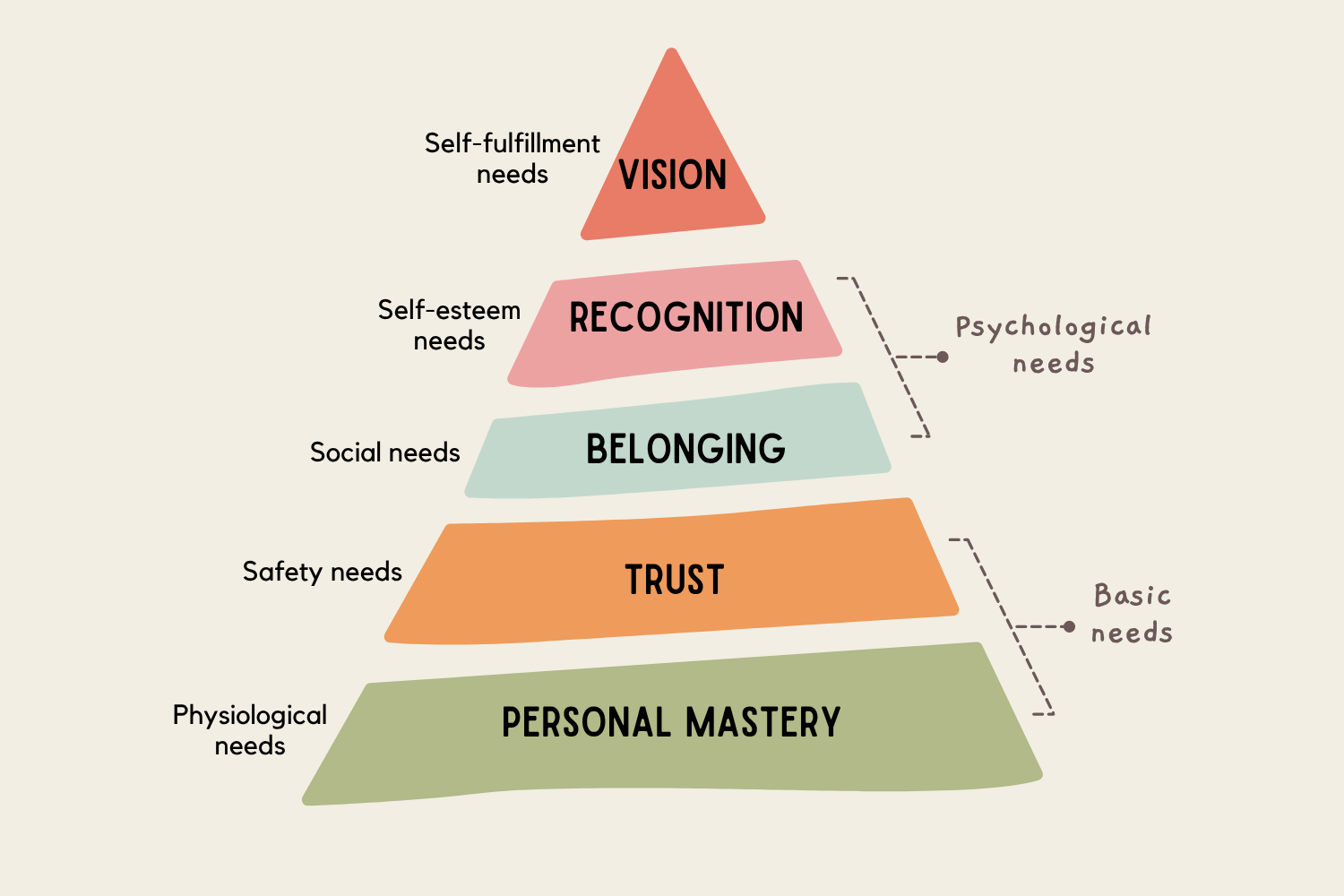
Maslow's Hierarchy of Needs
Abraham Maslow's five-level model of motivation, applied to leadership as a stack — mastery, trust, belonging, up through recognition and vision.
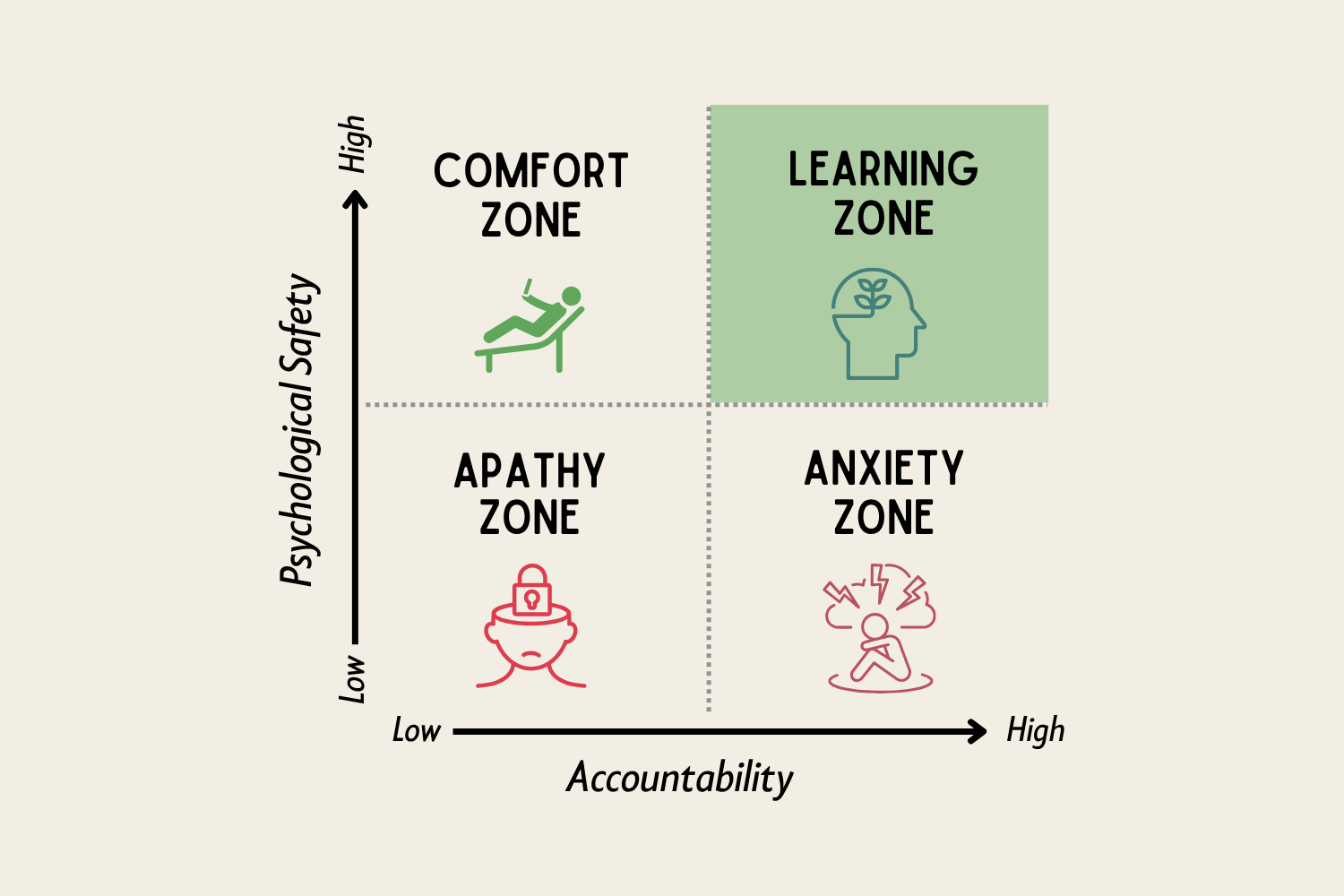
Psychological Safety
Amy Edmondson's finding that people must feel safe taking risks — a dumb question, a mistake — before a team can perform.

Spiral Dynamics
Eight color-coded value systems shaping what people care about at work — success, purpose, relationships — matched to stop guessing motivation.

The AI Culture Stack
Same AI tools and budget, wildly different results — the gap isn't the technology, it's three layers underneath: permission, fluency, judgment.

The Bannister Effect
One person breaking a barrier makes it stop being fixed for everyone else — break the unspoken belief in public first.
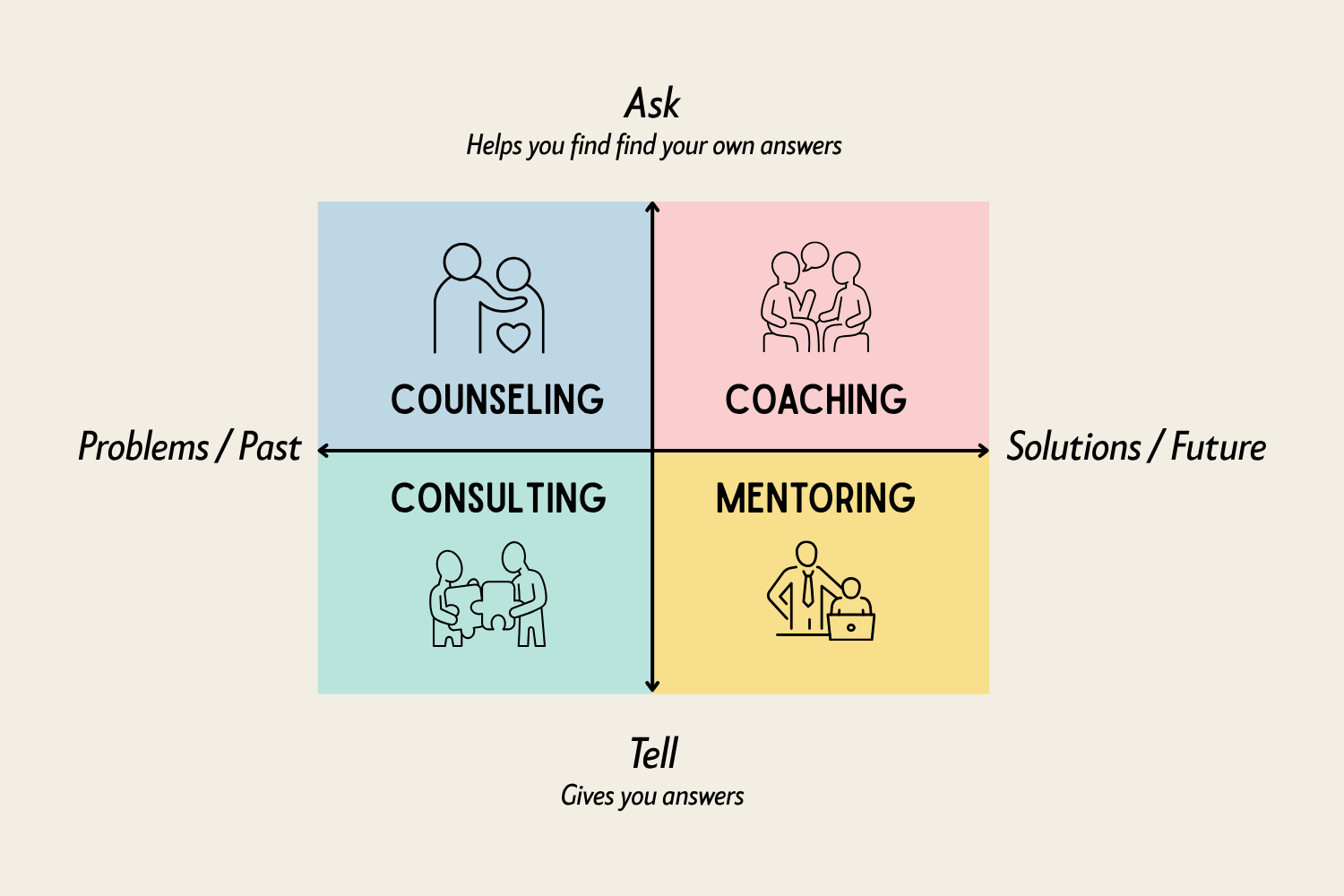
The Four Leadership Support Roles
A 2x2 separating four modes for helping someone — coaching, mentoring, counseling, consulting — plus a test for picking the right one.

The Inner Drive
A leadership take on Daniel Pink's *Drive* that turns three conditions for motivation — autonomy, mastery, purpose — into habits for 1:1s.
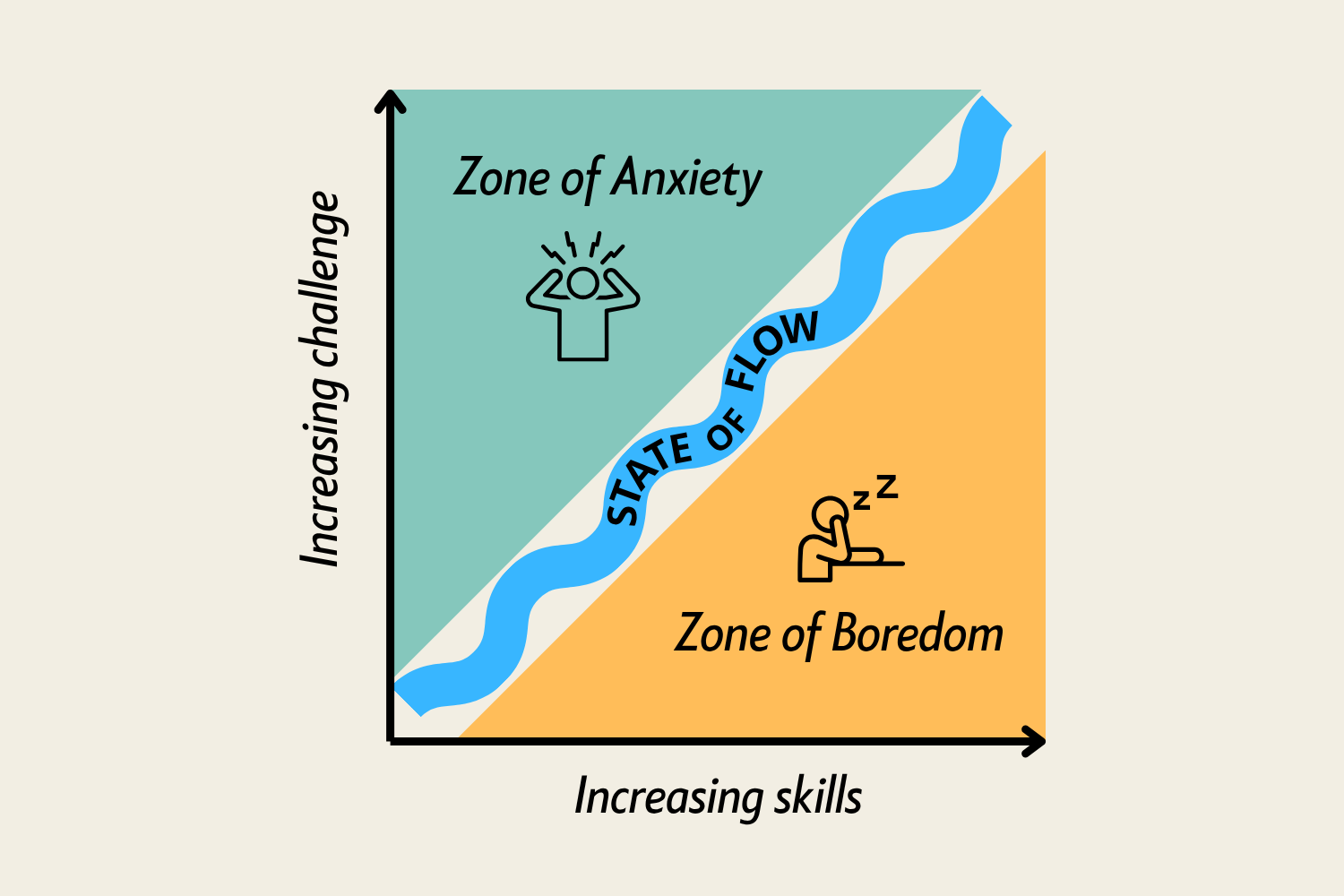
The State of Flow
The zone between anxiety and boredom, where challenge meets skill — your job is moving each person, with a different push.