The AI Culture Stack
Same AI tools and budget, wildly different results — the gap isn't the technology, it's three layers underneath: permission, fluency, judgment.
 Find this on the mind-map
Introduction
Gaurav Jain built this model after noticing something that didn't add up: teams with identical AI tools, identical budgets, and identical rollout plans kept landing in completely different places six months later.
The usual explanation is that AI adoption is an access problem — buy the tools, set up the subscriptions, run a few lunch-and-learns, hand out some prompt templates, and wait for the transformation. What actually happens is a small pocket of power users emerges — people who'd have figured it out anyway — while everyone else dabbles occasionally and drifts back to old habits. That's not a tools problem, and it's not really a people problem either. It's a culture problem, and building culture is your job as the leader.
How It Works
Think of your team's relationship with AI as a stack of three layers, each one resting on the layer below it.
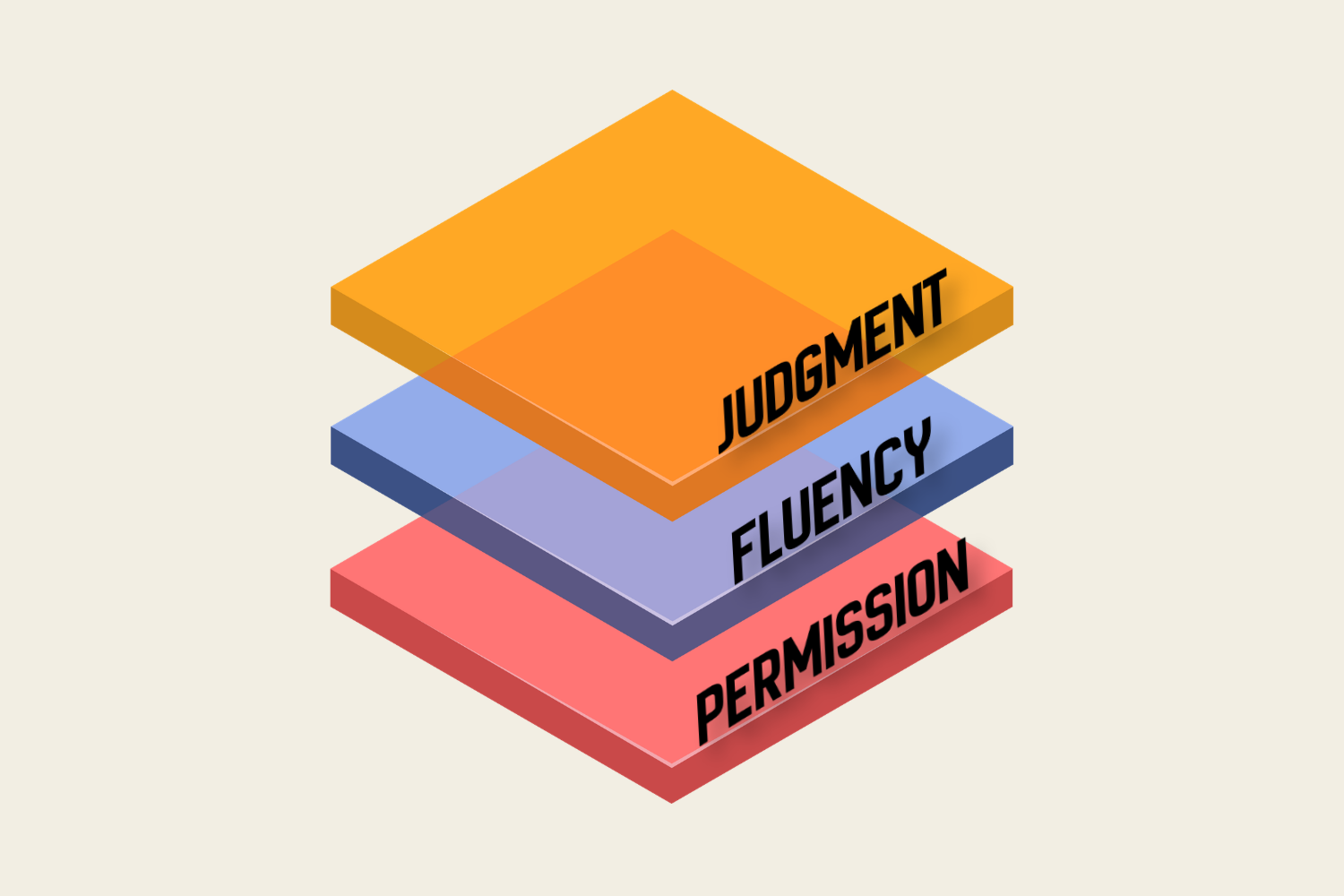
| Layer | What it is | What it looks like when it's missing |
|---|---|---|
| 3. Judgment (top) | Knowing when not to use AI, when to verify, when speed is costing you accuracy or trust | Unverified output ships as-is, critical thinking fades, the quality of thinking drops |
| 2. Fluency (middle) | Actually working with AI well: prompting effectively, pushing back on output, knowing when it needs rework, folding it into real workflow | High usage, mediocre results, output that gets copy-pasted without anyone trusting it |
| 1. Permission (base) | Feeling safe to experiment, to share an AI-assisted draft, to admit you don't know a tool yet | Thin adoption, AI used only for low-risk tasks nobody's watching |
Layer 1: Permission. Your people need to feel genuinely safe trying things — safe to experiment and have it flop, safe to share an AI-assisted draft without getting judged for not doing "the real work" themselves, safe to admit they haven't figured a tool out yet. Permission can't be a policy or a slide in a deck. It has to be felt, which means it comes from what you model and what you actually reward, not what you say at the all-hands.
Layer 2: Fluency. Access and fluency are two completely different things. Fluency is the ability to prompt well, push back on what comes out, tell a strong result from one that needs serious rework, and actually fold AI into a real workflow instead of treating it like a toy. You probably assume your team has this. Most teams don't have it evenly, and fluency is a skill — it needs to be developed on purpose, the same way any other skill does.
Layer 3: Judgment. Judgment means knowing when not to reach for AI — when to verify before you act, when a problem needs human input the model would completely miss, when the speed on offer is costing you accuracy, context, or trust. You can't teach judgment in a workshop. It only comes from experience, reflection, and doing it again and again.
Why It Matters for Leaders
This pattern is common, and it's expensive. Take two managers with similar team sizes, similar domains, and similar AI budgets — they can land in completely opposite places. One team runs parallel experiments it never would have attempted before, catches issues earlier through AI-assisted testing, and spends more time on hard thinking and less on mechanical grunt work. The other has thin adoption: a handful of people using AI for email drafts and boilerplate — stuff that saves minutes, not hours. The difference was never the technology. It's what you built around it.
Most leaders pour their investment into Layer 2 — tools, training, subscriptions, prompt libraries, demos at the all-hands. That's all fluency spending. Layer 1 gets skipped because permission feels soft and hard to point to. Layer 3 gets skipped because everyone's focused on shipping faster. What you end up with is a team that treats AI as a crutch instead of a lever.
The three layers fail in recognizable ways, and the fix is different for each one. Thin adoption despite good tools? That's a permission failure. Heavy usage with unremarkable output? That's a fluency failure. Fast output built on unverified AI summaries? That's a judgment failure. Get the layer wrong and you waste the budget — another training session does absolutely nothing for a team that doesn't feel safe experimenting in the first place.
There's a related point here about your own time, too. AI is now doing a lot of the summarizing and drafting that used to prove you were good at your job, which pushes your real value up into direction — deciding priorities, trade-offs, what not to do — and meaning — why the work matters, what your team stands for when things get hard. A team that delivers efficiently but feels hollow is usually short on that third thing, because when AI takes over the craft and the struggle, the human feel of the work goes with it.
What to do next
Test your knowledge of The AI Culture Stack
Apply The AI Culture Stack to a real situation
Skills related to The AI Culture Stack

Culture Building
Culture isn't the perks or the values on the wall, but what you tolerate, reward, and let slide.

Leading with AI
Knowing when to trust AI-generated work, when to dig into the reasoning behind it, and how to use it without letting your own judgment go soft.
Frameworks related to The AI Culture Stack

IKEA Effect
You value things more when you helped build them — which is why a strategy handed to a team lands flat.
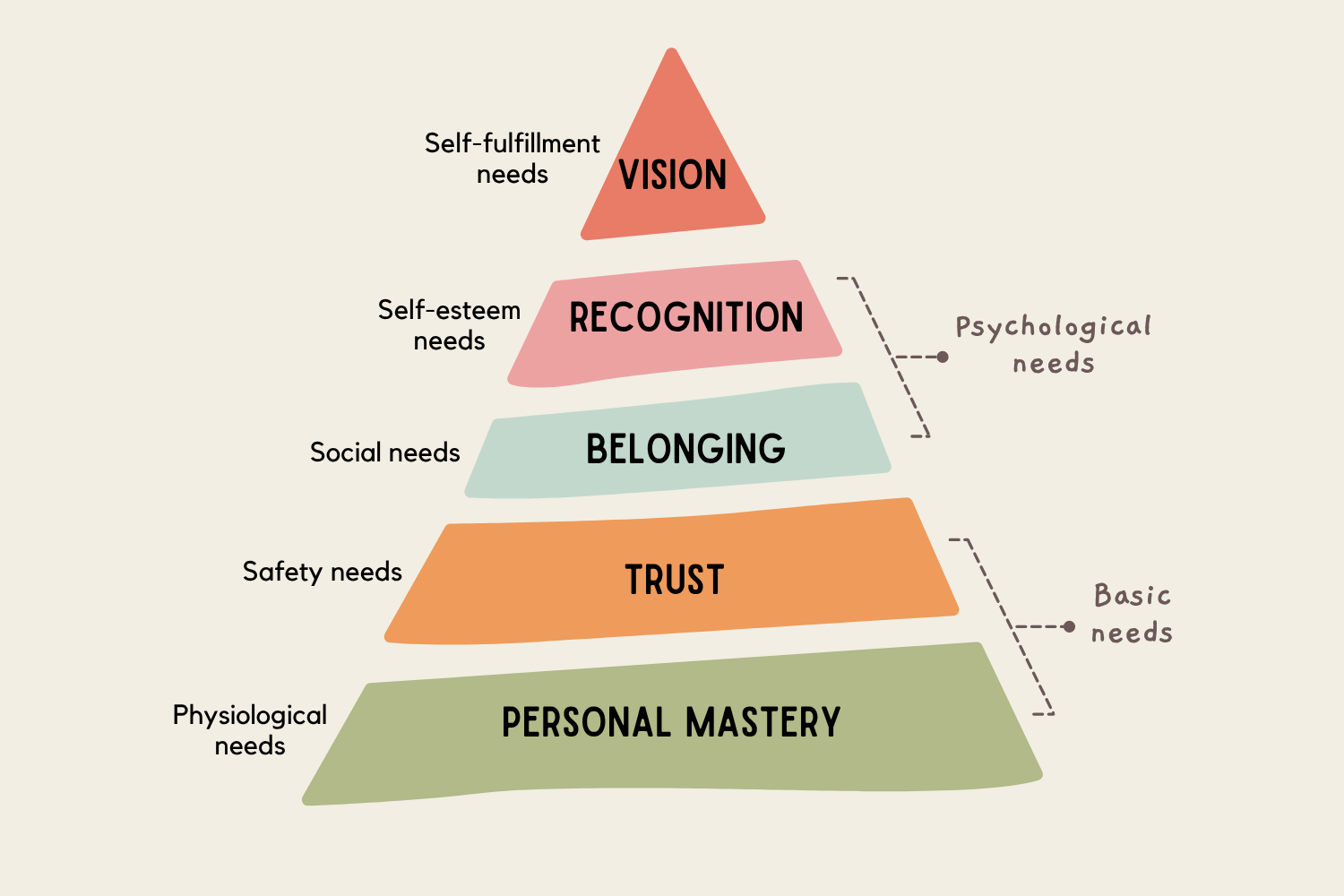
Maslow's Hierarchy of Needs
Abraham Maslow's five-level model of motivation, applied to leadership as a stack — mastery, trust, belonging, up through recognition and vision.
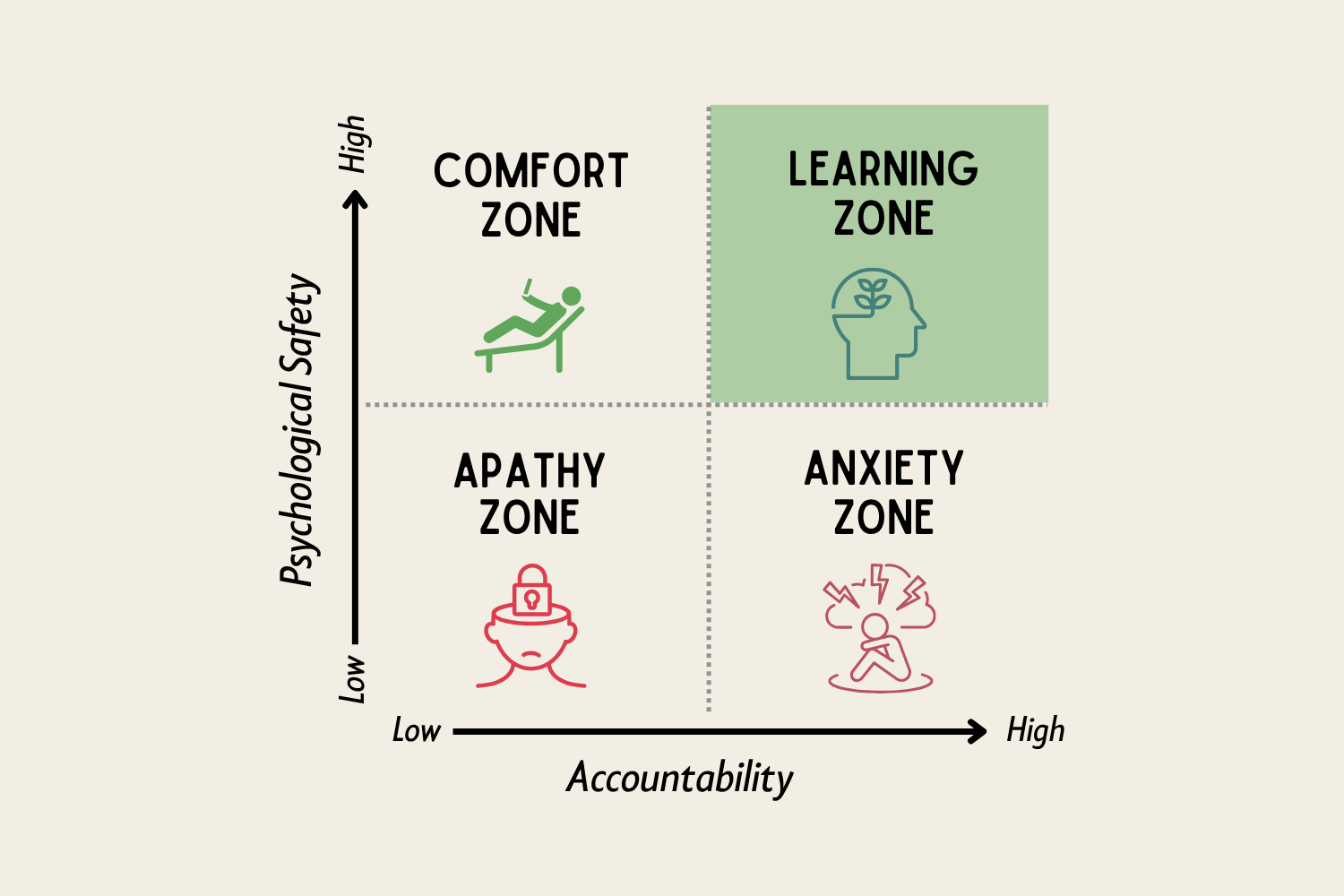
Psychological Safety
Amy Edmondson's finding that people must feel safe taking risks — a dumb question, a mistake — before a team can perform.

Spiral Dynamics
Eight color-coded value systems shaping what people care about at work — success, purpose, relationships — matched to stop guessing motivation.
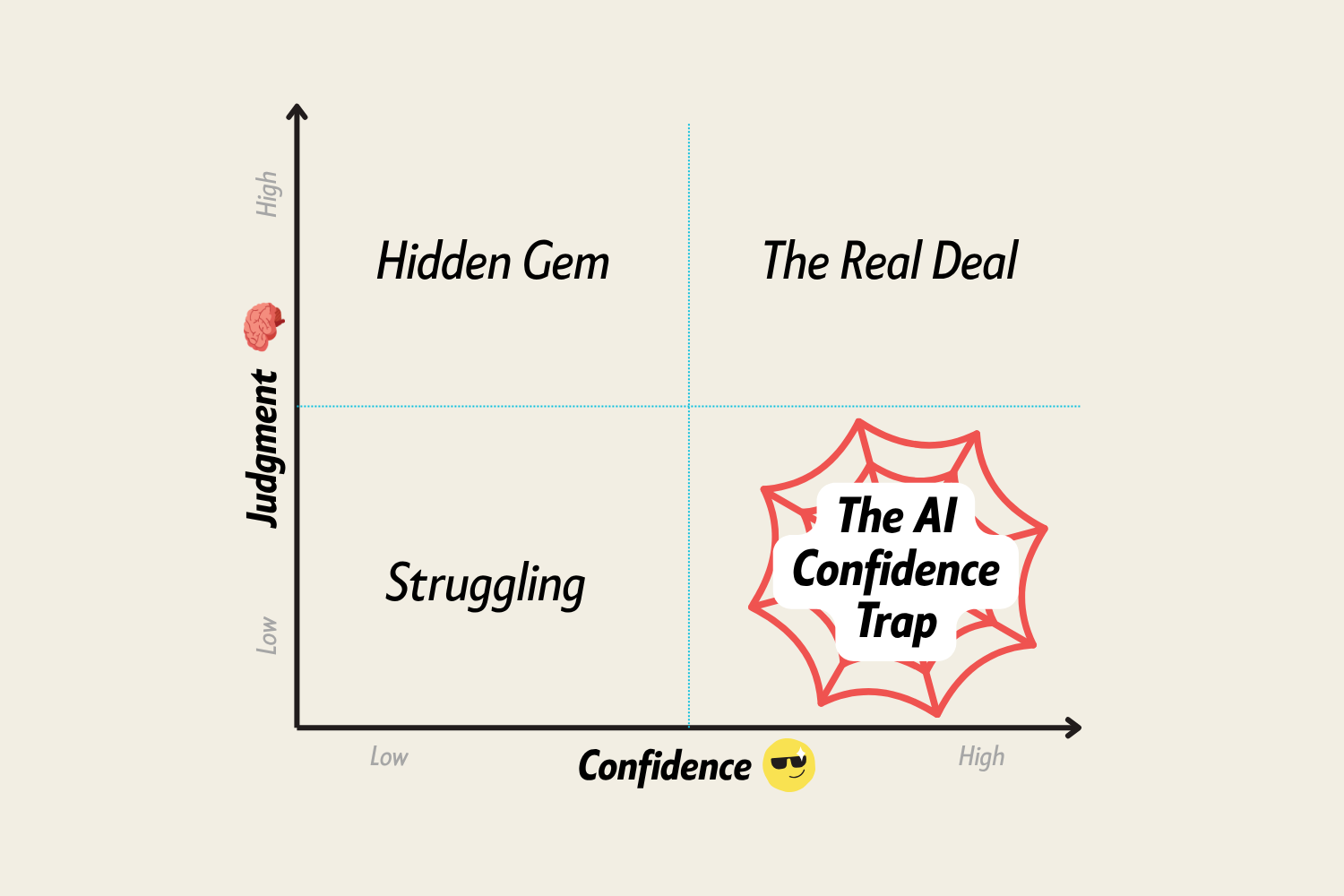
The AI Confidence Trap
AI-polished output can look like real competence when the thinking behind it isn't there — judge the reasoning, not the polish.

The AI Fluency Framework
AI fluency isn't a prompting skill — it's the same four competencies that make someone a good manager: delegating, briefing, reviewing, and owning.

The Bannister Effect
One person breaking a barrier makes it stop being fixed for everyone else — break the unspoken belief in public first.
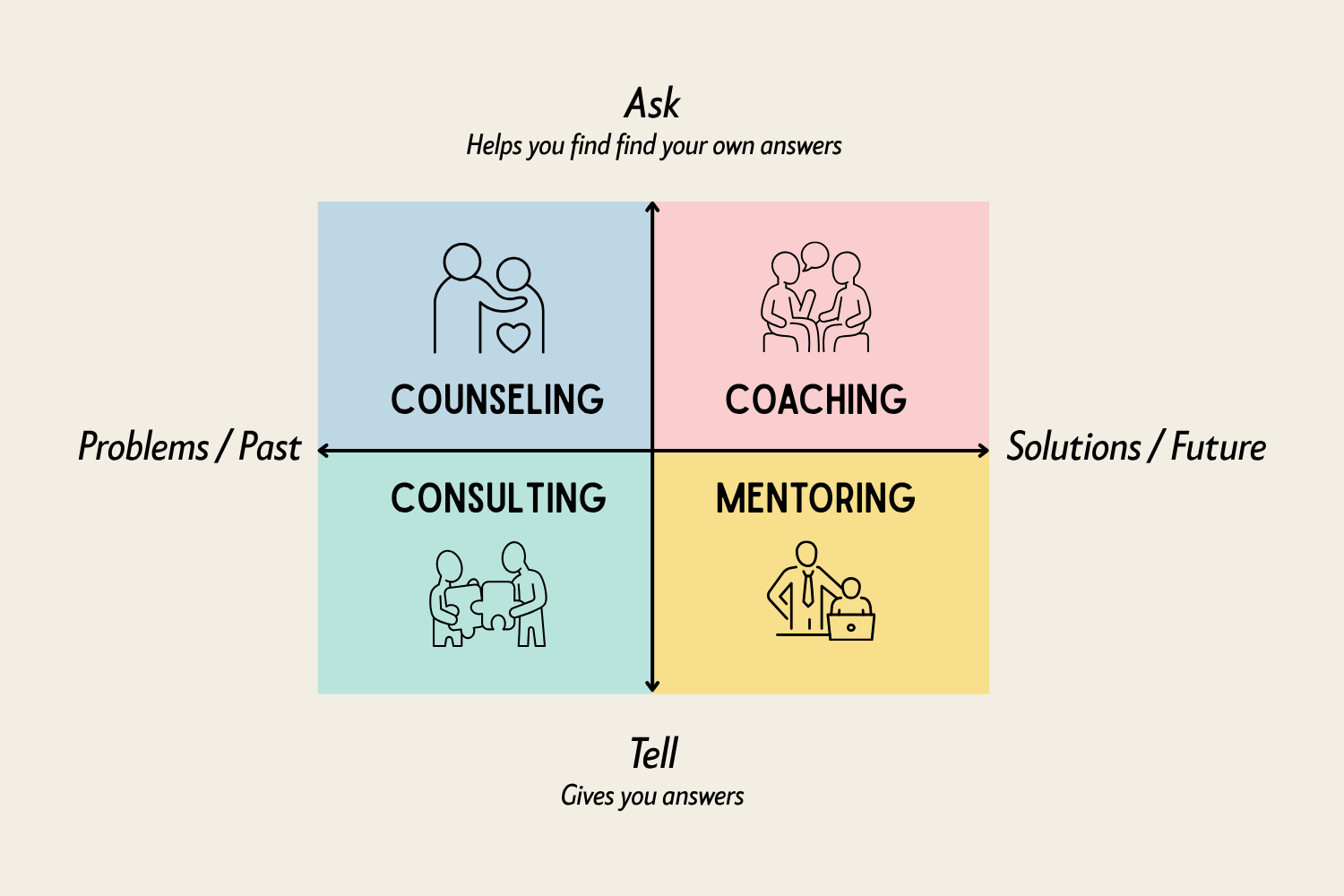
The Four Leadership Support Roles
A 2x2 separating four modes for helping someone — coaching, mentoring, counseling, consulting — plus a test for picking the right one.

The Inner Drive
A leadership take on Daniel Pink's *Drive* that turns three conditions for motivation — autonomy, mastery, purpose — into habits for 1:1s.
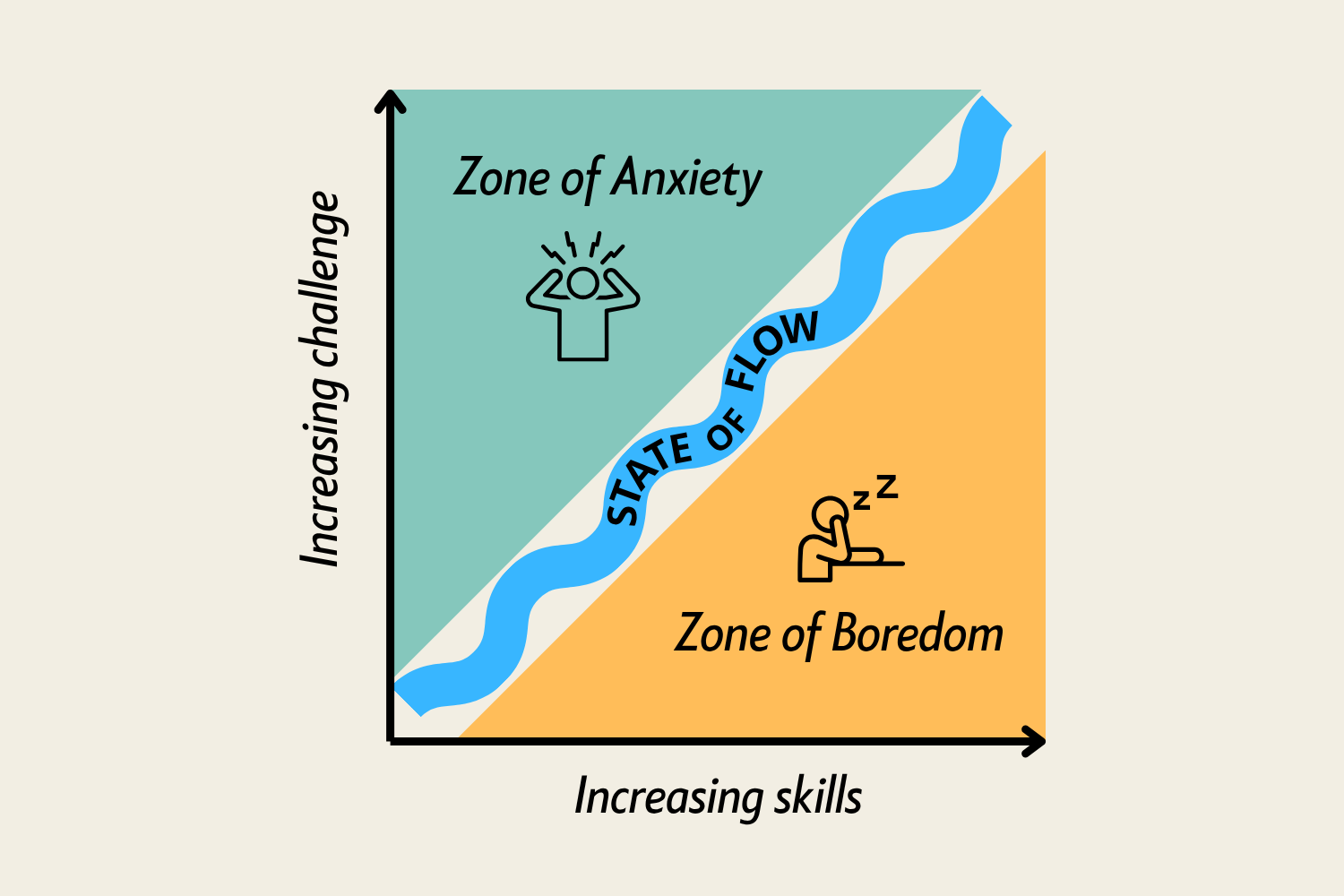
The State of Flow
The zone between anxiety and boredom, where challenge meets skill — your job is moving each person, with a different push.
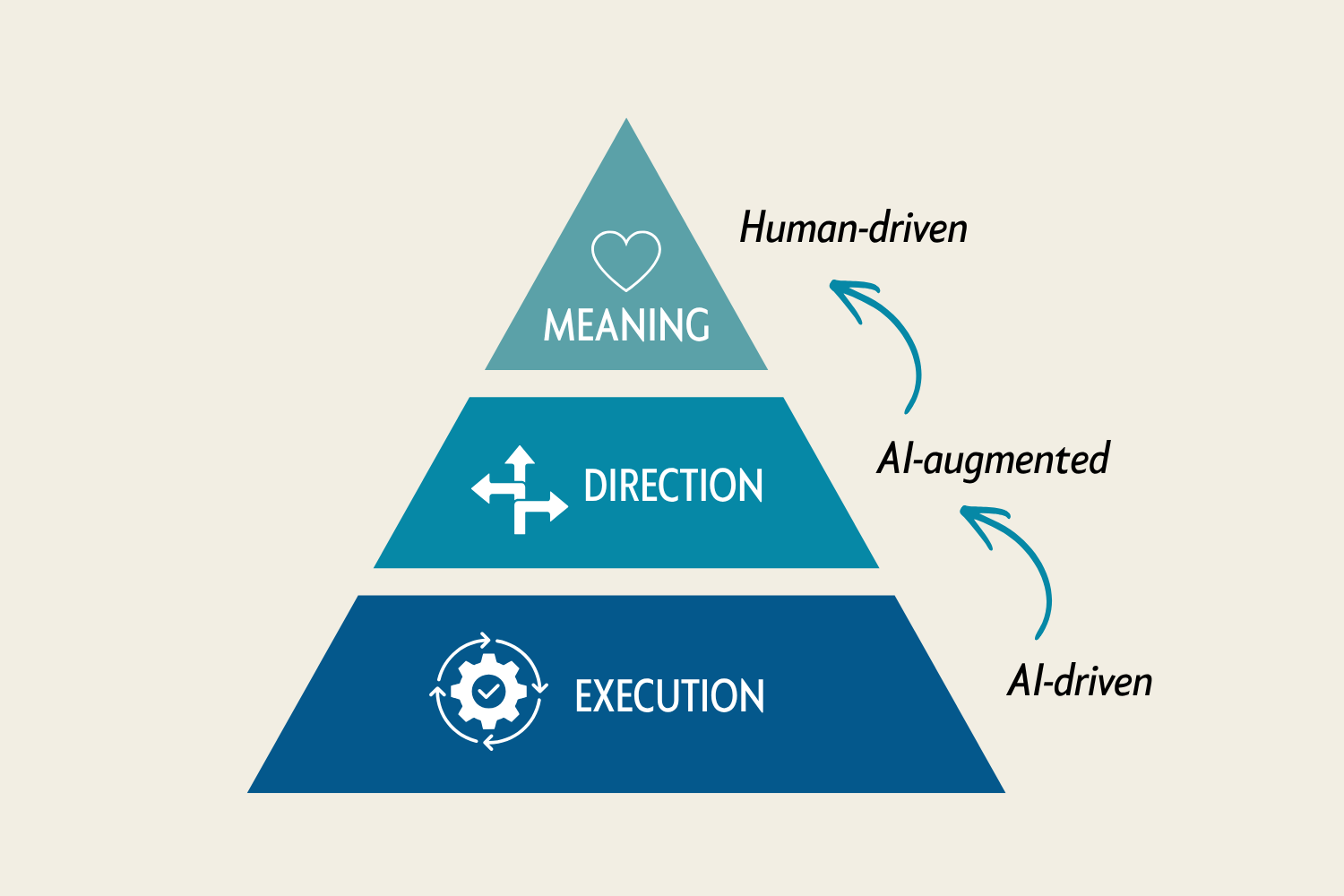
The Three Layers of Leadership
A pyramid — Execution, Direction, Meaning — where your value has to move up as AI automates execution.
Books related to The AI Culture Stack

AI 2041
Ten speculative-fiction stories set in the year 2041, each in a different country and paired with Kai-Fu Lee's nonfiction breakdown of the real technology underneath. A way of making abstract AI trends concrete by showing, not just telling, how they might actually land in ordinary lives.

AI Superpowers
Kai-Fu Lee's argument, from inside both Silicon Valley and the Chinese tech industry, that the AI race has shifted from who has the best research to who can actually ship and scale it. On that axis, the competitive map looks very different than Western coverage usually suggests.

Co-Intelligence
Wharton professor Ethan Mollick's field guide to actually working with generative AI day to day, treating it less like software and more like a fast, occasionally brilliant, occasionally confidently wrong new colleague.

Competing in the Age of AI
Two Harvard Business School professors' argument that AI-native firms aren't running a better version of your business. They're running a fundamentally different machine, one built to scale decisions at almost zero marginal cost.

Empire of AI
Investigative journalist Karen Hao's case, built from years covering OpenAI and hundreds of interviews, that the leading AI labs should be understood not as idealistic research nonprofits but as empires in the old sense: extracting data, labor, and natural resources to concentrate power, dressed in the language of a mission to benefit humanity.

Inclusify
Stefanie Johnson's argument that most leaders miss inclusion by over-indexing on one of two basic human needs, belonging or uniqueness, and her six named archetypes for exactly how that imbalance shows up, from the "Meritocracy Manager" to the "White Knight."

Leaders Eat Last
Simon Sinek's case that leadership is a biological deal, not a rank. The people at the top give up safety and comfort first, so everyone below them doesn't have to spend their energy watching their back instead of doing the work.

Lean In
Sheryl Sandberg's argument that the barriers keeping women out of leadership are real on both sides: structural bias in how organizations operate, and self-imposed caution in how women are taught to see their own ambition. Fixing only one side leaves the other fully intact.

No Rules Rules
Netflix co-founder Reed Hastings, with culture researcher Erin Meyer, on why Netflix removed vacation policies, expense approvals, and most of the rulebook most companies treat as non-negotiable, and the two things that have to be true first, or the whole thing backfires.

Prediction Machines
Three economists' reframing of AI, stripped of the hype: what modern machine learning actually does is make prediction cheap, and once prediction is cheap, the scarce, valuable thing left is judgment.

Rebel Ideas
Matthew Syed's case that the smartest team in the room is rarely the one stacked with the highest individual IQs, it's the one with the widest range of genuinely different ways of seeing the same problem. A pointed argument against hiring people who think like you, no matter how impressive they are.

The Culture Code
Daniel Coyle's reverse-engineering of highly successful groups: not through their strategy or talent, but through small, repeated signals that most leaders never notice they're sending, or failing to send.

The Culture Map
Erin Meyer's field guide to why a management style that works perfectly in one country reads as either rude or weak in another, and why "just be yourself" is actually terrible advice for anyone leading across cultures.

The Fearless Organization
Amy Edmondson's case that psychological safety isn't a soft perk for making people feel nice. It's a hard performance requirement, because teams without it make worse decisions, catch fewer errors, and learn slower than teams that have it.

The Person You Mean to Be
Dolly Chugh's case for giving up on being a "good person" (a fixed, defensive identity) in favor of becoming a "good-ish person": someone actively building toward better, who treats their own blind spots as something to work on instead of something to deny.

Tribal Leadership
A model for diagnosing a team's culture by literally listening to how people talk: five stages of "tribal" language, from "life sucks" to "life is great," and a surprisingly specific playbook for moving a team up one stage at a time.