The AI Confidence Trap
AI-polished output can look like real competence when the thinking behind it isn't there — judge the reasoning, not the polish.
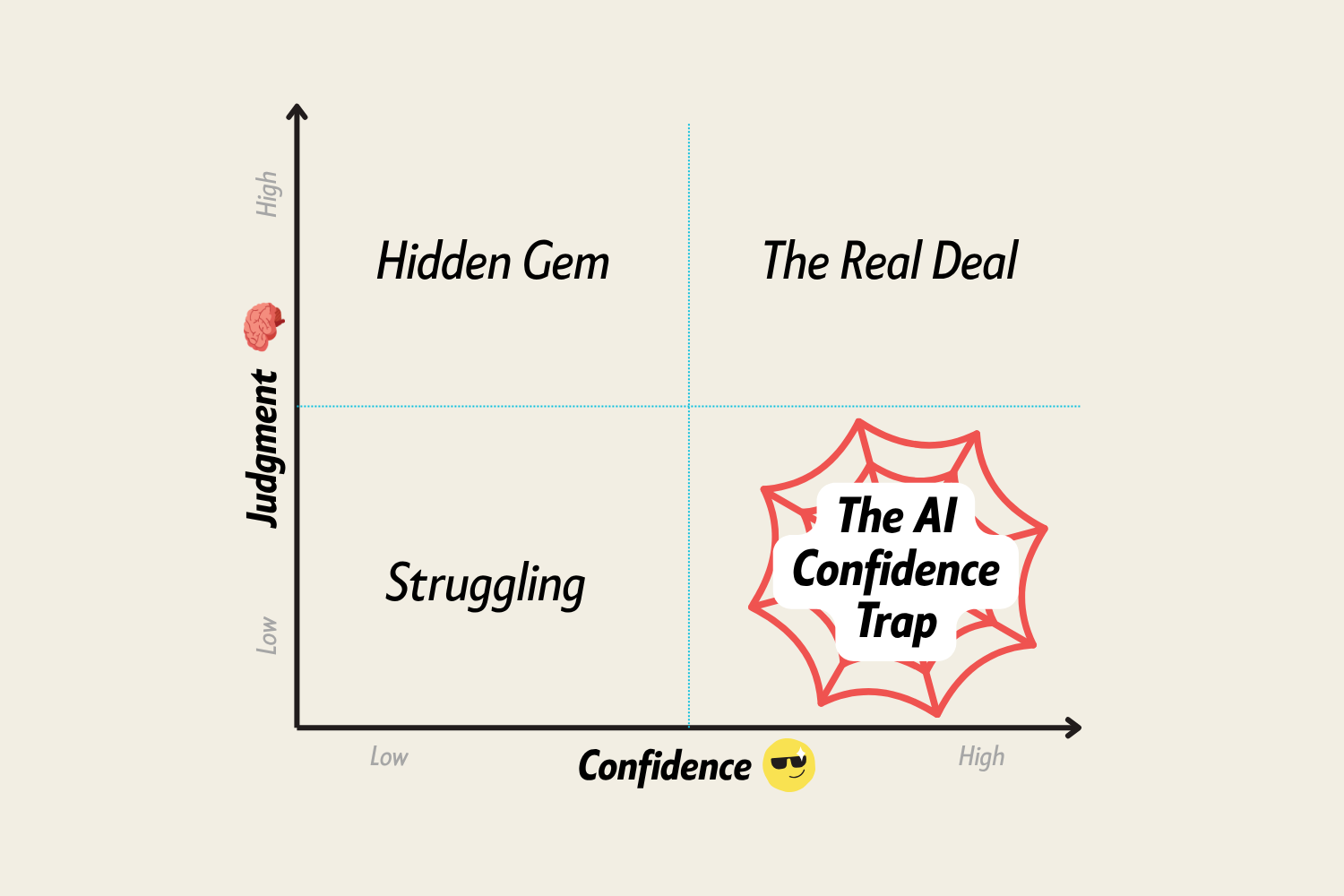 Find this on the mind-map
Introduction
Gaurav Jain named this one in The Good Boss to describe a shift he kept seeing play out: AI-generated polish creates the appearance of competence that isn't fully there, and leaders — or the people producing the work — mistake that appearance for the real thing.
For most of professional history, there was a simple shortcut you could trust: output quality was a reasonable stand-in for thinking quality. A well-written document usually meant a well-reasoned mind produced it. A striking piece of work usually meant years of developed craft. Output and capability moved together closely enough that you could tell one from the other just by looking.
AI breaks that relationship. A well-reasoned document might mean a well-reasoned mind — or it might mean a capable prompter and a powerful model. A comprehensive analysis might reflect real expertise, or a good template and fifteen minutes of work. From where you're sitting, the two can look identical.
None of this is about deception, either. Most people using AI are doing exactly what any sensible professional would do — using the best tools available to produce the best output they can. The problem is that the output alone no longer tells you how much thinking actually went into it.
How It Works
The framework names three specific shifts where AI is pulling confidence and competence apart.
| Shift | What's happening | What it costs you as a leader |
|---|---|---|
| 1. The floor has risen, the ceiling hasn't | AI lifts the baseline quality of almost everyone's output. A junior person can now produce work that would've read as solid mid-level three years ago. The top end — real depth of experience, judgment under genuine ambiguity — hasn't moved nearly as fast. | The gap between junior and senior output narrows, so it gets a lot harder to tell who's actually developing and who's coasting on the tool. |
| 2. Self-assessment gets unreliable | Producing great output with AI creates real pride, and that pride feels a lot like the pride of having done the thinking yourself. Over time, people start believing they understand something more deeply than they actually do. | The gap between how competent someone feels and how competent they actually are widens — through an honest misreading of what the tool did versus what they did. |
| 3. Peer credibility gets reassigned | Credibility used to build up through a visible track record of good reasoning. Now, someone using AI aggressively produces more visible, polished output than a colleague who thinks more deeply but works more slowly. | Volume and polish are visible; depth isn't. Credibility earned through efficient AI use can quietly outcompete credibility earned through real expertise. |
Shift 2 is really just an AI-era version of the Dunning-Kruger Effect: people who don't have the expertise to see the gap between where they are and where they need to be overestimate themselves — and now AI hands them a constant stream of evidence that seems to confirm it.
Why It Matters for Leaders
Nearly every people decision you make depends on reading capability accurately — who's ready for more responsibility, who needs more support, whose judgment you can actually rely on, who you put forward for promotion. This trap scrambles the exact signal those calls have always rested on.
Here's what that actually looks like in practice. Someone hands you a polished deck, assembled fast in response to a request from above. It cites data to support interpretations the data doesn't actually support, references figures without the context that changes their meaning, and gets a few numbers flat wrong. The document looks authoritative. The analysis underneath it is broken. If you don't push on it, it shapes a real decision anyway.
It shows up in comparisons that should be easy calls, too. Say two candidates for a senior role both turn in strong work and are both well regarded. One pushes back in discussion and raises angles nobody else considered. The other produces excellent documents but folds fast the moment they're challenged. On paper, they look comparable. The real difference is in the thinking, not the output.
None of this is an argument against using AI — it's making teams genuinely more productive, and if you use it well you get a real edge. Here's the shift: output used to be enough on its own. Now it's just where you start reading someone's ability, not where you stop. This is the same territory the AI Culture Stack calls the judgment layer, and it overlaps heavily with your Circle of Competence: you need to know exactly where someone's real understanding ends and where the tool took over.
Get this right and you make sharper calls about your people. Get it wrong and you end up rewarding the wrong things — then wondering why your team's actual capability never seems to match the polish of its output.
What to do next
Test your knowledge of The AI Confidence Trap
Apply The AI Confidence Trap to a real situation
Skills related to The AI Confidence Trap

Decision-Making
Making a measured call fast, on information that's never complete, and correcting course as evidence comes in instead of defending your first answer.

Leading with AI
Knowing when to trust AI-generated work, when to dig into the reasoning behind it, and how to use it without letting your own judgment go soft.
Frameworks related to The AI Confidence Trap

Abilene Paradox
A team can agree to something nobody wants — not from pressure, but because everyone assumes they're the only doubter.

Cynefin Framework
Dave Snowden's model sorts problems into four domains — Clear, Complicated, Complex, Chaotic — by cause-effect clarity, then matches your response.
Occam's Razor
Among competing explanations, pick the one with fewest assumptions — in leadership, diagnose simply, build lean, and say what actually matters.

OODA Loop
John Boyd's four-stage decision cycle — Observe, Orient, Decide, Act — for fast, adaptive calls under pressure, run as a loop.

Probabilistic Thinking
Stop betting on one predicted future — assign real probabilities to outcomes, weigh them by impact, and let the math decide.
System 1 and System 2 Thinking
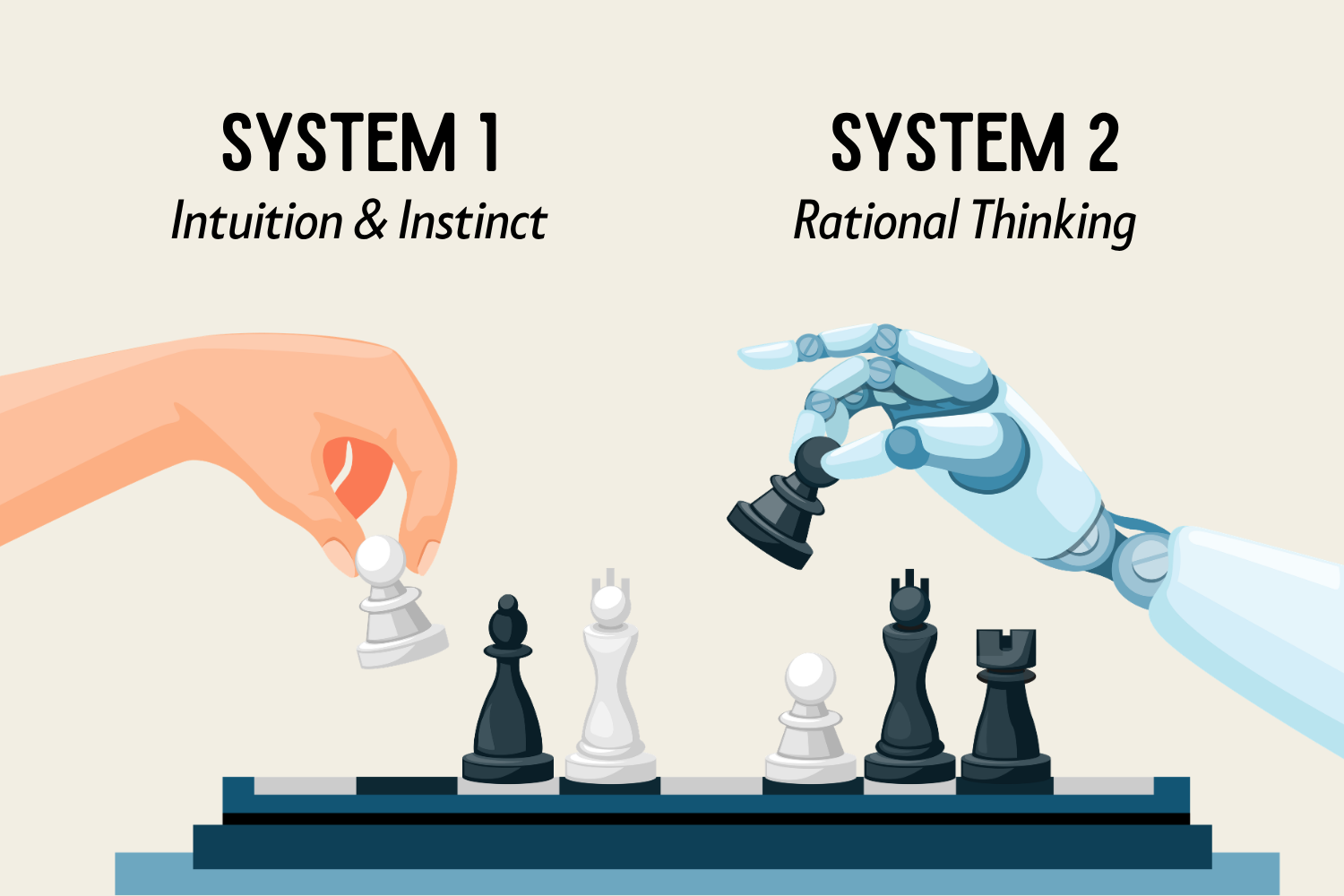
Your brain runs fast, gut-level System 1 and slow, deliberate System 2 — knowing which a moment needs is the skill.

The AI Culture Stack
Same AI tools and budget, wildly different results — the gap isn't the technology, it's three layers underneath: permission, fluency, judgment.

The AI Fluency Framework
AI fluency isn't a prompting skill — it's the same four competencies that make someone a good manager: delegating, briefing, reviewing, and owning.
The Three Layers of Leadership
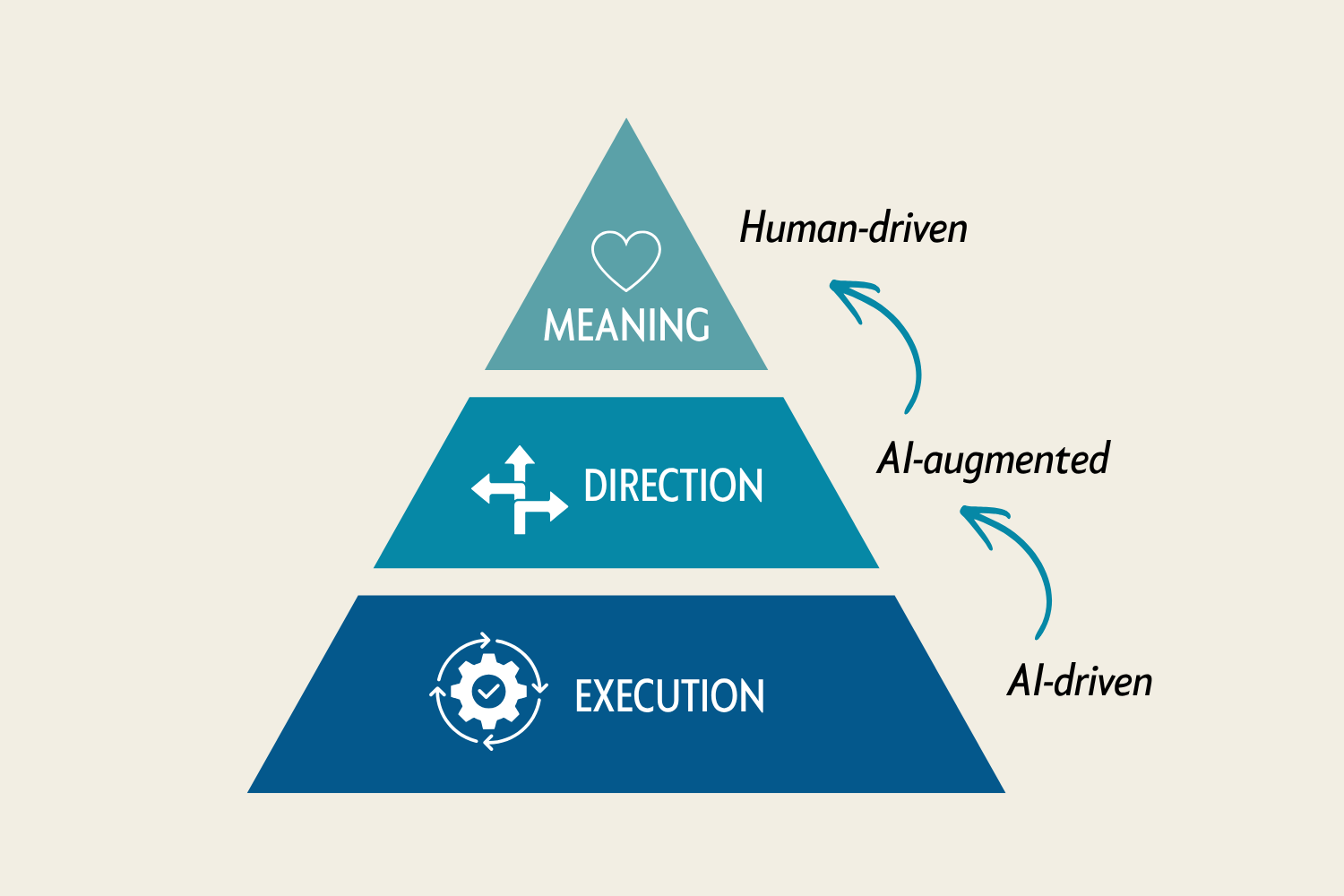
A pyramid — Execution, Direction, Meaning — where your value has to move up as AI automates execution.
Books related to The AI Confidence Trap

AI 2041
Ten speculative-fiction stories set in the year 2041, each in a different country and paired with Kai-Fu Lee's nonfiction breakdown of the real technology underneath. A way of making abstract AI trends concrete by showing, not just telling, how they might actually land in ordinary lives.

AI Superpowers
Kai-Fu Lee's argument, from inside both Silicon Valley and the Chinese tech industry, that the AI race has shifted from who has the best research to who can actually ship and scale it. On that axis, the competitive map looks very different than Western coverage usually suggests.

Blink
Malcolm Gladwell's dive into the two-second judgment: when snap decisions beat deliberate analysis, when they betray you without warning, and why you usually can't tell which is happening in the moment.

Clear Thinking
Shane Parrish's case that your biggest decisions aren't won by thinking harder in the moment. They're won or lost by the defaults you've already built long before the moment arrives.

Co-Intelligence
Wharton professor Ethan Mollick's field guide to actually working with generative AI day to day, treating it less like software and more like a fast, occasionally brilliant, occasionally confidently wrong new colleague.

Competing in the Age of AI
Two Harvard Business School professors' argument that AI-native firms aren't running a better version of your business. They're running a fundamentally different machine, one built to scale decisions at almost zero marginal cost.

Empire of AI
Investigative journalist Karen Hao's case, built from years covering OpenAI and hundreds of interviews, that the leading AI labs should be understood not as idealistic research nonprofits but as empires in the old sense: extracting data, labor, and natural resources to concentrate power, dressed in the language of a mission to benefit humanity.

Prediction Machines
Three economists' reframing of AI, stripped of the hype: what modern machine learning actually does is make prediction cheap, and once prediction is cheap, the scarce, valuable thing left is judgment.

Principles
Ray Dalio's attempt to turn decades of painful mistakes at Bridgewater into explicit, written rules, a bet that most bad decisions come from never writing down what you actually believe until you're forced to.

Same as Ever
Morgan Housel's case for studying what never changes about human behavior, risk, and decision-making, instead of exhausting yourself trying to predict what will, because the next crisis will look nothing like the last one, but it will be caused by the same handful of things that have always caused them.

Thinking, Fast and Slow
Daniel Kahneman's decades of research into the two systems running your mind, and why the fast, confident one is usually the one making your worst decisions, not your best ones.

Thinking in Bets
Former professional poker player Annie Duke's case that every decision is a bet made with incomplete information, and that judging decisions by their outcomes, the way almost everyone does, teaches exactly the wrong lessons.