Occam's Razor
Among competing explanations, pick the one with fewest assumptions — in leadership, diagnose simply, build lean, and say what actually matters.
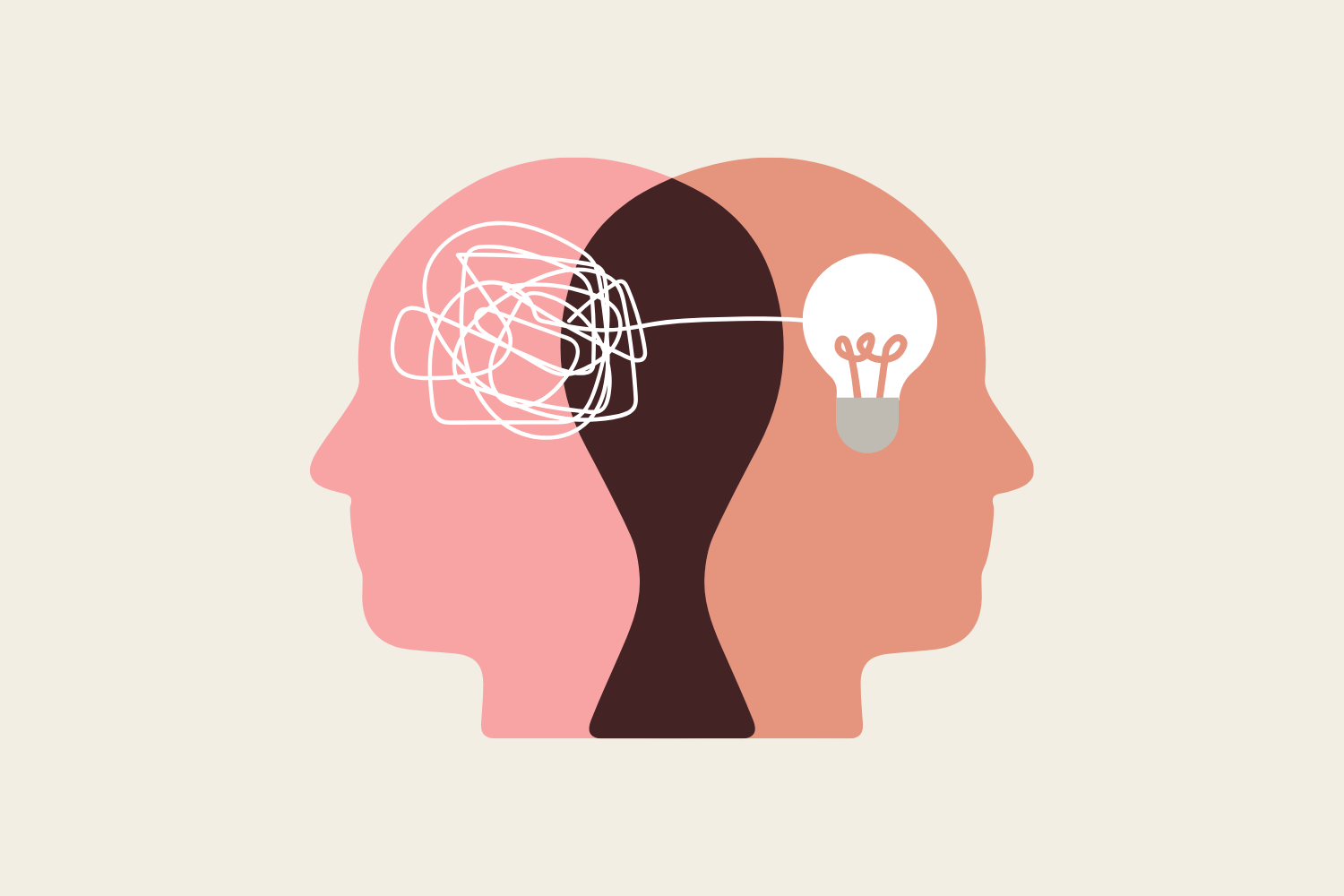 Find this on the mind-map
Introduction
This one goes back to William of Ockham, a 14th-century English philosopher and Franciscan friar. Roughly translated, his principle says: among competing explanations, prefer the one with the fewest assumptions. In plain terms — when you're not sure, go with the simpler explanation.
How It Works
The reasoning isn't that simple is always correct. It's that complexity carries a cost: more assumptions, more moving parts, more things that can break. A simpler explanation is easier to test, easier to communicate, and easier to act on — and it turns out to be right more often than not.
Scientists and philosophers have leaned on this for centuries to build theories. For you, as a leader, it shows up as a set of everyday choices:
- When something goes wrong: find the simplest explanation that accounts for it and deal with that — or reach for something more elaborate.
- When you're designing a process: keep it lean — or keep bolting things on until it feels comprehensive.
- When you're communicating a decision: say it plainly — or bury it in context and jargon to make it sound weightier.
The failure mode this targets is complexity creep. It rarely shows up all at once — it builds one reasonable-looking decision at a time. Miscommunication happens, so you add a status meeting. A process breaks down, so you add an approval step. A project runs late, so you add checkpoints. Every single one of those decisions is defensible on its own. Six months later, you're running a system nobody would have designed on purpose.
Complexity creep shows up in three predictable places:
| Where | The complex default | The razor question |
|---|---|---|
| Problem diagnosis | The project failed because of misalignment, unclear ownership, shifting priorities, and communication gaps | What's the simplest explanation that accounts for what happened? Usually it's one or two things, not five. |
| Process design | A three-step process becomes twelve as edge cases get patched in | What's the minimum number of steps actually required to reliably get this outcome? |
| Communication | Over-explanation and jargon bury the point | What's the one thing this person needs to understand or do? |
Why It Matters for Leaders
Smart, well-intentioned leaders default to complexity without even noticing, because a simple answer somehow feels like it can't be the right one. The instinct when a problem shows up is to add — a new process for the coordination issue, a new framework for the decision, a new meeting for alignment, a new document to capture what was agreed. Every one of those is justifiable in the moment. Together, they produce a team that spends more time managing the process than doing the actual work.
Part of the cost is operational. Every layer of complexity is a layer your team has to work through. Every unnecessary step is time not spent on real output. Every over-explained message is extra thinking someone else has to do just to follow you.
The bigger cost is what complexity signals. Hand your team a complicated process, and they'll draw one of two conclusions: leadership doesn't trust us to figure this out, or nobody actually thought this through. Neither is what you meant to say. Simplicity signals the opposite — clarity of thought. If you can explain a decision in two sentences, fit a process on one page, or give feedback that lands in thirty seconds, you earn trust through the compression itself.
Take two ordinary situations. A weekly meeting that's been on the calendar for two years starts losing attendance and stops producing anything. The complex diagnosis blames misaligned priorities, shifting communication norms, and busy calendars. The simple one is that the agenda has too many items that don't need the whole room, and people have correctly figured out their time is better spent elsewhere. The fix: cut the agenda down to two or three items that genuinely need everyone, and move the rest async.
Or say a team member is underperforming. You could list a dozen possible causes — unclear expectations, team dynamics, personal circumstances, skill gaps, motivation, workload. Any of them might apply. But the explanation that usually fits what you're actually observing is simpler than that: they don't clearly understand what good performance looks like in their role right now. That points to one direct conversation about expectations, not a whole intervention plan.
What to do next
Test your knowledge of Occam's Razor
Apply Occam's Razor to a real situation
Skills related to Occam's Razor

Frameworks related to Occam's Razor

Abilene Paradox
A team can agree to something nobody wants — not from pressure, but because everyone assumes they're the only doubter.

Cynefin Framework
Dave Snowden's model sorts problems into four domains — Clear, Complicated, Complex, Chaotic — by cause-effect clarity, then matches your response.

OODA Loop
John Boyd's four-stage decision cycle — Observe, Orient, Decide, Act — for fast, adaptive calls under pressure, run as a loop.

Probabilistic Thinking
Stop betting on one predicted future — assign real probabilities to outcomes, weigh them by impact, and let the math decide.
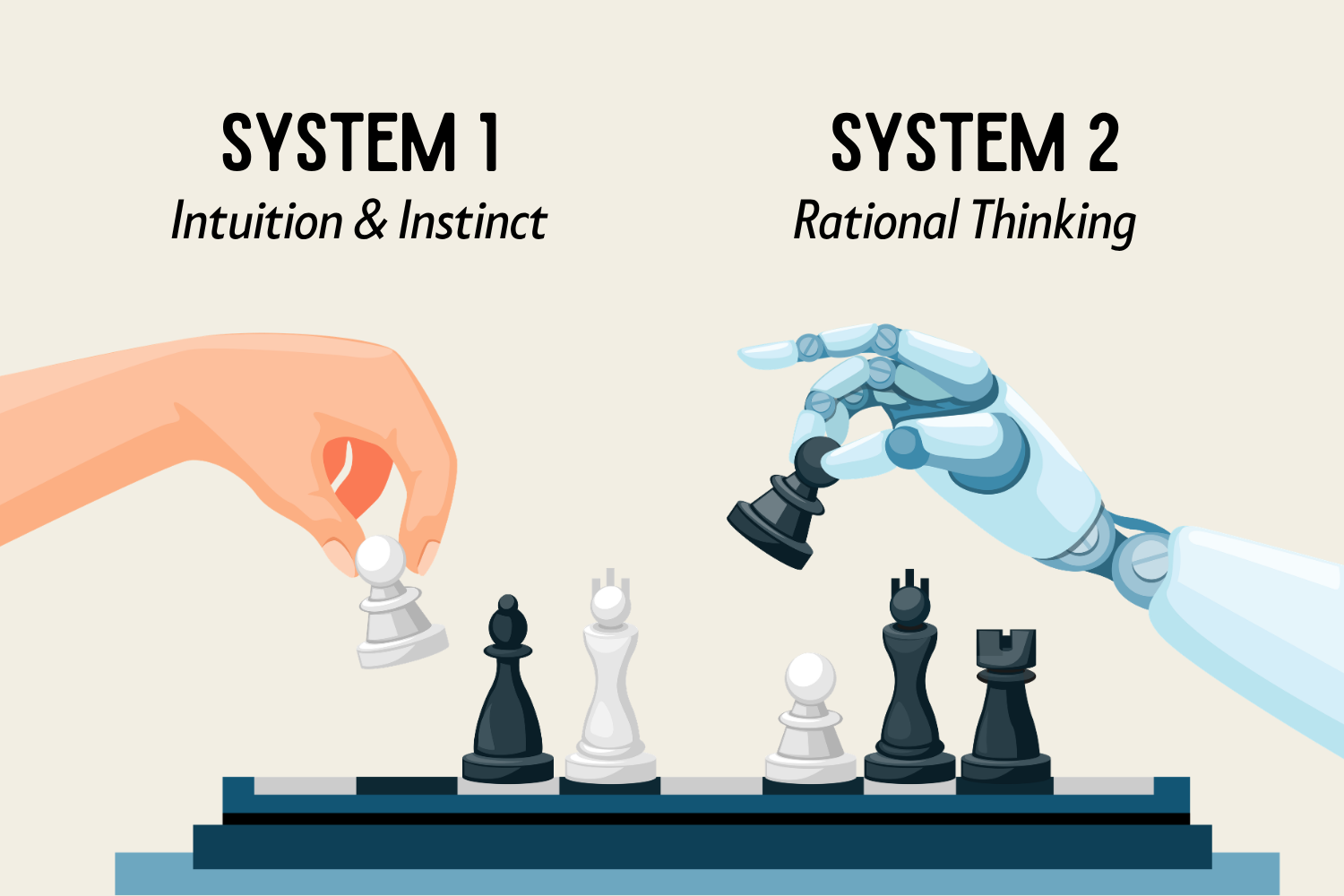
System 1 and System 2 Thinking
Your brain runs fast, gut-level System 1 and slow, deliberate System 2 — knowing which a moment needs is the skill.
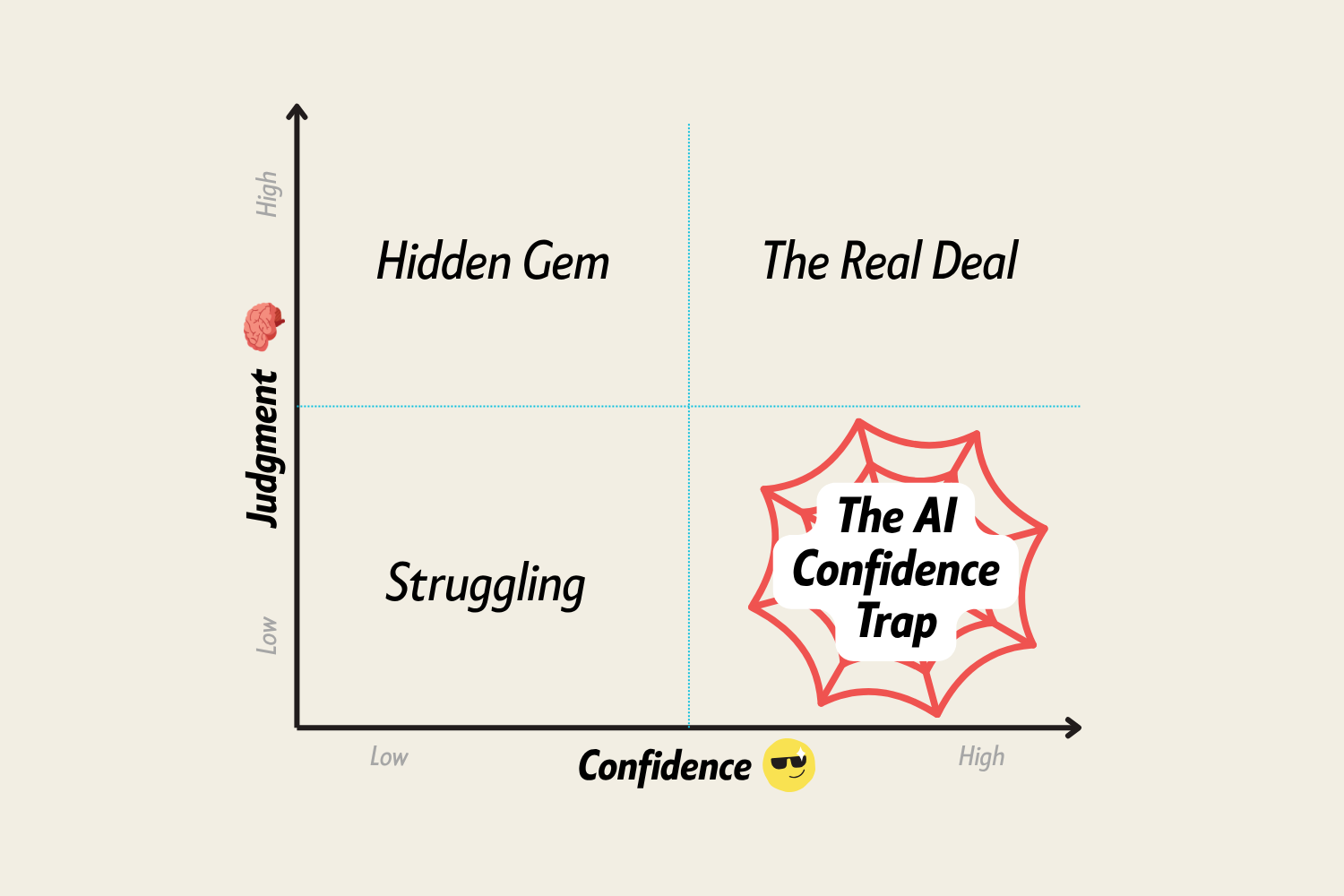
The AI Confidence Trap
AI-polished output can look like real competence when the thinking behind it isn't there — judge the reasoning, not the polish.
Books related to Occam's Razor

Blink
Malcolm Gladwell's dive into the two-second judgment: when snap decisions beat deliberate analysis, when they betray you without warning, and why you usually can't tell which is happening in the moment.

Clear Thinking
Shane Parrish's case that your biggest decisions aren't won by thinking harder in the moment. They're won or lost by the defaults you've already built long before the moment arrives.

Principles
Ray Dalio's attempt to turn decades of painful mistakes at Bridgewater into explicit, written rules, a bet that most bad decisions come from never writing down what you actually believe until you're forced to.

Same as Ever
Morgan Housel's case for studying what never changes about human behavior, risk, and decision-making, instead of exhausting yourself trying to predict what will, because the next crisis will look nothing like the last one, but it will be caused by the same handful of things that have always caused them.

Thinking, Fast and Slow
Daniel Kahneman's decades of research into the two systems running your mind, and why the fast, confident one is usually the one making your worst decisions, not your best ones.

Thinking in Bets
Former professional poker player Annie Duke's case that every decision is a bet made with incomplete information, and that judging decisions by their outcomes, the way almost everyone does, teaches exactly the wrong lessons.