OODA Loop
John Boyd's four-stage decision cycle — Observe, Orient, Decide, Act — for fast, adaptive calls under pressure, run as a loop.
 Find this on the mind-map
Introduction
John Boyd was a U.S. Air Force colonel and fighter pilot turned military strategist, and he built this loop to answer one question: why did some pilots survive aerial dogfights while others didn't? The answer wasn't strength or flying hours. The pilots who processed new information faster and acted on it stayed ahead of the situation — Boyd just named what they were already doing without realizing it. The model has since spread from the military into business strategy, emergency response, cybersecurity, and leadership, because all of them share the same condition: fast decisions made under real uncertainty.
How It Works
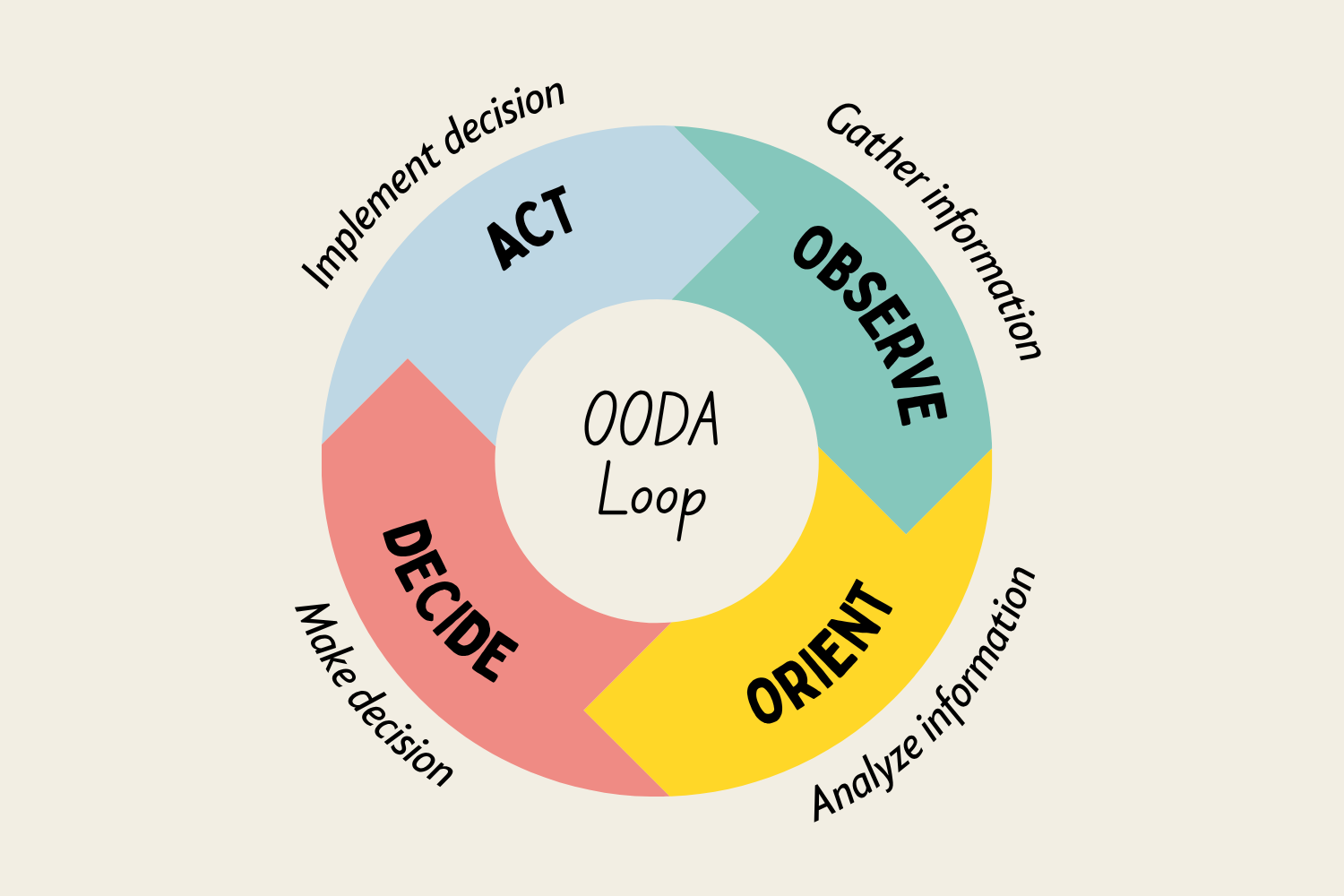
| Stage | The question it answers |
|---|---|
| Observe | What is happening? What are the facts, and what's missing? |
| Orient | What does this mean in context? What assumptions and mental models am I filtering it through? |
| Decide | Based on what I now see and believe, what's the smartest next move? |
| Act | Execute — then immediately loop back and observe what the action produced. |
Two things set this apart from other decision models.
The first is speed. The goal is to cycle through the loop faster and better than the chaos around you. Boyd's insight was that a faster loop doesn't win by being smarter — it wins by staying ahead of the other side's ability to orient and respond.
The second is Orient. It's the heart of the loop, and the stage you're most likely to skip. Orientation is where raw observation gets interpreted, and it never happens in a vacuum — it runs through your biases, your beliefs, your past experience, your team's values, and whatever your company is prioritizing right now. Your orientation determines what you even notice in the first place.
Why It Matters for Leaders
The hard part of a leadership decision is rarely the decision itself. It's the time pressure sitting around it. New inputs keep arriving, you're still processing the last meeting, and something new lands in your inbox marked urgent. Under those conditions, you tend to do one of two things: overthink, or default to whatever you did last time.
OODA gives you a third option. It turns a wide-open problem into four small questions you can answer in minutes, then repeat. That matters most in three situations you'll recognize.
Prioritization chaos. Fourteen items on your list, three marked urgent, two blockers from the team, and a new top priority just handed down from your boss. A fast loop asks what's actually at risk, reads your team's energy and the week's real business priority, picks one or two things that unblock everything else, and communicates the plan. You trade reaction for intention.
Firefighting. An outage or an escalation puts everyone on edge, and the temptation is to fix something fast just to look in control. Acting before you orient usually makes it worse. Nail down what's actually known versus what's rumor, then define a first move — isolate the issue, name an owner — and you cut the panic instead of adding to it.
Ambiguity. A poorly defined project with a vague goal and no roadmap paralyzes most people. This is ideal OODA territory, because every cycle produces a little more clarity. The project moves out of the fog not because you solved everything, but because you solved something.
If you never run the loop on purpose, you tend to fail in one of two directions: stuck in Observe, waiting for clarity that never arrives, or skipping Orient entirely and acting on a guess dressed up as decisiveness.
What to do next
Test your knowledge of OODA Loop
Practice OODA Loop
Apply OODA Loop to a real situation
Skills related to OODA Loop

Frameworks related to OODA Loop

Abilene Paradox
A team can agree to something nobody wants — not from pressure, but because everyone assumes they're the only doubter.

Cynefin Framework
Dave Snowden's model sorts problems into four domains — Clear, Complicated, Complex, Chaotic — by cause-effect clarity, then matches your response.
Occam's Razor
Among competing explanations, pick the one with fewest assumptions — in leadership, diagnose simply, build lean, and say what actually matters.

Probabilistic Thinking
Stop betting on one predicted future — assign real probabilities to outcomes, weigh them by impact, and let the math decide.
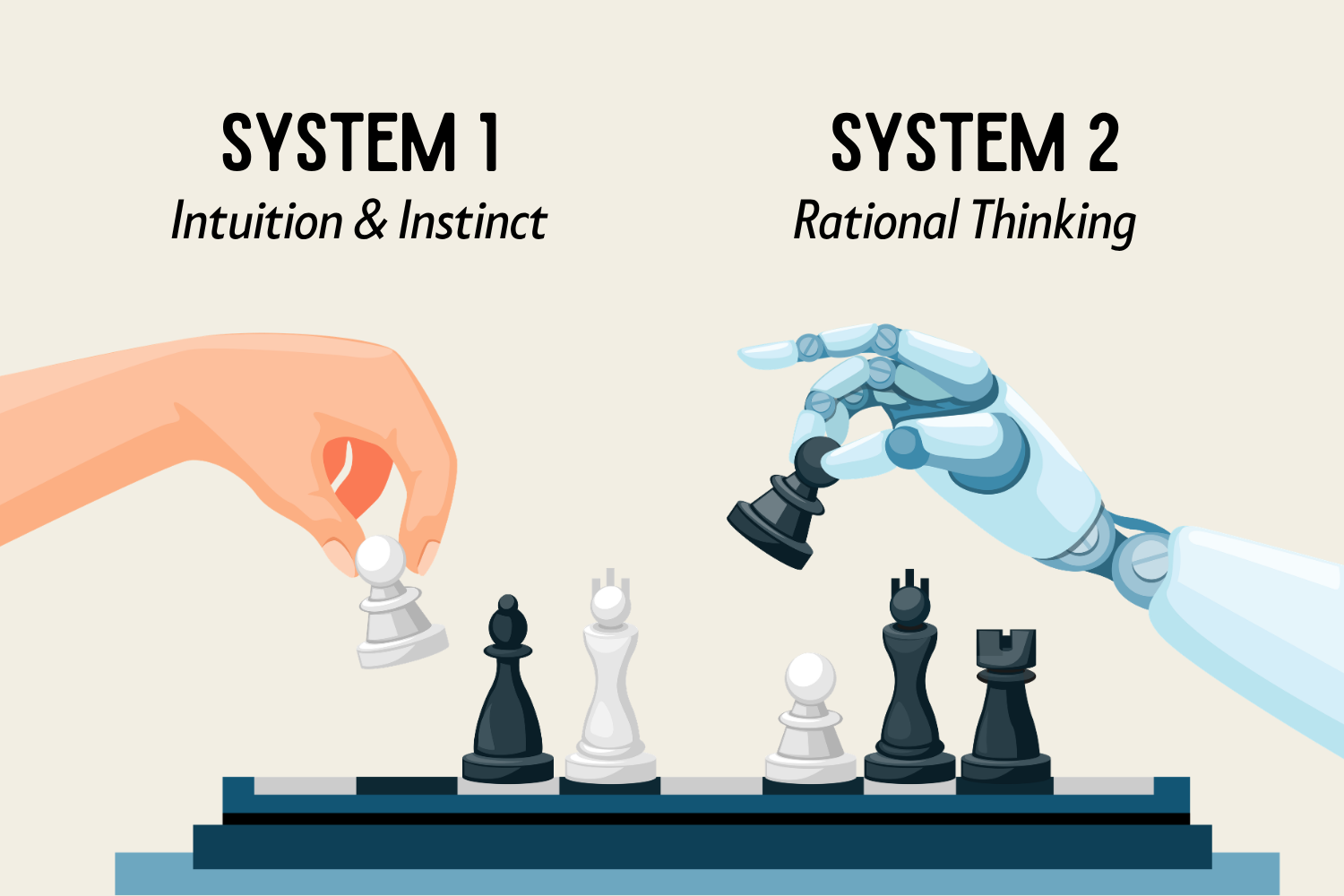
System 1 and System 2 Thinking
Your brain runs fast, gut-level System 1 and slow, deliberate System 2 — knowing which a moment needs is the skill.
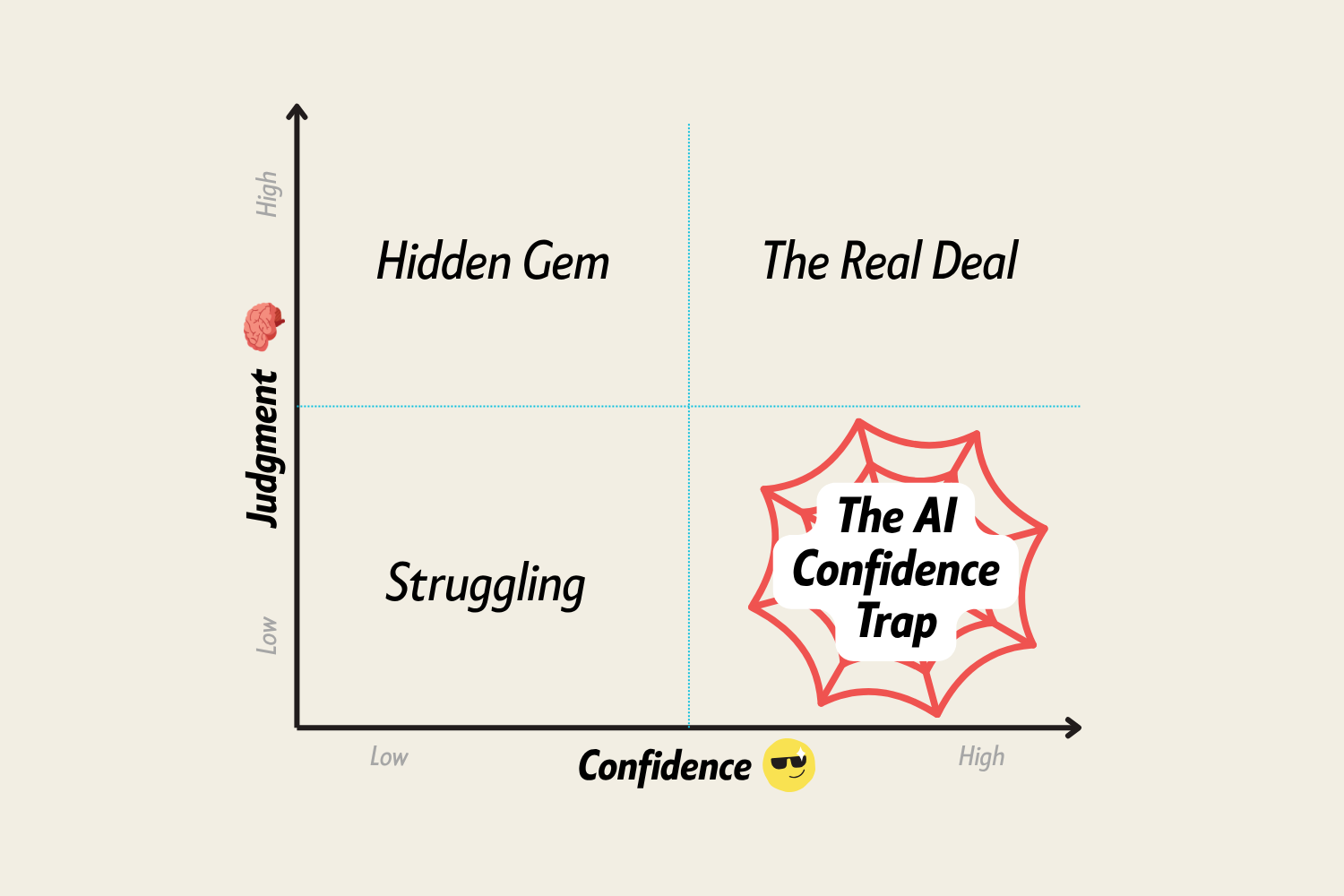
The AI Confidence Trap
AI-polished output can look like real competence when the thinking behind it isn't there — judge the reasoning, not the polish.
Books related to OODA Loop

Blink
Malcolm Gladwell's dive into the two-second judgment: when snap decisions beat deliberate analysis, when they betray you without warning, and why you usually can't tell which is happening in the moment.

Clear Thinking
Shane Parrish's case that your biggest decisions aren't won by thinking harder in the moment. They're won or lost by the defaults you've already built long before the moment arrives.

Principles
Ray Dalio's attempt to turn decades of painful mistakes at Bridgewater into explicit, written rules, a bet that most bad decisions come from never writing down what you actually believe until you're forced to.

Same as Ever
Morgan Housel's case for studying what never changes about human behavior, risk, and decision-making, instead of exhausting yourself trying to predict what will, because the next crisis will look nothing like the last one, but it will be caused by the same handful of things that have always caused them.

Thinking, Fast and Slow
Daniel Kahneman's decades of research into the two systems running your mind, and why the fast, confident one is usually the one making your worst decisions, not your best ones.

Thinking in Bets
Former professional poker player Annie Duke's case that every decision is a bet made with incomplete information, and that judging decisions by their outcomes, the way almost everyone does, teaches exactly the wrong lessons.