Thinking in Bets
Former professional poker player Annie Duke's case that every decision is a bet made with incomplete information, and that judging decisions by their outcomes, the way almost everyone does, teaches exactly the wrong lessons.
 Find this on the mind-map
Introduction
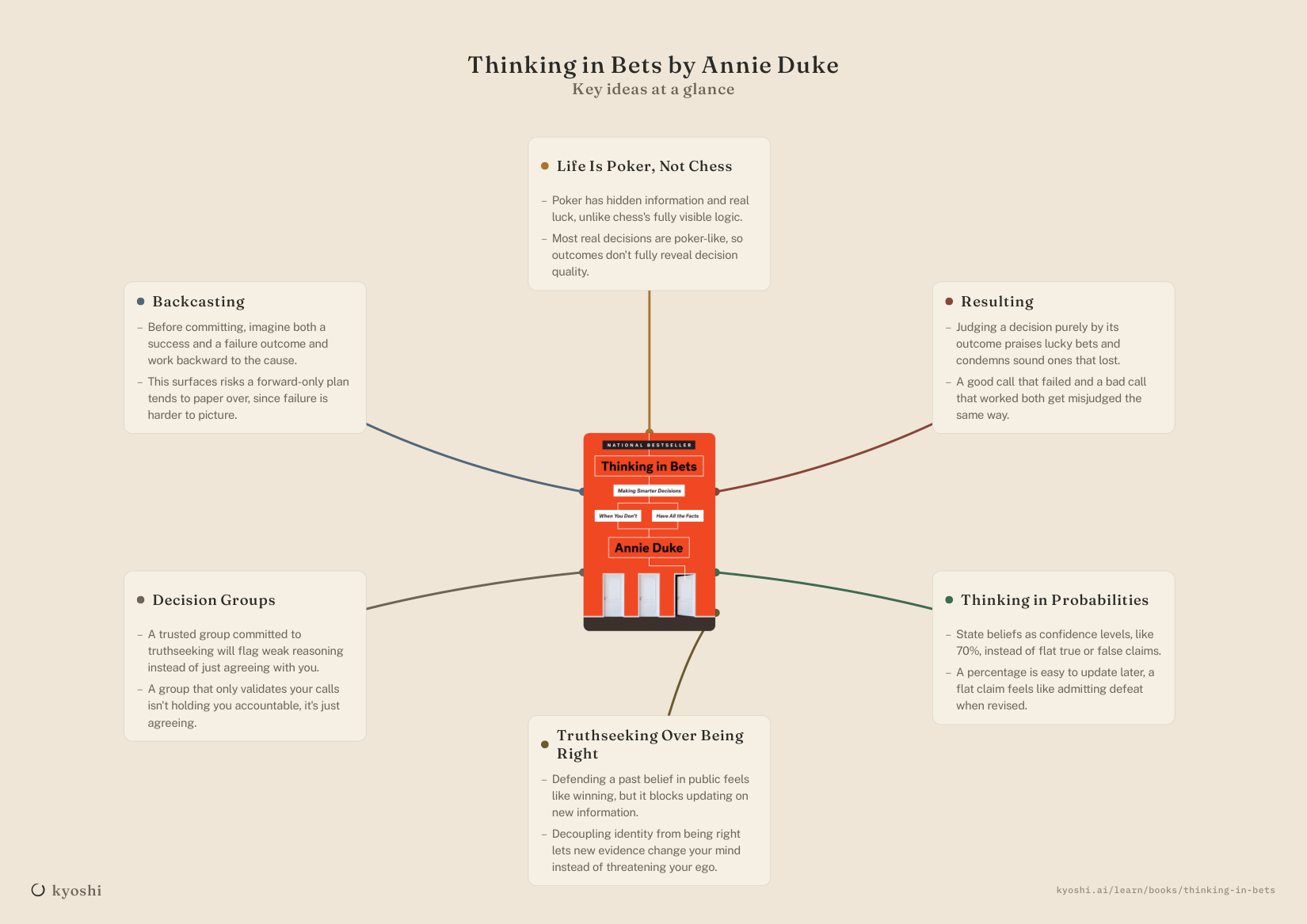
Duke's background as a professional poker player shapes the whole book. Poker, unlike chess, is a game of incomplete information where a well-played hand can still lose and a badly-played hand can still win. That's a far more accurate model of real business and life decisions than the clean, fully-visible logic of chess. The core move the book asks for is separating the quality of a decision from the quality of its outcome, because collapsing the two together is how people learn the wrong lessons from both their successes and their failures.
Life Is Poker, Not Chess
Chess has no hidden information and no luck. A loss is always attributable to a worse move. Poker has both hidden information and genuine variance: a good player can lose a hand to bad luck, and a bad player can win one. Most real decisions (a hire, a bet on a market, a strategic call) are poker-like: made with incomplete information, subject to real luck, and not fully explainable by decision quality alone. Treating them like chess, assuming every outcome perfectly reflects the decision that produced it, sets you up to misjudge both your own choices and other people's.
Resulting
"Resulting" is Duke's term for judging the quality of a decision purely by how it turned out: praising a risky move that happened to pay off, or condemning a sound decision that happened to lose. Manager A green-lights a well-reasoned, properly-vetted project that fails due to an unforeseeable market shift, and is treated by leadership as having made a bad call. Manager B rubber-stamps an under-analyzed pet project that happens to succeed, and is praised for "great instincts." Both verdicts are resulting, and both teach the organization the wrong lesson about how to actually decide.
Thinking in Probabilities
Instead of stating beliefs as flatly true or false ("this will work" / "this won't work"), state them as degrees of confidence ("I'm about 70% confident this works, mainly because of X"). This does two things: it makes your reasoning checkable by others, and it makes it far easier to update later, because revising a 70% to a 40% feels like normal recalibration, while abandoning a flat "this will work" feels like admitting you were wrong.
Truthseeking vs. Being Right
Most people are constantly nudged to defend their past beliefs rather than update them, because changing your mind in public feels like losing. Duke argues for deliberately decoupling your identity from being right about any specific past call, so that new information updates your belief instead of threatening your ego. That's a direct, practical cousin of simply being willing to say "I was wrong, here's what I think now."
Decision Groups and Accountability
Duke recommends forming a small group explicitly committed to truthseeking over agreement: people who will tell you honestly when your reasoning is weak, specifically because you've asked them to and made it safe to do so. A group that only ever validates your decisions isn't holding you accountable to good decision-making. It's just agreeing with you, which feels supportive and teaches nothing.
Backcasting
Before committing to a plan, deliberately imagine both a future where it succeeded and a future where it failed, and work backward from each to ask what likely caused it. This surfaces risks and dependencies that a single forward-looking "here's the plan" narrative tends to paper over, because success stories are easy to imagine in detail and failure stories usually aren't, until you force yourself to.
Putting It Together
Treating decisions as bets (Life Is Poker) is the mental model. Avoiding Resulting is the discipline that keeps you from corrupting that model with hindsight. Thinking in probabilities and prioritizing truthseeking over being right are how you keep your beliefs calibrated to reality instead of to your ego. Decision groups and backcasting are the concrete practices that make the whole approach something you actually do, rather than something you just believe in.
Why It Matters for Leaders
The managers who get burned by this book's blind spot are usually the good ones, the ones with real judgment, who've learned the wrong lesson from their own track record without ever noticing it happening. A call that was well-reasoned and still lost gets filed away as "a mistake I won't make again," even though the actual problem was bad luck, not bad thinking. Do that enough times and you end up more cautious in exactly the situations where your reasoning was sound.
The practical use of this book is a habit, not a framework: before you file any outcome away as a lesson, ask whether you're judging the decision or the result. A launch that flopped because of a competitor's surprise move isn't proof the launch was a bad idea. A bet that paid off because a rival stumbled isn't proof your strategy was right. Conflating the two teaches your team to chase lucky outcomes and avoid sound risks, which is the opposite of what you want from people making calls under uncertainty.
It also changes how you talk about your own decisions out loud. Saying "I was about 65% sure, mainly because of X" instead of "this will definitely work" does two things at once: it gives your team something real to push back on, and it makes it much easier for you to update later without it feeling like admitting defeat. A leader who only ever speaks in certainties trains everyone around them to do the same, and then nobody flags the risk they actually saw coming.
Picture a VP, Daniel, reviewing a product bet that missed its target by a wide margin. The easy move is to grill the team on what they did wrong. The harder, more useful move is to pull up the original decision memo and check whether the reasoning held up given what was known at the time. If it did, the real conversation isn't "why did you fail," it's "what did we learn about the market that we didn't know three months ago." Treating it that way is what keeps good people willing to make the next real bet instead of just the next safe one.
What to do next
Reinforce your understanding of Thinking in Bets
Books related to Thinking in Bets

Blink
Malcolm Gladwell's dive into the two-second judgment: when snap decisions beat deliberate analysis, when they betray you without warning, and why you usually can't tell which is happening in the moment.

Clear Thinking
Shane Parrish's case that your biggest decisions aren't won by thinking harder in the moment. They're won or lost by the defaults you've already built long before the moment arrives.

Principles
Ray Dalio's attempt to turn decades of painful mistakes at Bridgewater into explicit, written rules, a bet that most bad decisions come from never writing down what you actually believe until you're forced to.

Same as Ever
Morgan Housel's case for studying what never changes about human behavior, risk, and decision-making, instead of exhausting yourself trying to predict what will, because the next crisis will look nothing like the last one, but it will be caused by the same handful of things that have always caused them.

Thinking, Fast and Slow
Daniel Kahneman's decades of research into the two systems running your mind, and why the fast, confident one is usually the one making your worst decisions, not your best ones.
Skills related to Thinking in Bets

Frameworks related to Thinking in Bets

Abilene Paradox
A team can agree to something nobody wants — not from pressure, but because everyone assumes they're the only doubter.

Cynefin Framework
Dave Snowden's model sorts problems into four domains — Clear, Complicated, Complex, Chaotic — by cause-effect clarity, then matches your response.
Occam's Razor
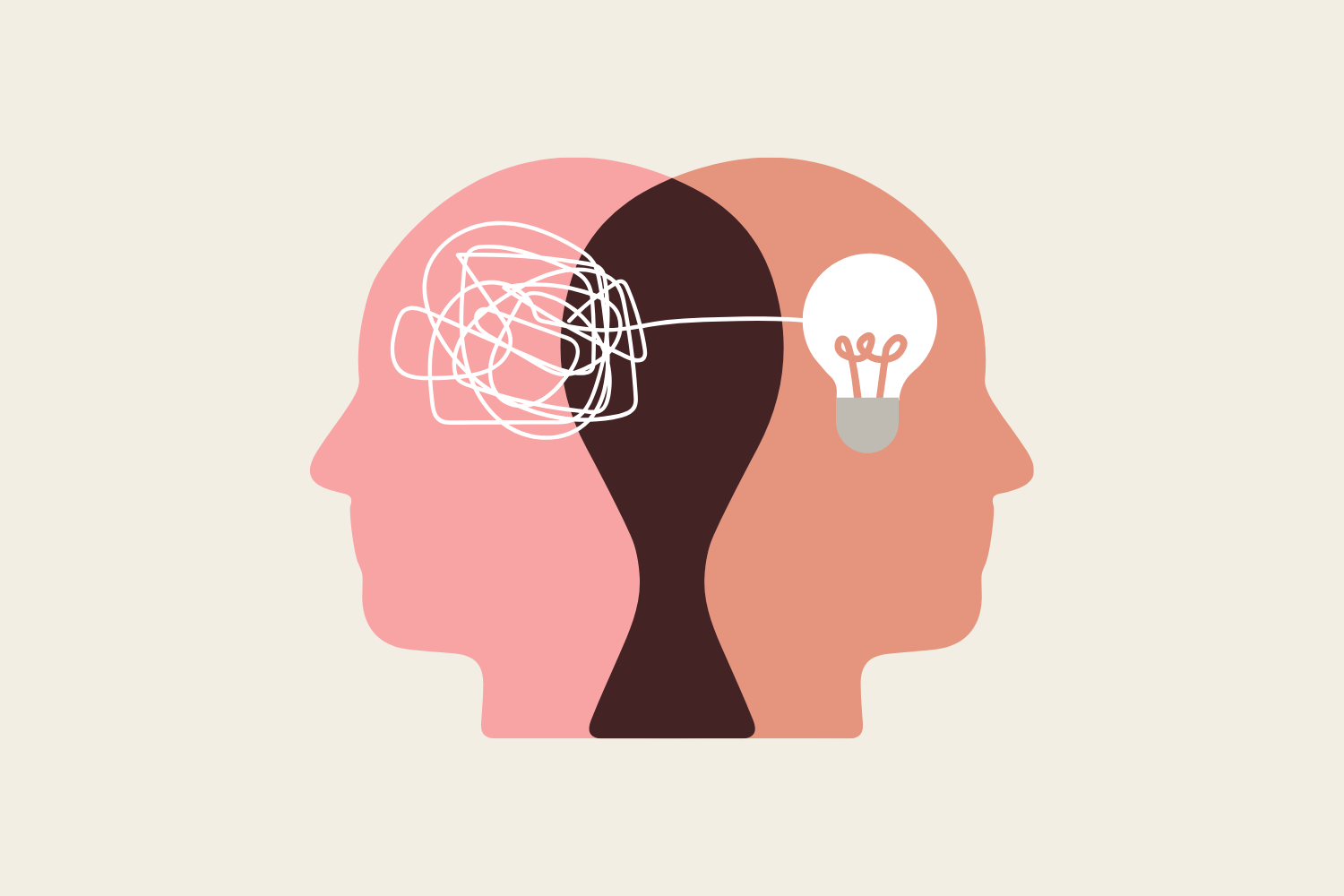
Among competing explanations, pick the one with fewest assumptions — in leadership, diagnose simply, build lean, and say what actually matters.

OODA Loop
John Boyd's four-stage decision cycle — Observe, Orient, Decide, Act — for fast, adaptive calls under pressure, run as a loop.

Probabilistic Thinking
Stop betting on one predicted future — assign real probabilities to outcomes, weigh them by impact, and let the math decide.
System 1 and System 2 Thinking
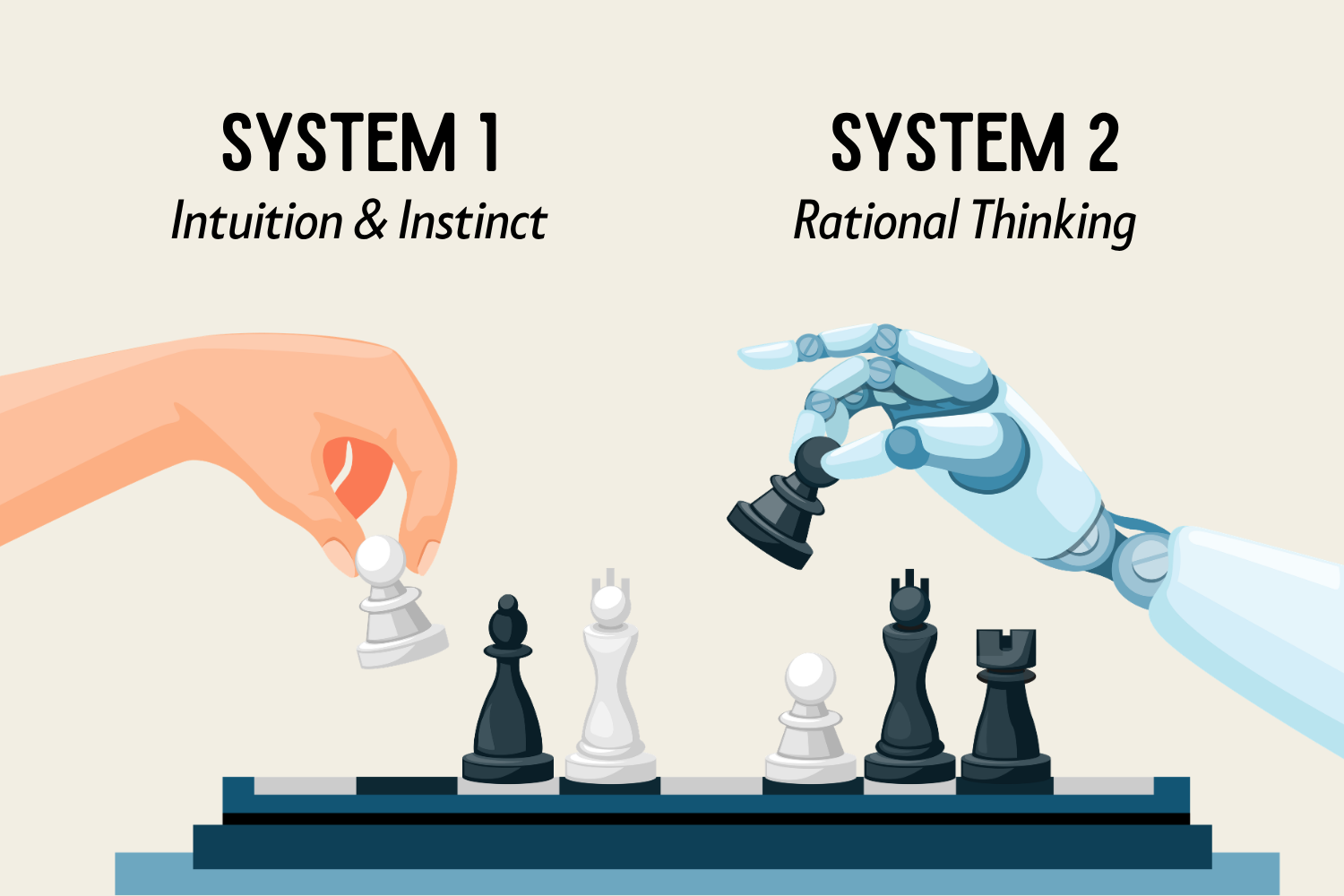
Your brain runs fast, gut-level System 1 and slow, deliberate System 2 — knowing which a moment needs is the skill.
The AI Confidence Trap
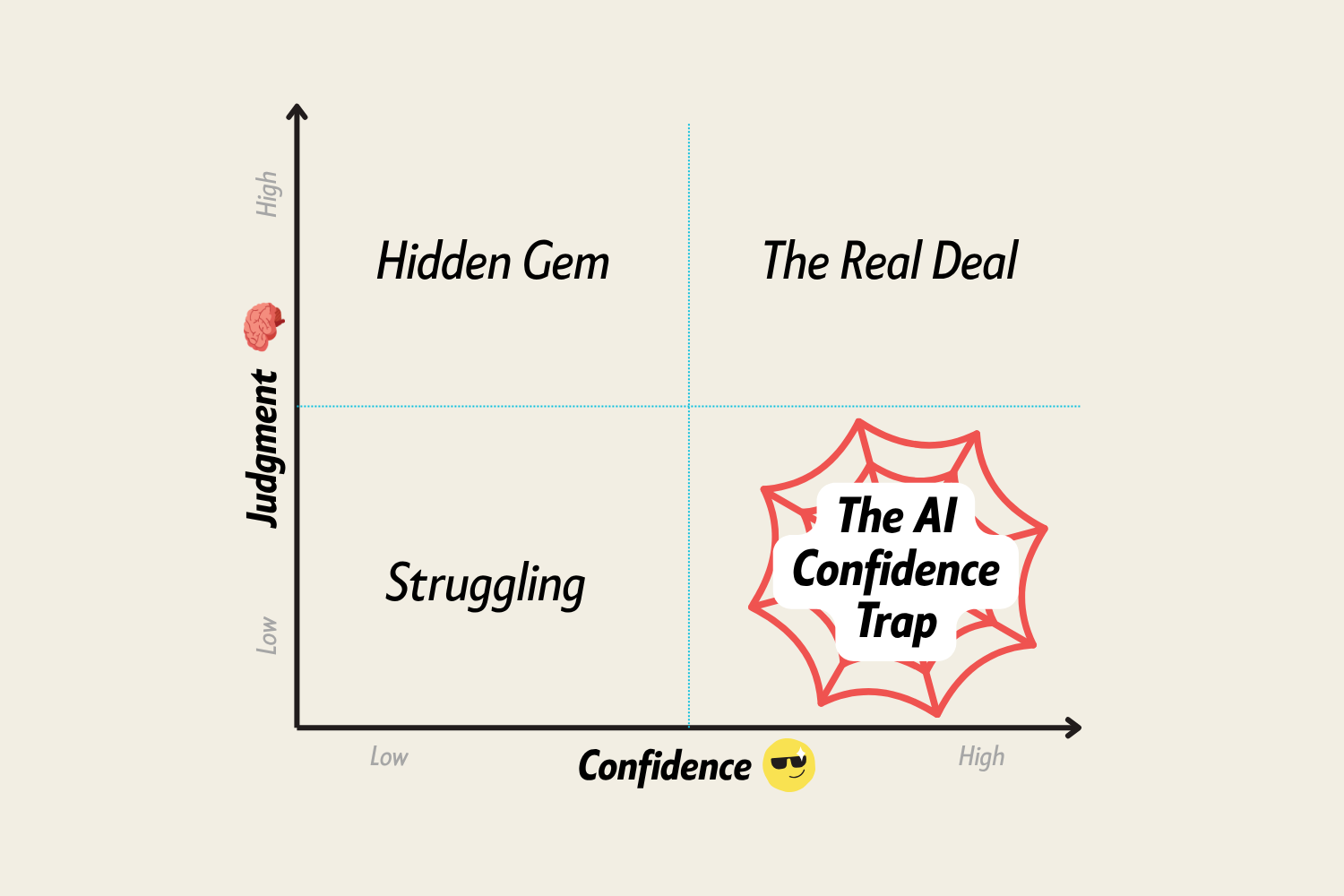
AI-polished output can look like real competence when the thinking behind it isn't there — judge the reasoning, not the polish.